Languages

Topbar Menu EN
The SDG Fund is operationally closed. This site is alive for knowledge and dissemination purposes.
Warning: This website is closed. Be aware of phishing or social engineering fraudulent requests of payments or certificates. Explore our programme areas.
Please visit jointsdgfund.org

Search our database of publications


Operationalizing the rights based local WatSan governance framework in the Philippines: Vol II

One of the key targets of the the MDG Achievement Fund (MDG-F) Joint Programme (JP) in the Philippines was the development of capacities at the local level that will enable enhanced access to and provision of water services. While Volume I of the Handbook is aimed at providing the basic concepts and principles of human rights based local Water and Sanitation (WatSan) governance, Volume II was developed to provide a practical guide to the LGU, the community and water service providers (WSPs) on how to operationalize the framework. For the LGU as the Duty Bearer, the Handbook is a step-by-step guide on how to comply in fulfilling the obligation to realize the target of guaranteeing the provision of safe, available, affordable and acceptable water to the most vulnerable sectors of the community. This publication presents the processes that will be undergone by the different water governance actors following a human rights-based approach.

View online/download
English

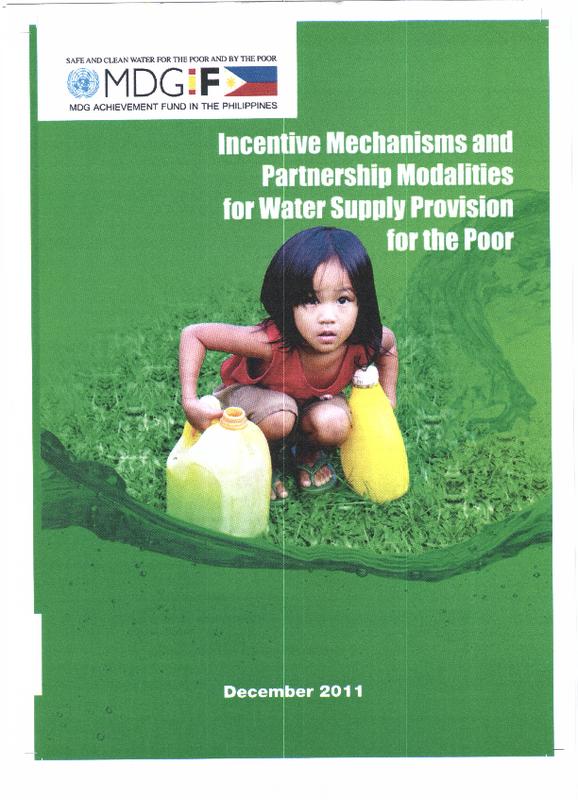
Incentive mechanisms and partnership modalities for water supply provision for the poor in the Philippines

This study took stock of the existing policies, laws, issuances and rules and regulations that affect the level of investment at the local level, characterized by water service providers, from either public or private entities. It produced a compendium of partnerships and incentive modalities that may be applied in water-less and rural areas, a framework for implementation of incentive and partnerships on the provision of water services for the poor, and a proposed action plan for its implementation.

View online/download
English

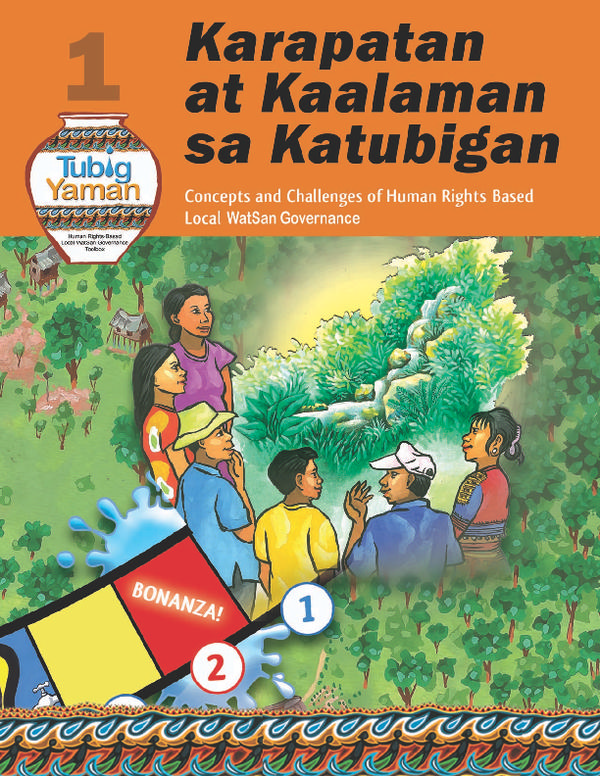
Concepts and challenges of human rights based, local WatSan governance in the Philippines

The lack of access to sufficient, acceptable, and affordable water and sanitation is deeply rooted in poverty, weak governance, power imbalance, and discrimination that directly impacts the lives of persons living in poverty and denies them a most basic human right: the right to water. This “Handbook” on a Human Rights Based Approach to Local WatSan Governance presents a framework to support the realization of the right to water and sanitation, and consequently, other fundamental rights in the Philippines. It is divided into 2 sections that provide an introduction to human rights based local WatSan governance and helps the practitioner understand the challenges implicit in it.

View online/download
English

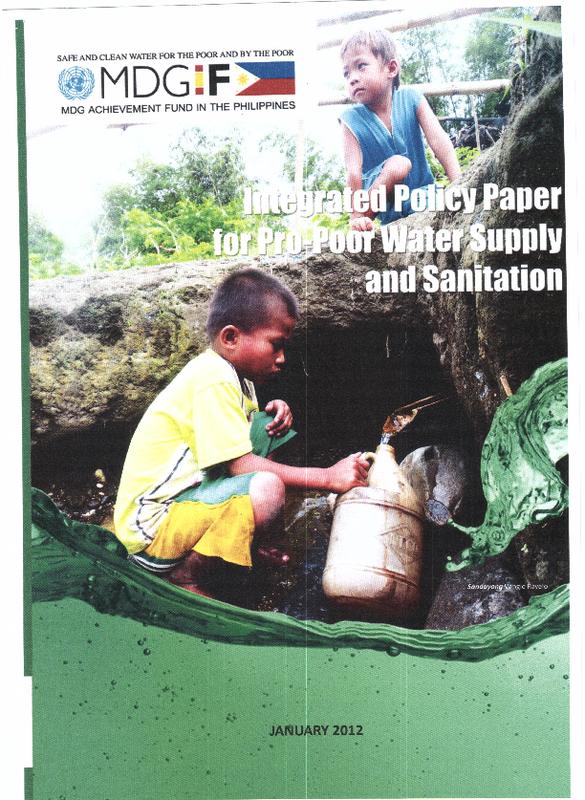
Integrated policy paper for pro-poor water supply and sanitation in the Philippines

The recognition of the human right to water supply and sanitation implies that the state accepts its responsibility to respect, protect and fulfill this right. For about 18 million Filipinos that do not have access to safe water and for the 10 million Filipinos that still defecate in the open, the ability to exercise this right is constrained by the limited ability of national and local government to provide the resources required to satisfy this right. The policy reforms mentioned in this summary cover a range of concerns including, but not limited to institutional arrangements, revisiting the targeting approach, financing, NG-LGU cost-sharing, economic regulation, incentives and partnership arrangements and others. This paper also highlights recommendations on the policy reforms and changes required in the implementation of these concerns and identifies possible strategies to scale up rural water supply services within the context of the emerging Philippine Water Resources Sector Development Plan and the SALINTUBIG Program.

View online/download
English

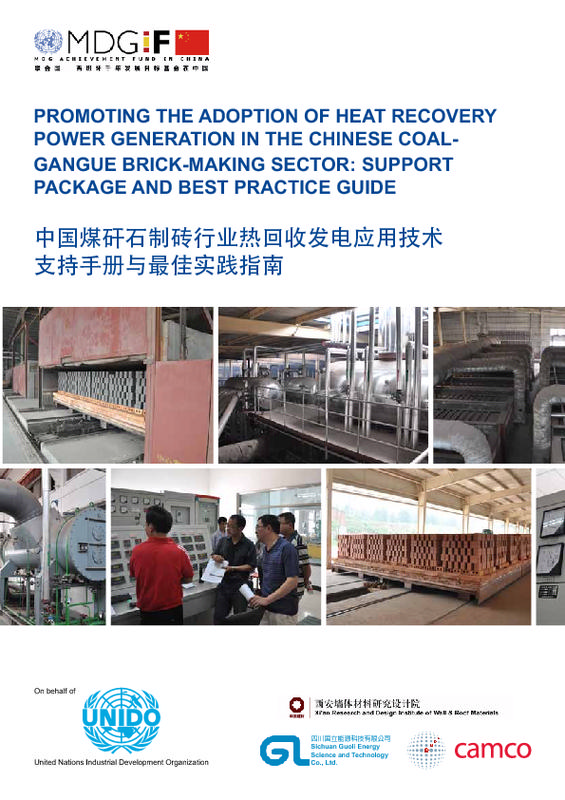
Promoting the adoption of heat recovery power generation in the Chinese coal-gangue brick-making sector: support package and best practice guide

This guide provides an overview of heat recovery power generation (HRPG), examines costs and return on investment, and analyses associated risks, as well as presents a case study of a HRPG pilot project. This package has been compiled based on feasibility study reports, engineering study material, expert input gathered during workshops, and the results of a full technical, economic and financial assessment of the pilot project.

View online/download
English

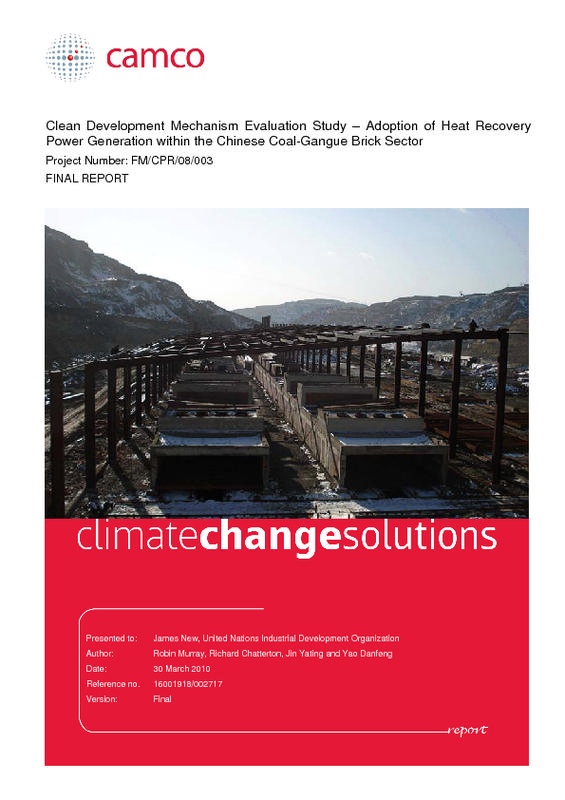
Clean development mechanism evaluation study: adoption of heat recovery power generation within the Chinese coal-gangue brick sector

China is the world’s largest producer and consumer of building materials. The Chinese clay brick sector consumes around one billion tonnes of clay per year. Recent policies aim to limit the manufacture of clay bricks and encourage the use of industrial waste materials instead, in particular coal-gangue brick (CGB). This report is the result of a study into the potential of the Clean Development Mechanism (CDM) to finance CGB HRPG projects in China in order to accelerate the sector-wide uptake of Heat Recovery Power Generation (HRPG )and reduce GHG emissions. The study uses a detailed cash flow model to analyse CDM potential for the CGB sector and, specifically, at the two pilot sites, applying a range of carbon price scenarios for different CDM development approaches (single project, bundled projects and programmatic CDM).

View online/download
English

Sectoral approach and international technology development and transfer in the electricity sector in China

This working paper focuses on the Chinese electricity sector and illustrates the importance of sectoral approach for technology development and transfer to escape lock‐in effects and achieve emission reduction. This paper also comments on the contributions to technology development from the existing proposals on sectoral approaches. It concludes by shedding some light on possible international and domestic institutional arrangements and potential demonstration projects, in order to use sectoral approach to substantially promote technology development and transfer.

View online/download
English

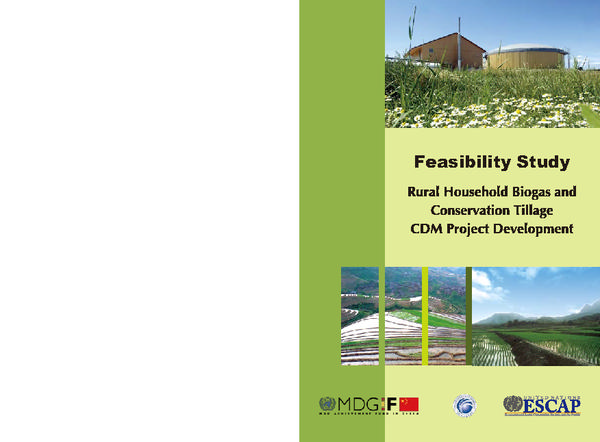
Feasibility study: rural household biogas and conservation tillage CDM project development in China

The China Climate Change Partnership Framework (CCPF) brought together nine UN Agencies, ten government line ministries, local Governments, and a host of other counterparts from academia, the public and the private sectors, to deliver a series of interventions to promote the mainstreaming of climate change mitigation and adaptation into government policy and China’s achievement of MDG-7: environmental sustainability. This paper shares some of the key findings and case studies from work in the field, as well as policy recommendations and a gap analysis identifying possible future areas of cooperation for the government of China, the United Nations System and other local and international stakeholders in China.

View online/download
English

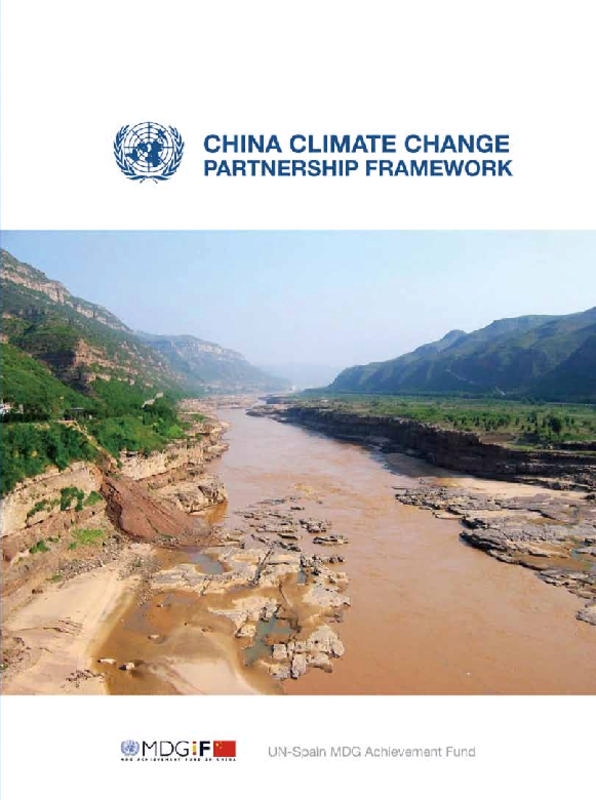
China climate change partnership framework

The China Climate Change Partnership Framework (CCPF) brought together nine UN Agencies, ten Government line ministries, local Governments, and a host of other counterparts from academia, the public and the private sectors, to deliver a series of interventions to promote the mainstreaming of climate change mitigation and adaptation into Government policy and China’s achievement of MDG-7: environmental sustainability. This paper shares some of the key findings and case studies from work in the field, as well as policy recommendations and a gap analysis identifying possible future areas of cooperation for the Government of China, the United Nations System and other local and international stakeholders in China.

View online/download
English

Local environmental health action plans: resource manual to support training in China

The manual was developed to support training workshops conducted in four pilot Provinces in China as part of the MDG Joint Program on Climate Change. The Resource Manual provides 1) Strategic planning techniques suitable for local Environmental Health (EH) planning, 2) Resource material related to Local Key Performance Areas, 3) Resource material related to development of local climate change adaptation and mitigation planning, 4) International examples of Local Environmental Health Action Plans (LEHAP) to serve as a guide to local implementers.

View online/download
English

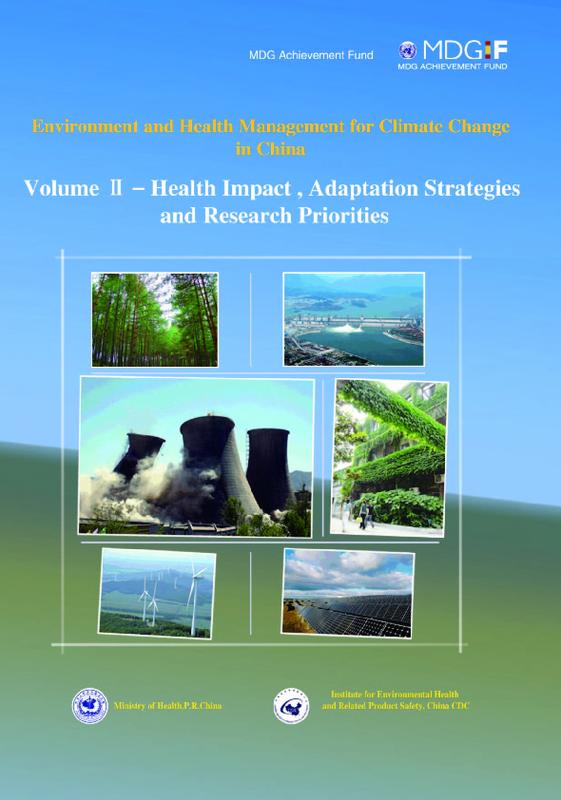
Environment and health management for climate change in China, Vol II

This report observes the change in the climate and estimates the trend of climate change in the future in China. It also analyses its associated health impacts and provides an overview of an adaptation strategy and addresses research priority areas based on a gap analysis. In regards to the response to climate change, China's public health emergency response system is introduced and the development of emergency response system has been proposed.

View online/download
English

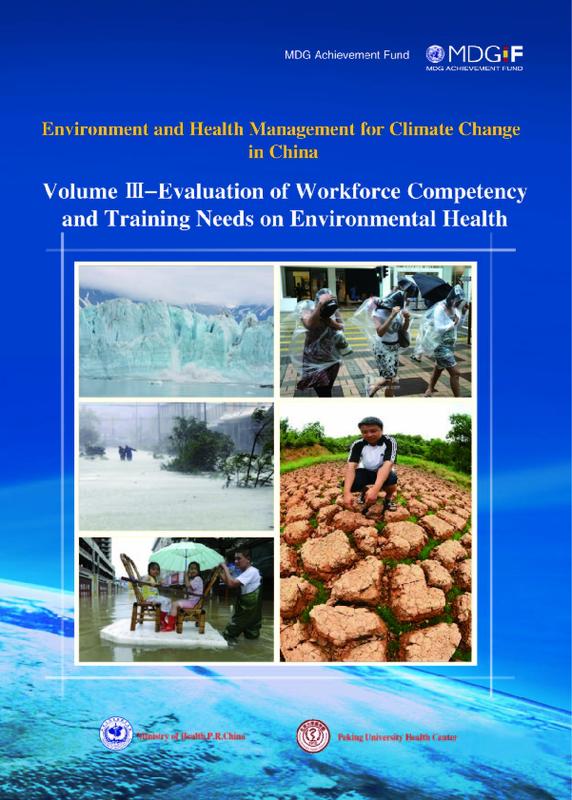
Evaluation of workforce competency and training needs on environmental health in China: Vol. III

The Chinese government recognizes the need to enhance environmental and health management systems in order to prepare for expected impacts of climate change in the future. An intensive workforce training program is urgently needed for local environment and health practitioners. This evaluation of workforce competency and training needs has been carried out in order to define the training contents and targets. This document also outlines the current health management systems and structures in place, provides an overview of current training and education that is being provided, as well as offers recommendations to the Chinese government on ways to enhance the education of environmental health staff and improve current environmental health training.

View online/download
English

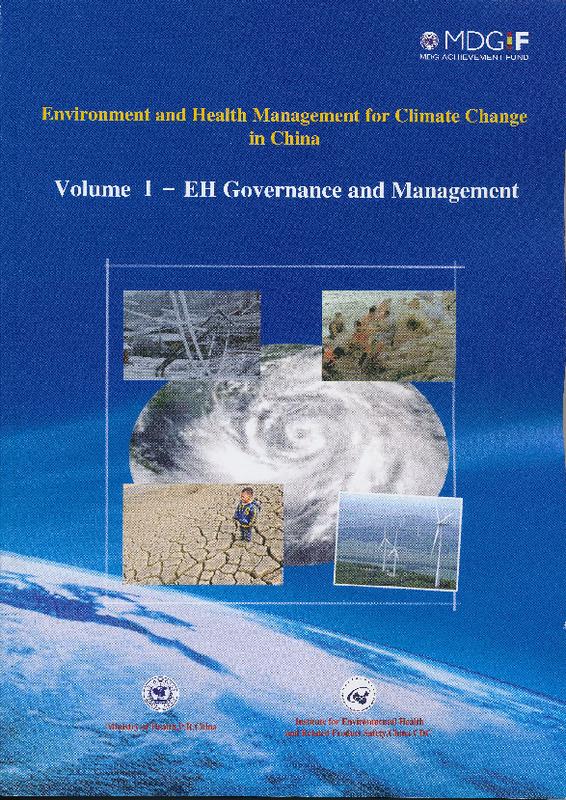
Environment and health management for climate change in China

This report has as its primary focus the identification of the Capacity Building measures necessary to prepare China and, in particular, the Ministry of Health for adaptation and mitigation policy and practice to address the public health impacts of Climate Change. It is the first of four reports and aims to 1) assess the environment and health managements system in China, 2) analyze the problems within the system, 3) develop recommendations for the system.

View online/download
English

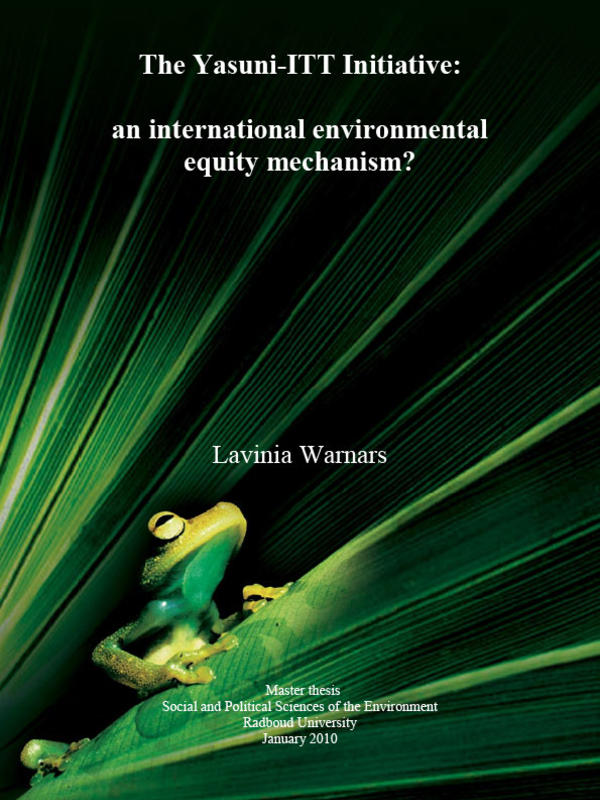
The Yasuni-ITT Initiative: an international environmental equity mechanism?

This thesis aims at analysing and assessing whether the Yasuni-ITT Initiative can be considered as an alternative pilot project to address not only environmental and climate justice, but also power imbalances. Current and proposed climate change mechanisms such as the CDM and REDD, as well as the history of Ecuador are being examined as motivations of the initiative. Such motivations include injustice aspects as well as how the petroleum industry has affected the country severely in terms of environment, society, economy and politics. These motivation and the Yasuni-ITT Initiative are therefore carefully examined in relation to environmental and climate justice as well as power imbalances.

View online/download
English

Development of a system of energy intensity indicators for the Egyptian economy

This report contributes to achieving the objective of increasing demand side energy efficiency in Egypt, without negatively impacting economic development targets. The application of the developed system should make it possible to track changes in energy intensity, identify barriers to the reduction of energy intensity, and help outline programs to reduce Egypt’ s energy intensity to decouple GDP and energy consumption growth. The system will thus provide the basis for sustained rational planning and decision making. This final report proposes energy intensity indicators, provides the data and methodology used, and proposes an energy accounting system, as well as actions and policies to improve energy efficiency.

View online/download
English

Policy brief for climate change adaptation of the agricultural sector in Egypt

This policy brief provides an overview of the Egyptian agricultural sector, identifies key challenges facing agriculture and the need for new policy, estimates financial resources needed and savings, as well as offers policy recommendations and an overall climate change adaptation policy framework structure.

View online/download
English

Policy brief: towards a more sustainable energy economy in Egypt

The energy sector plays an important role in achieving the economic and social development in Egypt through supplying the energy resources mix needed for different sectors and contributing about 15% of the country’s FDI. However, given recent trends in supply and demand, the Egyptian energy sector will be facing crucial challenges for securing the energy supplies requested for achieving the development programs. As a result, there is a need for the design and implementation of an aggressive energy policy reform. This policy brief, provides an overview of the challenges faced and offers strategic recommendations for policy makers.

View online/download
English

Policy brief for climate change adaptation for the Ministry of Water Resources and Irrigation in Egypt

Egypt is an arid country relying on the Nile River which provides 95% of its water resources and is suffering water stress due to limited supplies and growing populations, and increased competition on water from the upper Nile basin countries. There is significant pressure on water resources in Egypt to support the basic needs of the population, industry and agriculture production. This document provides a list of major policies that should be considered in addressing these problems.

View online/download
English

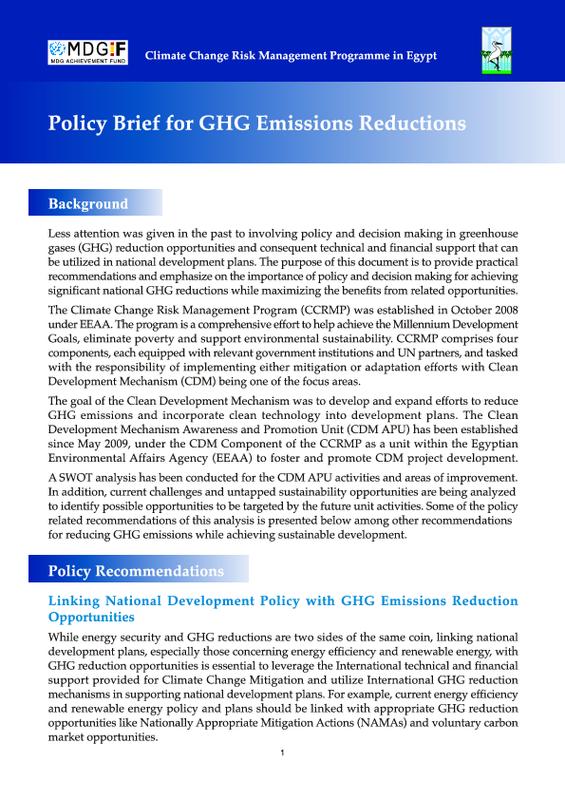
Policy brief for greenhouse gas emissions reduction in Egypt

The purpose of this document is to provide practical recommendations and emphasize the importance of policy and decision making for achieving significant national greenhouse gas (GHG) reductions while maximizing the benefits from related opportunities. It contains a list of policy recommendations for Egypt that aim to reduce GHG emissions while embracing sustainable development.

View online/download
English

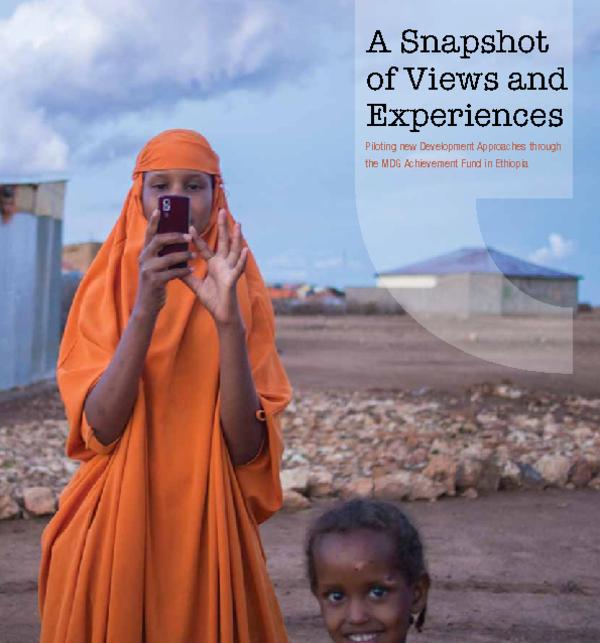
A snapshot of views and experiences piloting new development approaches through the MDG Achievement Fund in Ethiopia

With support from the MDG Achievement Fund, the government of Ethiopia and the United Nations (UN) tested new approaches for involving some of the most vulnerable people more actively in the country’s development process. Through five programmes, new development approaches were piloted with impressive results. In addition to adopting a holistic, cross-sectorial approach, each programme focused on investing in individuals’ capabilities and social opportunities. They also strengthened entire communities through economic and self-help groups. This snapshot covers programme highlights, strategies implemented, and lessons learned from the field.

View online/download
English

Enabling pastoral communities to adapt to climate change and restoring rangeland environments programme in Ethiopia

With support from the MDG Achievement Fund, the government of Ethiopia and the United Nations (UN) tested new approaches for involving some of the most vulnerable people more actively in the country’s development process. Through five programmes, new development approaches were piloted with impressive results. In addition to adopting a holistic, cross-sectorial approach, each programme focused on investing in individuals’ capabilities and social opportunities. They also strengthened entire communities through economic and self-help groups. This snapshot covers programme highlights, strategies implemented, and lessons learned from the field.

View online/download
English

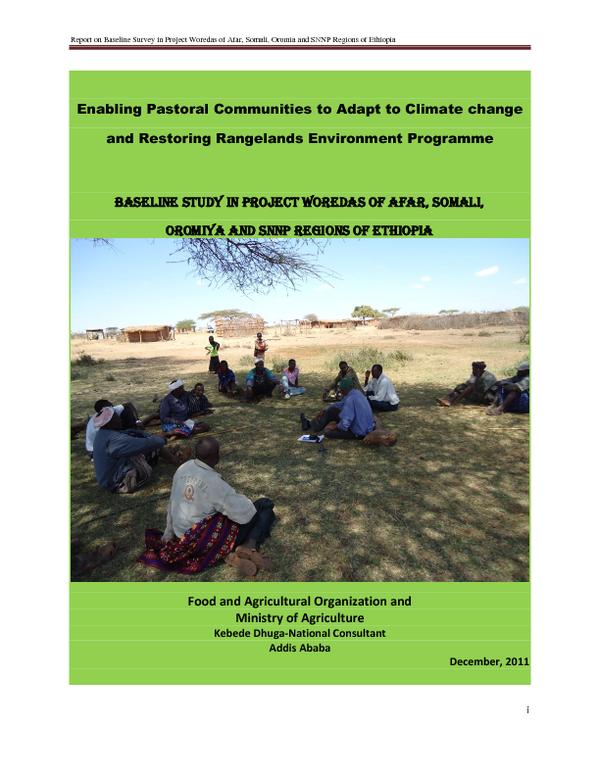
Baseline study in project Woredas of Afar, Somali, Oromiya and SNNP regions of Ethiopia

This study is part of a larger Joint Programme whose goal was to enhance the enabling policy environment to effectively plan and execute pastoralist related climate change adaptation and mitigation measures at federal, regional and district levels and pilot measures to enable the pastoral communities develop capacity for managing climate change risks and shocks in six districts. This report presents the findings of a baseline survey executed to facilitate project monitoring and evaluation. It is based on the findings of a quantitative household survey of 765 households (77% male headed and 23% female headed), 34 Key Informant Interviews at households levels and 17 Focused Group Discussions at community levels.

View online/download
English

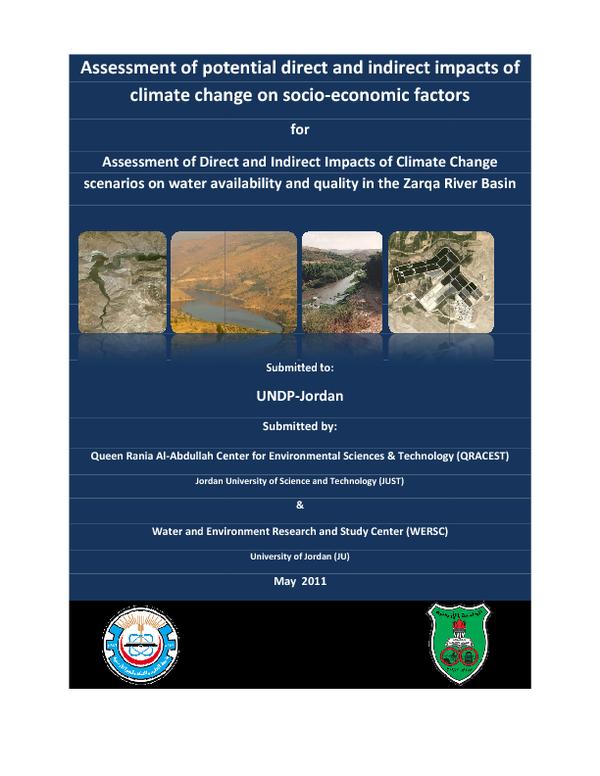
Assessment of direct and indirect impacts of climate change scenarios on water availability and quality in the Zarqa river basin in Jordan

The study aims to help optimize the water allocation in the Zarqa River Basin. In the future, more wastewater will be produced and more treated wastewater is expected to be used due to the increasing population and the increased connection rate and rehabilitation and expansion of the existing treatment plants. This study articulates the links between water input alternatives, their availability and other input choices to produce output, and identifies the best or optimal input strategies or the profit maximizing production path that could be followed by firms. In effect, it identifies the most efficient water utilizing options by the production sectors in terms of GDP maximization.

View online/download
English

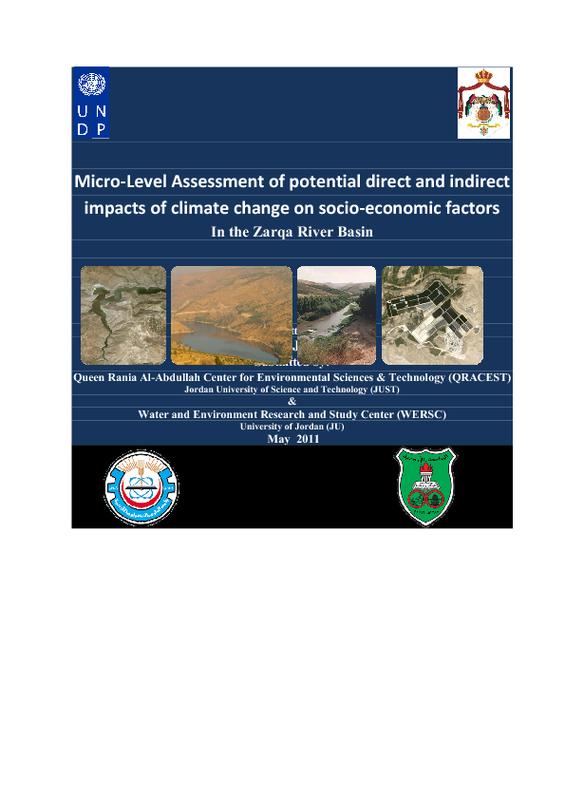
Micro-level assessment of potential direct and indirect impacts of climate change on socio-economic factors in the Zarqa river basin in Jordan

The Zarqa basin is considered the most important basin in Jordan because it hosts about 70% of the industrial activities and about 50% of the population of the country reside on it. This study focuses on the competitiveness of water use in agriculture and other sectors and use of water of different quality. Also this study evaluates and assesses the different scenarios of water availability and quality – as a consequence of climate change in the region - depending on economic and social aspects.To simulate the complexity of the system, a base line scenario was built using the Water Resources Model (WRM). This scenario has been tested to reflect the expectation of the impact of climate change in the future.

View online/download
English

Assessment of treated wastewater quality under different climate change scenarios in Jordan

This assessment was part of a larger project that aimed to address wastewater quality and soil irrigated with wastewater to provide support to Jordan’s national strategies and action plans for sustainable management of its natural resources, reducing poverty, and enhancing health indicators. There were 3 main objectives to this assessment: 1) Determine the impact of using wastewater under different climatic conditions on pollutants residue in soil and the impact of different climate on wastewater quality, 2) Define the impacts of global climatic change on soil properties and seepage water quality using inorganic and organic contaminants of the irrigation water quality, and 3) Define the microbial activities under different climatic conditions.

View online/download
English


Suggest a publication

Feel free to submit a publication.

Submit here