Languages

Topbar Menu EN

The SDG Fund is operationally closed. This site is alive for knowledge and dissemination purposes.
Warning: This website is closed. Be aware of phishing or social engineering fraudulent requests of payments or certificates. Explore our programme areas.
Please visit jointsdgfund.org

Search our database of publications


China’s manufacturing and industrialization in Africa
While a succession of Asian countries have exhibited dramatic growth over the last thirty to fifty years, Africa has largely stagnated. This Asian expansion has been driven by manufacturing exports to the US in particular, and enabled through an overall constructive policy package that opened markets, implemented favourable trade and exchange rate policies, and provided a sound and stable government that inspired investment and secured property rights. Conversely, Africa has been unable to put the full package in place, and this has resulted in a manufacturing sector whose contribution to both GDP and export shares is significantly below the continents’ developing country peers. Growth in natural resource-rich developing countries in general has lagged behind those with a manufacturing focus, and this is especially the case in Africa with its poor linkages into unskilled labour and its appetite for rent seeking activities. Africa’s industrial base is not as robust as theory suggests it should be. Using the continent’s export profile to the US 90 percent or more is either a dominant mineral fuel or precious minerals for those African countries with significant exports. Other than South Africa, manufacturing exports are notably absent, with only textiles and clothing featuring in those countries where manufacturing also features. Importantly Africa has difficulty to capitalise on its significant tariff preferences into the US, and we examine the thesis that China is making it harder for Africa to diversify away from its natural resource-based export profile.

View online/download
External Link

International remittances and income inequality in Africa

This paper investigates the impact of migrant remittances on income inequality in African countries, using a panel of five eight-year non-overlapping windows for the period 1960-2006. The results suggest that, first, international migrant remittances have a significant positive impact on income inequality in African countries. After instrumenting for the possible endogeneity of remittances, a 10 percent increase in remittances as a percentage of GDP will lead, on average, to a 0.013 percent increase in income inequality in Africa. Second, initial per capita GDP strongly increases income inequality. Third, inflation rate appears to be the strongest factor fuelling income inequality in the Continent. Fourth, education significantly reduces income inequality. Fifth, the North African dummy and remittances inflows to North Africa largely reduce income inequality in the sub-region while doing the opposite in Sub-Saharan Africa. The policy implications of these results are discussed.

View online/download
External Link

Development aid and access to water and sanitation in Sub-Saharan Africa

Providing safe drinking water and basic sanitation to citizens is one of the major challenges facing the African Governments. The issues of access to safe drinking water and improved sanitation is well articulated and prioritized in the various national, continental, and international policy documents, strategy papers, declarations, and conventions. And yet it is not clear if the provision of sustainable access to safe drinking water and basic sanitation has been given the requisite financial and other support by the SSA policy makers and donors. The principal objective of this paper is to compare countries’ performance in the water and sanitation sector and analyse how effectively they used the development aid received for the Water and Sanitation sector (WSS). Much has been written on Development Aid Effectiveness, but the focus of attention has often been on how the donors operate, and how the recipients use the money. In this context, the paper utilised an innovative standardized measurement framework known as-the Watsan Index of Development Effectiveness (WIDE) - which compares drivers of progress with results achieved, and ranks African countries by the level of outcome obtained per unit of available input. In particular, how effectively they used the development aid received for the water and sanitation sector. The WIDE is made up of two composite information layers, the Resources (input drivers such as aid received, GDP, water resources, and governance level), and the Progress Outcomes (access to water, access to sanitation, and progress in the two). We also performed econometric analyses to explore the linkages between interventions designed to promote development, and the outcomes from that development process, in the water and sanitation sector. These analyses were further validated by presentation of the WSS sector situation of four case study countries namely, Kenya, Madagascar, Burkina Faso and Uganda.

View online/download
External Link

Closing the education gender gap: estimating the impact of girls’ scholarship program in The Gambia

This paper estimates the enrolment impact of a nation-wide scholarship program for female secondary students in The Gambia implemented to reduce gender disparity in education. In the regions where the scholarship program was implemented, all girls attending public middle and high schools were exempted from paying school fees, which used to be mandatory. The gradual implementation of the project provided a unique opportunity to rigorously assess the enrolment impact of the scholarship program. We use two nationally representative household surveys carried out in 1998 and 2002/03. By 2002/03, about half of the districts in the country had benefited from the project. We found that the program increased enrolment for middle and high school female students by 9 percentage points, and increased the years of schooling attained by 0.3 to 0.4. The program had no significant impact on enrolment or years of schooling attained for male students at any level.

View online/download
External Link

Development of wind energy in Africa

This paper describes how Africa’s wind energy markets have evolved over the years and the structural characteristics affecting the development of wind energy projects on the continent; providing what we believe is the first mapping of the continent’s wind energy market. Results from our analysis of 94 projects on the continent suggest that wind energy markets remain small, concentrated and nascent in nature. While we observe an increasing trend in the number and size of projects being implemented, we show that wind energy contribution to the energy mix in Africa will remain unchanged over the long term. A key observation in the paper is that wind energy has limited potential to address the issue of access to electricity in Africa mainly due to the intermittent nature of electricity output from wind power plants. Wind energy is more likely to complement electricity generation from conventional sources, as has been observed in more mature markets. We estimate the cost of the 1.1 GW installed wind power capacity in Africa at USD 1.8 billion, out of which 59 percent was contributed by development finance institutions as non-concessional funding. We also notice a shift from the use of concessional funding on projects towards non-concessional funding from development finance institutions, an increasing participation of the private sector and greater use of specialized funds and Clean Development Mechanism funding. There is also emerging south-south cooperation with some experienced African firms seeking new markets across the continent. The paper finds that the public sector remains a key player in the wind energy sector, not only as a financier but also as a local partner that ensures smooth project implementation. The paper also discusses technical, environmental and financial considerations that African countries need to take into account when developing wind energy projects.

View online/download
External Link

Youth employment in Africa: new evidence and policies from Swaziland

Drawing on the 2007 and 2010 Swaziland Labour Force Surveys, this paper provides first systematic evidence on recent youth employment challenges in Swaziland, a small, land-locked, middle-income country with one of the highest youth unemployment rates in Africa. The paper first documents the various labour market disadvantages faced by the Swazi youth, such as high unemployment and discouragement, and how they changed from 2007 to 2010. A multinomial logit regression analysis is carried out to analyse the socio-economic drivers of the unfavourable youth labour market outcomes on the supply side. Since many of the factors that can unlock the employment potential of the Swazi youth are on the demand side of the labour market, the paper examines the barriers to job creation and youth entrepreneurship. It concludes with experiences of other countries that could inform design of more effective interventions for youth employment in Swaziland.

View online/download
External Link

Inequality, economic growth, and poverty in the Middle East and North Africa (MENA)

In this paper, we have presented the patterns of inequality, growth and income inequality in the MENA region. Using a cross-sectional time series data of MENA countries for the period 1985-2009, we have also investigated the effect of income inequality on key societal development, namely economic growth and poverty, in the region. Our empirical results show that income inequality reduces economic growth and increases poverty in the region. Other factors having significant negative effect on economic growth in the MENA region include previous growth rate, exchange rate, government consumption expenditure or government burden, initial per capita GDP, inflation, and primary education. On the other hand, variables positively and significantly associated with MENA’s economic growth are domestic investment rate, urbanization, infrastructure development, and mineral rent as a percentage of GDP. In addition, apart from income inequality, other factors increasing poverty in the region are foreign direct investment, population growth, inflation rate, and the attainment of only primary education. Poverty-reducing variables in the region include domestic investment, trade openness, exchange rate, income per capita, and oil rents as a percentage of GDP. The policy implications of these results are discussed.

View online/download
External Link

Community based health insurance schemes in Africa: the case of Rwanda

Community-based health insurance schemes (Mutuelles) in Rwanda are one of the largest experiments in community based risk-sharing mechanisms in Sub-Saharan Africa for health related problems. This study examines the impact of the program on demand for modern health care, mitigation of out-of-pocket catastrophic health expenditure and social inclusiveness based on a nationally representative household survey using traditional regression approach and matching estimator popular in the evaluation literature. Our findings suggest that Mutuelles have been successful in increasing utilization of modern health care services and reducing catastrophic health related expenditure. According to our preferred method, higher utilization of health care services was found among the insure non-poor than insured poor households, with comparable effect in reducing health-related expenditure shocks.

View online/download
External Link

Microcredit for the development of the bottom of the pyramid segment: impact of access to financial services on microcredit clients, institutions and urban sustainability

The focus of microcredit for the bottom of the pyramid segment in urban areas is increasingly becoming an area of focus as development policy-makers work towards improving the lifestyles of urban poor. Previous research has had a keen focus on the impacts of financial services to business outcomes, leaving behind other equally vital aspects of development. In addition, very little of this research has focused on socio-economic and sustainability outcomes in urban areas. Using randomized controlled trials, this paper measures the impacts of microcredit to selected groups of people in Kibera slum in Nairobi city, using a combination of double difference and propensity score matching techniques to evaluate the impacts of these financial services on businesses, households, micro-finance institutions and urban sustainability outcomes. While the paper finds little evidence on urban sustainability outcomes, there is a significant, although small, improvement on business and households outcomes.

View online/download
External Link

Eliminating extreme poverty in Africa: trends, policies and the role of international organizations

Eradicating extreme poverty for all people everywhere by 2030, measured by people living on $1.25 a day, is the first goal among the UN Sustainable Development Goals expected to guide the post-2015 development agenda. This paper summarizes several studies on eradicating poverty globally and examines feasibility of this goal for Sub Saharan Africa (SSA), the world’s poorest but rapidly rising region. It finds that under plausible assumptions extreme poverty will not be eradicated in SSA by 2030, but it can be reduced to low levels. National and regional policies should aim at accelerating growth, while making it more inclusive and ‘green’. International organizations, including informal ones such as the G20, can play a critical role in this endeavour by encouraging policy coordination and coherence. Further, African countries will need a greater scope for bringing their perspectives into global economic debates on issues impacting sustainable development on the continent.

View online/download
External Link

Immigrants, skills and wages in the Gambian labor market

Using data from the Household Poverty Surveys in 2003 and 2010, this paper analyses characteristics of immigrants in The Gambian labour market. The analysis indicates that immigrants are relatively young, low-skilled (though with skill levels comparable to Gambians) and mainly come from neighbouring West African countries. While immigrants on average earn more than Gambians, this labour market advantage varies significantly depending on workers’ skill level. For instance, unskilled immigrants have a wage advantage but such an advantage does not exist among the skilled immigrants. Given that The Gambia is a country with high skilled emigration rates, these and other findings in this paper have important policy implications.

View online/download
External Link

Promoting North African women’s employment through SMEs

This analysis points to a host of significant challenges facing women to become SME owners in the region. These include women’s multiple burden, legal and cultural barriers, lack of access to training and business related support, limited access to property and credit, absence of effective social networks, and problems associated to economic infrastructure. There is a need for a supportive ecosystem for female-owned SMEs. Two pillars of such a system are: a) Good governance and infrastructure, which are essential for economic growth, but also have particularly positive effects on women’s entrepreneurship; and b) Energizing and establishing communication and coordination among various governmental, non-governmental and international organizations in order to create a synergy between the three and to ensure coherence in their policies and programs.

View online/download
External Link

Child labour and schooling in South Sudan and Sudan: is there a gender preference?

Based on the 2009 household surveys conducted in Sudan and South Sudan, the objective of this article is to analyse gender inequality for the young population aged 10 to 14 who should be at school. Although education is free in both countries, children’s enrolment at school is low especially for girls, many of them stay home performing domestic chores or have an economic activity particularly in rural areas. The bivariate probit model highlights the key role of the household head’s education, gender and poverty status in determining children’s schooling. Drawn on Pal (2004) who extended the Oaxaca-Blinder decomposition, we confirm that children’s activity in Sudan and South Sudan is strongly determined by the fact of being a girl or a boy. The article also provides some policy recommendations to address the issues of low school attendance and high gender inequality.

View online/download
External Link

Agricultural use of groundwater and management initiatives in the Maghreb: challenges and opportunities for sustainable aquifer exploitation

The intensive use of natural resources in the Maghreb, in particular by the agricultural sector, is creating an urgent need to design governance mechanisms at both the local and national level. Groundwater has become one of the most fragile of these resources. The rapid development of groundwater use for irrigation in the Maghreb has resulted in significant agricultural growth, but in many regions, such development has become unsustainable because of aquifer overexploitation or water and soil salinization. Adequate instruments to address this unsustainable use are not easy to design and implement, for there are many informal groundwater withdrawals by farmers, and water resource management organizations have limited intervention capacity. The paper examines groundwater use and management in Morocco, Algeria and Tunisia based on a study of national institutional and policy mechanisms and nine local case studies. Overexploitation creates environmental, economic and social risks, and there are already significant identifiable impacts in several of the case studies. Farmers address the problem of decreasing borehole flow-rates (or water salinization) either by constantly investing more in order to continue to have sufficient quantities of fresh water for their crops, or by adjusting their cropping systems to adapt to this decrease. In the absence of specific policies, there are increasing differences between those farms that have the resources to continue investing more in order to have sufficient water, and those that have to adapt their crops to the shortage. Legal frameworks have laid management foundations, but they only have a limited impact, in particular, because of the generally informal nature of such uses. Different strategies are currently being discussed at national level, and are often focused on contractual approaches with the farmers. Concomitantly, some collective initiatives have been conceived at local level. The range of policies implemented to address this unsustainable use is very broad-based, and entails both increased water resources and the adoption of instruments to limit increases in withdrawals. These instruments are based on control and incentive mechanisms. In the cases considered, jointly used instruments have made it possible to limit increases in withdrawals and to facilitate water enhancement, without, however, restoring the resource-use balance. The design and implementation of strategies for sustainable aquifer exploitation require the building of coalitions of actors, which should include organizations responsible for water resources, those involved in agriculture, but also - and especially - farmers. Support could be provided to the formation of such coalitions and to their reflections on possible options to assist an agricultural economy based on sustainable aquifer use.

View online/download
External Link

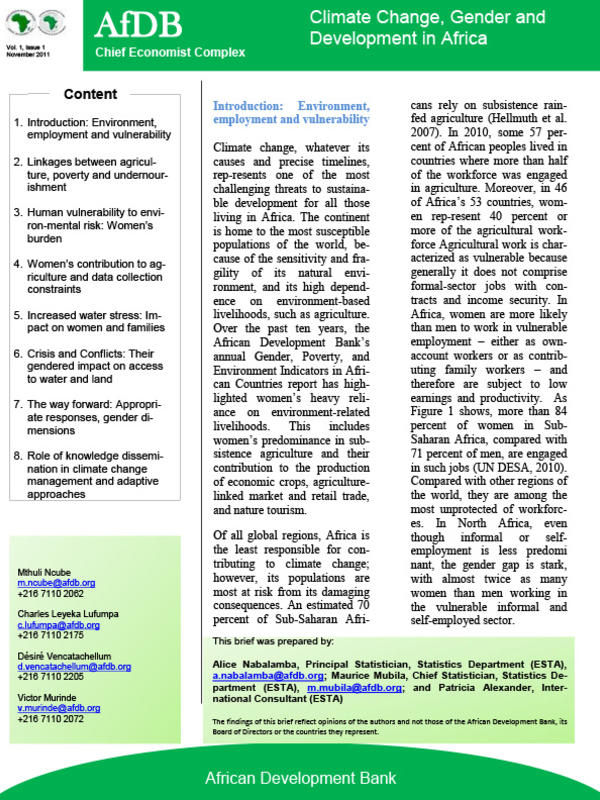
Climate change, gender and development in Africa

This article focuses on policy to support adaptation to climate change, and the importance of good gender analysis in planning and following through. It first examines how vulnerabilities are understood by climate change specialists. Then it examines how, through these perspectives, African people – particularly women in environment-based livelihoods – can best be supported by governments and development partners to adapt to the effects of climate change.

View online/download
External Link

The unintended consequences of agricultural input intensification: human health implications of agro-chemical use in Sub-Saharan Africa

While agro-chemicals such as pesticides, fungicides, and herbicides are often promoted as inputs that increase agricultural productivity by limiting a range of pre-harvest losses, their use may have negative human health and labor productivity implications. We explore the relationship between agro-chemical use and the value of crop output at the plot level and a range of human health outcomes at the household level using nationally representative panel survey data from four Sub-Saharan African countries where more than ten percent of main season cultivators use agro-chemicals. We find that agro-chemicals use is associated with increased value of harvest, with similar magnitudes across three of the four countries under study, but is also associated with increases in costs associated with human illness, including increased health expenditures related to illness and time lost from work due to sickness in recent past. We motivate our empirical work with a simple dynamic optimization model that clearly shows the role that farmer understanding of these feedbacks can play in optimizing the use of agro-chemicals. The central role of information in determining that optimum underscores the role of agricultural and public health extension as modern input intensification proceeds in the region.

View online/download
External Link

Health in Africa over the next 50 years

This report reviews the progress made in the health sector in Africa over the last 50 years, in terms of health outcomes, and particularly in the utilization of, and access to, healthcare services. The current challenges faced by the health sector are thoroughly assessed, focusing on the progress made toward the health-related Millennium Development Goals (MDGs), the need to establish more robust health systems, the problems of equity in access to and use of health services, sustainable health financing, and the quality of healthcare service provision. The discussion lays the groundwork for projections regarding the future of healthcare in Africa over the next 50 years. The analysis looks at how the sector is likely to evolve and the emerging trends, the key features of the post-MDG agenda, the future of health financing, and the methods that might be deployed to strengthen the system and human resources.

View online/download
External Link

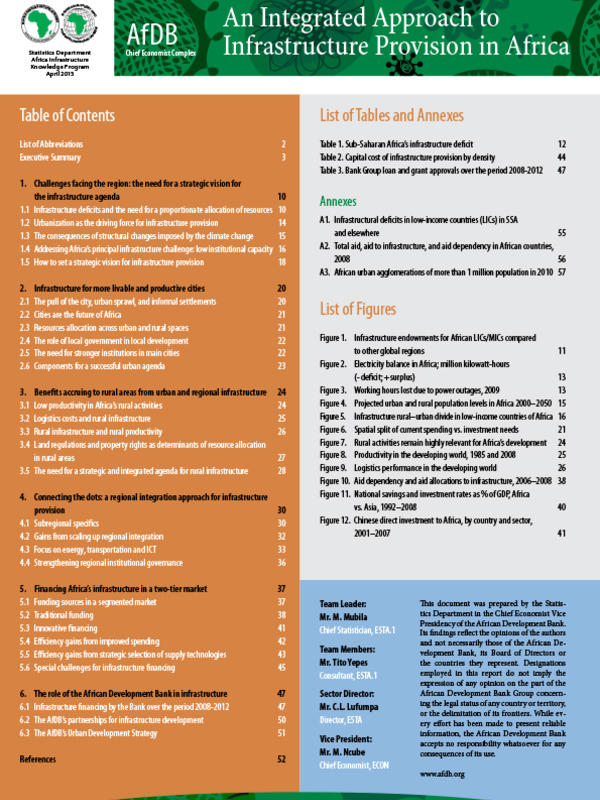
An integrated approach to infrastructure provision in Africa

This document outlines the need for a strategic vision for the infrastructure agenda in Africa and examines the infrastructure agenda in urban and rural settings. It also looks at the financing of the region's infrastructural development in a 2-tiered market, and ends off by setting out the role of the African Development Bank in the strategic vision.

View online/download
External Link

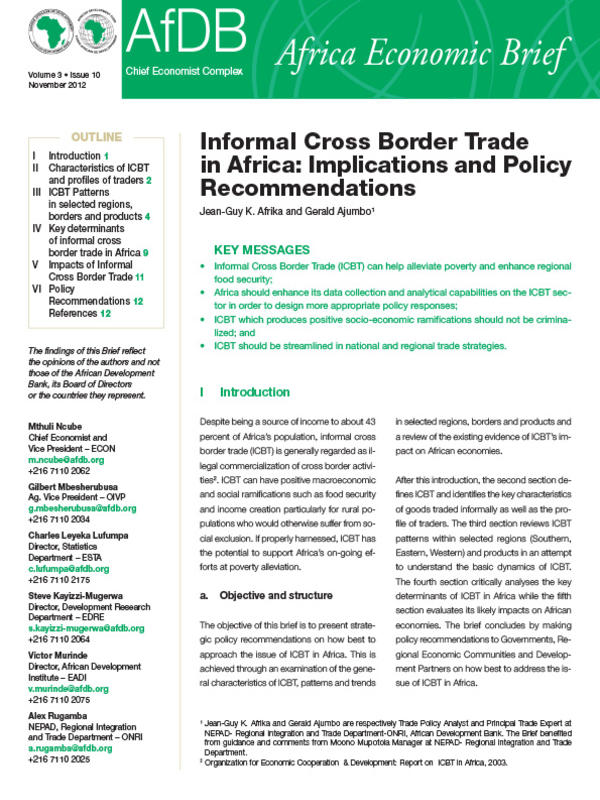
Informal cross border trade in Africa: implications and policy recommendations

Despite being a source of income to about 43 percent of Africa’s population, informal cross border trade (ICBT) is generally regarded as illegal commercialization of cross border activities. ICBT can have positive macroeconomic and social ramifications such as food security and income creation particularly for rural populations who would otherwise suffer from social exclusion. If properly harnessed, ICBT has the potential to support Africa’s on-going efforts at poverty alleviation.

View online/download
External Link

Intra-regional trade in Southern Africa: structure, performance and challenges

Regional integration offers possibilities to leverage and extend comparative advantage in ways not accessible through national programs. It offers particularly significant benefits for the region’s landlocked and small island economies. As landlocked countries depend on coastal neighbours for transit and access to the sea, they cannot integrate into regional markets unless their neighbours implement policies that will facilitate cross-border trade. The paper is organized as follows: Section I reviews the main trends in southern Africa’s intra and extra-regional trade; it also analyses the direction of total trade and changes in composition; Section II summaries trade policy developments in the region; Section III analyses the prospects and challenges for intra-regional trade; Section IV provides conclusions and policy recommendations for enhancing intra-regional trade.

View online/download
External Link

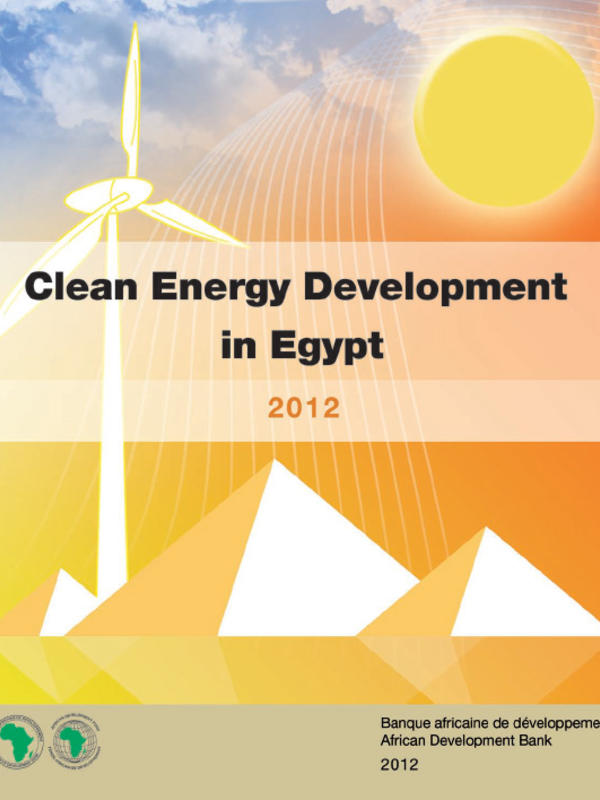
Clean energy development in Egypt

Once an exporter of oil and gas, Egypt is now struggling to meet its own energy needs. The growth in energy consumption is a response to the country’s economic expansion, industrialization, and change in people’s life style. Although all energy forms have been subject to high growth, electricity consumption has increased substantially causing serious concerns over the power sector’s fuel mix, heavier reliance on fuel oil, and an unaffordable burden on the government budget. As a result the government is determined to diversify the energy mix and to improve the efficiency of electricity consumption. It has also recognized that energy diversification and efficiency can impart other benefits such as cleaner environment, transfer of advanced technologies, and possible new areas of manufacturing and services. This report reviews the opportunities and challenges involved in improving energy efficiency, developing renewable energy resources and promoting the local manufacturing of the corresponding equipment in Egypt.The aim of this study is to review the outstanding issues in the development of clean energy in Egypt. Its specific intention is to arrive at recommendations regarding: (a) improving energy efficiency; (b) promoting the development of renewable energy resources; and (c) facilitating the development of local manufacturing of solar and wind power equipment.

View online/download
External Link

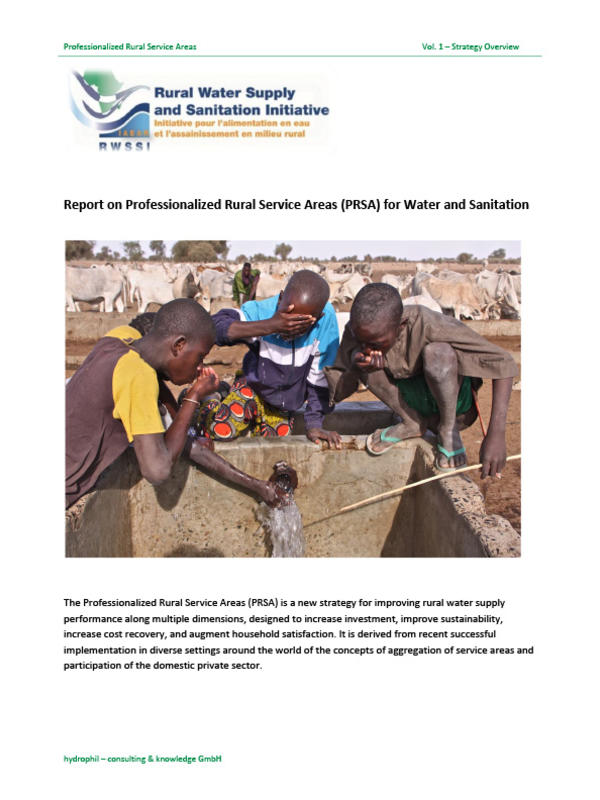
Report on Professionalized Rural Service Areas (PRSA) for water and sanitation

Standard approaches to rural water supply and sanitation have had some success in increasing access, but have often failed to provide sustainable coverage. Over the past decade, new approaches to rural water supply have begun to emerge in various parts of the world, largely in response to changing rural household conditions and attitudes. Two key elements often characterize these approaches: 1) Aggregation (or grouping) of service areas; 2) An entrepreneurial approach. In this document, strategies that adopt some or all of these elements are collectively referred to as the Professionalized Rural Service Areas (PRSA) strategy. The document sets out the strategy, providing policy-makers and potential lenders or investors with examples of proof-of-concept while outlining the main characteristics underlying PRSA (including aggregation and contracting domestic private operators).

View online/download
External Link

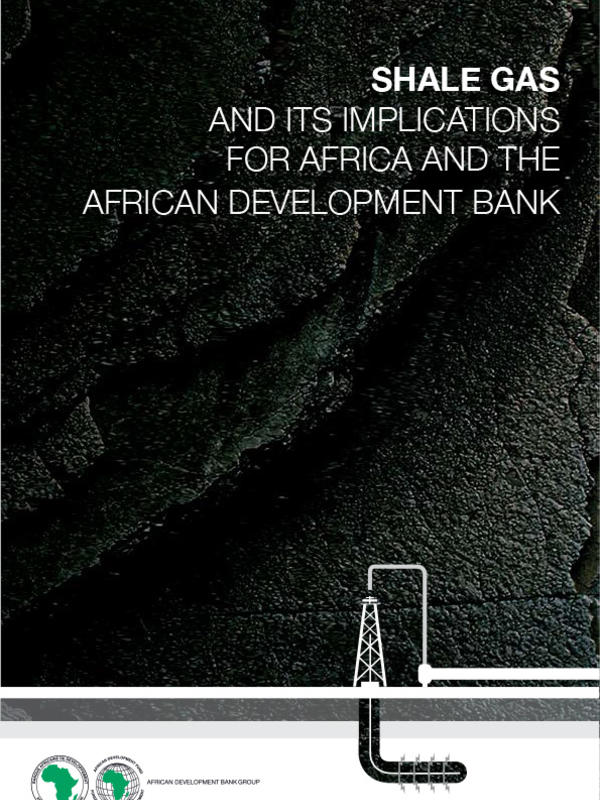
Shale gas and its implications for Africa and the African Development Bank

To better understand the “shale gas revolution” and its relevance to African countries, this report first describes actual experience with shale gas production in the United States, and then reviews a number of questions concerning shale gas production that are relevant to African countries. The report finishes by suggesting how the African Development Bank might work together with its client countries to assess the potential costs and benefits of developing shale gas where present.

View online/download
External Link

Analysis of gender and youth employment in Rwanda

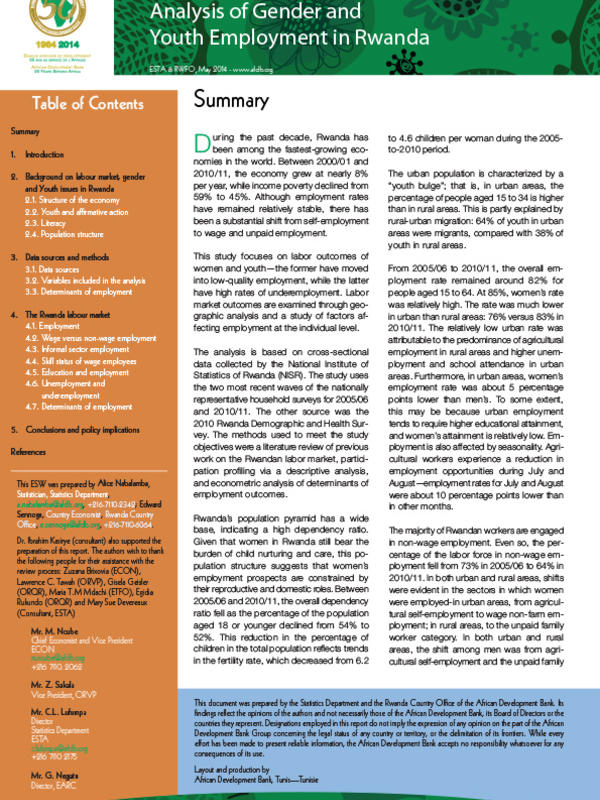
During the past decade, Rwanda has been among the fastest-growing economies in the world. Between 2000/01 and 2010/11, the economy grew at nearly 8% per year, while income poverty declined from 59% to 45%. Although employment rates have remained relatively stable, there has been a substantial shift from self-employment to wage and unpaid employment. This study focuses on labour outcomes of women and youth—the former have moved into low-quality employment, while the latter have high rates of underemployment. Labor market outcomes are examined through geographic analysis and a study of factors affecting employment at the individual level. The study concludes by setting out a set of policy implications.

View online/download
External Link

Tanzania’s seaports and transport corridors as development opportunity for east and southern Africa

Favorable economic growth prospects for the East and Southern Africa region will result in increased trade flows. This puts significant pressure on Tanzania’s port and transport infrastructure, suggesting the need to address trade gaps through interventions, which need to balance between infrastructure investment and institutional reform aspects. Specific investments should prioritize port development and transport corridor infrastructure to facilitate regional trade connectivity. Institutional upgrades can contribute to improve coordination in the hinterland access regime and encourage efficiency-enhancing reforms.

View online/download
External Link


Suggest a publication

Feel free to submit a publication.

Submit here