Languages

Topbar Menu EN

The SDG Fund is operationally closed. This site is alive for knowledge and dissemination purposes.
Warning: This website is closed. Be aware of phishing or social engineering fraudulent requests of payments or certificates. Explore our programme areas.
Please visit jointsdgfund.org
Search our database of publications


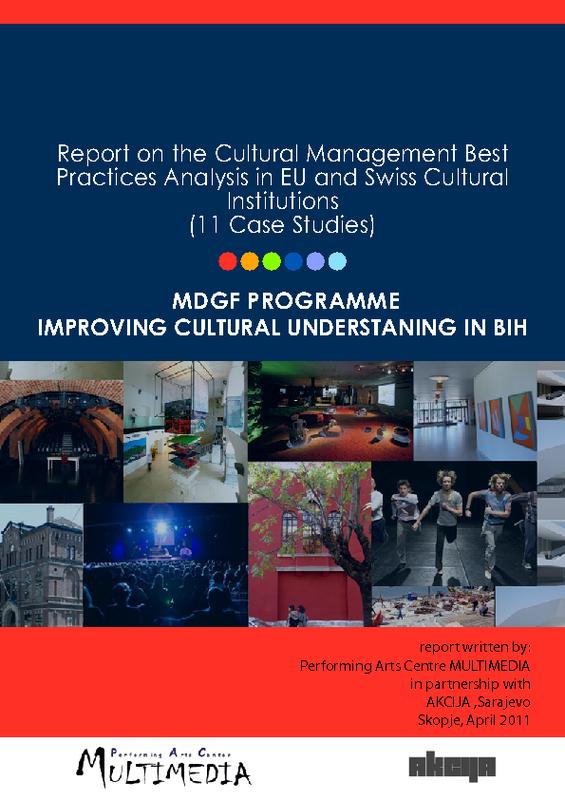
Report on the cultural management best practices analysis in EU and Swiss cultural institutions: 11 case studies

The main aim of this Report is to present the best practice regarding cultural management of the cultural institutions from EU and Switzerland that can serve as an instructive model of management practices for the cultural institutions in Bosnia and Herzegovina (BiH). It provides an overview on the management and structural models, methods, tools and strategies either already implemented in the recent past or being conceived for implementation of the strategic management visions of the selected institutions. The complexity and diversity of the cultural sector in EU and Switzerland implies that this report should be considered as a non-representative sample, rather than as a comprehensive overview of the situation in the cultural sector in the European Union and Switzerland as a whole. However, the trends identified within the 11 case studies compiled in this report and the key conclusions derived from them, offer informative and instructive insights for the BiH cultural organizations.

View online/download
English

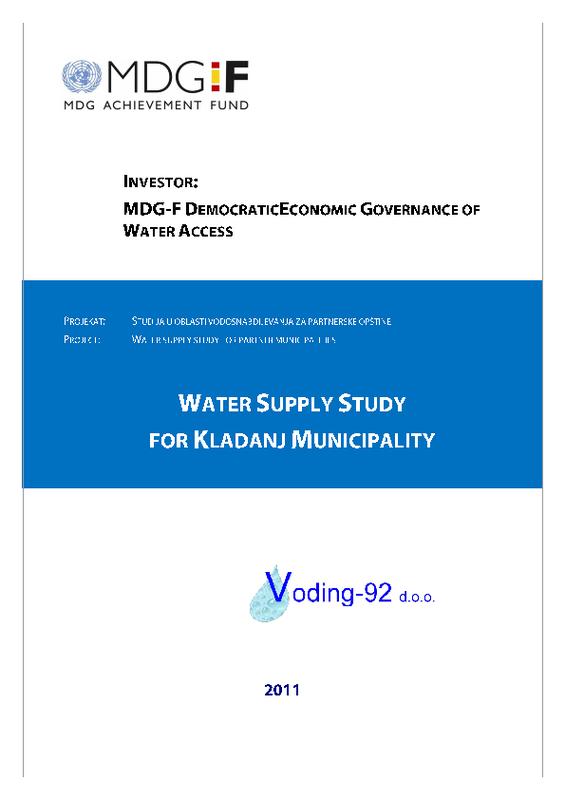
Water supply study, Kladanj

Kladanj Municipality lies in the Drinjaca river valley along the Zupanja-Tuzla-Sarajevo road in Bosnia and Herzegovina. This report has four main objectives: 1) provide a current situation analysis of the water supply system of Kladanj as well as an analysis of development projects, studies, project solutions and harmonization of development of water supply systems with development plans and projects, 2) draft a water supply master plan for partner municipalities, 3) prioritize a plan of investment measures for a period of 10 years, and 4) conduct a feasibility study for priority investment measures.

View online/download
English

Handbook to support dispute resolution in multicultural communities in Macedonia

The purpose of this Handbook is to provide an overview for citizens, local governments and community-based organizations on practices that can be used to resolve disputes in multicultural communities. This Handbook also aims to orient its readers with local resources that can be called upon to help resolve community-based disputes. It provides an easily accessible starting point for community leaders who wish to access experts to help mediate disputes. The Handbook also includes practical information on the different methods for dispute resolution, while including examples of success stories that result from such application.

View online/download
English

National and local capacities for strengthening inter-ethnic dialogue and collaboration in Macedonia

The findings and recommendations in this report are taken directly from a broad series of consultations with stakeholders at local and national levels in Macedonia aimed at supporting inter-ethnic dialogue and collaboration in the country. The process of assessing capacities included structured and informal meetings, focus group discussions, interviews and training sessions. Those involved were stakeholders from local and national government, Parliament, political parties, professional agencies, international and non-governmental organizations, the media, youth and women’s groups, the business community, as well as civic and religious leaders and academic and legal experts. This report provides information on the resources, practices, approaches and instruments available to various stakeholders, as well as recommendations for policy makers and community leaders on ways to enhance or build new frameworks and approaches to enhancing inter-ethnic dialogue within their communities.

View online/download
English

Baseline nutrition and food security survey for Albania

Over the past decade, the nutrition situation has improved greatly for many Albanians. Despite this progress, however, the nutritional status of the population, especially in certain areas of the country, remains a public health concern.The purpose of the survey was to 1) assess food and nutrition security, dietary diversity and food management practices in resource-poor households in order to plan and implement activities aimed at improving household food security and diets, 2) identify the main determinants of anemia in high prevalence areas in order to plan and implement targeted interventions to reduce and prevent anemia; and 3) create a baseline of knowledge, attitudes and practices on infant and young child feeding and care practices in order to help families and communities improve their nutrition practices.

View online/download
English

The economic consequences of malnutrition in Albania

Poverty, malnutrition, and poor child development are locked in a vicious cycle of poor health, lower learning capacity, diminished physical activity and lower work performance or productivity. As this cycle threatens health and survival, it simultaneously erodes the foundation of economic growth - people’s strength and energy, creative and analytical capacity, initiative and entrepreneurial drive. This document analyses risk such as mortality, morbidity, mental development and physical performance deficits in order to develop a scenario that describes the magnitude of national economic consequences from the malnutrition status quo in Albania.

View online/download
English

Assessment of the milling industry for the purpose of wheat flour fortification

Children in Albania face many challenges that affect their chances for a better start in life and reduce their potential to lead productive lives as adults. In spite of relatively low U5 mortality rates (22 per 1,000) and good exclusive breastfeeding rates in the first months of life, Albanian children face multiple nutrition problems including high rates of stunting and overweight, disparities in health and nutrition status and micronutrient deficiencies (IDD and IDA). It is considered that iron deficiency anemia counts for most of anemia cases. Increasing of the consumption of iron and other micronutrients through sustainable flour fortification of widely consumed foods has great potential for improving health and nutrition status of children and women. This assessment was done to help place nutrition and food security higher on the government agenda and design interventions focusing directly to the most vulnerable population groups.

View online/download
English

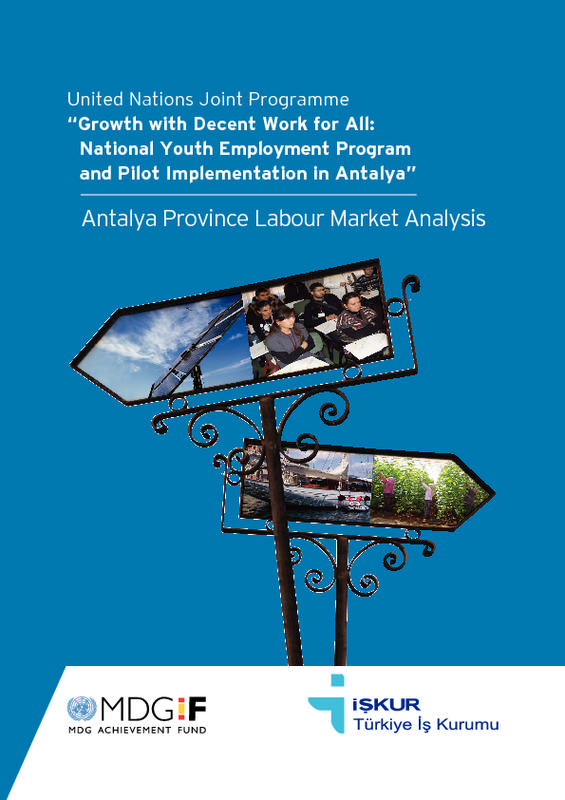
Antalya province labour market analysis

The MDG Achievement Fund (MDG-F) Joint Programme Antalya study was launched to identify priority sectors which have sustainable economic growth potential and potential for offering decent job opportunities particularly to youth, ten sectors were selected for their higher values in terms of labour and non-labour factors.

View online/download
English

Occupational outlook in Turkey

“Occupational Outlook in Turkey”, which is one of the national level outputs of the United Nations Joint Programme “Growth with Decent Work for All: A National Youth Employment Programme and Pilot Implementation in Antalya”, has been prepared to develop population, labour force and employment related projections for Turkey by using brand new data. The report is also intended to provide a basis for the regular publication of “Occupational Outlook” in the next years as a sustained endeavour.

View online/download
English

Vocational training programme in Antalya region of Turkey

This manual describes methodology, introduces the guiding principles, and suggests how to organise the overall vocational training programme for the cut flower sector. The purpose of the Vocational Training Programme is to develop the capacities and systems of local stakeholders to increase employment of vulnerable youth including young women and migrants in Turkey’s top migration receiving city, Antalya within the framework of the UN MDG-F Joint Programme: “Growth with Decent Work For All: A Youth Employment Program in Antalya”.The manual supports extension services in organization of vocational training programme aimed at increase of employment of vulnerable youth including young women and migrants.

View online/download
English

Migration and employment: Working life in Central Antalya, Turkey

This research was conducted under the United Nations Joint Programme “Growth with Decent Work for All: National Youth Employment Program and Pilot Implementation in Antalya” and funded by the MDG Achievement Fund. The research was conducted in Antalya with a view to investigate role of migration in labour market adjustment as well as to better understand effects of migratory flows on occupational changes in the labour market structure. Furthermore, the research aimed to identify factors contributing to the persis- tently high rates of unemployment and joblessness among youth in Antalya.

View online/download
English

Growth with decent work for all: national youth employment programme and pilot implementation in Antalya, Turkey

Since September 2009, the MDG Achievement Fund (MDG-F) Joint Programme: “Growth with Decent Work For All: A Na- tional Youth Employment Programme and Pilot Implementation in Antalya” carried out a series of activities nationwide and in Antalya to generate opportunities for decent work for the youth. The salient objectives of the Joint Programme were: to create a “National Youth Employment Action Plan”; to reduce unemploy- ment among young population, especially vulnerable members of migrant families; and increase the partici- pation of young women in the labour force in Antalya. This report talks about how within the three years of its implementation, the Joint Programme succeeded in creating a significant impact in Turkey and Antalya.

View online/download
English

Case Study on Ying Yang Bao: Improving complementary feeding for China’s children

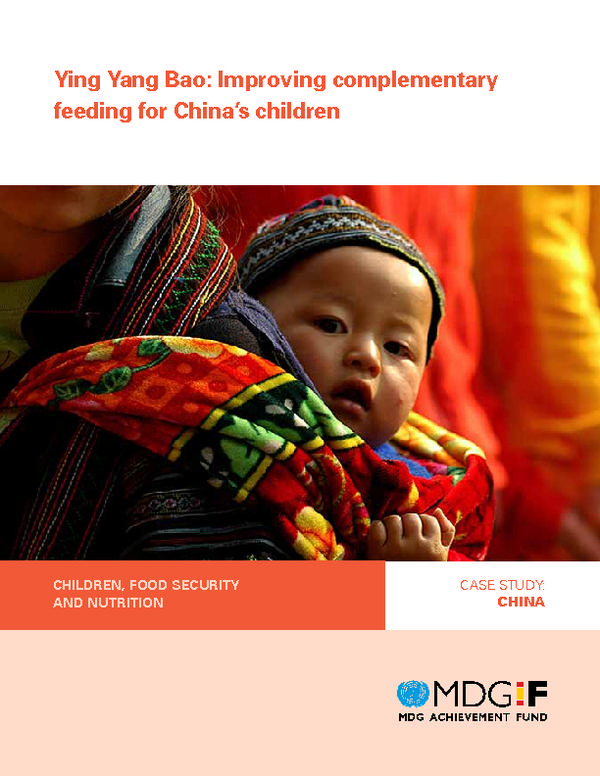
This case study discusses the effects of the micronutrient sachets ”Ying Yang Bao (YYB)” intervention under the MDG Achievement Fund's (MDG-F) Joint Programme's thematic area, "Children, Food Security and Nutrition". YYB developed by the Chinese scientists are an in-home complementary food supplement fortified with iron, zinc, calcium, VA, VD and other nutrients in soy bean powder base. Results of intervention trials with YYB and the project evaluation continued to indicate that YYBs can significantly reduce the anaemia incidence, and improve stunting and intellectual development.

View online/download
English

Point of use complementary food fortification with multiple micronutrient powders in the Philippines

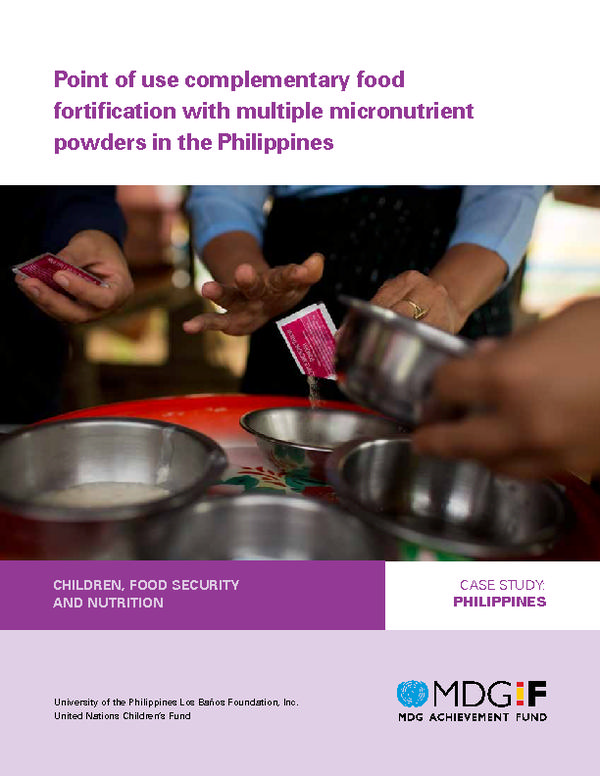
In support of the achievement of the objectives of the MDG Achievement Fund (MDG-F) Joint Programme on Ensuring Food Security and Nutrition for Children 0-23 months, this case study on the Point of Use Complementary Food Fortification with multiple micronutrient powders (MNPs) captures best practices as well as document lessons learned for purposes of generating knowledge and policy implications. As such, the case study addresses concerns in inter-agency and intersectoral coordination, national ownership and policy reform of the Complementary Food Fortification with Multiple Micronutrient Powders. To meaningfully assess Joint Programming as an approach, this study looked into the utilization concerns in complementary food fortification with multiple micronutrient powder at the household level.

View online/download
English

Case Study on Integrated data monitoring and referral systems for community-based management of acute malnutrition (CMAM) in Mozambique

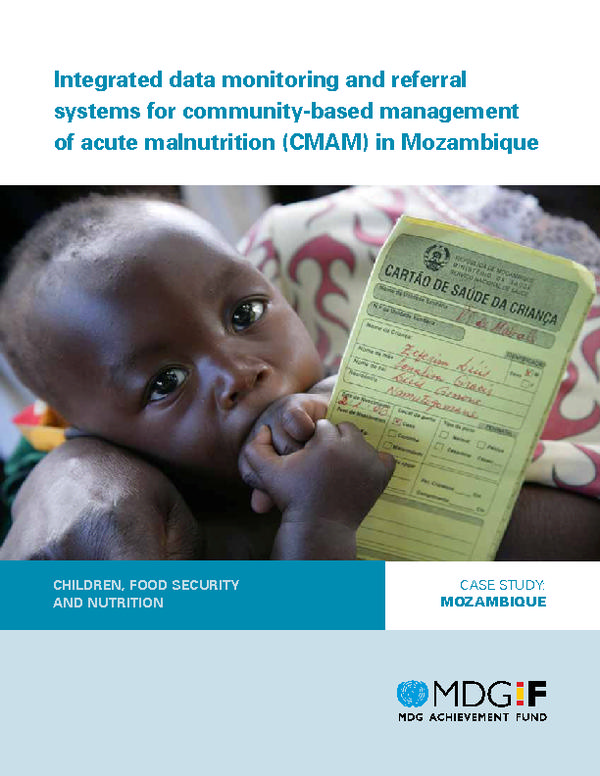
This case study documents the learnings on integrated data monitoring and referral systems for community-based management of acute malnutrition (CMAM) as implemented in the MDG Achievement Fund ( MDG-F) Joint Programme known as the Nutrition Rehabilitation Programme in Mozambique.

View online/download
English

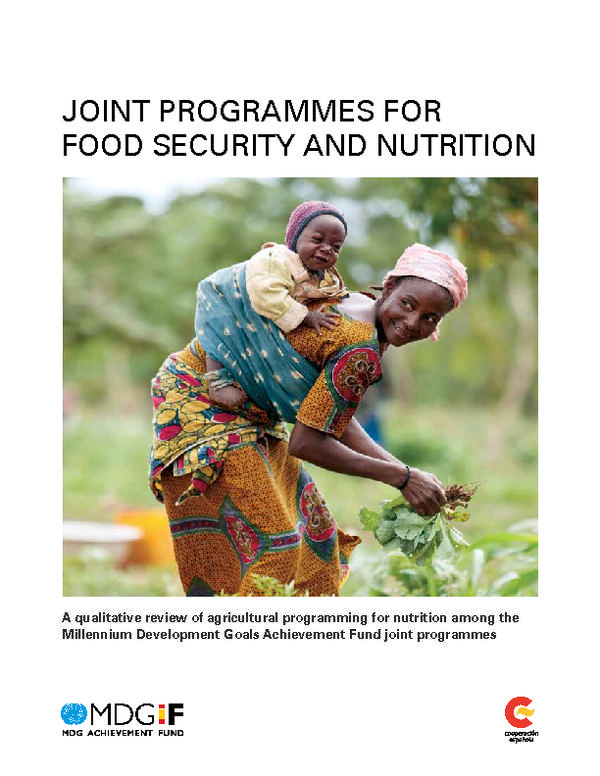
Joint programmes for food and nutrition security

This document presents a qualitative review of agricultural programming for nutrition among the Millennium Development Goals Achievement Fund (MDG-F) Joint Programmes.focuses on nutrition-sensitive agricultural activities among the MDG-F joint programmes. The specific objectives of this paper are to 1) provide policymakers and practitioners with an overview of the MDG-F joint programmes and how they integrated agricultural and nutrition-specific interventions, 2) determine the extent to which joint programmes’ designs incorporated the principles embodied in the ‘Synthesis of Guiding Principles on Agriculture Programming for Nutrition’, 3) discuss the challenges and lessons learned from the MDG-F’s experience in incorporating agricultural programming in joint programmes, and 4) make recommendations for the design for future joint programmes that integrate food security and nutrition in order to better synergize agriculture and nutrition activities. The review is the product of the joint efforts of the MDG-F and UNICEF to generate knowledge and provide evidence-based solutions for how to take a comprehensive look at the problem of malnutrition and food insecurity.

View online/download
English

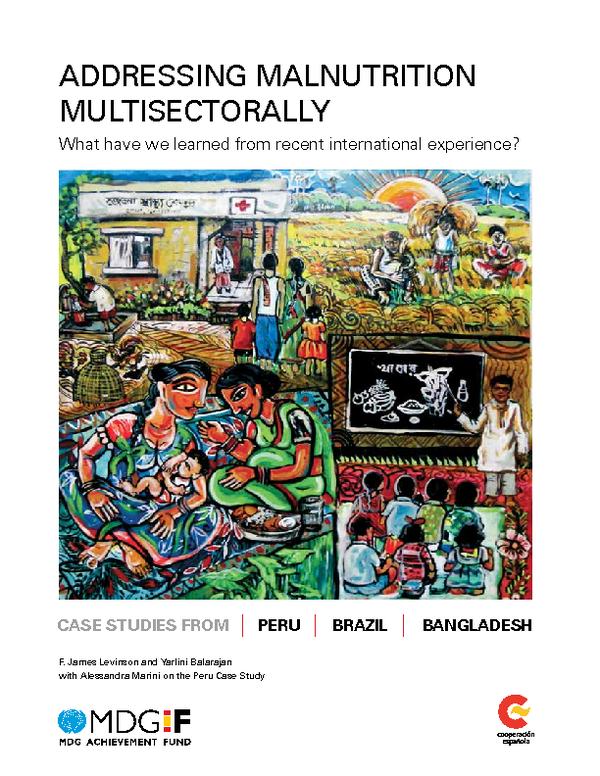
Addressing malnutrition multisectorially

This document is the product of the joint efforts of the MDG-F and UNICEF to generate knowledge and provide evidence-based solutions for how to take a comprehensive look at the problem of malnutrition and food insecurity.The findings from the case studies and a historical review of working multisectorally in nutrition in varied country contexts can be used to inform this new era of multisectoral nutrition programming. The lessons learned relate to the institutions and politics of working multisectorally; systems to promote vertical and horizontal coordination; and multisectoral programme design and monitoring and evaluation. This study confirms the principle of “Plan multisectorally, implement sectorally, review multisectorially”. The three cases presented –Peru, Brazil and Bangladesh–, while contrasting in many ways, offer lessons that, in the end, are not dissimilar.

View online/download
English

Joint programme on children, food security and nutrition in Afghanistan: best practices and lessons learned

Afghanistan is one of the most dangerous places for a child to be born. Its mortality rate for children younger than 5 years is ranked second in the world. Twenty five percent of children die before reaching their fifth birthday and more than half of all children are stunted. The Joint Programme on Nutrition and Food Security was designed to address the symptoms and underlying causes of under nutrition by supporting several government initiatives for addressing malnutrition. This report has identified and captured best practices and lessons learned in implementing a joint program that evolved from a consultation process with governmental counterparts, IPs, community structures and beneficiaries. It addresses challenges faced and can be used by practitioners that embrace a multisectoral approach to addressing nutrition and food security issues.

View online/download
English

Water supply study, Gracanica

Municipality Gracanica lies in the north-eastern part of Bosnia and Herzegovina. This report has four main objectives: 1) provide a current situation analysis of the water supply system of Gracanica as well as an analysis of development projects, studies, project solutions and harmonization of development of water supply systems with development plans and projects, 2) draft a water supply master plan for partner municipalities, 3) prioritize a plan of investment measures for a period of 10 years, and 4) conduct a feasibility study for priority investment measures.

View online/download
English

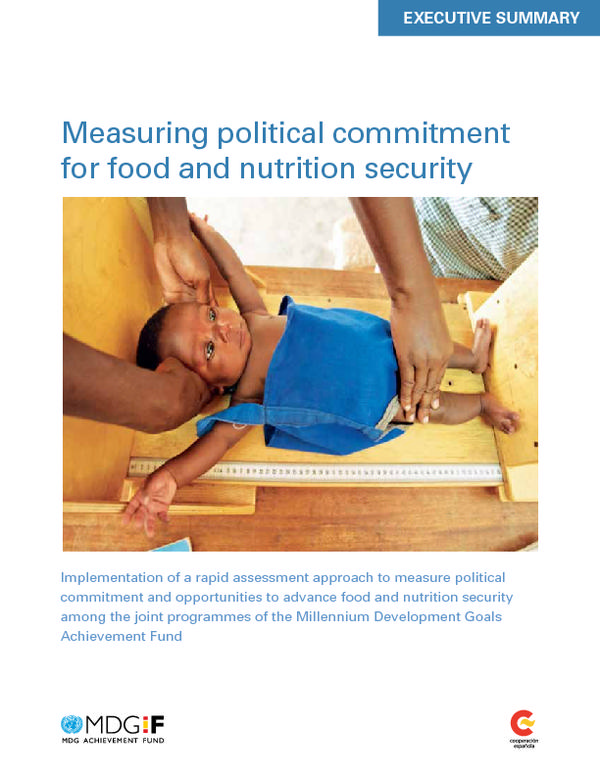
Measuring political commitment for food and nutrition security

This document is the product of the joint efforts of the MDG-F and UNICEF to generate knowledge and provide evidence-based solutions for how to take a comprehensive look at the problem of malnutrition and food insecurity. The MDG-F promoted integrated solutions to food insecurity and malnutrition. By bringing together the expertise of various UN agencies, the MDG-F programmes have put in place multisectoral approaches that include important issues such as nutritional education, equality and empowerment of women, agricultural production and health issues, among others.

View online/download
English

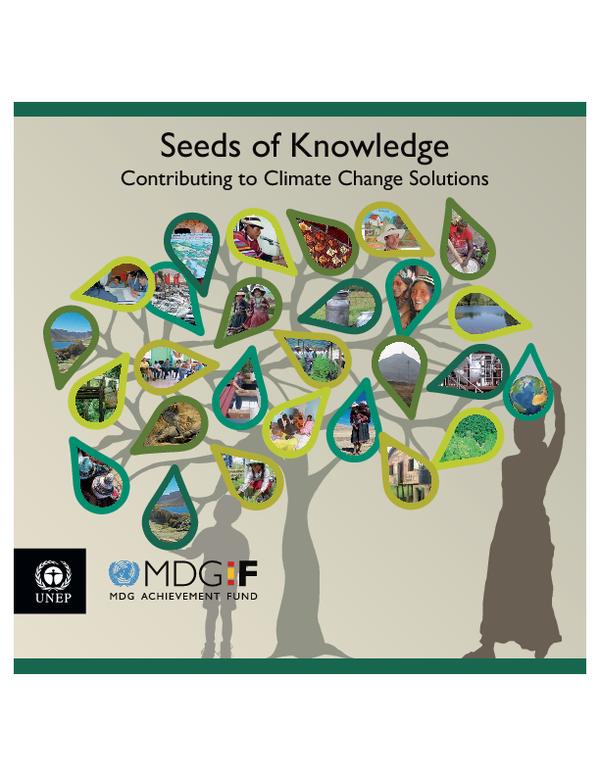
Seeds of knowledge: contributing to climate change solutions

The MDG-F has funded a wide range of projects intended to advance the achievements of the Millennium Development Goals and the implementation of the UN ‘Delivering as One’ reform. Under the Environment and Climate Change window of the MDG-F, 17 Joint Programmes ( JP) developed 53 lessons learned on climate change adaptation at national and local community levels. This booklet describes the experience that was gained and its impact at the global and policy-making levels.

View online/download
English

The value added of joint gender programmes: findings and recommendations to the wider community of UN agencies

The MDG Achievement Fund was designed to provide support through funding ‘windows’ linked thematically to the eight MDGs. The ‘Gender Window’ was allocated focused on gender equality and empowerment of women (MDG-3). This review demonstrated that Gender Window programmes were innovative in their approaches: designs were diverse and strategies interlinked and implemented through groupings of activities tailored to national needs and capacities. All 13 programmes displayed a common purpose and cohesion by aiming to meet the United Nations Development Group (UNDG) performance indicators for gender equality and women’s empowerment, and aligning with the United Nations Development Assistant Frameworks (UNDAFs) and national development plans.

View online/download
English

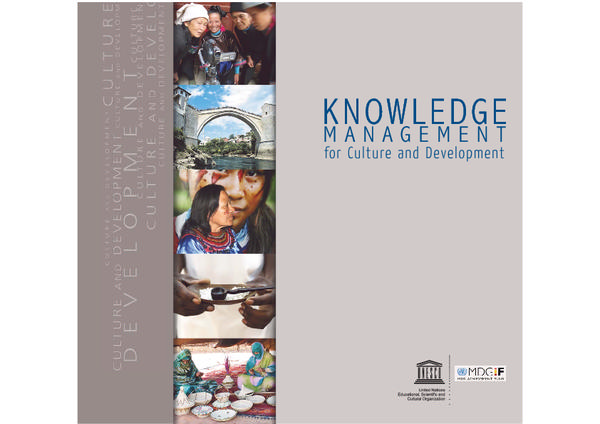
Knowledge management for culture and development

This report capitalizes on the multifaceted aspects of the experiences of the MDG Achievement Fund (MDG-F) and builds on knowledge gleaned from Joint Programmes’ project implementation, success stories and lessons learned, as this is crucial both to knowledge generation and to knowledge capitalization with a view to informing future cultureand development programming and policy.

View online/download
English

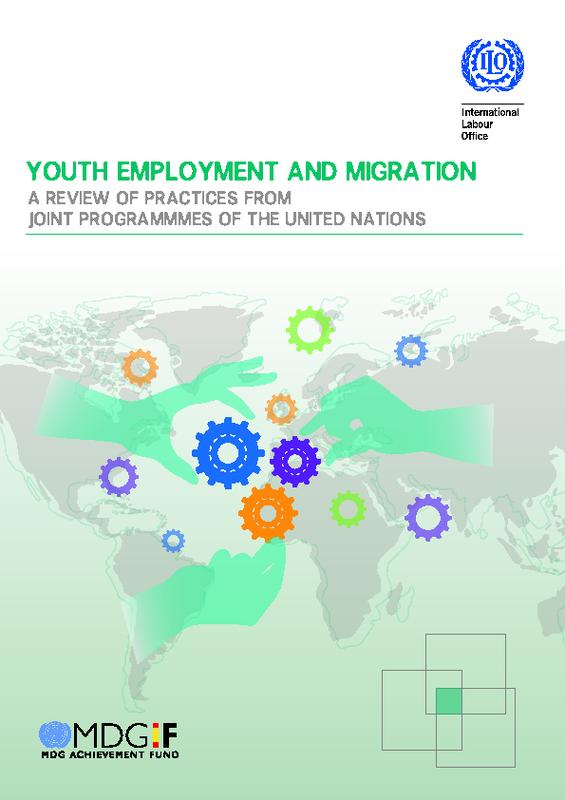
Youth, employment and migration: a review of practices from joint programmes of the United Nations

The youth employment and migration practices that are documented in this publication are a product of the Knowledge Management Facility on Youth Employment and Migration. The practices that are contained in this publication were presented and validated through a peer-review process that took place during two international workshops in 2011 and one in 2012. This publication identifies key features that characterize “promising practices” and identifies 13 practices that were identified that have the potential to contribute to the promotion of youth employment and good governance of youth migration. These practices summarize the results achieved and the lessons learned, as well as scaling up and replication potential.

View online/download
English

From global agenda to national action

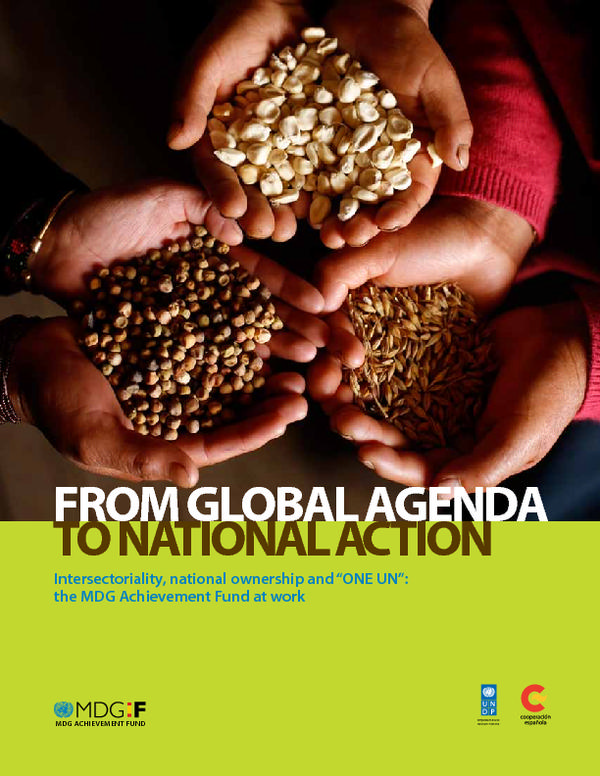
The purpose of this publication is to review and highlight the effectiveness of the MDG Achievement Fund (MDG-F) as a development cooperation mechanism. The MDG-F focuses on three features that distinguish it from other international mechanisms: (i) the promotion of intersectoral approaches to deal with complex development challenges with a view to accelerating the achievement of the MDGs; (ii) the implementation of the Paris Declarations principles, both at the national and local levels, as a tool for MDG achievement; and (iii) the enhancement of the UN system-wide coherence to increase coordination and effectiveness in supporting countries in achieving the MDGs. This research is divided into two parts. The first presents finding in relation to the three overarching goals outlined above, using evidence from programmes across the 50 countries in which the MDG-F has operated in the period from 2008-2013. The second part presents six in-depth country case studies. The research's policy implications may help national governments to reflect on innovative, intersectoral programmes that can contribute to achieving the MDGs and the future sustainable development goals. The report can also inspire the UN system to deepen system-wide coherence reform and reflect upon the added value of multiple-agency coordinated interventions. Finally, the paper can help international donor to consider the appropriateness of investing in intersectoral and joint initiatives at the country level.

View online/download
English


Suggest a publication

Feel free to submit a publication.

Submit here