Languages

Topbar Menu EN

The SDG Fund is operationally closed. This site is alive for knowledge and dissemination purposes.
Warning: This website is closed. Be aware of phishing or social engineering fraudulent requests of payments or certificates. Explore our programme areas.
Please visit jointsdgfund.org
Search our database of publications


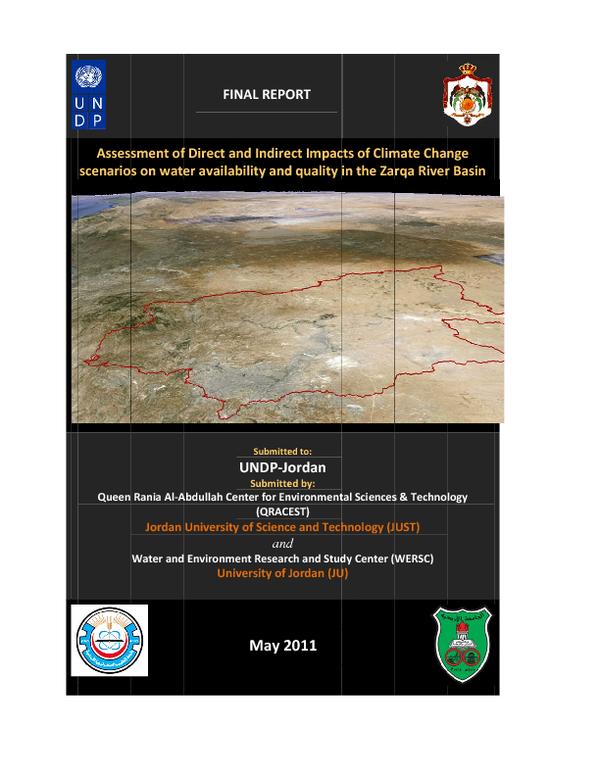
Assessment of direct and indirect impacts of climate change scenarios of water availability and quality in the Zarqa river basin in Jordan

The Zarqa River Basin is the second main tributary to River Jordan after Yarmouk River Basin, and thus one of the most significant basins in the country with respect to its economical, social and agricultural importance. This project aimed to strengthen adaptive capacity for health protection and food security to climate change under water scarcity conditions. This report provides the results of extensive statistical analysis that helped identify the expected impact of climate change on surface water availability, water quality and the impact on groundwater. Its estimates on future levels of precipitation and temperatures are given as well as recommendations to State officials for conducting future studies as well as an emphasis on the need to prioritize climate adaptation strategies despite its potential costs.

View online/download
English

Sharing water, sharing benefits: working towards effective transboundary water resources management

There were 276 transboundary water basins in the world at last count, covering around 45 percent of the globe’s surface. Competition often arises between stakeholders over limited water resources and many institutions lack the capacity to overcome conflicting approaches. As communities face escalating threats to water scarcity, water managers, politicians, and engineers must work together to ensure that water is managed in an integrated manner. Many solutions to water problems lie in better governance, with sharing water as one of the key challenges to be addressed. Although there is a growing literature in the field of water conflict resolution, many water professionals still lack the necessary tools to resolve water conflicts. UNESCO has thus partnered with the World Bank in the publication of this workbook, developed through training courses and seminars funded by the International Waters Window of the World Bank-Netherlands Water Partnership Program (BNWPP), with the goal of making the information available to a wider audience across the globe. The publication is meant for use by mediators, instructors, and facilitators in collaborative learning exercises. The material focuses on the skills necessary for managing water disputes at all levels, from the interpersonal to the international. It is organized into two parts. Part 1 is a Participant Workbook and Part 2 is an Instructor/Facilitator Manual

View online/download
English

Final report on Identify and screen adaptation measures to reduce climate change impacts on food productivity in Jordan

This study was conducted in the context of the UN/FAO activities for helping developing countries make progress towards the achievement of Millennium Development Goals (MDGs). These goals include reduction of poverty rates (MDG1), achieving adults literacy rates (MDG2), infant mortality rate (MDG4), access to water and to sanitation (MDG7). However, these achievements are undermined by the crippling water scarcity and aggravated by climate change, thus bringing about additional threats to health, food security, productivity and human security. The purpose of this study is to identify and screen adaptation measures to reduce climate change impacts on food productivity in Jordan. It begins with a review and evaluation of suitable measures that are applicable to Jordan, creates a baseline scenario and an adaptation scenario, and recommends appropriate measures based on lessons learned from previous interventions and the goals laid out in the adaptation scenario.

View online/download
English

Review evidence on minimum household water security requirements for health protection in Jordan

Identifying minimum water requirements for health protection is a very important concern, in particular to health authorities in Jordan, to avoid human suffering and distress. The relation between minimum water quantity and the health inside the household is not well established and affected by some confounding variables. This report aimed to determine more precisely, via a comprehensive review of literature and studies on this subject, what the relationship between water quantity and health is.

View online/download
English

Piloting and strengthening adaptation capacity to climate change in the Zarqa river basin in Jordan

Sediments and nutrients carried by the agricultural runoff are identified as the major source of Non-Point Source (NPS) pollution particularly in agricultural watersheds, such as Al-Kfair. Agricultural practices such as tilling make soil available to flow overland with storm waters, causing soil erosion which reduces crop productivity and adds sediments which act as a carrier and a storage agent for other kinds of pollutants such as phosphorous, nitrogen and organic compounds. This study aims to model the hydrological processes and assess the impact of land management practices on water quality and quantity of the Al-Kfair watershed using the Annualized Agricultural Non-Point Source Pollutant Loading Model. It identifies areas that are susceptible to soil erosion within the watershed and assesses the agricultural nutrient loadings that are responsible for water quality degradation.

View online/download
English

Adaptation to climate change in semi-arid environments experience and lessons from Mozambique

This document describes the experiences, successes and challenges being faced in implementing climate change adaptation interventions in one of the most remote districts where very few development agencies are operating. It identifies, at farm and community level, approaches that have been tested and applied and which have shown positive impact on productivity, broadening livelihood opportunities and improving resilience to climate change. It also draws attention to those interventions that are not so promising and whose sustainability and expansion are questionable. Valuable lessons learned are highlighted in several areas crucial for the success of future projects and programs in climate change adaptation. There is also an urgent need to fund and implement programs in support of national and local development plans that also serve to build climate resilience. This report will serve as a useful guide to policy-makers at all levels of government, field practitioners and international development partners (both multilateral and bilateral agencies) in the effort to find new approaches and innovations to address the serious and urgent challenge of climate change.

View online/download
English

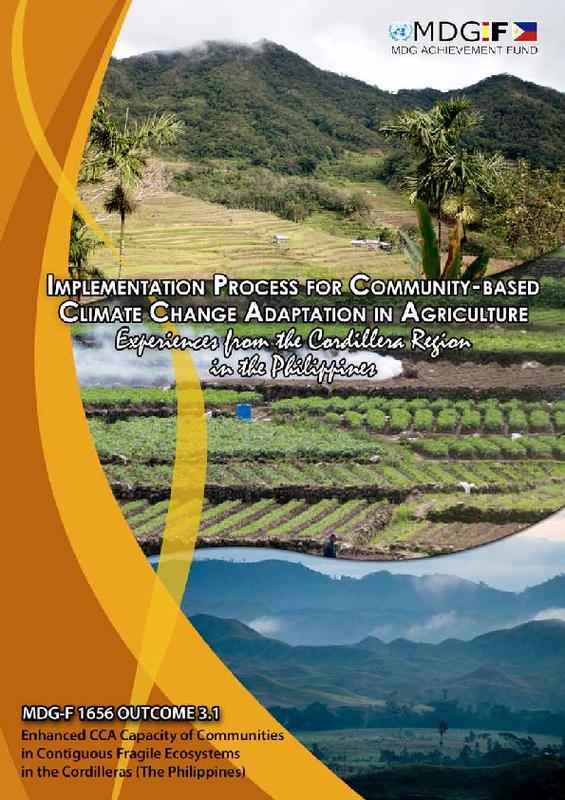
Implementation process for community-based climate change adaptation in agriculture in the Philippines

Climate change adaptation can be considered as a socio-institutional learning process. As climate change impacts change over time, adaptation cannot be a one-off intervention, rather, it should be understood as a flexible and iterative process. The objective of this document is 1) capture and document the different steps carried out in a UN joint programme project in the Philippines to serve as a model for other future community-based adaptation processes at the local level, and 2) document both facilitating and hindering factors in project implementation to allow continuous learning and adjustments during the project as well as to inform future projects. It concludes with identifying success factors and general lessons learned with regards to launching local adaptation processes.

View online/download
English

Farm operations monitoring manuals for climate change adaptation in the Philippines

This assessment was part of a larger project that aimed to address wastewater quality and soil irrigated with wastewater to provide support to national strategies and action plans for sustainable management of its natural resources, reducing poverty, and enhancing health indicators. There were 3 main objectives to this assessment: 1) Determine the impact of using wastewater under different climatic conditions on pollutants residue in soil and the impact of different climate on wastewater quality, 2) Define the impacts of global climatic change on soil properties and seepage water quality using inorganic and organic contaminants of the irrigation water quality, and 3) Define the microbial activities under different climatic conditions.

View online/download
English

Training toolkit for weather index based insurance in the Philippines

This document discusses the methodology of designing training modules for Weather Index Based Insurance (WIBI) product under the Climate Change Adaptation Project (CCAP) in a select few sites in Agusan del Norte, a province of Caraga region on Mindanao islands of Philippines. Weather index insurance is a ‘bet’ on the index formed from weather parameters. This toolkit provides an overview of index insurance and provides a training module based on a number of pilot projects that are trying to modify the traditional ‘top-down’ approach to teaching farmers about weather index insurance schemes.The goal is for the farmers to understand various risks posed by climate change to their agriculture portfolio, to understand the concept of crop insurance, and to understand some of the most fundamental concepts of index insurance like basis risk and index structure.

View online/download
English

A feasibility study on weather index based insurance in the Philippines

This document discusses feasibility of implementing Weather Index Based Insurance (WIBI) pilot under Climate Change Adaptation Project (CCAP) in a select few sites in Agusan del Norte, a province of Caraga region on Mindanao islands of Philippines. CCAP is a part of a larger initiative named “Joint Programme on Strengthening the Philippines’ Institutional Capacity to Adapt to Climate Change.” The objectives of this report were to 1) understand weather risks at various levels in the priority area of CCAP, 2) understand the availability of the data essential to create WIBI contracts at various levels, 3) propose best possible products in the current context and current season for areas of CCAP, and 4) comment on the way forward for the next seasons.

View online/download
English

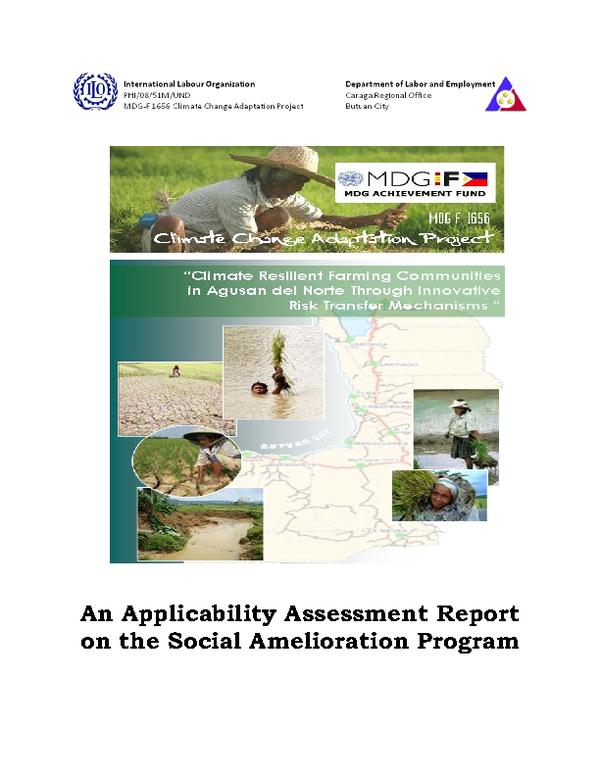
Climate resilient farming communities in Agusan del Norte, Philippines

This report was part of a project that aimed to develop and test financial safety nets for vulnerable populations, especially women, and to develop the capacities of vulnerable populations to participate and avail of the benefits under economic diversification and a democratized governance system. A component of this project was the Social Amelioration Program (SAP) which was an amelioration and welfare scheme for sugar workers derived from the contribution of the millers and planters in the Philippines. The results of the vulnerability and adaptation analysis and the farm value chain analysis were able to identify the different risk factors the pilot project sites and the farming communities are susceptible to. It concludes with recommendations on how to ensure success in the administration of the Social Amelioration Program.

View online/download
English

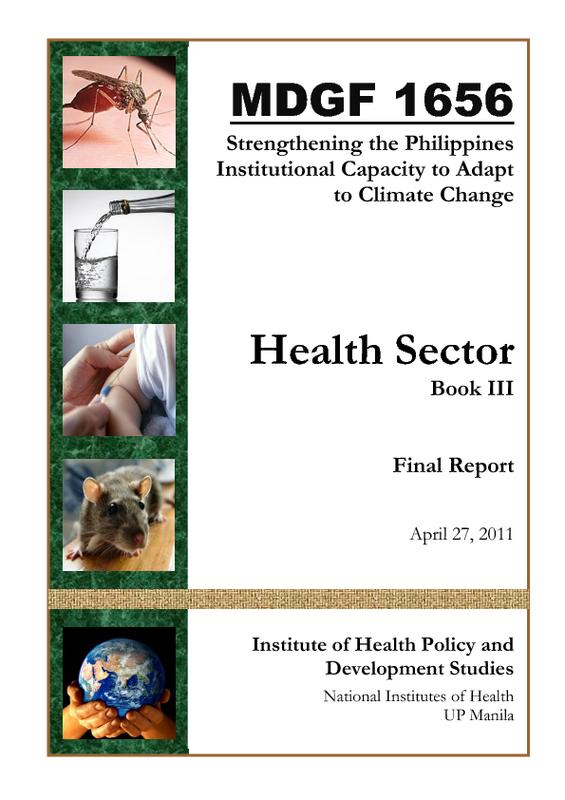
Strengthening the Philippines institutional capacity to adapt to climate change: Health sector, Book III

In the Philippines, improving maternal health has been identified as the most likely MDG not to be achieved by the target date as the decrease of maternal deaths has been decreasing too slowly to meet targets. Due to poor health, child health is also in jeopardy. Since climate change has been identified to exacerbate the effects of poor health, ineffective mitigation and adaptation are expected to make maternal and child health more fragile. Moreover, climate change is also expected to exacerbate vector borne diseases such as malaria, dengue and leptospirosis. This is the third book of a four book final report. It is a compendium of good and innovative climate change adaptation options for the health sector and has been taken from extensive reviews of literature and actual site visits. These practices have been identified as being applicable in the Philippine setting.

View online/download
English

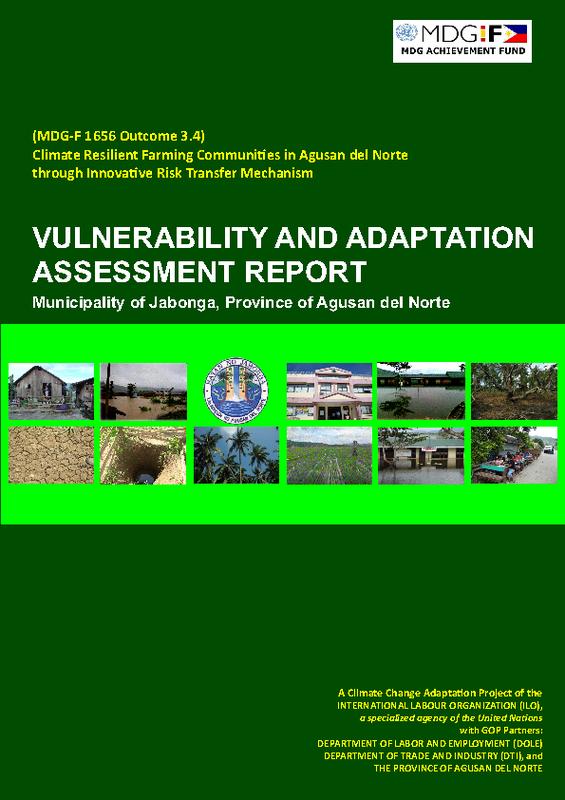
Vulnerability and adaptation assessment report, Philippines

A Vulnerability and Adaptation (V&A) Assessment takes stock of area characteristics, current and observed climate changes impacts along with natural hazards; and adaptation strategies employed in response to these, as well as looks at climate change scenarios for a particular locality. It is a risk assessment and looks at alternative adaptation coping capacities with respect to the likely risk scenarios. This V&A assessment is part of a bigger project on innovative financing and insurance schemes of the ILO CCA Project. This assessment is viewed to characterize the municipality’s climate change vulnerabilities, current adaptation strategies and point to adaptation options for the future.

View online/download
English

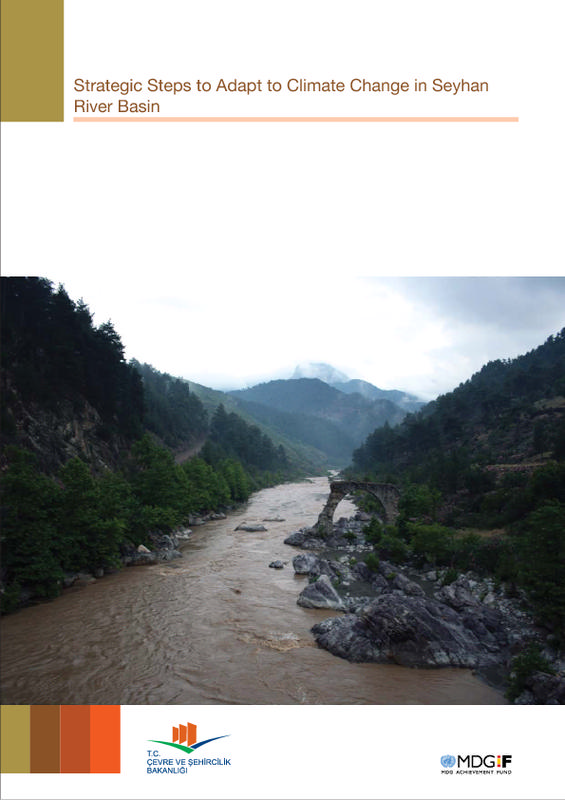
Strategic steps to adapt to climate change in Seyhan river basin in Turkey

This document outlines strategic steps and priorities in order to create a successful climate change adaptation strategy in Turkey. The Seyhan River Basin has a semi arid climate and is facing increasing drought risk, reduced amount of water per person, flood and inundation risks induced by heavy precipitation, desertification, degradation in various ecosystems and loss of biodiversity. Strategic steps focus on five areas: 1) water resources management, 2) agricultural production and food security, 3) ecosystem services, biodiversity and forestry, 4) natural disaster risk management, 5) public health.

View online/download
English

Preliminary ecological assessment of Seyhan river basin in Turkey with reference to climate change predictions

The purpose of this report is to provide the ecological background for a Joint Programme whose core objective is to develop capacity for managing climate change risks to rural and coastal development in Turkey. This report sheds light on the natural resources in the Seyhan Basin, prioritizes them in terms of their biodiversity importance, assesses climatic threats to them, and finally provides recommendations for their management for their adaptation to the climatic changes.

View online/download
English

Enhancing the capacity of Turkey to adapt to climate change: participatory vulnerability analysis

In the Fourth Evaluation Report of the Intergovernmental Panel on Climate Change (IPCC) it is indicated that temperatures in Turkey, on average, are estimated to increase by 2.5-4 degrees celsius. The IPCC report and other national and international scientific modeling studies demonstrate that Turkey will get hotter, more arid and unstable in terms of precipitation patterns in the near future. This document is the result of a participatory vulnerability analysis (PVA) carried out in 11 provinces in Turkey from 2009-2010. It analyzed the impacts on relevant sectors or themes in changing climate conditions, sustainability levels of ecosystem services and natural resources, and the preparedness level against natural disasters originating from the climate was observed. These results represent an important input to the development of a national adaptation strategy for Turkey. This report describes the methodology, conclusion, and recommendation associated with the PVA. Such information is vital to identify and prioritize adaptation strategies as well as develop a national policy framework for managing the risks associated with climate change.

View online/download
English

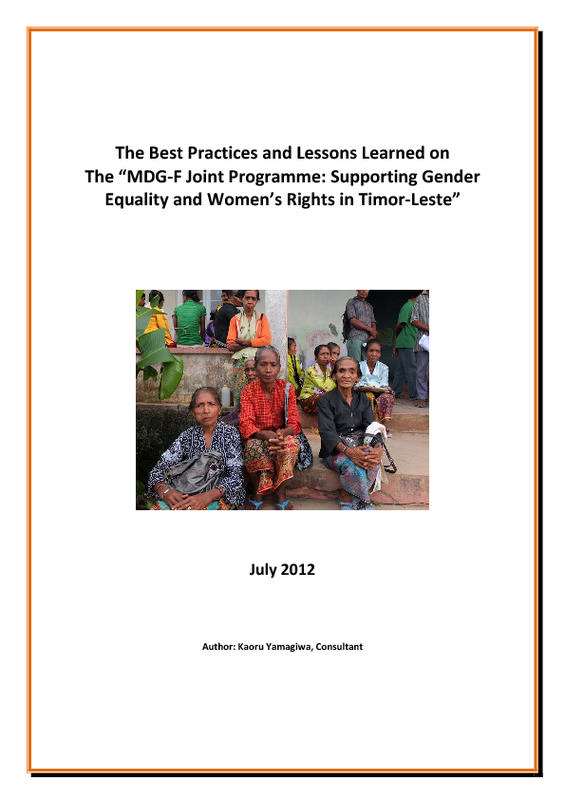
The best practices and lessons learned from the MDG-F joint programme: Supporting gender equality and women’s rights in Timor-Leste

This documentation presents seven case studies implemented under the MDG-F Joint Programme ‘Supporting Gender Equality and Women’s Rights in Timor-Leste’ from which lessons can be drawn as good practices, enhancement, replication, or up-scaling of similar initiatives in the future. The sustainability of the initiatives is taken into account and the document concludes with lessons learned (strengths and weaknesses) that are important for UN agencies and practitioners that continue to support the government in their efforts to achieve gender-equality.

View online/download
English

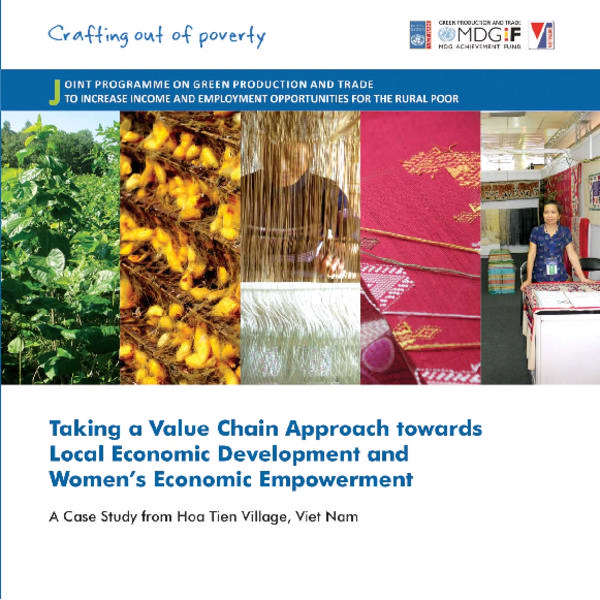
Taking a value chain approach towards local economic development and women's economic empowerment in Vietnam

Recognizing the need to increase income and to promote employment opportunities for the rural poor in Viet Nam, the Government of Viet Nam and the United Nations launched a Joint Programme on Green Production and Trade to Increase Income and Employment Opportunities for the Rural Poor in 2010. The programme supports the handicrafts sector, recognizing its importance as a major source of income for smallholder farmers and landless poor, and has a high potential for creating employment opportunities in rural areas by promoting entrepreneurship and sustainable production. This document presents the experience of the programme in strengthening the Sericulture value chain in Quy Cahu district of Nghe An province and shows how strengthening the value chain contributed to economic empowerment of women and their negotiation power, increased income and employment opportunities in rural areas, and preservation of the environment and local ethnic minority traditions. This document zooms in on the Hoa Tien Textile Cooperative, a group of women weavers that belong to the Thai ethnic minority.

View online/download
English

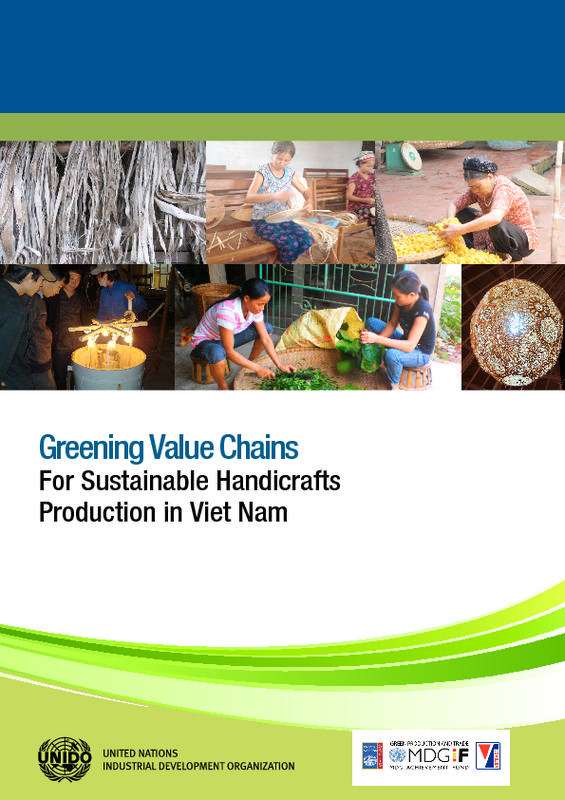
Greening value chains for sustainable handicrafts production in Vietnam

The environmental impacts of crafts production by households and Micro, Small and Medium Enterprises (MSMEs) are often considered negligible given the scale of their operation, yet taking into account their sheer sheer number, use of natural materials and limited capabilities, their production practices should also be appropriately addressed. This study analyzes a comprehensive, integrated and coordinated intervention to “green” five value chains in Viet Nam, respectively in the: bamboo and rattan, seagrass, sericulture and silk, lacquerware and handmade paper sectors. This publication includes examples and case studies that show, with concerted effort and application of local and international knowledge, cleaner production techniques can be made practical, applicable and cost-effective for crafts-producing households and MSMEs.

View online/download
English

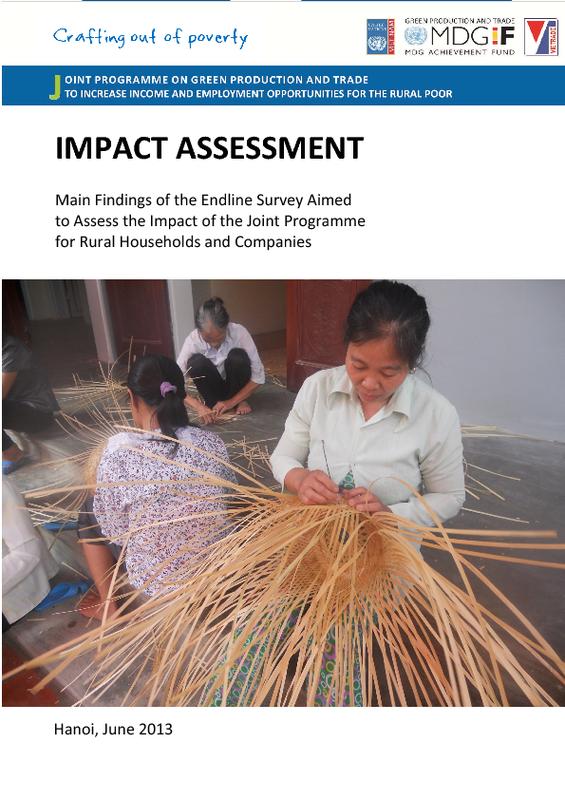
Impact Assessment Study on joint programme on green production and trade in Vietnam

This report details the processes behind a programme that increased income, enhanced productivity and created a significant number of jobs throughout the handicraft supply chain in Northern Vietnam. The programme applied a value chain approach to develop a better integrated, pro-poor and environmentally sustainable “green” value chain. The programme’s successes in enhanced productivity and increased employment stem from two main outputs: the introduction of innovative equipment & tools to craft producers and capacity building activities in support of SME’s. As a result, two local provinces are mobilizing funding for the up-scaling and replication of these activities, specifically focused on the bamboo/rattan and sericulture value chains.

View online/download
English

Rapid assessment of the impact of the global economic crisis on the apparel and footwear industry in Albania

The apparel and footwear industry flourished in Albania during the early 1990’s when Italian companies started to explore the Albanian market. After gradually testing the variety and quantity of product lines, many enterprises were established and grew from small units into large consolidated companies. Two key comparative advantages were the relatively cheap and abundant labour force and the proximity to important world markets of apparel and footwear. This study shows the impact of the crisis on the industry, explores the measures that were taken in response to the crisis that helped cushion its impact, and offers recommendations for policy makers, industry leaders and practitioners such as the need to move up the value chain of production and marketing in order to increase profit margins and cushion the sector against future shocks.

View online/download
English

Practical guide to employment counselling from Bosnia and Herzegovina

The purpose of employment counselling is to help individuals come to terms with their feelings, explore and clarify their options and to empower them to actually help themselves. It is a mechanism for building self-reliance in an individual by assisting them to make decision and fulfill commitments. This guide aims to help counsellors understand the best practices, as well as limits, of employment counselling. It provides an overview of the whole process followed by a step by step guide to the 4 stages of a counselling interview.

View online/download
English

Non-enrolment and school dropout in Bosnia and Herzegovina

This study is part of the Youth Employability and Retention Programme (YERP) which aims to address the high level of youth unemployment and irregular migration by working closely with government, the private sector and civil society to improve youth employability in BiH, while providing new entry points to the labour market. It analyses the results of a comprehensive survey that identified the most frequent causes for non-attendance of primary and or secondary school. It attempts to answer the imposing question as to what the Government should do in order to reduce the rate of children who do not complete primary education and offers recommendations to policy makers. An example would be the need to make primary education truly free by including the provision of textbooks, and notebooks for every pupil as well as free meals and school transportation.

View online/download
English

Voices of youth: quantitative research findings of survey on youth in Bosnia and Herzegovina

The Voices of Youth survey was carried out in 2012 within the UN Youth Employability and Retention Programme. The purpose of this project has been to conduct a survey that can serve as a baseline for the development of more adequate youth policies as well as to enable young people to participate more actively in society. This survey examines the experiences, attitudes, opinions and wishes of young people in terms of education, employment and the labour market, the economic situation, the level of social protection, political and other forms of social participation and other related issues. Its findings are intended to help UN agencies, policy makers and development practitioners in Bosnia and Herzogovina (BiH) plan new youth oriented social policies that will address the existing challenges that face young people in BiH today.

View online/download
English

Research report on migrant workers in high-risk industry in China

This report is a result of a survey in the four Chinese cities of Hangzhou, Tianjin City, Jiaozua and Cangzhou. Nearly 1,000 questionnaires were received and more than 100 interviews were conducted with department leaders who are familiar with the construction industry, HR of construction companies, as well as NGO practitioners working for migrant workers. The construction industry was the focus of this survey due to its high risk nature and because over 75% of workers are migrant workers. The survey explores characteristics such as employment status, training status, and other basic characteristics such as age and income.

View online/download
English


Suggest a publication

Feel free to submit a publication.

Submit here