Languages

Topbar Menu EN

The SDG Fund is operationally closed. This site is alive for knowledge and dissemination purposes.
Warning: This website is closed. Be aware of phishing or social engineering fraudulent requests of payments or certificates. Explore our programme areas.
Please visit jointsdgfund.org
Search our database of publications


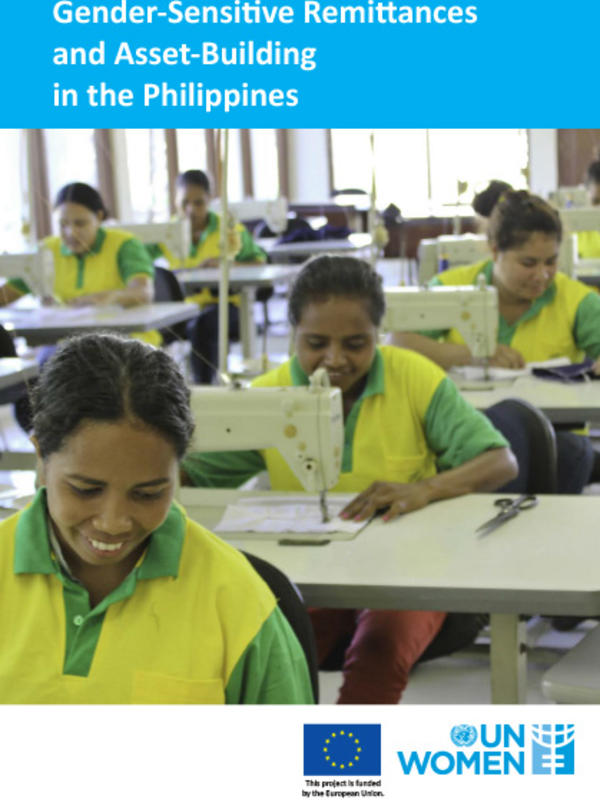
Gender sensitive remittances and asset-building in the Philippines

This publication aims to add to the remittances for development discourse, as an input into policy, programme and services development. It offers information and sex-disaggregated data on remittance flows, patterns, recognizing the differences between women and men as senders and recipients of remittances. The study considers how these gender dimensions intersect with specific social and economic contexts so that programmes are responsive to the needs at different levels – local, national, international, as appropriate and in a collaborative manner among key stakeholders. The study recommends emphasis on the meaningful participation of women migrant workers in decision-making processes on remittance-oriented initiatives, not merely as remittances senders and investors but beneficiaries and protagonists of development.

View online/download
External Link

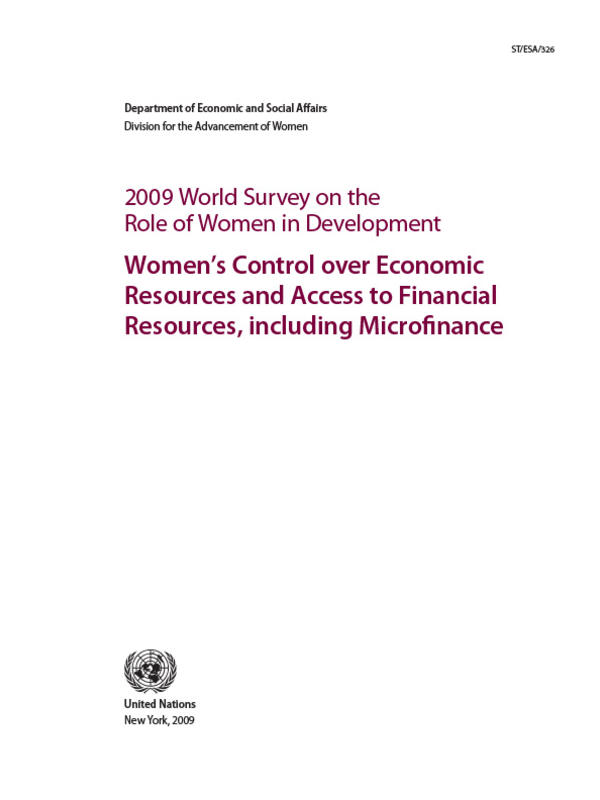
2009 World survey on the role of women in development

The World Survey on the Role of Women in Development is the flagship publication of the United Nations Division for the Advancement of Women. It is presented to the Second Committee of the General Assembly at five-yearly intervals. The 1999 World Survey focused on globalization, gender and work and the 2004 World Survey addressed women and international migration. The General Assembly requested the Secretary-General to update the World Survey on the Role of Women in Development for the consideration of the General Assembly at its sixty-fourth session; noting that the survey should continue to focus on selective emerging development themes that have an impact on the role of women in the economy at the national, regional and international levels. The theme for the World Survey in 2009 is “Women's control over economic resources and access to financial resources, including micro-finance”.

View online/download
External Link

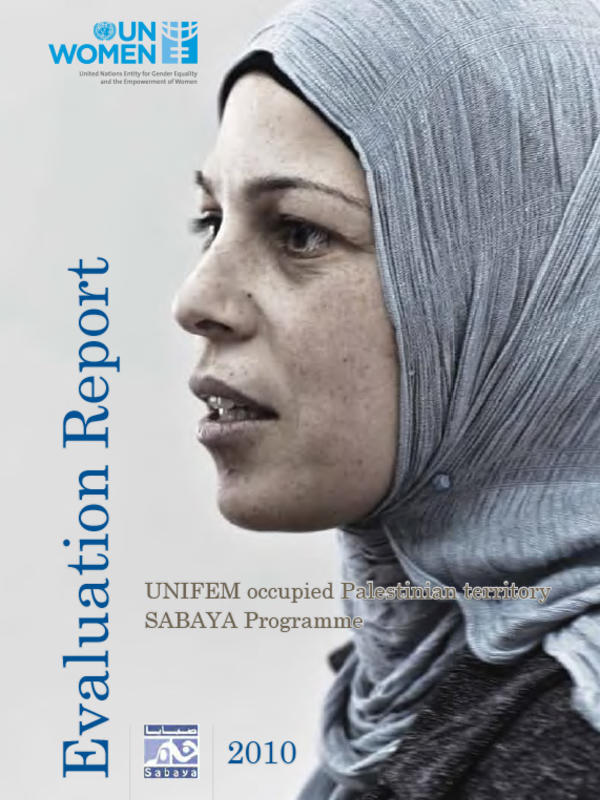
Occupied Palestinian territory Sabaya programme evaluation report

Initiated in 2004 in partnership with the United Nations Development Programme (UNDP), Sabaya was UNIFEM's (now UN Women's) largest programme in the occupied Palestinian territory, benefiting more than 25,000 Palestinian rural and marginalized women both in the West Bank and Gaza Strip. Through the establishment and rehabilitation of women's centres, the four-year programme empowered and protected rural women by developing their skills socially, economically, academically and legally, thereby promoting their participation in decision-making within their communities. It now has become a model for community development. Conceived as a tool to support the work of development practitioners, the UN Women Sabaya Programme Evaluation Report sets forth lessons learned and key recommendations for the implementation of community-based women's development programming. It aims at promoting community-led initiatives for advancing women's human rights and eliminating gender inequality through the generation of intervention models like Sabaya.

View online/download
External Link

Exploring the dynamics and vulnerabilities of HIV transmission amongst sex workers in the Palestinian context

This publication aims to emphasize the importance of strengthening the current national HIV and AIDS policy in the oPt, dispel stigmas attached to sex work and call for greater efforts to prevent sexual exploitation and support reintegration. The operational research publication features inputs and testimonies collated from 243 respondents (28 sex workers, 63 key informants, 64 clients, and 88 university students) during face-to-face interviews and focus group discussions from March to June 2010. It provides a formative look into sex work in the West Bank (including East Jerusalem). Through the collection of both quantitative and qualitative data from individuals with primary or secondary knowledge on sex work, the research serves to address the protection gaps pertaining to this issue and associated vulnerabilities to HIV and AIDS in the oPt.

View online/download
External Link

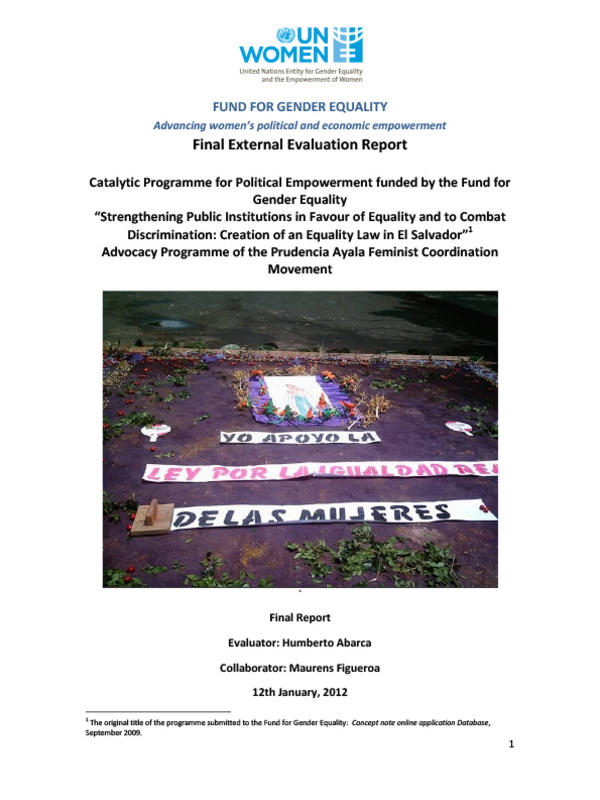
Final external evaluation report:“Strengthening public institutions in favour of equality and to combat discrimination: creation of an equality law in El Salvador”

The publication provides findings from the recent evaluation of 'Strengthening Public Institutions in Favour of Equality and to Combat Discrimination: Creation of an Equality Law' in El Salvador, a programme supported by UN Women's Fund for Gender Equality. It is hoped that readers will benefit from the experience of the programme and its efforts that successfully contributed to the recent approval of the Equality Law in El Salvador. This report details the communication, alliance-building and advocacy strategies that contributed to the new law . Conclusions, lessons learned and recommendations are outlined to support similar initiatives and activities for passing national laws on gender equality around the world.

View online/download
External Link

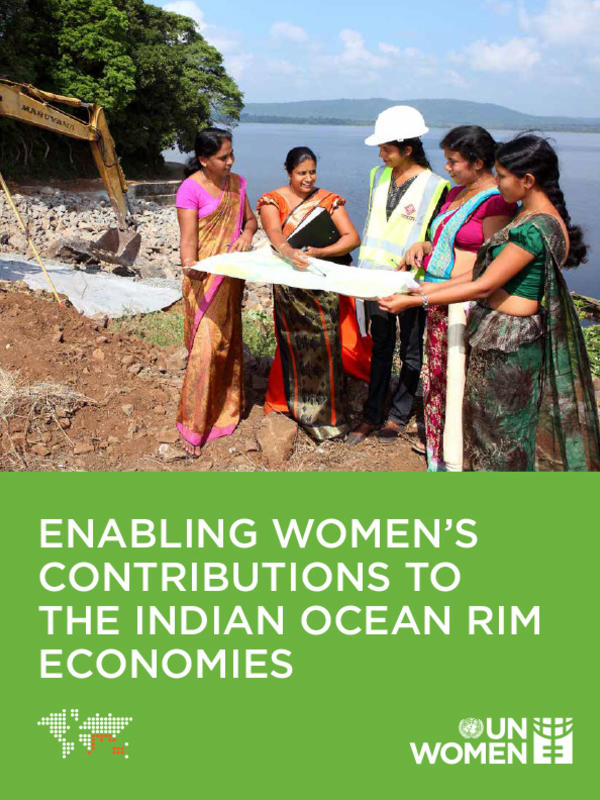
Enabling women’s contributions to the Indian Ocean Rim economies

The Indian Ocean Rim Association (IORA) represents one of the world’s most diverse and dynamic regional communities. While the people of the Indian Ocean Rim come from a variety of backgrounds, they rely on interconnected environments, institutions and markets for their livelihoods. They are united by a shared commitment to the prosperity of the region through inclusive, sustainable economic growth and women’s economic empowerment. This report identifies some of the key trends and critical issues for the Indian Ocean Rim Association Member States to address in support of women’s substantive gender equality and economic advancement. It provides an overview of existing data on key aspects of women’s economic empowerment in Indian Ocean Rim countries using publicly available and comparable data. The report develops a simple baseline, primarily using data from 2010 onward in some of the areas that describe women’s participation in the economy and their opportunities for advancement in business and economic leadership. It also explores some of the key enabling factors that support women’s increased labour force participation and are associated with improvements in the terms and conditions of their employment, leadership and entrepreneurship.

View online/download
External Link

Gender, remittances and asset accumulation in Ecuador and Ghana

The central question motivating this study is whether processes of migration can contribute to women’s economic autonomy by facilitating their acquisition of physical and financial assets, either as migrants or as managers of remittances sent to their households. Drawing on representative national-level household asset surveys for Ecuador and Ghana, the authors find that 24 per cent of all households with migrants in Ecuador and 17 per cent in Ghana have acquired at least one asset through the use of remittances, predominantly international remittances. In Ecuador, where international migration is gender balanced, male and female international migrants are equally likely to send remittances to their households of origin; in Ghana, men are much more likely to be international migrants than women and predominate among the remitters. Remittances have contributed towards strengthening women’s ownership of assets (especially consumer durables) in both countries. In Ghana, most businesses acquired with remittances are owned by women, as are the majority of the residences so acquired. In Ecuador, women managers have benefited through the build-up of their savings and as joint owners of the homes built with remittances; also, return female migrants are more likely than their male counterparts to have acquired a home through their use of savings earned abroad. Nonetheless, a minority of migrant women and female remittance recipients are able to acquire assets. Enhancing the capacity of migrants to channel their foreign savings towards asset accumulation will require policy interventions at various levels, including a focus on their conditions of employment in destination countries (see Sustainable Development Goal, recommended SDG 8.8); reducing the cost of remittance transfers (recommended SDG 10.c); and specific policies to facilitate the acquisition of assets in the home country (recommended SDGs 1.4 and 5.a).

View online/download
External Link

Gender and financial inclusion through the post

Women form a disproportionately large share of the world’s unbanked population. Gender inequalities in employment and earnings mean that women have lower incomes, making them less able to open accounts in formal financial institutions. Moreover, women frequently do not have the collateral necessary to seek out loans from the formal financial sector. These factors combined with discrimination against women in financial markets mean that women are far less likely than men to have checking or savings accounts in their own names. Women’s microcredit and savings and loans groups have become important components of the development agenda in many countries. However, these groups have not been able to build the long-lasting linkages to formal financial institutions (FIs) necessary to scale up their access to funds and grow independently of non-governmental and aid organizations. The role of post offices in banking women has, however, gone largely unnoticed in this analysis. This paper investigates the extent to which financial services offered through posts may serve women in the developing world better than FIs. We find evidence that posts do seem to include women to a greater extent than FIs. The empirical analysis suggests that this is partly a function of widely distributed postal networks and the lower transactions costs in combination with cheaper services offered by the posts. We also find some evidence that this outcome may be a result of greater discrimination against women by FIs rather than systematic outreach to women by the posts. We conclude that a more deliberate attempt at the financial inclusion of women by postal operators has the potential to yield even more success in this regard.

View online/download
External Link

The Mehwar Centre: evaluation of policies and procedures

The Mehwar Centre opened its doors in February 2007 with the mission to address gender- based violence in the occupied Palestinian territory (oPt). Since its opening, the centre has sheltered approximately 150 women and 40 children victims of violence. In 2010, after three years in operation, UN Women and the Palestinian Ministry of Social Affairs agreed to conduct a comprehensive review of the centre's policies and procedures in order to assess their effectiveness, efficiency and compliance with human rights standards, with the broader goal of developing them into a model for the establishment of other centres supporting women victims of violence in the oPt. The evaluation findings highlight achievements and results, as well as gaps and shortfalls in the formulation and/or implementation of the Mehwar Centre's policies and procedures. Based on these findings, comprehensive suggestions and recommendations were given for their improvement. Five priority areas were identified for focused action.

View online/download
External Link

Final external evaluation report:“Dalit women’s livelihoods accountability initiative” in India

This publication provides findings from the recent evaluation of the 'Dalit Women's Livelihood Accountability Initiative' supported by the UN Women's Fund for Gender Equality and illustrates how the programme contributed to changing the lives of marginalised Dalit women in Andhra Pradesh and Uttar Pradesh in India. As a result of this programme thousands of Dalit women are more socially, economically and politically empowered and are now benefiting from the Mahatma Gandhi National Rural Employment Guarantee Act. The report also details the strategies used and outlines the lessons learned and recommendations that can support similar initiatives to hold governments to account for their commitments to gender equality around the world.

View online/download
External Link

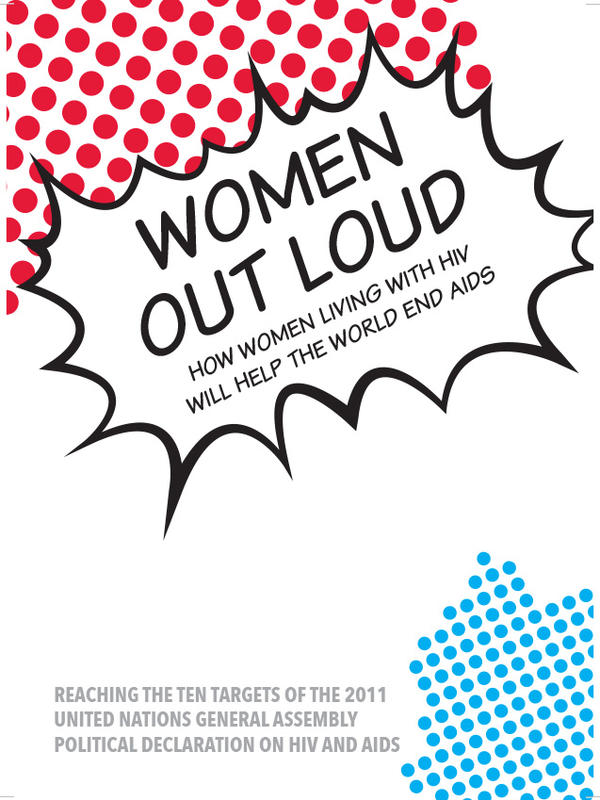
Women out loud: How women living with HIV will help the world end AIDS

Half of all people living with HIV are women, yet many are under served or do not know their status. Despite the many successes we have seen, women still face inequalities that will keep the AIDS response from reaching its full potential. 'Women out loud' amplifies the voices of women living with HIV so that their knowledge is shared and acted upon. This is essential to achieve the 10 targets of the 2011 United Nations Political Declaration on HIV and AIDS. As this report testifies, women’s leadership, resilience and good practices to transform societies are widespread. What is needed now is stronger support for women’s full participation in the response to HIV, and better data to track progress as it relates to women. This requires a concerted effort to promote and protect the rights of women and of all people living with HIV. When women speak out, we must listen carefully, and act with solidarity and commitment to transform words into action.

View online/download
External Link

Evaluation of gender mainstreaming in United Nations peacekeeping activities (MONUC/MONUSCO) in the Democratic Republic of the Congo

This evaluation report is a complementary report by UN Women to the evaluation of the UN Peacekeeping Activities in the Democratic Republic of the Congo carried out in 2011-12 by the Inspection and Evaluation Division (IED) of the Office of Internal Oversight Services (OIOS). It provides an in-depth analysis of gender mainstreaming results in the Peacekeeping Mission along the following questions: 1) How effectively have human rights and gender equality been mainstreamed into the Missions’ operations? 2) To what extent have the Missions’ mandates and operations been contributing to the goals of Security Council resolutions, including those on women, peace and security and the rule of law? 3) What lessons have been learned in the Missions with respect to addressing human rights and gender equality, the rule of law and other major mandate areas? 4) What are the key challenges?

View online/download
External Link

CEDAW and Security Council resolution 1325: a quick guide

Established international norms and standards promote the protection of women during armed conflict and their participation in peace and security decision-making. Two sets of standards, UN Security Council resolution 1325 on women, peace and security (UNSCR 1325), and the Convention on the Elimination of All Forms of Discrimination Against Women (CEDAW), are critical tools for moving the gender equality agenda forward in conflict and post-conflict situations. While both sets of standards are important in their own right, there is also a synergy between them that can enhance their implementation and impact. UNSCR 1325 helps to broaden the scope of CEDAW's application by clarifying its relevance to all parties in conflict and in peace. CEDAW, in turn, provides concrete strategic guidance for actions to be taken on the broad commitments outlined in UNSCR 1325. Drawing on these instruments together will enable advocates to maximize the impact of norms and standards for gender equality in all conflict and post-conflict interventions. This brief overview provides a basic introduction to each set of standards, as well as the context within which they were developed. It reviews the commonalities and potential strategic uses of UNSCR 1325 and CEDAW. It begins with a description of their shared gender equality agenda and includes a discussion of: 1) the ways that each set of standards can expand the reach of the other; 2) the application of the standards to the situation of women in the various stages of conflict and post-conflict reconstruction; 3) the significance and legal authority embodied in each set of standards; and 4) monitoring processes connected to UNSCR 1325 and CEDAW.

View online/download
External Link

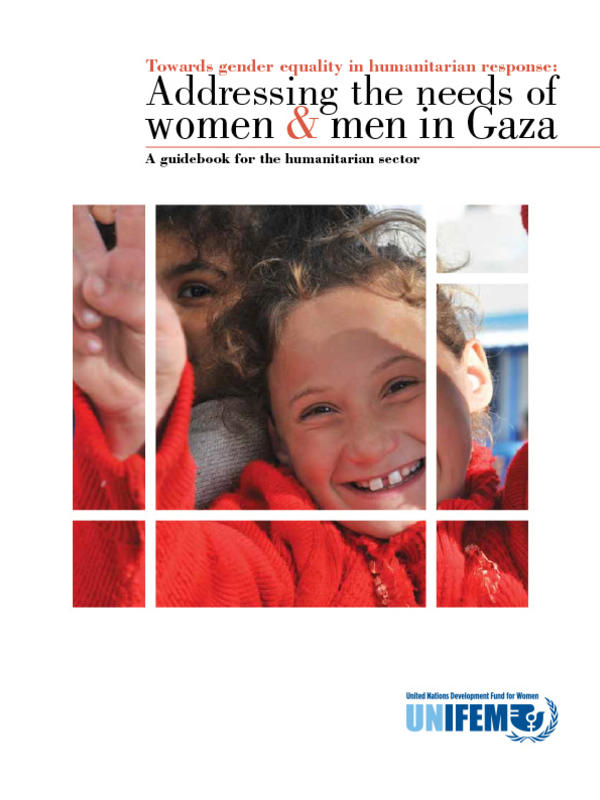
Towards gender equality in humanitarian response: addressing the needs of women and men in Gaza

The already grave humanitarian situation caused by the 18-month-long blockade of the Gaza Strip was compounded by Israel's 23-day military offensive in December 2008 and January 2009. The social and economic repercussions spread across all sectors of Gazan society, but were also mediated by men's and women's gender roles and identities. Ignoring the different needs, capacities and contributions of women, girls, boys and men can mean that some segments of the population are overlooked, sometimes with destructive consequences. In the rush to provide humanitarian assistance, the appeal to pay attention to gender issues may seem irrelevant. However, it is crucial to ensure that the most necessary and appropriate assistance is offered to the population as a whole. This guidebook sets forth standards for the integration of gender issues from the outset of a complex emergency, aiming to enable humanitarian services to reach their target audience with the maximum positive effect. The main framework for this guidebook is based on the Inter-Agency Standing Committee (IASC) handbook on gender and humanitarian action, and it builds on the gender needs assessment survey conducted by the UN Inter-Agency Gender Task Force in March 2009. Main issues that arose from that survey were subsequently discussed in focus groups in various communities in Gaza in April and May 2009, organized by UNIFEM.The findings of the focus groups form the core of the data used in this guidebook.

View online/download
External Link

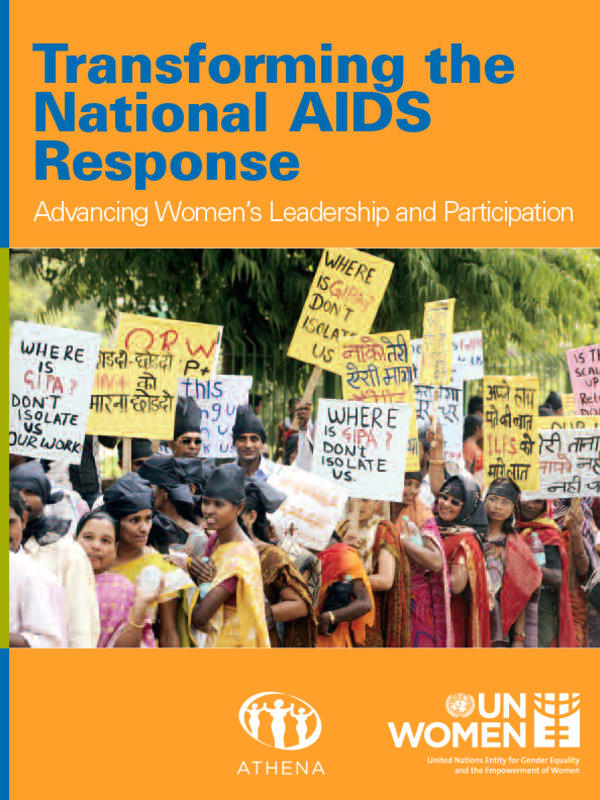
Transforming the national AIDS response: advancing women’s leadership and participation

Despite international commitments, HIV-positive women's participation and voices are largely missing from decision-making in the HIV and AIDS response. With very little and inconsistent monitoring of involvement by key stakeholders at global and national levels, this study, conducted in collaboration with the ATHENA network, sets out to locate where and in what ways, particularly women and those most affected by the epidemic, are participating in the response. It also assesses the opportunities for and challenges to that participation as well as identifies strategies that can be used to advance their full and meaningful participation at all levels. Based primarily on a series of in-depth interviews and consultations carried out with more than 100 key informants, including institutional leaders, women leaders and decision-makers as well as case studies, five key findings emerged from this review that argue for a more dedicated commitment to developing women as agents of change and active partners in defining and implementing solutions from the community to the global levels in order to transform the AIDS response. The study concludes with ten actionable recommendations — aimed at donors, national governments and other institutional leaders in the AIDS response — addressing the various systemic obstacles women face to their participation and the need for longer term commitments to increase resources to reduce women's vulnerability to HIV and AIDS.

View online/download
External Link

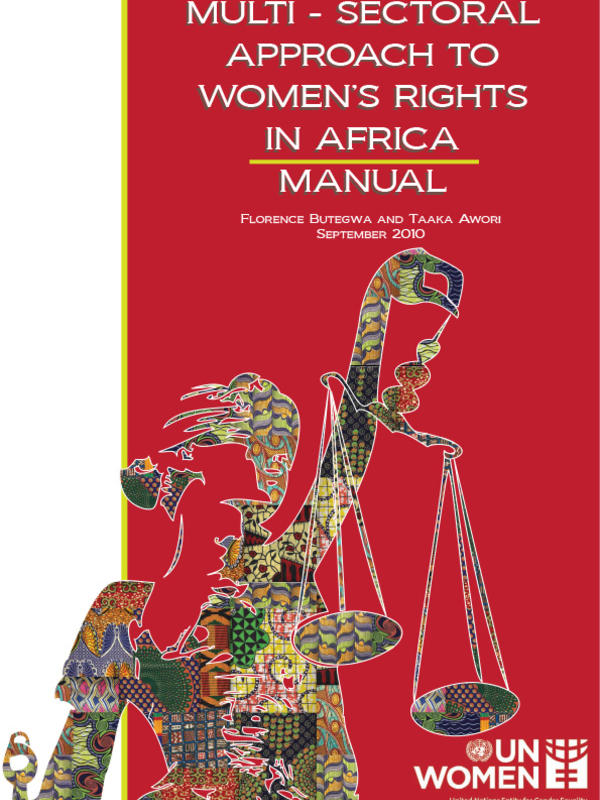
Manual: multi-sectoral approach to women’s rights in Africa

Even though many African governments have ratified international and regional human rights treaties and have made commitments to respect, promote and protect women's rights and to eliminate discrimination against women, the translation of these commitments into national laws, policies and programmes remains a challenge. As a response, UN Women has developed this manual as a methodological tool to promote the adoption and use of a multi-sectoral approach to achieve women's rights. Through practical guidance, the manual aims to support the African Union and its member states to fast track delivery on commitments to women's rights and empowerment. It introduces an implementation framework that promotes the integration of women's rights into all sectors of government and development endeavours. The framework also calls for inter-ministerial coordination to ensure improved efficiency, accountability, and communication across sectors; the establishment of a strong technical and advisory services unit at the regional and national levels; and an important and strengthened role for national machineries for women's affairs. Overall, the manual stresses the important role of government-led partnerships, such as with the African Union, donor countries, the United Nations system, civil society, organizations and unions, to make women's rights a reality.

View online/download
External Link

Handbook for national action plans on violence against women

The Handbook for National Action Plans on Violence against Women brings together current knowledge on effective policy for the prevention of, and response to, violence against women, and concretely demonstrates how States have developed and implemented such policy in their own contexts. Although not a model plan itself , this publication sets out guidelines to help policy makers and advocates formulate effective plans. It is based on good practices in States' plans and the advice of experts from different countries and regions. It first outlines the international and regional legal and policy framework which mandates States to adopt and implement National Action Plans to address violence against women. It then presents a model framework for National Action Plans on violence against women, which sets out recommendations, accompanied by explanatory commentaries and good practice examples.

View online/download
External Link

Handbook for legislation on violence against women

The Handbook serves as a useful tool in supporting efforts to provide justice, support, protection and remedies to victims and to hold perpetrators accountable. The Handbook first outlines the international and regional legal and policy frameworks which mandate States to enact and implement comprehensive and effective laws to address violence against women. It then presents a model framework for legislation on violence against women, divided into fourteen chapters. Finally, the Handbook provides users with a checklist of considerations to be kept in mind when drafting legislation on violence against women. This Handbook intends to provide all stakeholders with detailed guidance to support the adoption and effective implementation of legislation which prevents violence against women, punishes perpetrators, and ensures the rights of survivors everywhere.

View online/download
External Link

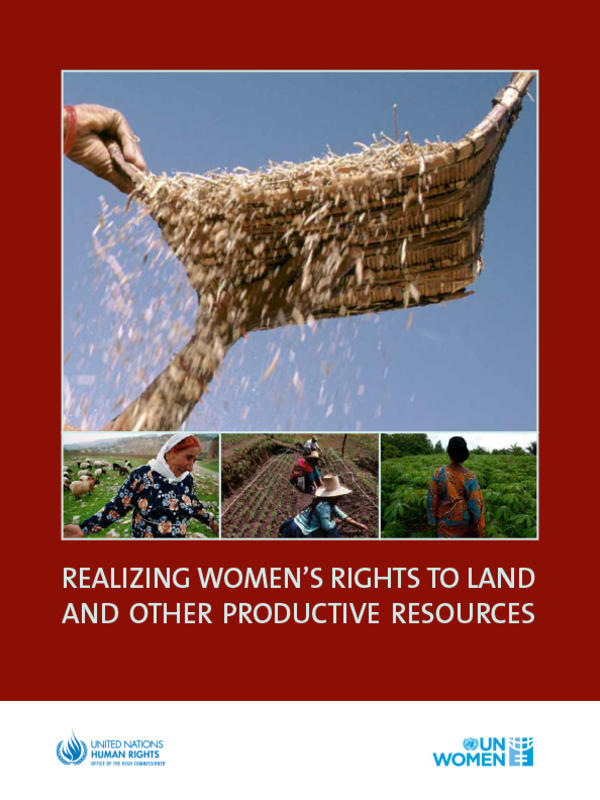
Realizing women's rights to land and other productive resources

Women’s access to, use of and control over land and other productive resources are essential to ensuring their right to equality and to an adequate standard of living. Throughout the world, gender inequality when it comes to land and other productive resources is related to women’s poverty and exclusion. Barriers which prevent women’s access to, use of and control over land and other productive resources often include inadequate legal standards and/or ineffective implementation at national and local levels, as well as discriminatory cultural attitudes and practices at the institutional and community level. The purpose of this publication is to provide detailed guidance to support the adoption and effective implementation of laws, policies and programmes to respect, protect and fulfill women’s rights to land and other productive resources. It presents an overview of international and regional legal and policy instruments recognizing women’s rights to land and other productive resources, and discusses ways of advancing a human rights-based approach to women’s rights to land and other productive resources. It sets out recommendations in a range of areas accompanied by explanatory commentaries and good practice examples and case studies from countries. The publication is based on the results of an expert group meeting held in June 2012. It is hoped that the publication will be a useful tool for policy makers, civil society organizations and other stakeholders in their efforts to realize women’s rights to land other productive resources.

View online/download
External Link

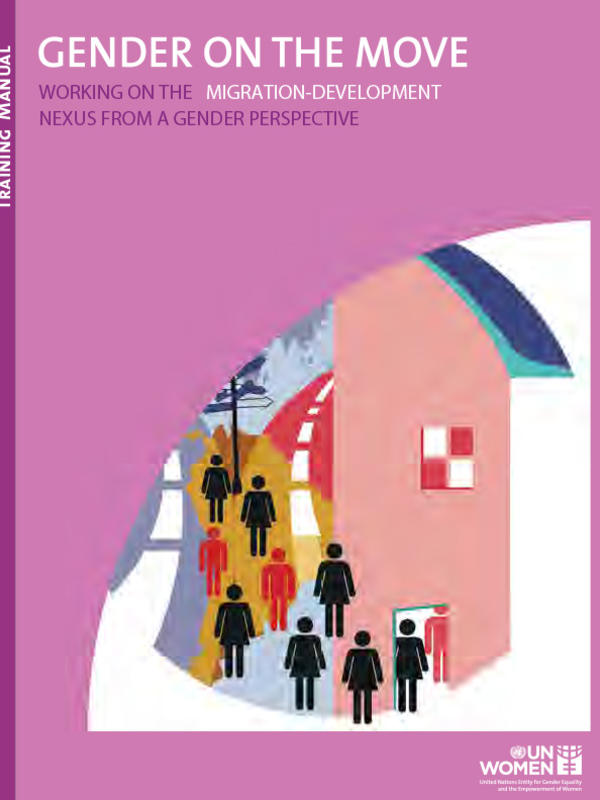
Gender on the move: working on the migration-development nexus from a gender perspective

The training manual aims to build the gender analysis capacity of those working in the field of migration and development to bring about a model of development that is centered on people, human rights, and on the principle of gender equality. It also offers a series of tools to help design programmes and policies that strengthen the positive effects of migration in terms of development, both in origin and destination countries. The manual, which is available in English and Spanish, is divided into a facilitator’s guide and four training guides, each of which has a self-directed learning section and an activities section for designing face-to-face trainings. The manual aims to provoke thinking and action around migration and development from a gender and rights-based perspective, bringing to the fore migration for care, the importance of putting the right to care on the development agenda, and migrant women’s rights. The manual is divided into the following sections: 1. Introduction to Gender, Migration, and Development; 2. Impact of Remittances on Local Economies in Origin Countries from a Gender Perspective; 3. Global Care Chains; 4. Migration Policies and Migrant Women’s Rights

View online/download
External Link

Guide for the evaluation of programmes and projects with a gender, human rights and intercultural perspective

In recent years, we have advanced progressively in the development of a conceptual and methodological basis for improving the processes of programme and project evaluation. Similarly, there is an important body of resources for the gender equality approach, and the same is true for the field of human rights. With respect to the intercultural approach, progress has been slower and, in many cases, partial. It has been associated with the processes of consultation to Indigenous peoples when preparing or evaluating a project in a region or area where they live. All these approaches share certain characteristics: they emphasize human rights and social justice; analyse asymmetrical social relations; promote competent cultural relations between the evaluating team and the members of the community or social organizations; use mixed and culturally appropriate methods for social action; and apply feminist theory, critical race theory, post-colonialist theories, etc. This Guide has been elaborated with the intent of integrating these approaches into the UN Women evaluation cycle. It is a practical tool for those who undertake, manage and/or use evaluations.

View online/download
External Link

Extracting equality - a guide

This guide examines how to approach the issue of gender within the extractive sector. It is the first-ever extractive value chain that combines gender with good governance. This toolkit examines all 12 steps of the extractive value chain, from finding out how much natural resources a country has to looking at how a project should be dismantled. At each step, the toolkit offers a clear picture of the specific considerations to make and questions to ask in order to ensure women are not left out of natural resource governance. Are women being consulted about the impact of mining? Are women, as well as men, being trained in contract monitoring? The toolkit is targeted at those involved in the extractive industries sector — community members, civil society organizations, NGOs, oil, gas and mining companies, as well as governments and UN agencies.

View online/download
External Link

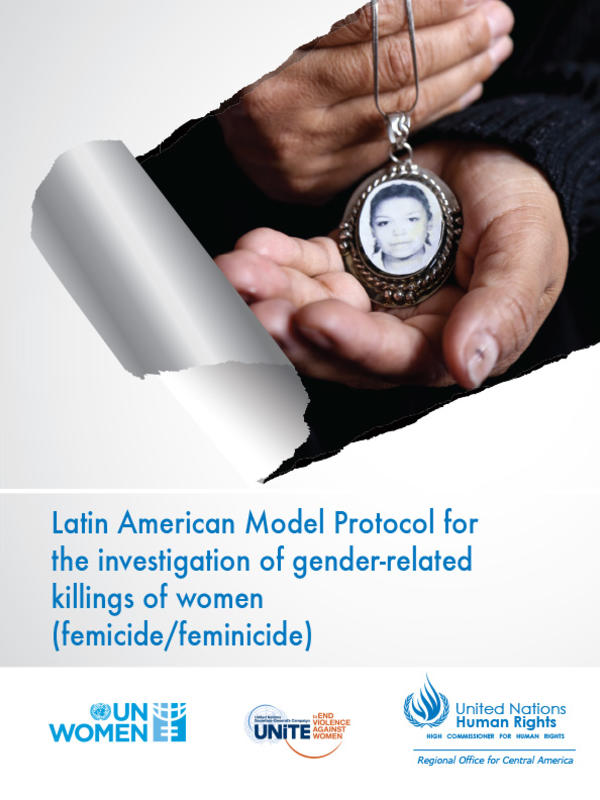
Latin American model protocol for the investigation of gender-related killings of women (femicide/feminicide)

The Latin American Model Protocol for the investigation of gender-related killings of women is a practical tool, designed to be applied by the people responsible for carrying out the investigation and prosecution of these acts. Its main objective is to offer guidance and lines of action to improve the practice of those working in the justice system, forensic experts, and other specialized persons, including those acting in relation to the crime scene, the forensic laboratory, the interrogation of witnesses and suspects, the case analysis, the formulation of the indictment, or before the court. The content of this Model Protocol is based not only on technical elements—essential to understand the gendered dimension of the killings of women—but also on the experience and lessons learned by the people that participate in these cases day in and day out. This text is the result of a broad consultation process carried out with prosecutors in charge of the investigations, police officers, forensic experts, people that work with perpetrators of these crimes, professionals from a variety of disciplines, organizations that assist the victims (direct and indirect) of violence against women, and judges called on to evaluate the evidence, punish those responsible for these crimes and determine the reparations for victims.

View online/download
External Link

Handbook on effective prosecution responses to violence against women and girls

Prosecutors play a critical role in the criminal justice response to violence against women and girls. In December 2010, the United Nations General Assembly adopted the updated Model Strategies and Practical Measures on the Elimination of Violence against Women in the Field of Crime Prevention and Criminal Justice (General Assembly resolution 65/228, annex) which provide a comprehensive policy framework to assist States in developing responses and carrying out actions to eliminate violence against women and to promote gender equality within the criminal justice system. Drawing upon the recommendations and guidance contained in the updated Model Strategies and Practical Measures, the United Nations Office on Drugs and Crime (UNODC) and UN Women, in cooperation with Thailand Institute of Justice, have drafted the Handbook on Effective Prosecution Responses to Violence against Women and Girls with a view to assist prosecutors in their duty to uphold the rule of law, firmly protect human rights and serve their community with impartiality and fairness in cases involving violence against women and girls. The Handbook is divided into three parts: Part One discusses current reflections, theories and research on violence against women and girls, the importance of the criminal justice response and some common misconceptions and myths surrounding sexual and gender-based violence; Part Two focuses on the role of a prosecutor in cases involving violence against women and girls. This part covers dealing with survivors, their role in investigations and the relationship with police, the decision to prosecute, the selection of charges, pre-trial considerations such as release pending trial and no contact orders, evidentiary issues, trial considerations, roles in sentencing and post-conviction, and restorative justice concerns; Part Three explores some of the institutional approaches that a prosecution agency can consider to ensure an effective response to violence against women and girls.

View online/download
External Link

Gender mainstreaming In development programming

Gender mainstreaming is mandated by the 1995 Beijing Platform for Action as a strategic approach for achieving gender equality and women’s empowerment at all levels of development. This publication display how the Platform commits all stakeholders in development policies and programmes, including United Nations entities, Member States, the international development community and civil society actors, to take action.

View online/download
External Link


Suggest a publication

Feel free to submit a publication.

Submit here