Languages

Topbar Menu EN

The SDG Fund is operationally closed. This site is alive for knowledge and dissemination purposes.
Warning: This website is closed. Be aware of phishing or social engineering fraudulent requests of payments or certificates. Explore our programme areas.
Please visit jointsdgfund.org

Search our database of publications


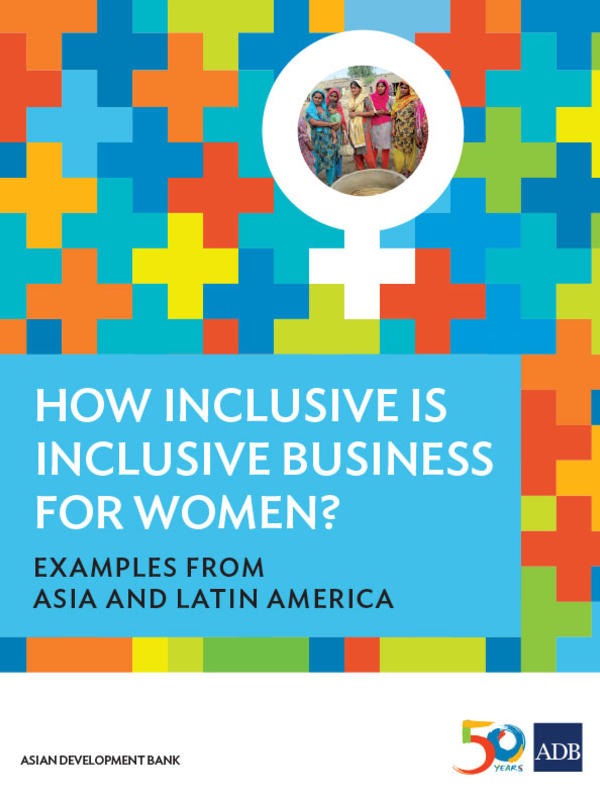
How inclusive is inclusive business for women? Examples from Asia and Latin America

Inclusive businesses are commercially viable business models that provide in-scale innovative and systemic solutions to problems relevant to the lives of low-income people. Inclusive business companies often involve women in their value chain and provide specific services that help low-income women. This report assesses the extent to which inclusive business models promote women's economic empowerment. Examples come from the inclusive business portfolios of the Asian Development Bank, the Inter-American Development Bank and the International Finance Corporation.

View online/download
External Link

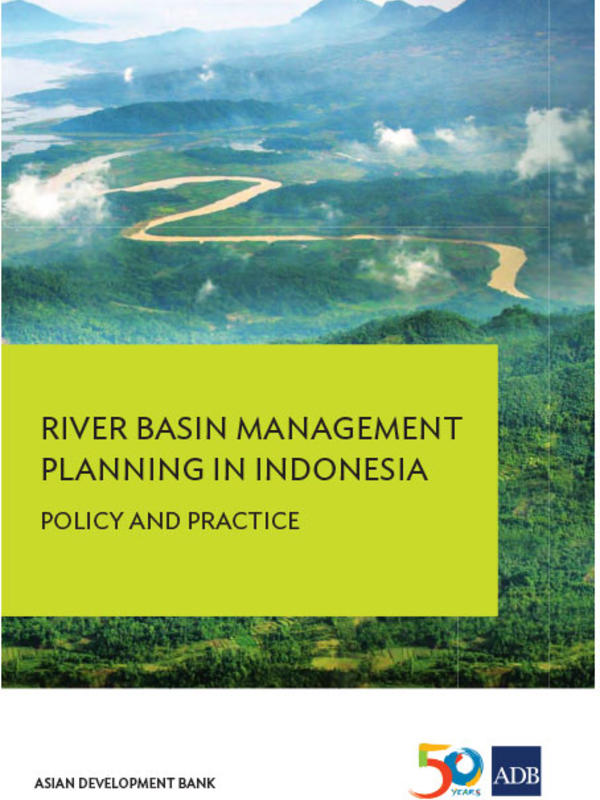
River basin management planning in Indonesia: policy and practice
This publication summarizes the strengths, challenges, opportunities, and risks characterizing the prospects for integrated water resources management in Indonesia. Integrated water resources management planning is essential for sustainable growth. Understanding these conditions may provide decision makers with more insight to optimize the country’s water resources potential using available and state-of-the-art methodologies and tools for river basin planning. The publication discusses all aspects of basin planning based on experiences from one of Indonesia’s most complex and strategic river basins.

View online/download
External Link

Innovative strategies in higher education for accelerated human resource development in South Asia: Sri Lanka

In order to maximize the full development potential of the higher education system, strategic interventions will be needed at both the national, such as creation of appropriate economic and institutional regimes, as well as an efficient national policy for fostering innovation, and university levels. University-level interventions would include capacity building, improvements in the learning environment, exposure of students to the world of work, and promoting international best practices. This report presents current arrangements and initiatives in the country’s skills development strategies. These are complemented by critical analyses to determine key issues, challenges, and opportunities for innovative strategies toward global competitiveness, increased productivity, and inclusive growth. It emphasizes making skills training more relevant, efficient, and responsive to emerging domestic and international labor markets.

View online/download
External Link

Overview of financial inclusion, regulation, and education

Financial inclusion is receiving increasing attention as having the potential to contribute to economic and financial development while at the same time fostering more inclusive growth and greater income equality. However, although substantial progress has been made, there is still much to achieve. East Asia and the Pacific and South Asia combined account for 55% of the world’s unbanked adults, mainly in India and the People’s Republic of China (PRC). This paper surveys the experience of a number of advanced and Asian emerging economies to assess factors affecting the ability of low-income households and small firms to access financial services, including financial literacy, financial education programs and financial regulatory frameworks, and identify policies that can improve their financial access while maintaining financial stability. It aims to identify successful experiences and important lessons that can be adopted by other emerging economies. This analysis is based on studies of the experiences of Germany, the United Kingdom, Bangladesh, India, Indonesia, the Philippines, Sri Lanka and Thailand. The study aims to take a practical and holistic approach to issues related to financial inclusion. For example, innovative methods of promoting financial access, such as mobile phone banking and micro-finance, require corresponding innovations in regulatory frameworks, perimeters and capacity. Moreover, programs in the areas of financial education and consumer protection are needed to enable households and small firms to take full advantage of improvements in financial access.

View online/download
External Link

Barriers to innovation in Indian small and medium-sized enterprises

Innovation plays a critical role in shaping the industrial and firm competitiveness of any nation. Innovation is often discussed in the setting of developed countries, but the rise of emerging economies such as India has generated a new interest in understanding innovation in developing economies. This paper aims to study and present the current state of innovation in small and medium-sized enterprises (SMEs) in India. The focus of the paper is to bring out the key barriers SMEs face in the innovation process in the context of the existing government policy. India, being a developing nation, has its own set of unique situations and challenges that impede the innovation potential of SMEs operating in it. Many of these barriers are related to public policy, funding constraints, shortage of skilled research and development (R&D) workforce, and weak linkages between institutions and the firms, among others.

View online/download
External Link

An assessment of financial sector development in Bhutan

This paper presents the results of a study into the performance and stability of Bhutan’s banking system. It finds that economic growth has fueled a large demand for household credit over recent years. In turn, banks have responded by substantially increasing their loan portfolios. Although the largest recipient of credit is the building and construction sector, personal loans now make up more than 18% of credit extended to the private sector. Within this context, this study discusses policy recommendations to strengthen and improve the banking sector. These measures include fostering banking sector competition, improving regulatory practices on both the monitoring and the enforcement side, and enhancing risk diversification and liquidity management practices.

View online/download
External Link

Water: securing Bhutan's future

Water has been sculpting Bhutan’s landscape for millennia, flowing down from majestic alpine mountains to the narrow valleys and deep gorges that make up the country’s iconic landscape before spreading out toward the southern plains. Water needs to be managed well, and in an integrated and adaptive way. This kind of management is very challenging because it involves many actors and stakes. Water is not a sector in the traditional sense. Rather, it is a complex fabric—particularly in Bhutan—of interconnections between agriculture, ecology and energy that need to be recognized and managed as a system. This view of water management gives coordination a central role. Bhutan’s framework for integrated water resource management (IWRM) adopts coordination as its core management principle. It builds on a strong Bhutanese tradition of water sharing and collective management, examples of which are illustrated in this book.

View online/download
External Link

Tajikistan: promoting export diversification and growth

Building on robust economic growth since the end of a civil war in 1997, Tajikistan has transformed itself into a service economy driven by consumer spending fueled by strong remittance inflow. Yet the transfer of resources to high value-added sectors has been restrained, and structural change has generated few new jobs. Without sufficient employment opportunities in the services and industrial sectors, agriculture became the fallback for most of the labor force. To continue its economic growth, Tajikistan requires new drivers from a diversified industry sector and a modernized economy through structural transformation and export diversification.

View online/download
External Link

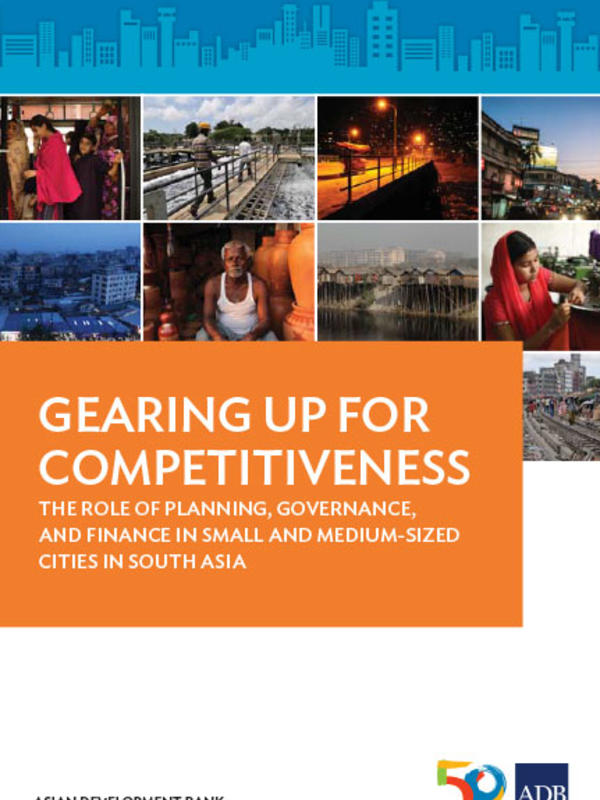
Gearing up for competitiveness: The role of planning, governance, and finance in small and medium-sized cities in South Asia

This book focuses on local government’s role in increasing city competitiveness through planning, governance, and finance, particularly in small to medium-sized cities in South Asia. Existing studies on city competitiveness tend to focus on megacities, and yet smaller cities house an increasingly large portion of South Asia’s population. This study seeks to initiate a more systematic thinking on the role of planning, governance, and finance to overcome the challenges of urbanisation, improve the investment climate, and provide greater opportunities for more people, especially in small to medium-sized cities.

View online/download
External Link

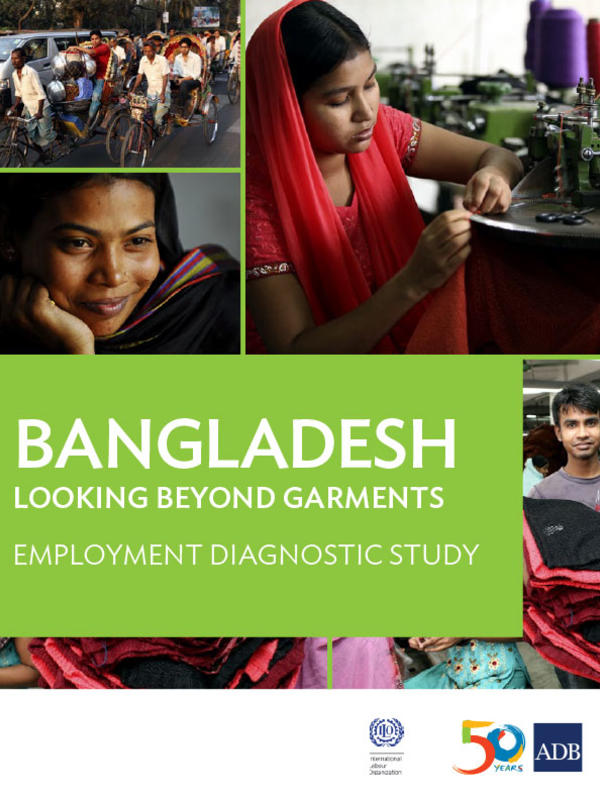
Bangladesh: looking beyond garments - employment diagnostic study

Economic growth in Bangladesh, above 6% in most years since the 2000s, has been on the fast track since the 1990s. Not many developing countries, especially the least developed, have been able to achieve this consistently for such a long period. Yet despite the jobs generated in the export-oriented ready-made garment industry, the fruits of growth have not been widely shared. This joint study by the Asian Development Bank and the International Labour Organization examines the nature and magnitude of the employment challenge Bangladesh faces, looking at the nature of productive employment and its role in transmitting the benefits of growth into incomes for the poor. It indicates that the positive economic turnaround in Bangladesh is largely due to the rising presence of women in the workplace.

View online/download
External Link

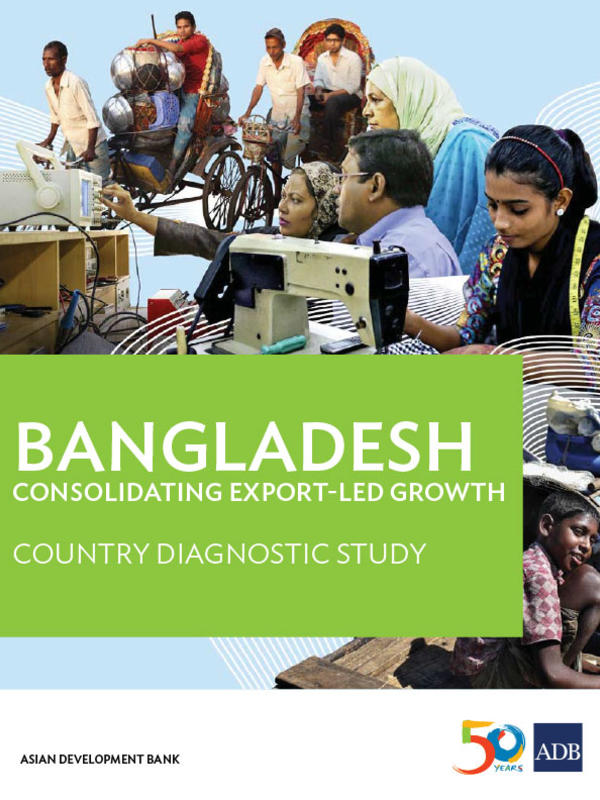
Bangladesh: consolidating export-led growth - country diagnostic study

Bangladesh has transformed its economy over the last 2 decades, graduating to middle-income status as average annual growth remained strong at 5%–6%. The country’s goal to become an upper-middle-income country by 2021 will require even stronger annual growth of 7.5%–8%. The study finds that the most critical constraints to growth are (i) insufficient reliable energy supply, (ii) policies that indirectly stunt development of economic activities unrelated to ready-made garment exports, and (iii) insufficient security about property and land rights due in part to inadequate registry systems. If policies are designed to urgently tackle these constraints, Bangladesh will be free to harness its potential for inclusive and sustainable growth.

View online/download
External Link

Working conditions, work outcomes, and policy in Asian developing countries

Working conditions in developing countries are the focus of policy makers and stakeholders in Europe, the Americas, and especially Asia. In this debate, the garment sector has perhaps captured the most attention. This paper reviews academic studies of the causes and consequences of poor conditions in developing country garment factories with a special emphasis on causes and potential solutions for South Asia. This review provides an introduction to some of the leading academic literature and ideas that are important for understanding the persistence of poor labor practices and possible policies to address these conditions.

View online/download
External Link

Public–private partnership funds: observations from international experience

To help improve public service delivery, many countries have established funds to help finance their public–private partnership (PPP) programs. This paper examines the international experience with three types of funds: Each type has a very precise purpose and is designed to address a specific constraint to developing bankable PPP projects. The analysis reveals that funds must be designed well to address specific problems and that dedicated funds can provide better incentives, concentrate expertise, and promote PPPs. With this knowledge, ADB is helping the People’s Republic of China investigate the use of funds and other facilities for providing government financial support to PPPs.

View online/download
External Link

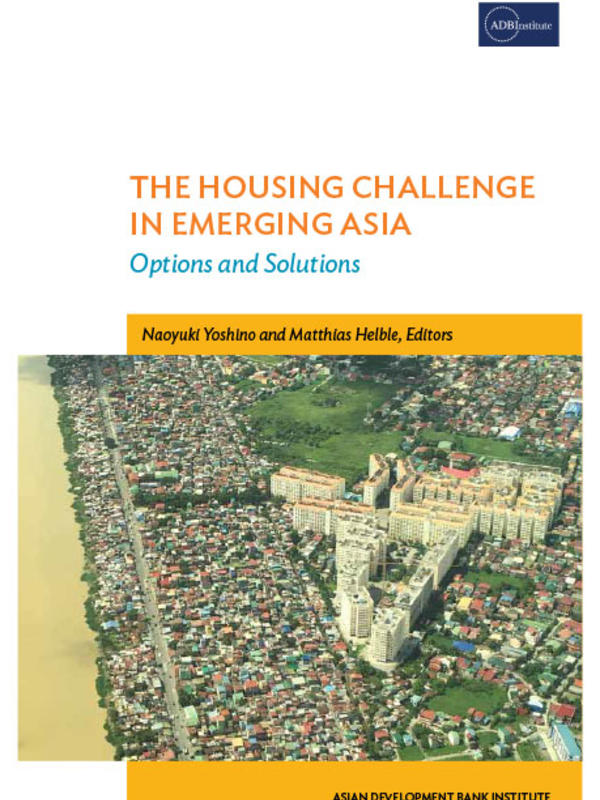
The housing challenge in emerging Asia: options and solutions

This publication provides new insights and ideas to best design and implement housing policies aimed at improving access to affordable and adequate housing. The book offers an innovative theoretical framework to conceptualize and analyze various housing policies. It also critically reviews housing policies of various countries and draws lessons for others. The countries studied include advanced economies within and outside Asia, such as Japan, the Republic of Korea, Singapore, Switzerland, the United Kingdom, and the United States, as well as emerging countries within Asia, such as the People’s Republic of China and India.

View online/download
External Link

Improving energy efficiency in South Asia

Opportunities for energy efficiency in South Asian power systems exist mostly in the areas of operation of thermal power plants, electricity transmission and delivery systems and in demand management and conservation at the user-end. This paper concludes that there is scope for significant improvement in coal-fired power plant efficiency improvements and loss reduction in transmission and distribution systems. On the demand side expanded application of time-of-use electricity tariffs and appliance standards along with demand control through smart metering will improve efficiency. These improvements can be realized with appropriate policies and programs that can be readily implemented with the existing institutional framework.

View online/download
External Link

Housing system and urbanization in the People’s Republic of China

This paper examines how transformations in the housing system in the People’s Republic of China (PRC) influence the PRC pattern of urbanization. It first discusses how housing policies determine the supply and demand of housing in urban PRC and subsequently analyzes how the changes in the mode of housing provision have affected rural–urban migration, intercity labor mobility, the financing of urban infrastructure, and general urban economic activities in the PRC. The PRC experience of the interaction between the housing system and urbanization is unique, but it clearly indicates that an effective housing system that can responsively provide adequate and affordable housing is crucial to the success of inclusive and equitable urbanization.

View online/download
External Link

Human capital and urbanization in the People’s Republic of China

The relationship between human capital development and urbanization in the People’s Republic of China (PRC) is explored, highlighting the institutional factors of the hukou system and a decentralized fiscal system. Educated workers disproportionately reside in urban areas and in large cities. Returns to education are significantly higher in urban areas relative to those in rural areas, as well as in large, educated cities relative to small, less-educated cities. In addition, the external returns to education in urban areas are at least comparable to the magnitude of private returns. Rural areas are the major reservoir for urban population growth, and the more educated have a higher chance of moving to cities and obtaining urban hukou. Relaxing the hukou restriction, increasing education levels of rural residents, providing training for rural–urban migrants, and guaranteeing equal opportunity for all residents are necessary for a sustainable urbanization process in the PRC. In terms of health, rural–urban migration is selective in that healthy rural residents choose to migrate. Occupational choices and living conditions are detrimental to migrants’ health, however. While migration has a positive effect on migrant children, its effect on “left-behind” children is unclear.

View online/download
External Link

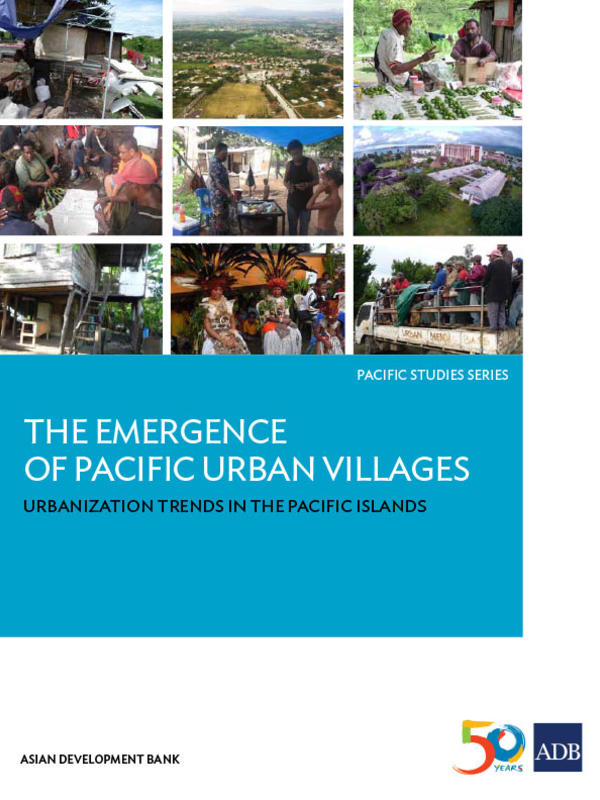
The emergence of Pacific urban villages: urbanization trends in the Pacific islands

Village-like settlements such as squatter and informal settlements are seen as a type of urban village. The report examines the evolution of different types of settlement commonly known as native or traditional villages, and the more recent squatter and informal settlements. It looks at the role these and other urban villages play in shaping and making Pacific towns and cities and presents key actions that Pacific countries and development partners need to consider as part of urban and national development plans while achieving a more equitable distribution of the benefits of urbanization.

View online/download
External Link

Digital health infrastructure: the backbone of surveillance for malaria elimination

Elimination of malaria is not only technically feasible but also a public health imperative. With millions of people at risk from the disease across Asia and the Pacific, and malaria imposing an even bigger burden in Africa, the race is on to eliminate the disease in the Greater Mekong Subregion (GMS). The area is of particular concern because of growing resistance to artemisinin-based combination therapies. Resistance to this last line of simple-to-use and effective malaria drugs has been detected in Cambodia, the Lao People’s Democratic Republic (Lao PDR), Myanmar, Thailand, and Viet Nam.

View online/download
External Link

Sanitation and sustainable development in Japan

This publication documents Japan’s experience in pursuing sustainable sanitation solutions in the context of economic development. Five case studies illustrate how sound sanitation policies are essential in achieving a nation’s growth. Produced by ADB in cooperation with Japan Sanitation Consortium, this publication also documents key policies and laws that enable the integration of sewerage systems and wastewater treatment facilities in development plans. It shares learnings on how the sanitation challenge can be met, not only at the community, but also at the national level.

View online/download
External Link

Agricultural production and groundwater conservation: examples of good practices in Shanxi Province, People’s Republic of China

Climate change and declining water resources threaten food production systems worldwide, increasing the need for efficient agricultural processes. The Shanxi Province in the PRC has been experiencing declining groundwater tables since 1956. This publication provides examples of how ADB’s development support met the rising challenges in water security, food production, and climate change faced by communities in the Shanxi Province. It describes initiatives in four counties in the Shanxi Province selected as pilot areas, where traditional farmers learned modern methods of groundwater use and management. As a result, options for more sustainable use of groundwater were introduced, while farm labor was reduced, crop yields increased, and water was used more efficiently.

View online/download
External Link

An Asian poverty line? Issues and options

Given Asia’s record of rapid economic growth and the conceptual and empirical problems of the current international income poverty line (“dollar-a-day”), this paper discusses whether there is merit to develop an Asia-specific poverty line that addresses some of the shortcomings of the dollar-a-day line and additionally considers Asia’s particular economic situation. We consider various ways of creating an Asia-specific poverty line, including an Asia-specific international income poverty line (using purchasing-power parity [PPP] adjusted dollars) that is derived from Asian national poverty lines. We argue that there can be some merit in developing an Asian poverty line and that, in the case of income poverty, it would be best to ground such an Asia-specific poverty line in a consistent method of generating national poverty lines using national currencies rather than generating a PPP-adjusted poverty line in international dollars that is specific for Asia. It is important that such a poverty line also considers relative poverty in its assessment to reflect the rising aspirations of Asian societies, in line with suggestions made by Chen and Ravallion (2013) on weakly relative poverty lines. In terms of multidimensional poverty lines, there is also some merit in developing an Asia-specific multidimensional poverty index that takes into account the specific living conditions of Asian societies.

View online/download
External Link

Toward a national eco-compensation regulation in the People’s Republic of China

The People’s Republic of China practices “eco-compensation” to promote environmental protection and restoration. This study examines the theory, practice, and legislation governing this in selected ecological areas. ADB and the National Development and Reform Commission of the People’s Republic of China (PRC) undertook a study on eco-compensation regulations development in the country. The study examined the PRC’s theory, practice, and legislation governing eco-compensation in selected ecological areas to map out the scope and content of a national eco-compensation regulation. Pursuit of its higher agenda of ecological civilization and development of its national eco-compensation regulation will require the PRC to capture the diversity that subnational projects have tapped, integrate its experience with eco-compensation at all levels of government into a coherent national regulatory framework, and harmonize this framework with existing laws and other legal instruments.

View online/download
External Link

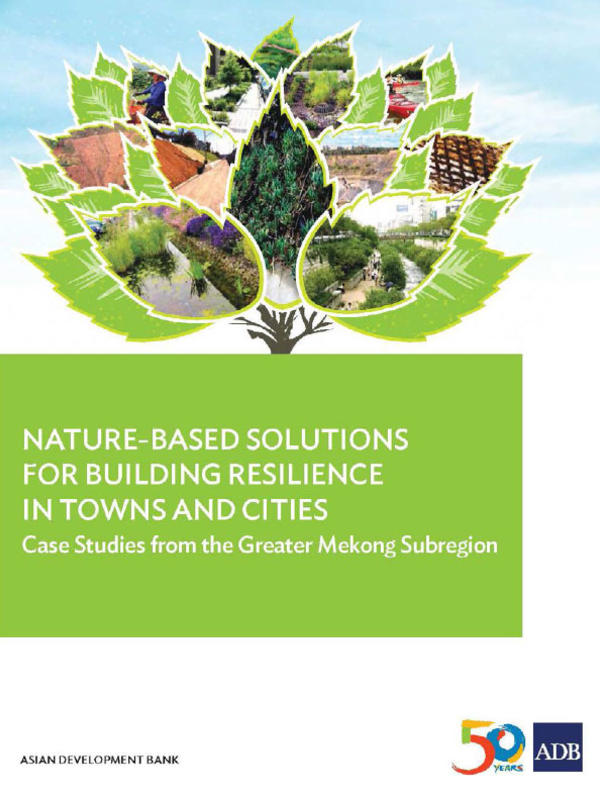
Nature-based solutions for building resilience in towns and cities: case studies from the Greater Mekong Subregion

Urban populations are projected to increase from 54% to 66% of the global population by 2050, with close to 90% of the increase concentrated in Asia and Africa. Cities and towns—a growing source of greenhouse gas emissions—will need to address challenges posed by climate change. A nature-based approach in identifying climate change vulnerabilities and developing relevant adaptation options was conducted in three towns of the Greater Mekong Subregion (GMS). Working with local governments, non-government organizations, women’s groups, and professional associations, town-wide adaptation measures were defined by overlaying climate change projections on town plans and zoning schemes for strategic infrastructure. This publication captures valuable experience and lessons from the project.

View online/download
External Link

Enhancing urban climate change resilience: seven entry points for action

Growing interest in the concept of urban climate change resilience (UCCR) recognizes the complexity of rapid urbanization and uncertainties associated with climate change. This working paper synthesizes existing knowledge on urban climate change resilience to identify seven entry points for actions. It is expected that the proposed entry points will benefit ADB’s developing member countries, development partners, staffs and projects under the Urban Climate Change Resilience Trust Fund to take actions for strengthening urban resilience.

View online/download
External Link


Suggest a publication

Feel free to submit a publication.

Submit here