Languages

Topbar Menu EN

The SDG Fund is operationally closed. This site is alive for knowledge and dissemination purposes.
Warning: This website is closed. Be aware of phishing or social engineering fraudulent requests of payments or certificates. Explore our programme areas.
Please visit jointsdgfund.org

Search our database of publications


Developing gender-sensitive value chains
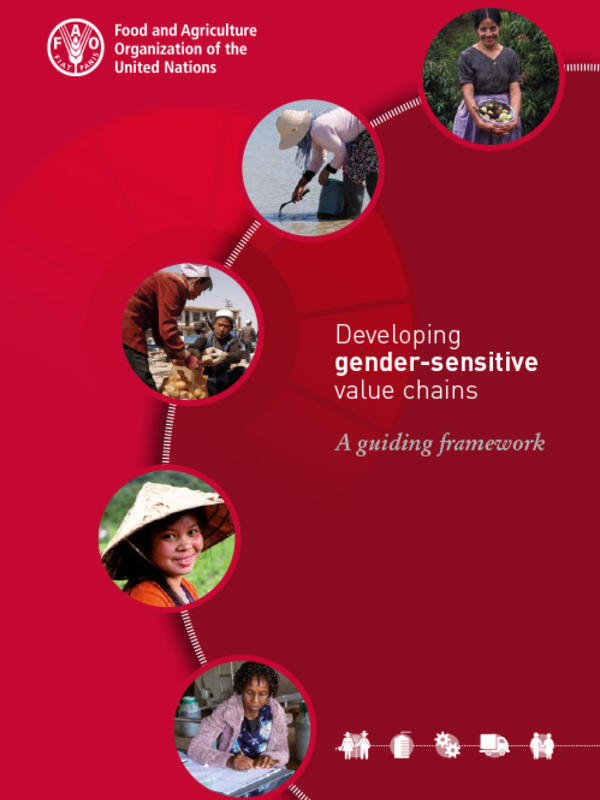
The purpose of this publication (part of the FAO series on sustainable food value chain development) is to facilitate the systematic integration of gender equality dimensions into value chain development programmes and projects. It raises awareness on gender inequalities and discusses the importance of addressing these dimensions in value chain development, while also building a common approach for work on gender-sensitive value chain development. It achieves this by bringing together key concepts from value chain development and gender and by providing concrete guiding principles for the integration of gender concerns into value chain development projects and programmes. This conceptual framework has a companion publication, Developing gender-sensitive value chains: Guidelines for practitioners, which provides specific tools to support practitioners in designing, implementing and monitoring gender-sensitive value chain programmes.

View online/download
External Link

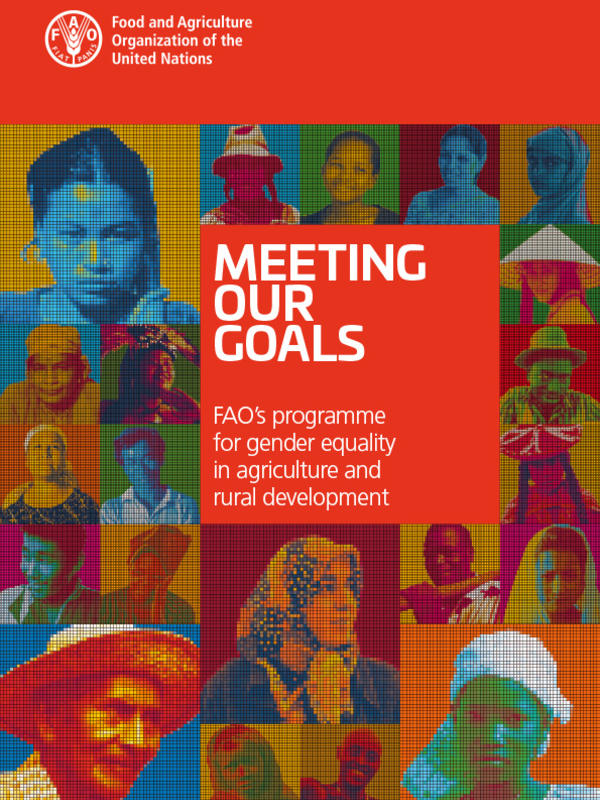
Meeting our goals: FAO’s programme for gender equality in agriculture and rural development

FAO recognizes the potential of rural women and men in achieving food security and nutrition and is committed to overcoming gender inequality, in line with the pledge to “leave no one behind”, which is at the heart of the Sustainable Development Goals (SDGs) and the 2030 Agenda. The publication illustrates the consistent and sustained work of FAO towards gender equality and women’s empowerment, which are at the core of the Organization’s work to eliminate hunger and rural poverty. Each chapter highlights the relevance of gender work to achieving the FAO Strategic Objectives, and describes main results achieved, showcasing activities implemented at country and international levels. Stories from the field demonstrate the impact of FAO’s work for beneficiaries, highlighting successes and significant insights gained.

View online/download
External Link

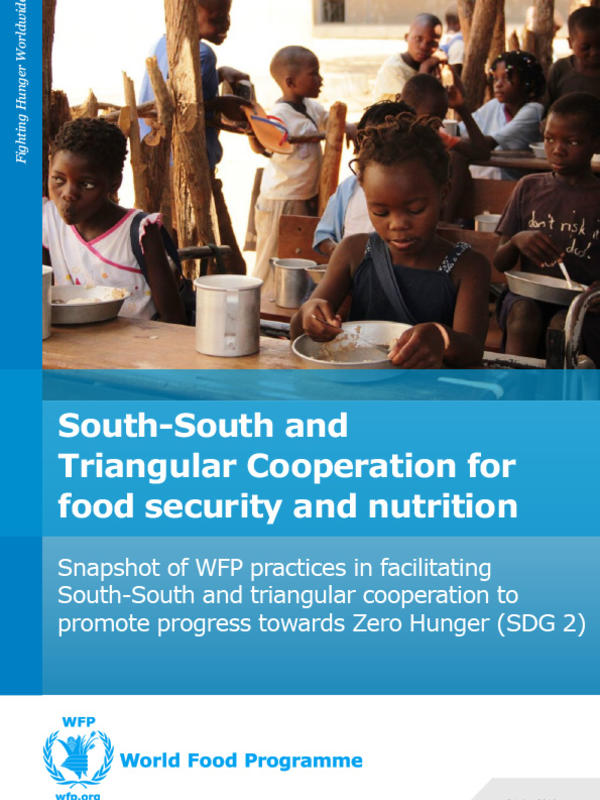
South-South and Triangular Cooperation for food security and nutrition

This publication explores how WFP facilitates South-South cooperation to help countries advance their national objectives and build capacities to fight hunger and malnutrition towards achieving Agenda 2030. Seven case studies showcase how different South-South modalities can be applied on the ground.

View online/download
External Link

Gender and desertification: expanding roles for women to restore dryland areas

This review examines the impact of desertification on women, their role in the management of natural resources and drylands, and the constraints they face. It presents the experiences of several IFAD-supported programmes and projects in addressing women as natural resource users and managers in dryland areas, and highlights some of the approaches used to reach women more effectively. It also presents lessons learned from IFAD programmes and projects, and recommendations for expanding women’s roles in order to restore dryland areas.

View online/download
External Link

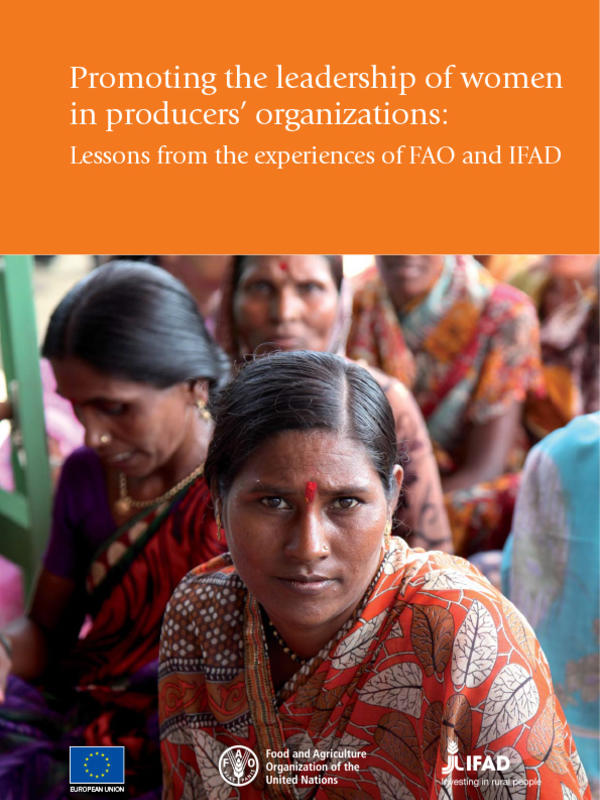
Promoting the leadership of women in producers’ organizations

This paper explores aspects of promoting rural women’s leadership in producers’ organizations (POs). Despite the vast amount of work that women perform in the agriculture sector, their role remains largely unrecognised. The concerns and issues of women farmers are scarcely heard at the local, national and global levels. One reason for this silence is that there are not enough women in leadership positions to be able to represent the interests of rural women. This shortage is compounded by women’s lack of voice in decision making processes at all levels − from households to rural organizations − and in policymaking. Ensuring that women have a greater voice is not only a matter of gender equality. Women’s leadership, especially in POs, is essential for increasing the production of smallholder agriculture, as women make massive contributions to the sector. Women leaders can advocate for women’s better access to and control over assets and productive inputs, thus boosting their productivity and incomes, leading to food security and increasing their employment opportunities and real wages. This paper has three main purposes: (i) to identify relevant aspects that relate to the promotion of rural women’s leadership within POs; (ii) to identify related good practices that are implemented by IFAD, the Food and Agriculture Organization of the United Nations (FAO) and their partners; and (iii) to present key messages and recommendations for guiding the design and implementation of interventions in support of women’s leadership.

View online/download
External Link

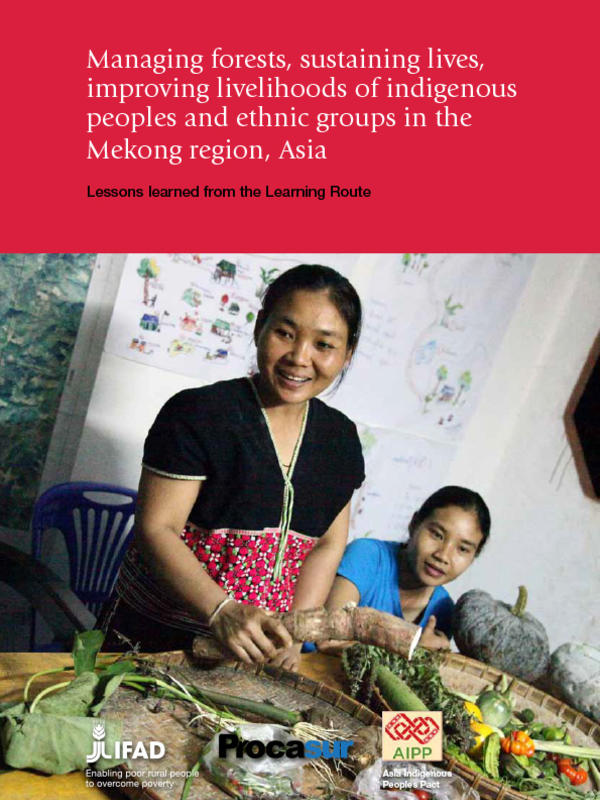
Managing forests, sustaining lives, improving livelihoods of indigenous peoples and ethnic groups in the Mekong region, Asia

This paper presents the Learning Route, ‘Managing Forests, Sustaining Lives, Improving Livelihoods of Indigenous Peoples and Ethnic Groups in the Mekong Region’, undertaken in November 2012 by PROCASUR and AIPP with the support of IFAD. It describes the Learning Route process, outputs and outcomes, as well as lessons learned, in addition to two case studies – one in Lao PDR and the other in Thailand – of community-based forest management, communal land titles and sustainable livelihoods. The document also provides a general overview of the land tenure system and its effect on the traditional livelihoods of indigenous peoples and ethnic groups in Asia, with particular focus on Lao PDR and Thailand.

View online/download
External Link

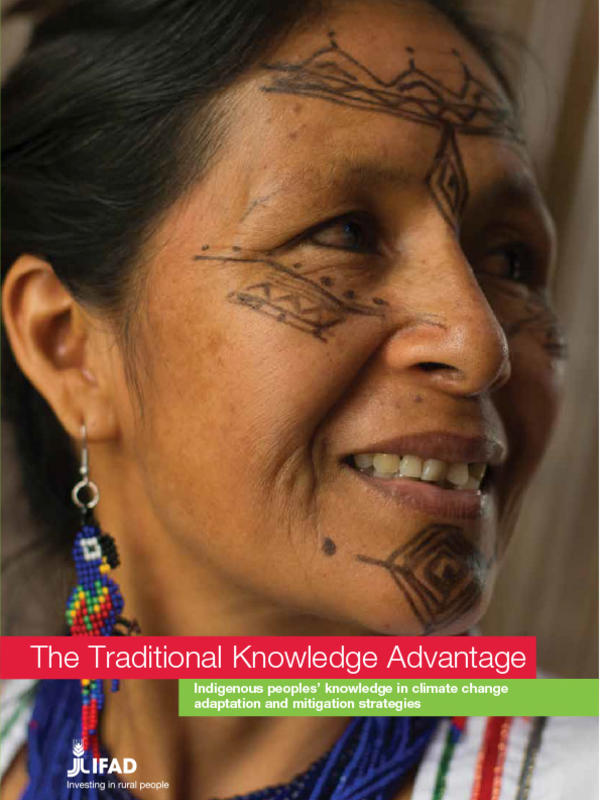
The traditional knowledge advantage: indigenous peoples’ knowledge in climate change adaptation and mitigation strategies

Working with indigenous peoples, IFAD has learned that the relationship between natural resources management, sustainable livelihoods and indigenous concepts of self-driven development are interrelated and interdependent. Indigenous peoples conceive and manage their livelihoods in harmony with nature and in accordance with agroecological conservation, natural resources sustainable management, and climate change adaptation and mitigation practices. In this paper, a number of cases from IFAD-funded projects analyse the important role of indigenous peoples’ knowledge preservation and application in community responses to climate change.

View online/download
External Link

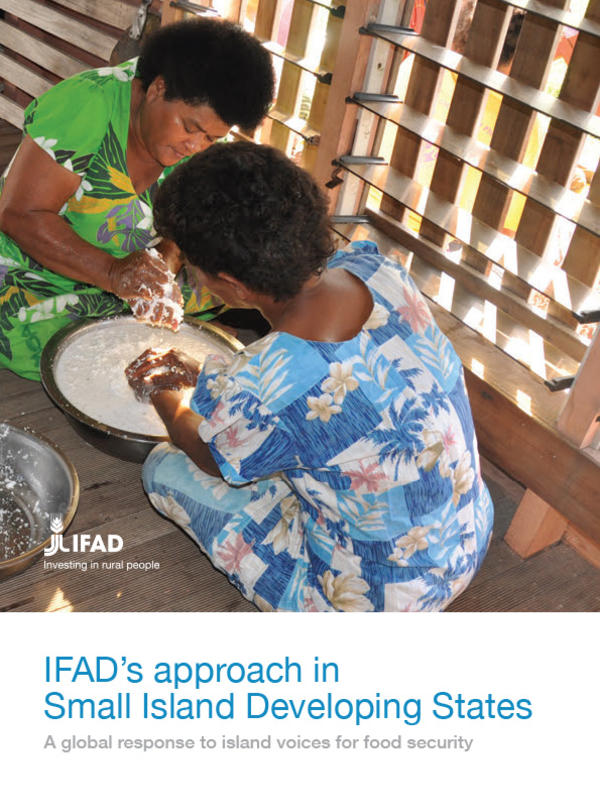
IFAD’s approach in Small Island Developing States

This paper outlines IFAD’s strategic approach to enhancing food security and promoting sustainable smallholder agriculture development in Small Island Developing States (SIDS) in the context of exacerbated impacts of climate change and persistent challenges to market access. A renewed approach will provide an opportunity for increasing results and impacts from agriculture and fisheries, reducing the high transaction costs of project delivery in SIDS, adjusting to an ever-changing development environment and – most of all – avoiding the overlooking of SIDS’ persistent fragility and the risk that they are cut off from development assistance.

View online/download
External Link

Learning from each other: South-South and triangular cooperation in East and Southern Africa

South-South and triangular cooperation has an enormous potential role in agriculture and rural development in developing countries, both in unlocking diverse experiences and lessons and in providing solutions to pressing development challenges. From the cases in this publication, a number of common lessons emerge. Meanwhile, the importance of adaptation also emerged from these documented cases. Inspiring examples in other regions or countries encourage people to take up certain approaches, but they can almost never be copied exactly into any new context.

View online/download
External Link

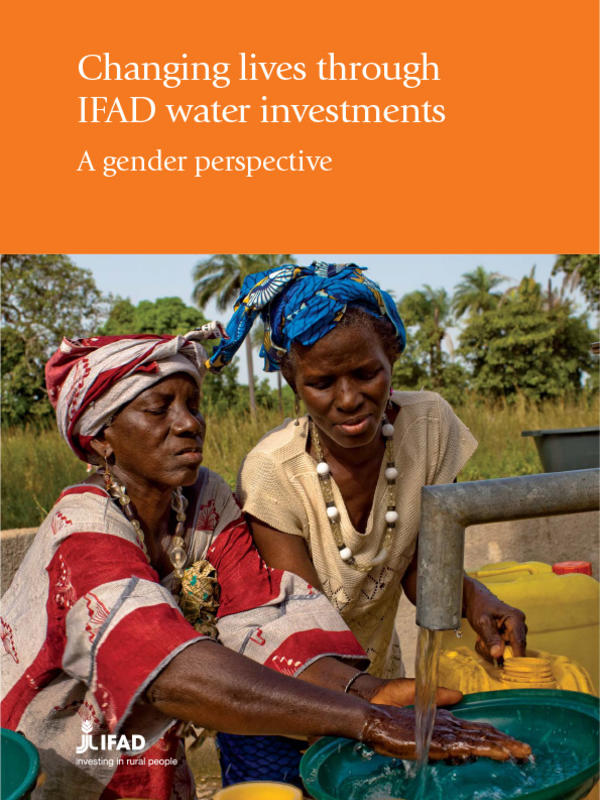
Changing lives through IFAD water investments: a gender perspective

This study was designed by IFAD in order to contribute to the knowledge about the relationship between gender, water investment and time saving. It is also intended to contribute to gender mainstreaming in IFAD’s water projects. The focus of the study is to see how much time women and men gain when they have improved access to sources of water and to establish what individuals, particularly women, do with the time they save by not having to walk long distances in search of water. The study further aims to discover to what extent the projects/investments contribute to reducing drudgery and to achieving equitable workloads between men and women. The survey targeted ongoing projects from the five regions in which IFAD operates that were either in their second phase or a mature stage of operation. In each project, one community was covered and 24 households were targeted. The survey successfully covered seven communities and 140 households and was mainly conducted through project officers facilitated by country programme managers or country programme officers.

View online/download
External Link

Youth and agriculture: key challenges and concrete solutions

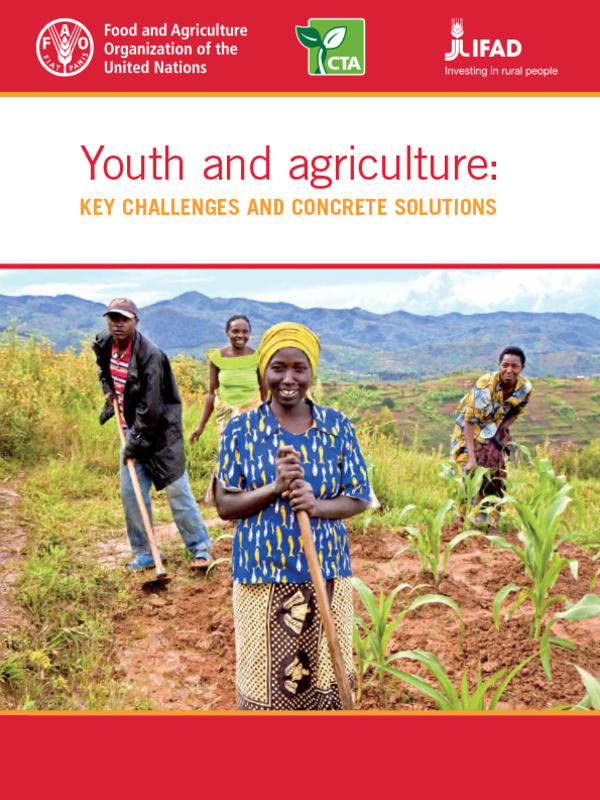
Global population is expected to increase to 9 billion by 2050, with youth (aged 15–24) accounting for about 14 percent of this total. While the world’s youth cohort is expected to grow, employment and entrepreneurial opportunities for youth – particularly those living in developing countries’ economically stagnant rural areas – remain limited, poorly remunerated and of poor quality. In recognition of the agricultural sector’s potential to serve as a source of livelihood opportunities for rural youth, a joint MIJARC/FAO/IFAD project on Facilitating Access of Rural Youth to Agricultural Activities was carried out in 2011 to assess the challenges and opportunities with respect to increasing rural youth’s participation in the sector. Over the course of the project, six principal challenges were identified. For each challenge, this publication presents a series of relevant case studies that serve as examples of how this challenge may be overcome.

View online/download
External Link

Fostering inclusive outcomes in sub-Saharan African agriculture

Despite strong per capita income growth, the structure of sub-Saharan Africa’s economies has not changed markedly in recent decades. In spite of a rapidly growing labour force and urbanizing populations, employment growth in rural areas in general and in non-farm sectors in particular has been slow, and poverty levels in those areas remain relatively higher than in urban areas. So, the key question is: how to catalyse economic transformations that foster inclusive and sustainable development? This is where the role of agriculture is key, given that the overwhelming majority of the population across the continent depends on it as a livelihood source. The case for increasing agricultural productivity to accelerate transformation, investment and industrialization is strongly supported by well-established conceptual frameworks and historical empirical evidence. Though recent gains have been encouraging, agricultural productivity in sub-Saharan Africa still lags behind other regions. The relatively low productivity has led to a loss of competitiveness in agricultural exports and the declining share of the region’s participation in global agricultural trade. Nonetheless, the potential of building on recent gains and developing an agribusiness sector that is responsive to and benefits from the work of smallholder farmers is enormous. This requires the prioritization of two main areas for policy and investment: (i) supporting the emergence of a modern agro-industrial sector; and (ii) developing the potential of smallholders to engage in high-value activities across agricultural value chains.

View online/download
External Link

Rural-urban linkages and food systems in sub-Saharan Africa

Given the context of transitions related to rapid urbanization, the roles that rural economies and societies will have to play (particularly smallholder farmers and other rural producers) in creating sustainable and inclusive food systems, in generating employment and incomes and in contributing to more balanced, equitable and mutually reinforcing patterns of rural-urban development in Africa require the attention of analysts, policymakers and development programmes in the years ahead. Addressing challenges related to a bulging population of young people will be particularly important in any work on the rural-urban nexus, in which youth migration plays critical roles. This is borne out by an analysis of evidence from sub-Saharan Africa and elsewhere, which stresses the importance of increasing productivity and incomes among rural people, particularly smallholders, during processes of economic and social transformation. Emerging trends and opportunities – such as the increasing demand for food and the changing nature of that demand as consumer preferences evolve, urbanization, demographic patterns that mean young people are an increasingly important proportion of the overall population, and more integrated food value chains – all point to the importance of ensuring key rural dynamics are taken into account in developing rural-urban linkages. Taking account of these dynamics will mean addressing key rural-urban inequalities and connectivity gaps, developing more integrated and inclusive links within food systems and agricultural value chains, testing spatial and territorial approaches to development that provide valuable tools to integrate the rural dimension into debates surrounding urbanization, the promotion of a more sustainable urbanization, and building decent employment in food value chains. Nonetheless, the review of evidence in this paper suggests that, while urbanization potentially opens up opportunities for inclusive rural and structural transformation, this can only be achieved when suitable policies and investments are put in place to adequately address the particular needs of often-neglected rural people who play critical roles in food systems.

View online/download
External Link

Background paper to the synthesis of the lessons learned from the IFAD9 Impact Assessment Initiative

In recent years, the International Fund for Agricultural Development (IFAD) has increasingly strengthened its focus on achieving and measuring results. In 2011-2012, resources were invested in the IFAD9 Impact Assessment Initiative (IFAD9 IAI) in order to: (i) explore methodologies to assess impact; (ii) measure – to the degree possible – the results and impacts of IFAD-financed activities; and (iii) summarize lessons learned and advise on rigorous and cost-effective approaches to attributing impact to IFAD interventions. The initiative reflects a recognition of IFAD’s responsibility to generate evidence of the success of IFAD-supported projects so as to learn lessons for the benefit of future projects. This paper describes the IFAD9 IAI and the range of methods that have been identified to broaden the evidence base for the estimation of IFAD impacts, and presents the results from the aggregation and projection methodology used to compute the Fund’s aggregate impact on key outcomes, while also highlighting what has been learned. The results show that there are many areas in which IFAD-supported project beneficiaries have had, on average, better outcomes in percentage terms as compared to comparison farmers who were not project beneficiaries. Specifically, IFAD-supported projects are effectively poverty-reducing: when choosing durable asset indexes as the preferred poverty proxies on the grounds that they better approximate long-run wealth, findings point to statistically significant gains. Overall, the analyses strongly imply that IFAD is effectively improving the well-being of rural people in terms of asset accumulation, and higher revenue and income. The IFAD9 IAI represents a pioneering research effort, which has tried to overcome the clear challenges of designing data collection and conducting ex post impact assessments in a context where data were scarce, with a view to measuring progress towards a global accountability goal over a very short period of time. Therefore, an important recommendation is that future impact assessments should be selected and designed ex ante, and structured to facilitate and maximize learning, rather than used solely as an instrument to prove accountability.

View online/download
External Link

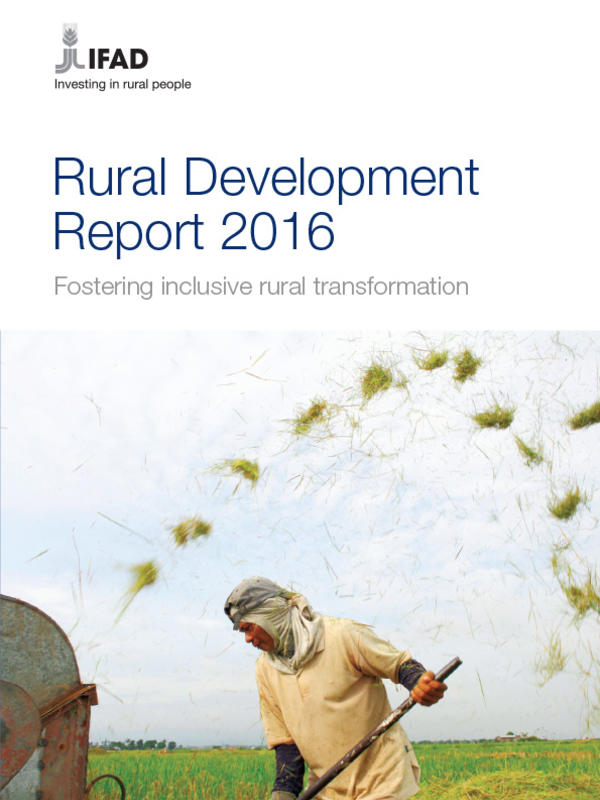
Rural Development Report 2016: fostering inclusive rural transformation

The 2016 Rural Development Report focuses on inclusive rural transformation as a central element of the global efforts to eliminate poverty and hunger, and build inclusive and sustainable societies for all. It analyses global, regional and national pathways of rural transformation, and suggests four categories into which most countries and regions fall, each with distinct objectives for rural development strategies to promote inclusive rural transformation: to adapt, to amplify, to accelerate, and a combination of them. The report presents policy and programme implications in various regions and thematic areas of intervention, based on both rigorous analysis and IFAD’s 40 years of experience investing in rural people and enabling inclusive and sustainable transformation of rural areas.

View online/download
External Link

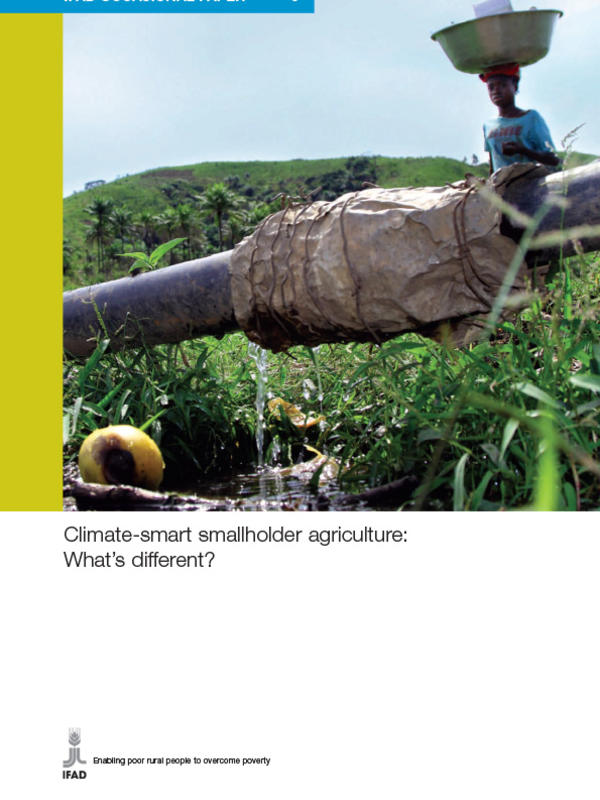
Climate-smart smallholder agriculture: what's different?

There is a growing consensus that climate change is transforming the context for rural development, changing physical and socio-economic landscapes and making smallholder development more expensive. But there is less consensus on how smallholder agriculture practices should change as a result. The question is often asked: what really is different about ‘climate-smart’ smallholder agriculture that goes beyond regular best practice in development? This article suggests three major changes.

View online/download
External Link

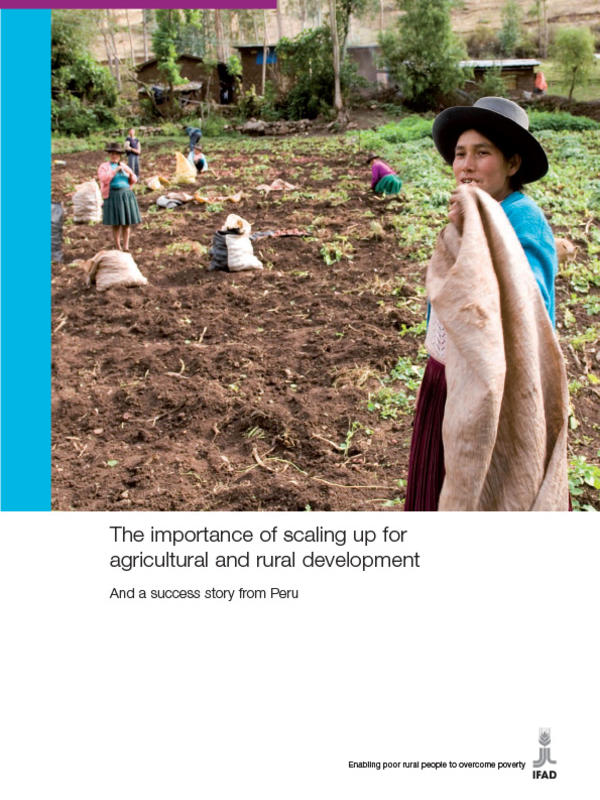
The importance of scaling up for agricultural and rural development

The thesis of this article is that governments of countries that plan their agricultural and rural development programmes on a large scale – typically covering the entire agriculture sector and including all or most of the important ingredients for agricultural growth and rural development – do better in terms of agricultural production and reduction of rural poverty and hunger than do country governments that do not invest broadly and at scale in such development. The reason, for most low-income countries, is that agriculture still constitutes the most important economic sector, uses the most labour and contains the majority of the poor, who are also the majority of the hungry. Government action to stimulate agriculture at scale pays off by increasing food production and rural incomes. Donors that contribute to government programmes at scale and for the long term thus contribute more to this success than donors that do not operate at scale, and that have short-term objectives or invest in small-scale projects. IFAD’s experience in Peru, in which it supported the Government in scaling up agricultural and rural development investments in poor areas of the Peruvian Andes over a period of 20 years, has paid off spectacularly in terms of poverty reduction. The Peruvian example points to two critical ingredients: government commitment to operating at scale and donor willingness to support governments in doing this.

View online/download
External Link

Agricultural and rural development reconsidered

This paper is a guide to current debates about agricultural development. It analyses the changes in development approaches and thinking in recent decades and explores today's critical issues in agricultural and rural development policy. With the main focus on Africa, the paper also includes insights from Asia and Latin America.

View online/download
External Link

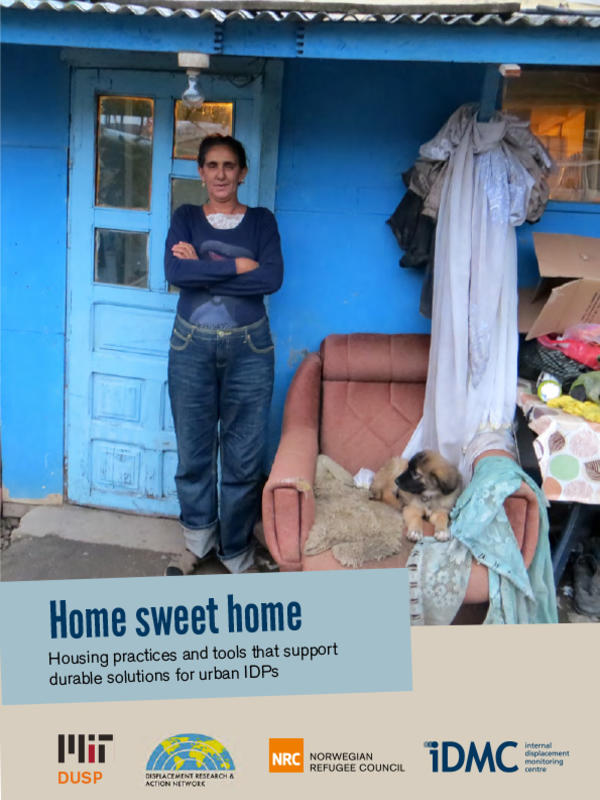
Home sweet home: housing practices and tools that support durable solutions for urban IDPs

Despite a long-standing recognition of the need to improve the response of actors addressing urban displacement, there is a lack of guidance on how to do this and a limited knowledge of practices that have successfully addressed the housing, tenure security and livelihood needs of urban IDPs. This report, the result of collaboration between IDMC and the MIT Displacement Research and Action Network (DRAN), presents different approaches and case studies that have been used to overcome recurrent challenges to adequate housing in urban displacement situations. It advocates for the use of a rights-based approach that supports the achievement of durable solutions by providing options that can guide and inform response when designing, funding or implementing housing policies and programmes in urban settings for policy makers and practitioners.

View online/download
External Link

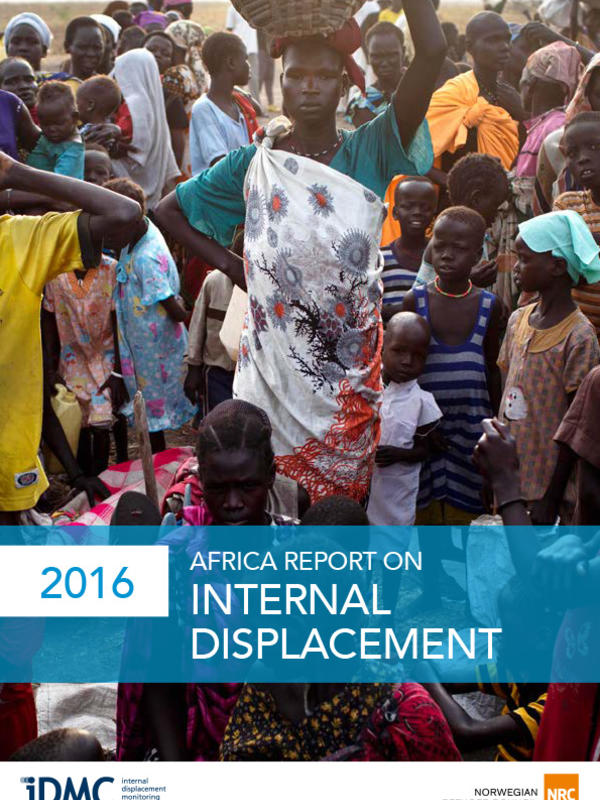
2016 Africa Report on Internal Displacement

Internal displacement has long been a concern of African governments and the African Union (AU) as a source of suffering for millions of people, a driver of food insecurity and a barrier to the sustained development we all seek. This is the first report from the Internal Displacement Monitoring Centre (IDMC) to focus exclusively on the African continent. It offers a timely reminder of the scale and complexity of the problem as we mark the anniversary of the entry into force of the Kampala Convention, Africa’s landmark commitment to preventing displacement and protecting the rights of internally displaced people (IDPs).

View online/download
External Link

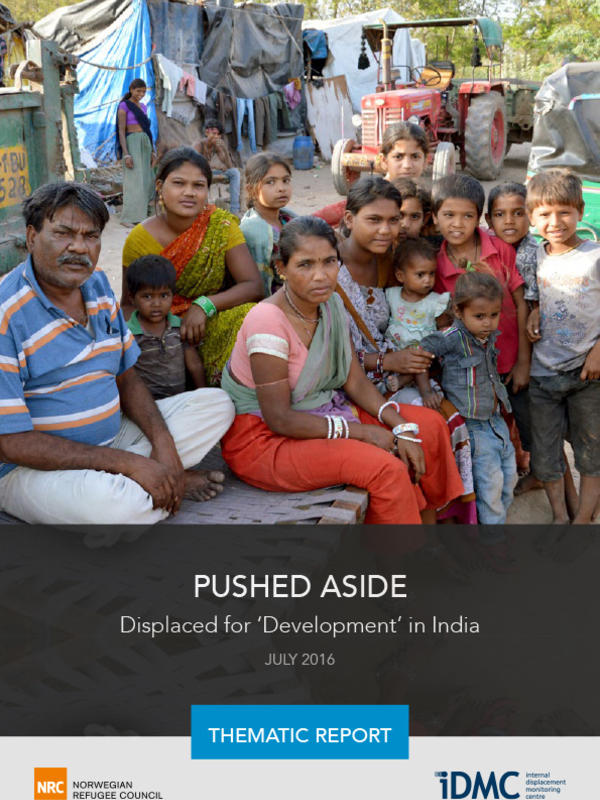
Pushed aside: displaced for 'development' in India

By providing a first-hand account of development projects and business activities that have caused displacement across India, this report documents and analyses the scale, process and impacts of the phenomenon. Rather than being priority beneficiaries of the projects that displace them on account of their losses, IDPs tend to find themselves trapped in permanent poverty. Given the limited availability of project documents and the lack of systematic monitoring, the true scale of displacement in India is unknown, as are the location and needs of many of those affected. As the world embarks on implementing the post-2015 global development agendas, Internal Displacement Monitoring Centre (IDMC) calls for the displaced to be priority beneficiaries of development work. Leaving IDPs behind risks undermining the achievement of these agendas.

View online/download
External Link

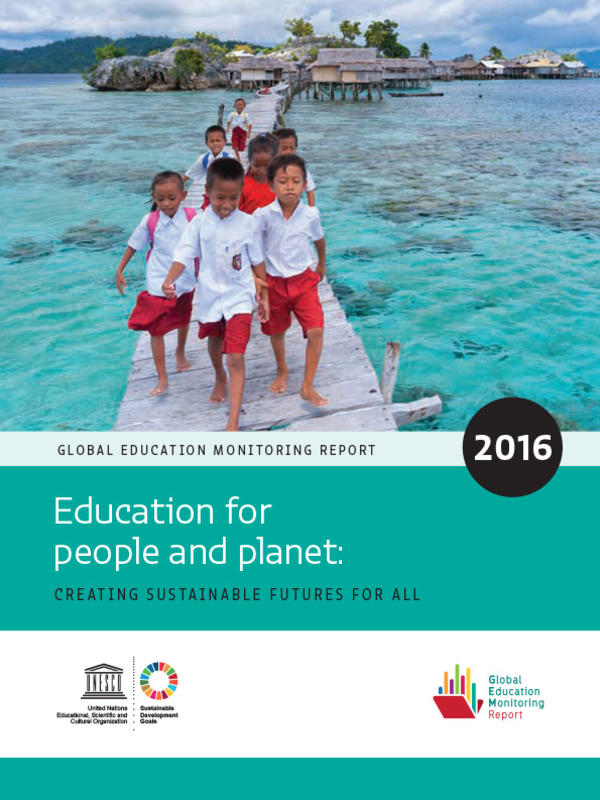
Global Education Monitoring (GEM) Report 2016. Education for people and planet: creating sustainable futures for all

The Incheon Declaration for Education 2030 has been instrumental to shape the Sustainable Development Goal on Education to “Ensure inclusive and equitable quality education and promote lifelong learning opportunities for all”. It entrusts UNESCO with the leadership, coordination and monitoring of the Education 2030 agenda. It also calls upon the Global Education Monitoring (GEM) Report to provide independent monitoring and reporting of the Sustainable Development Goal on education (SDG 4), and on education in the other SDGs, for the next fifteen years. The ultimate goal of this agenda is to leave no one behind. This calls for robust data and sound monitoring. The 2016 edition of the GEM Report provides valuable insight for governments and policy makers to monitor and accelerate progress towards SDG 4, building on the indicators and targets we have, with equity and inclusion as measures of overall success.

View online/download
External Link

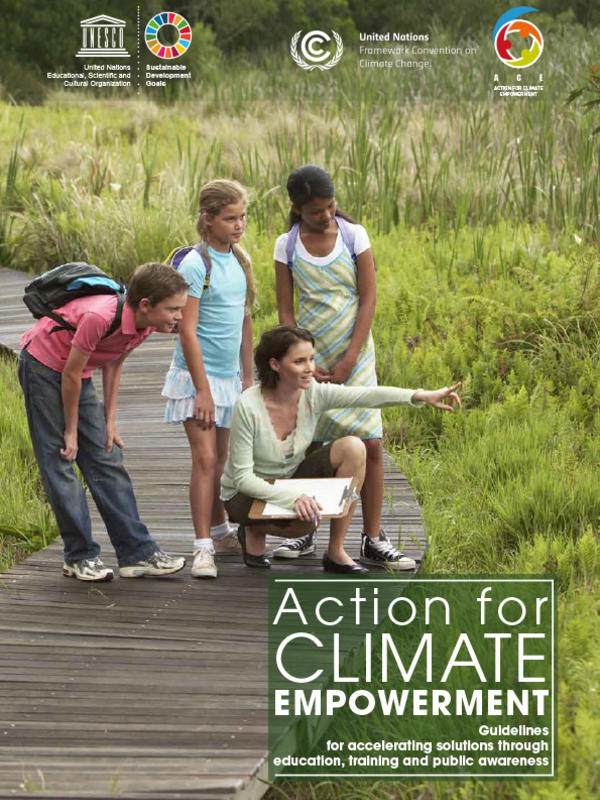
Action for Climate Empowerment: guidelines for accelerating solutions through education, training and public awareness

Action for Climate Empowerment (ACE) is a term adopted by the United Nations Framework Convention on Climate Change (UNFCCC). It refers to Article 6 of the Convention’s original text (1992), focusing on six priority areas: education, training, public awareness, public participation, public access to information, and international cooperation on these issues. These guidelines provide a flexible, phased approach to the strategic and systematic implementation of ACE activities at the national level, driven by each country’s circumstances. The guidelines are divided into 4 phases and 10 steps.

View online/download
External Link

Efficient and sustainable HIV responses: case studies on country progress

As the world economic landscape changes, so too does the HIV funding landscape. The limited resources available require more emphasis on value for money. This case study report consists of eight case studies. It highlights countries’ progress in making their HIV response more efficient or increasing domestic HIV funding, contributing to sustainability, increased scale-up and country ownership. Cambodia and Myanmar have re-allocated resources towards high-impact interventions. South Africa and Swaziland have saved millions by improving their antiretroviral drug tenders. Kenya, Namibia, Malawi and Kazakhstan have taken active steps for a future with fewer external funds. Each country has evolved strategies that other countries may apply to their particular context. The examples given here aim to catalyse country-driven action to make efficiency and sustainably funded HIV services the reality in the HIV response.

View online/download
External Link

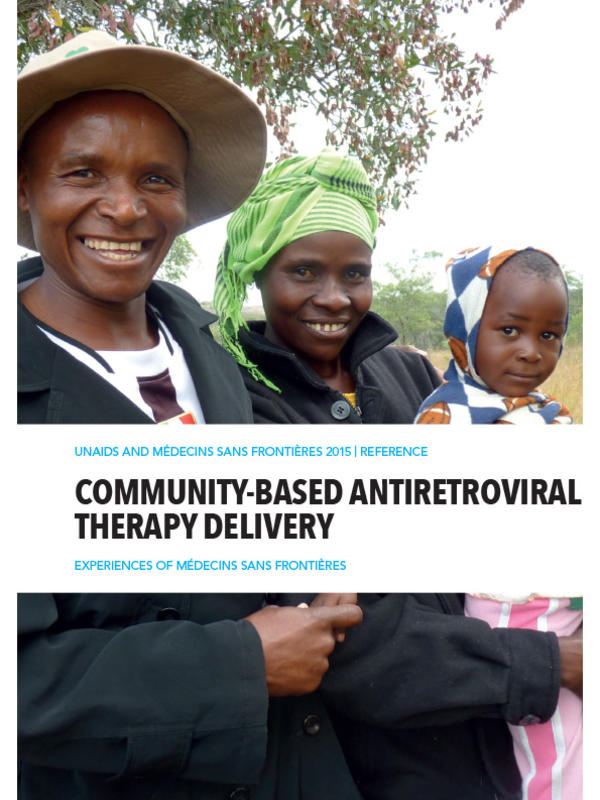
Community-based antiretroviral therapy delivery: eperiences of MSF

This document presents experiences of how community-based antiretroviral therapy (ART) delivery can improve both the level of access to treatment and the quality of health outcomes for people living with HIV. These experiences illustrate that community-based ART delivery is efficient, effective and high quality. This document draws from several Médecins sans Frontières (MSF) reports and articles regarding its experiences with community-supported ART delivery.

View online/download
External Link


Suggest a publication

Feel free to submit a publication.

Submit here