Languages

Topbar Menu EN
The SDG Fund is operationally closed. This site is alive for knowledge and dissemination purposes.
Warning: This website is closed. Be aware of phishing or social engineering fraudulent requests of payments or certificates. Explore our programme areas.
Please visit jointsdgfund.org

Search our database of publications


Community based nutrition: training guide of health workers and health extension workers

This training guide is used by Master Trainers (MT) when they train Health Workers (HW) & Health Extension Workers (HEW) in the region before the introduction of Community Based Nutrition (CBN) activities in Ethiopia. This training guide is to be used only after the Master Trainers have received their training to be trainers of HWs/ HEWs. There are a total of seven training hours per day throughout the 10 day module.

View online/download
English

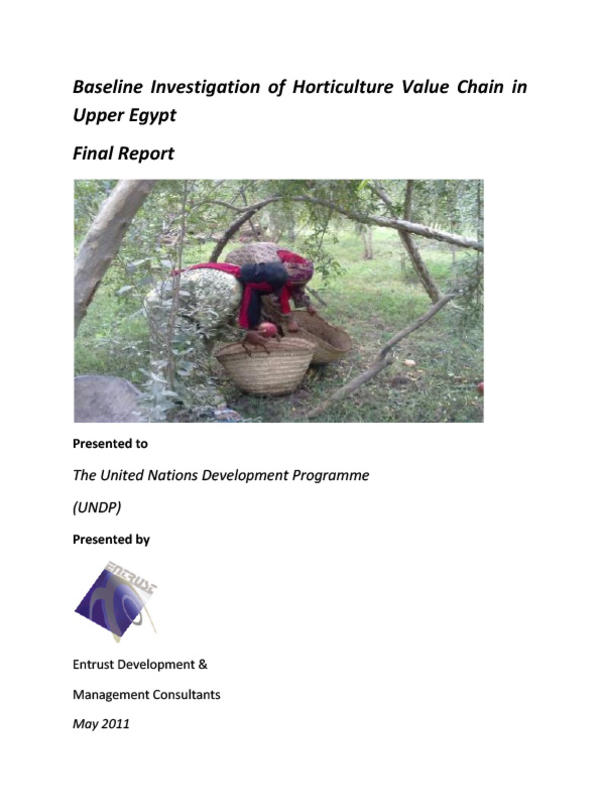
Baseline investigation of horticulture value chain in Upper Egypt

The “pro poor Horticulture Chain in Upper Egypt project” was a joint programme between specialized agencies and entities of the United Nations working in collaboration with national counterparts. The overall objective of the project was to enhance the efficiency and productivity of Upper Egypt’s small farmers and agricultural workers, and also to build the capacity of small Farmers’ Associations (FAs). This document is the result of a 2010 baseline investigation of the horticulture value chain in Upper Egypt and provides a better understanding of challenges faced by small farmers and also presents a comprehensive gap assessment of the local Farmers Associations and Post-harvest Centers (PHCs).

View online/download
English

Adaptation to climate change in the Zarqa river basin: development of policy options and integrated water resources management (IWRM)

This report summarizes the results of the second objective of the project “Review opportunities and barriers to adaptation to climate change risks” and included three major tasks: 1) Review national water strategy in Jordan, 2) Identify gaps in these policies, and 3) Propose policy options for adaptation to climate change to be adopted by policy makers. This report provides an overview of the prevailing legal and institutional framework of the water sector in Jordan in relation to climate change adaptation in the Zarqa River Basin. It also proposes a water policy for Jordan and aids the country in moving toward sustainable water resources management. It is argued that the type of climate change policy proposed could help in reducing the climate change impact of increasing temperature and decreasing precipitation.

View online/download
English

Adaptation to climate change In the Zarqa river basin: opportunities and barriers

This report’s main objective is to compile adaptation measures that are relevant to water availability and quality of water resources in the Zerqa River Basin (ZRB) that can be considered best-practices for adaptation to climate change. By doing this, it aims to support the efforts of the Government of Jordan through the Ministry of Environment to incorporate Integrated Water Resource management into climate change adaptation in the water sector. This report investigates the barriers and constraints that need to be assessed to overcome suggested adaptation measures. Based on a general classification of adaptation barriers, potential barriers to implementation of adaptation measures have been analysed and evaluated according to their degree of severity.

View online/download
English

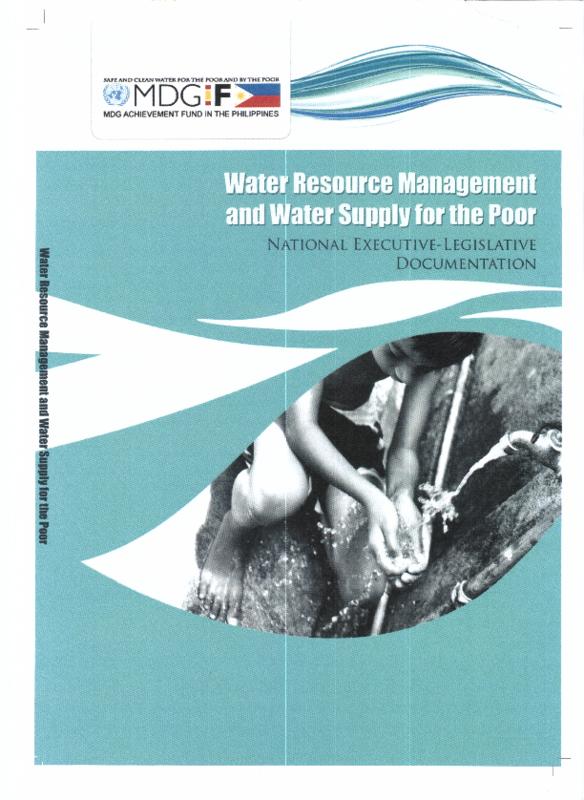
Water resource management and water supply for the poor in the Philippines

The MDG-Fund, in collaboration with the University of the Philippines National College of Public Administration and Governance, the Department of Interior and Local Government, the National Economic and Development Authority, and the National Water Resource Board, brought stakeholders together through a series of activities and forums that aimed to identify issues in the water sector and corresponding policy actions to address such issues. This document integrates the views, opinions, and aspirations of the different stakeholders as well as the recommendations and policy actions that are deemed necessary to provide greater access to water by the poor. Annex 1 includes a summary of outputs of one of the breakout sessions.

View online/download
English

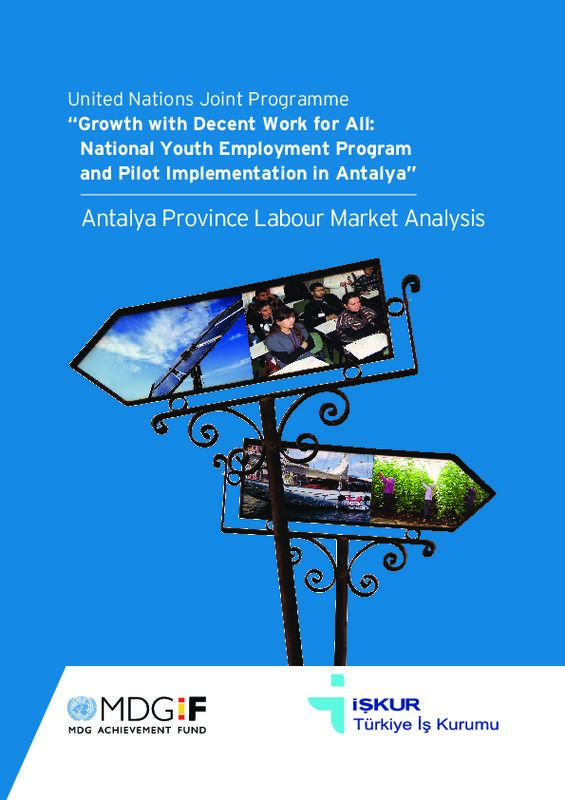
National youth employment programme and pilot implementation in Antalya, Turkey: Antalya province labour market analysis

This analysis focuses on a Turkish province that is a centre of gravity in internal migration. The situation, while presenting opportunities associated with a young and dynamic population composition, is at the same time a challenge for the low education and qualification level of the labour force. This study helped to identify priority sectors which have sustainable economic growth potential. This study also shows that enterprises mostly prefer vocational-technical school graduates as opposed to those who received occupational training. This stresses the importance of truly high quality trainings and the need to solicit the opinions of employers’ representatives from areas concerned.

View online/download
English

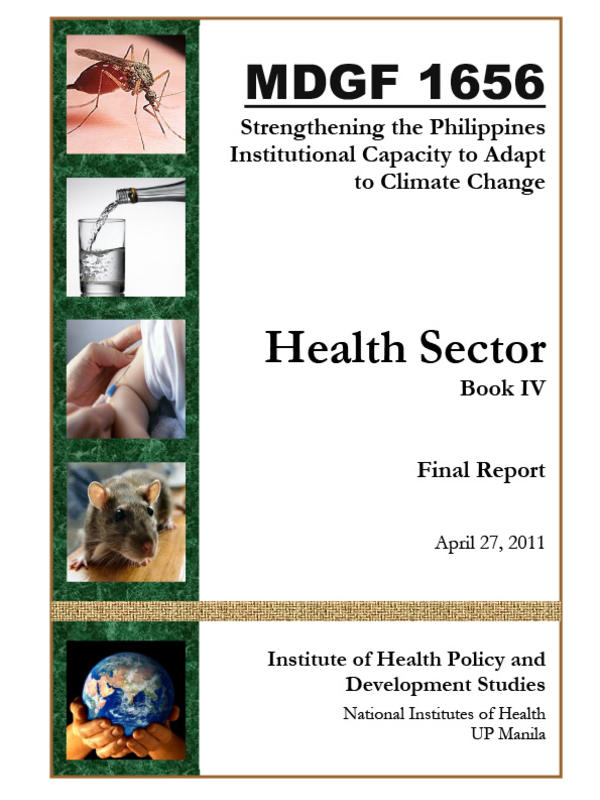
Strengthening the Philippines institutional capacity to adapt to climate change: Health sector, Book IV

In the Philippines, improving maternal health has been identified as the most likely MDG not to be achieved by the target date as the decrease of maternal deaths has been decreasing too slowly to meet targets. Due to poor health, child health is also in jeopardy. Since climate change has been identified to exacerbate the effects of poor health, ineffective mitigation and adaptation are expected to make maternal and child health more fragile. Moreover, climate change is also expected to exacerbate vector borne diseases such as malaria, dengue and leptospirosis. This is the last book of a four book final report. This manual is a supplement to the Philippine Integrated Disease Surveillance and Response System (PIDSR) Manual of Operations in order to provide guidance to health sector practitioners in making health decisions that take into account the influence of climate change and will serve as a quick reference on surveillance, a resource manual for training health personnel on climate change, and a guide for improving anticipation of health problems. This manual is designed for disease surveillance coordinators and provides guidance to users on how the PIDSR can be expanded to increase the capacity in the health sector to make decision that take into account climate change. Specifically, the manual will describe the procedure for collecting climate parameters and their integration with disease surveillance data, the analysis of their relationships which can be used for the design of public health response systems appropriate under changing climate scenarios.

View online/download
English

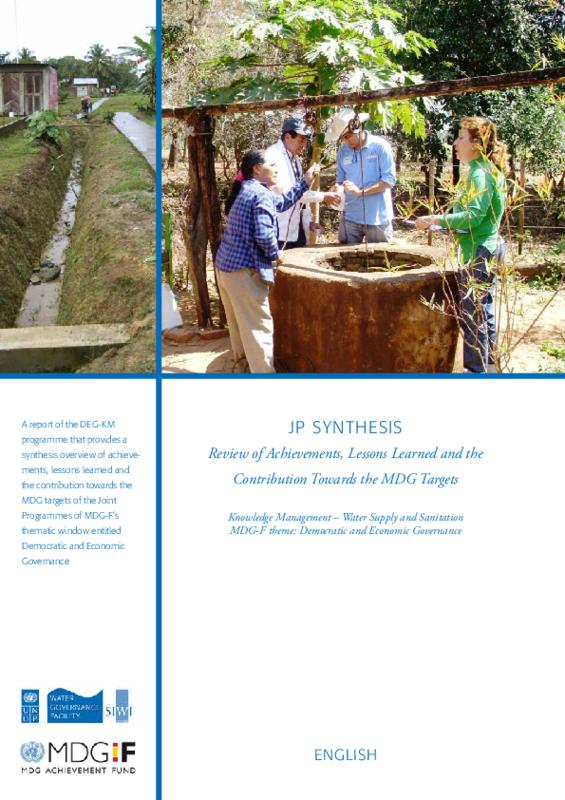
Joint programme synthesis II: MDG-F theme: democratic and economic governance

This report provides a synthesis overview of achievements, lessons learned and the contribution towards the joint programmes (JPs) of the MDG Achievement Fund's (MDG-F) thematic window entitled Democratic and Economic Governance (DEG). The MDG-F's water and sanitation programmes have worked with regulatory reforms and capacity development for improved services at both national and local levels, and striven to direct investments towards disadvantaged regions. Citizen awareness, participation, gender equality and the inclusion of marginalised populations, are important concerns that have been emphasised by the programmes.This DEG Knowledge Management (KM) programme report provides an overview of the successes and lessons learned, and a discussion of the joint contribution of DEG programmes towards the MDG target on water and sanitation.

View online/download
English

Analysis of Supreme Court water related cases in the Philippines (1901 - 2010) and policy recommendations

This analysis contributed to a three year joint programme (JP) entitled “Enhancing Access to and Provision of Water Services with the Active Participation of the Poor” in the Philippines. The JP aimed to enhance provision of and access to water services of poor communities by filling in gaps in existing water supply delivery programs. The main output of this project is a digest on jurisprudence in the water supply sector which includes: a) a compilation of relevant Supreme Court decision from 1901 to 2010; and b) a summary of those decisions. The nature of the cases included involve aspects of the water supply sector, including but not limited to, source allocation, investment, operation and regulation, household wastewater and sanitation.

View online/download
English

Analysis of the U.S. market for organic and fair-trade bananas from the Dominican Republic

The main goal of this report is to identify strategies to facilitate the entry of organic and fair-trade bananas from the Dominican Republic (D.R.) into the U.S. market, as well as the determination of production and marketing strategies that can contribute to increased income for D.R. banana producers. The report begins with an overview of the U.S. banana market, its value chain projections and demand characteristics, followed by a SWOT analysis of the D.R. banana sector as well as a discussion of identity and branding considerations. In the concluding section, short-term and medium-term strategies for enhancing the D.R.'s presence in the U.S. organic banana market are presented.

View online/download
English

Evaluation of the Platform HD (Human Development) 2010

The purpose of the evaluation is to provide a ‘big picture’ perspective on the extent to which the Platform HD 2010 has strengthened UN-civil society relations and policy dialogue on a range of development outcomes, particularly with regard to the MDGs, human development and the advancement of inclusive multilateralism. At the country level, the evaluation assessed the extent to which the program’s activities have facilitated greater citizen participation in policies and practices related to the achievement of the MDGs, and supported UNCTs in strengthening civic engagement and human development, using the MDGs as the entry point. As a knowledge tool, the evaluation identifies best practices, lessons learned and recommendations that will be useful to the work of United Nations Country Teams (UNCTs), UN development actors (at the country, regional and headquarter levels), civil society organizations and stakeholders.

View online/download
English

Complex global schoks and the new challenges for civil society

Events surrounding the global financial crash of 2008 have crystallised the view that the speed with which economic shocks are transmitted around the world has accelerated and that the shocks are increasingly complex in nature. Drawing on grounded accounts of what it means for people living in poverty to be part of a global economy at this time, this paper sets out four challenges for civil society: the need to a) breach its own boundaries, to address cross-cutting issues at their source; b) amplify the voice of those directly affected; c) influence a fairer policy response at local, national and global levels; and d) fertilise debate, to grow new understandings of how the global economy should work, and for whom.

View online/download
English

An evidence-based review of MDG-F experiences: a contribution to the QCPR process

This document was prepared by the MDG-F in 2012 to systemize its experience to date in joint programming and implementation through its 130 joint programmes in 50 countries across five regions in eight thematic areas. The document includes evidence based lessons and good practices on issues closely related to those that were discussed during the Quadrennial Comprehensive Policy Review (QCPR), with the goal of contributing to this QCPR process. These issues include: 1. The coherence, effectiveness, relevance, and efficiency of development programmes; 2. National ownership of development processes and results; 3. Capacity development and sustainability of development results; and 4. Mutual accountability.

View online/download
English

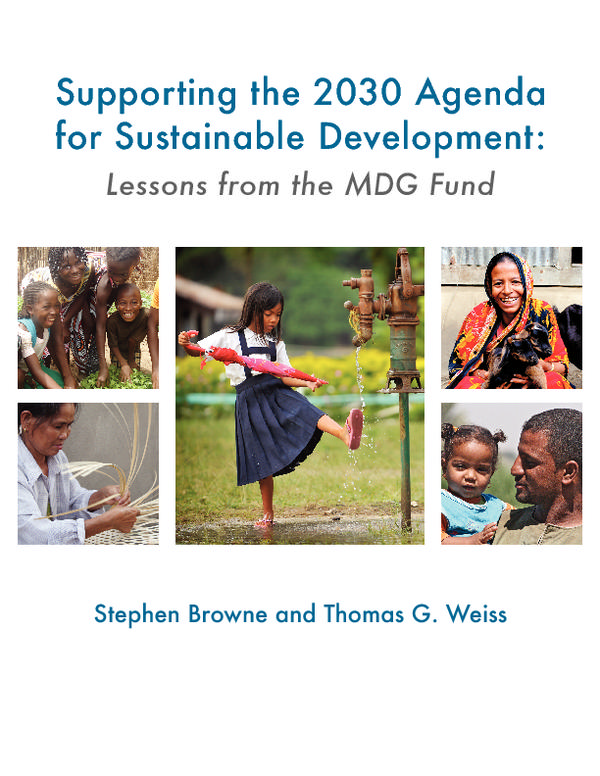
Supporting the 2030 Agenda for Sustainable Development: Lessons from the MDG Fund

The Sustainable Development Goals Fund (SDG-F), established by the UNDP on behalf of the UN system, commissioned the FUNDS Project to undertake “an independent study of the MDG-F experience to help guide future disbursements…and act as a foundation for future action in strengthening the UN development system beginning in 2016.” The special characteristics and performance of the MDG-F, and the fact that it led to the creation of new and different oversight mechanisms and procedures, means that there are lessons to be learned from this experience that could and should inform the future operations of the UN system, in headquarters as well as the field.

View online/download
English

Joint programming on youth employment and migration: a training guide

This tool was developed to offer a practical guide for the design, monitoring and evaluation of joint programmes of the United Nations on youth, employment and migration, but can be also helpful for joint programmes in other thematic areas. It consists of a set of learning modules and a toolkit with examples, templates and suggestions to manage joint programming. Guidance is also provided on the formulation, implementation and evaluation of these programmes, as well as on joint fundraising on yout employment by different entities. The moduldes and tools of this guide were developed for and validated by the programme managers of the MDG-F's 15 joint programmes on youth employment and migration.

View online/download
English

Implementation guidelines for MDG Achievement Fund joint programmes

The following MDG-F guidelines were drafted in response to the demand from UN participating organizations and their national counterparts, to consolidate experiences on joint programmes and provide guidance on joint programmes and implementation at the national level. The guidelines reflect lessons learned from our partners at the country level (including national governments at the central, regional and municipal levels, UNCT, UN agencies, civil society organizations) as well as the philosophy of the Fund, and ultimately aim to guide the implementation of MDG-F financed joint programmes. At the centre of this exercise is the ambition to improve the ability of the UN to deliver results that support national development outcomes, while placing greater emphasis on government leadership and commitment.

View online/download
English

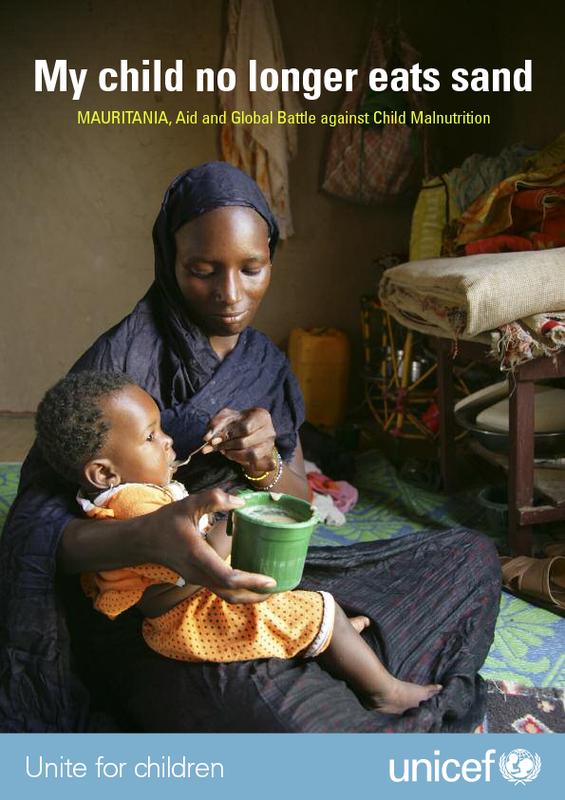
My child no longer eats sand: Aid and global battle against child malnutrition in Mauritania

This publication outlines some of the success that several joint initiatives have had in fighting malnutrition in Mauritania that should be replicated elsewhere in the region and demonstrates the impact of quality aid, coordinated between the national government, humanitarian organizations and donor countries. This study provides an overview of the four main crises facing Mauritania, examines the threats and opportunities posed to the current efforts to address these crises and concludes with four key recommendations moving forward. It also lends further credence to the effectiveness of breastfeeding as a strategy to reduce child mortality and notes that the strategy of deploying numerous hygiene, deworming, vitamin distribution and salt iodization programs had demonstrable success in not letting malnutrition manifest or aggravate diseases.

View online/download
English

Urban safety strategy formulation guidelines for Serbia

This document provides a framework from which to develop appropriate guidelines for an urban safety strategy. It also helps identify important factors necessary for the success of any program, such as how to choose appropriate stakeholders and partners and how to structure agreements with local municipalities. It was done in the context of formulating guidelines in some of the more violent areas in South Serbia. This document may help municipalities that are grappling with the problem of rising crime and violence and local authorities that are implementing projects/programmes for improving safety and the prevention of various types of violence and abuse.

View online/download
English

Return and development: increasing the developmental impact of return migration in South Serbia

For several years, Serbia has been faced with considerable flows of return migration. Even though empirical evidence from other countries indicates that returnees can have a positive impact on their home countries’ development, return migrants to Serbia are presently perceived as a burden for the country and its welfare system as a survey from 2011 shows. This paper examines the difficulties and needs of return migrants with regard to their economic situation, housing, personal documents, recognition of foreign diplomas and school certificates, schooling, social integration and health. Based on the findings, recommendations for reintegration measures are made, accounting for the specific needs of different groups of returnees.

View online/download
English

Inclusive development social survey in Jablanicki and Pcinjski districts in Serbia

This survey was conducted during October and November 2010 to analyse the situation in the field of migration, youth and inter-ethnic relations and to provide data for the evaluation of the Peacebuilding and Inclusive Social Development (PBILD) in south Serbia’s two districts of Jablanicki and Pcinjski. The survey concluded that the level of social inclusion in Pcinjski and Jablanicki districts is relatively low and offers a list of recommendations that practitioners and state officials could use to address the key priorities that are in accordance with the real needs of youth.

View online/download
English

The access in water supply and sewerage in the informal urban settlements and rural areas in five districts of Albania

This document presents an assessment on the access to water and wastewater services in 29 communes which are outside the service coverage areas of the Water and Wastewater Companies. The objective of the study is to help Albania to adapt the laws and standards regarding water and wastewater services and consumer protection best practices as exercised in other countries of the European Union (EU). The document includes a general overview of the situation, the results from a mini-survey and the focus groups’ meetings as well as a review of the strategic documents. The study gives recommendations for improving access to water supply and wastewater services in the informal settlements of the city and in the rural areas

View online/download
English

National study on the customer services of the Albanian water utility companies

This Report has been prepared to assist the Water Regulatory Authority of Albania to assess the level of Customer Services as compared to international best practice in order to improve Customer Services in the water utilities. This innovative study describes the situation of the Water Utilities in Albania from the customer’s point of view placing his issues and concerns central to the decision making process. The study focuses on seven functional areas that generally water supply and sewerage utilities aggregate under the category of Customer Service. Conclusions and recommendations of the report highlight the need of improving relations with customer and putting the customers at the center of the companies’ strategies translating this into qualified and trained customer centered staff, coordination with Local Government Shareholders and commitment of resources of the companies.

View online/download
English

Water supply study, Rudo

Rudo Municipality is situated on the border triangle of Bosnia and Herzegovina, The Republic of Serbia and the Republic of Montenegro. This report has four main objectives: 1) provide a current situation analysis of the water supply system of Rudo as well as an analysis of development projects, studies, project solutions and harmonization of development of water supply systems with development plans and projects, 2) draft a water supply master plan for partner municipalities, 3) prioritize a plan of investment measures for a period of 10 years, and 4) conduct a feasibility study for priority investment measures

View online/download
English

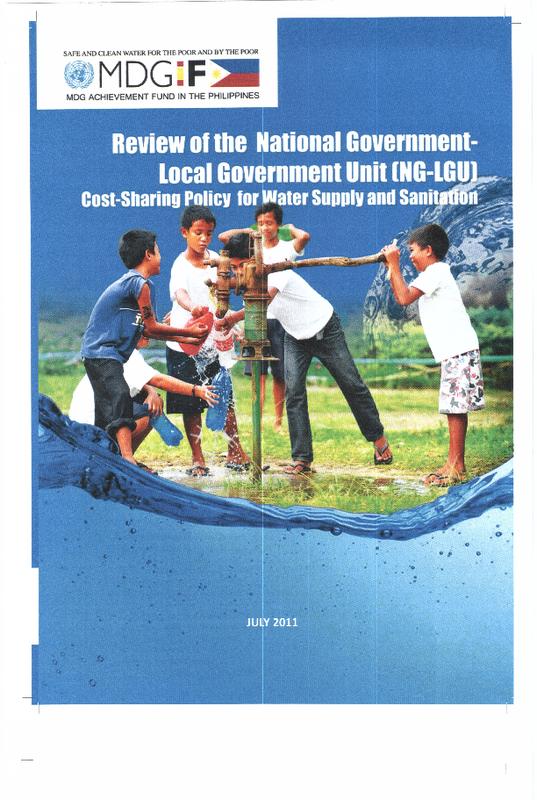
Review of the national government- local government cost-sharing policy for water supply and sanitation in the Philippines

This study reviewed the National Government (NG) - Local Government Unit (LGU) cost-sharing policy specifically for water and sanitation. It looked at current experiences at national and international levels in cost-sharing arrangements and assessed its effectiveness with the end view of recommending relevant amendments to the existing policy and practice of cost-sharing. This review focuses on how to balance limited social subsidies with better accountability and responsibility. It concludes with recommendations on the governance framework and implementation of cost-sharing policy as well as on the cost-sharing policy and mix between grants and local counterparts.

View online/download
English

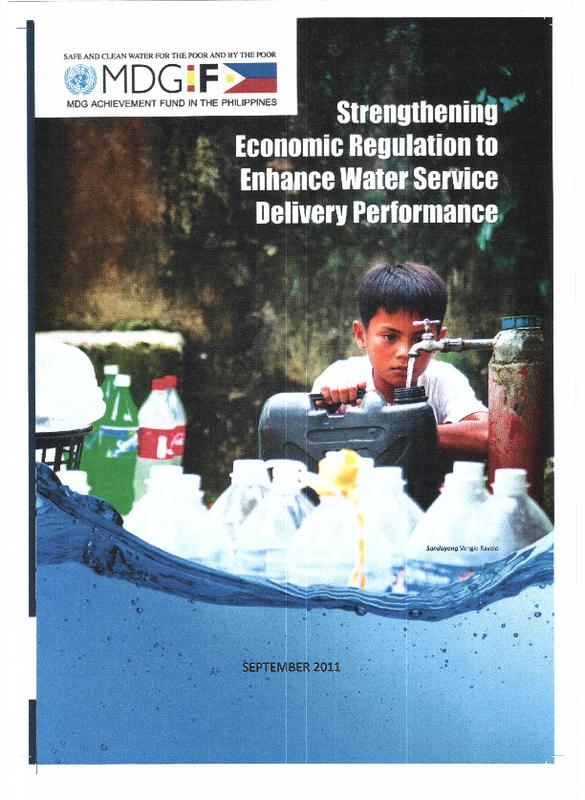
Strengthening economic regulation to enhance water service delivery performance in the Philippines

This study reviewed the Philippines’ current regulatory framework and practices that have an impact on investment flows and the performance of water service providers (WSPs) and was designed to facilitate the development of a framework for light-handed regulation (LHR) and the adjustment of the existing tariff-setting methodology of the National Water Resources Board to cater to the unregulated WSPs. This study categorized WSPs nationwide, formulated a framework for LHR and put forward policy recommendations and implementation guidelines for consideration of the National Water Resources Board.

View online/download
English


Suggest a publication

Feel free to submit a publication.

Submit here