Languages

Topbar Menu EN
The SDG Fund is operationally closed. This site is alive for knowledge and dissemination purposes.
Warning: This website is closed. Be aware of phishing or social engineering fraudulent requests of payments or certificates. Explore our programme areas.
Please visit jointsdgfund.org

Search our database of publications


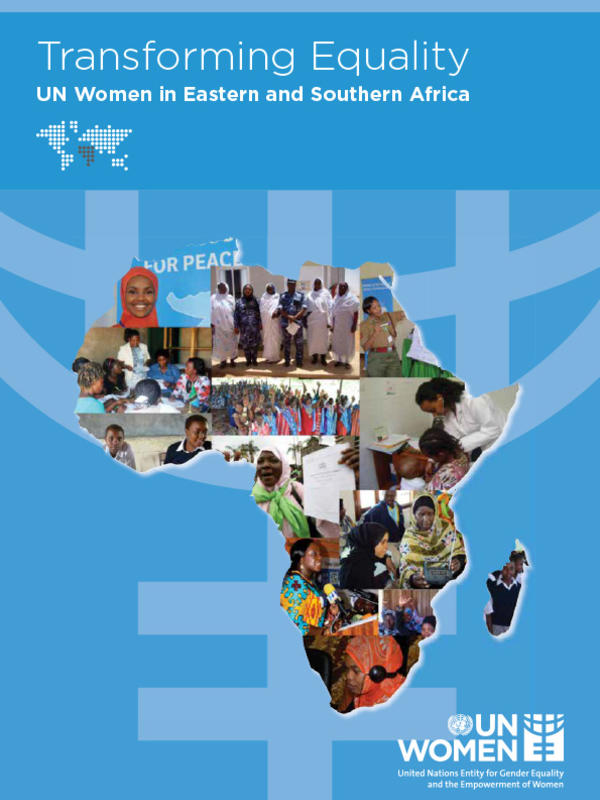
Transforming equality: UN Women in Eastern and Southern Africa

With a regional office based in the United Nations Complex, Nairobi, and country offices covering sixteen nations, with a presence in an additional ten countries, UN Women is well positioned to continue its work on gender equality in Eastern and Southern Africa.The report presents a glimpse into some of the activities and programmes lead by the regional office that have had measurable impacts, and which can be further grown with donor support.

View online/download
External Link

Compendium of good practices in training for gender equality

The Compendium of Good Practices in Training for Gender Equality aims to make both an empirical and an analytical contribution to the field of training for gender equality. The Compendium offers in-depth information on 10 different good practices, including detailed outlines of training courses, examples of dealing with challenges and a collection of tools and activities for use in training for gender equality.

View online/download
External Link

Investing in gender-equal sustainable development

This paper develops an agenda for investing in sustainable development, with particular emphasis on local priorities, poverty alleviation and gender equality. Sustainable development can take many different pathways, even within the dominant ‘three-pillar’ paradigm (economy-environment-society) of sustainability. The paper thus argues that any sustainable development pathway must include an explicit commitment to gender equality in both its conceptualization and implementation. It highlights four ‘mundane’ sectors in which investments at scale could be potentially transformative and should therefore be substantially increased: domestic water, safe sanitation, clean(er)-burning cookstoves, and domestic electricity services.

View online/download
External Link

Gender equality and sustainable development: a pathways approach

The challenges of building pathways to sustainability and enhancing gender equality are both urgent. This paper explores why they must be addressed together, and how this might be done. It begins by showing the moral, ethical and practical reasons why gender equality must be integral to sustainable development. Integrating gender equality with sustainable development requires profound conceptual understanding of both concepts and their inter-linkages. Thus the paper puts forward a ‘gendered pathways approach’, as a conceptual framework for addressing the interactions, tensions and trade-offs between different dimensions of gender equality and of sustainability. Finally, the paper addresses the policy and political challenges of transforming pathways towards greater gender equality and sustainability.

View online/download
External Link

Fund for gender equality evaluations 2011–2015: meta-analysis

UN Women’s multi-donor Fund for Gender Equality (FGE) was launched in 2009 to fast-track commitments to gender equality focused on women’s economic and political empowerment at local, national and regional levels. The Fund provides multi-year grants ranging from US$ 100,000 to US$ 3 million directly to women’s organizations in developing countries. The evaluation function is a stated priority of the FGE to ensure institutional accountability, learning, and communication of results. Using a decentralized approach to evaluation in which grant holders, with FGE guidance, undertake independent evaluations using UN standards, the Fund has developed a vast library of evaluation reports in the past six years containing a rich set of findings and recommendations. This independent meta analysis is a systematic review of findings, conclusions, lessons and recommendations from FGE evaluations produced between 2011 and 2015 that were rated as satisfactory or above according to the UN Women Global Evaluation Report Assessment and Analysis System (GERAAS) standards for evaluation reports. The primary objective of the meta analysis was to extract, analyse and communicate evidence from high-quality evaluation reports in order to support the FGE to develop constructive lessons for future systematic strengthening of programming, organizational effectiveness and the evaluation function. The meta analysis also provides evidence-based information and insights about what works for whom in regards to women’s political and economic empowerment and the processes and approach of the FGE. Apart from an important internal learning and accountability tool for UN Women, its donors and grantees, the report intends to be of use to women’s rights funders, civil society organizations and development practitioners.

View online/download
External Link

Women and violent radicalization in Jordan

Jordan remains stable amidst regional tensions but is not immune to radicalization threats. Preventing violent extremism and integrating the participation and concerns of women in peace and security has become a priority for the Government of Jordan, especially as it fulfills its commitments to UN Security Council resolutions 1325 and 2242 on women, peace and security. UN Women Jordan and the Jordanian National Commission for Women commissioned Al-Hayat Center for Civil Society Development - RASED and Search for Common Ground conducted a study on the gendered dimensions of radicalization in Jordan. The research focused on the perceptions of men and women of radicalization in their communities, the risks that women and girls may face from radicalization, the roles that women occupy in both the radicalization and deradicalization processes, and whether current efforts at deradicalization are gender-sensitive. The study found that both men and women perceive radicalization to be occurring in their communities and in universities. The majority of respondents also believed that women are at greater risk from radicalization than men and that it could exacerbate existing limitations on women’s freedom and access to their rights. The study also examines the role of religious leaders and mothers in radicalization. The findings from the study inform the development of Jordan’s National Action Plan on Women, Peace and Security as well as future programming efforts aimed at preventing violent extremism.

View online/download
External Link

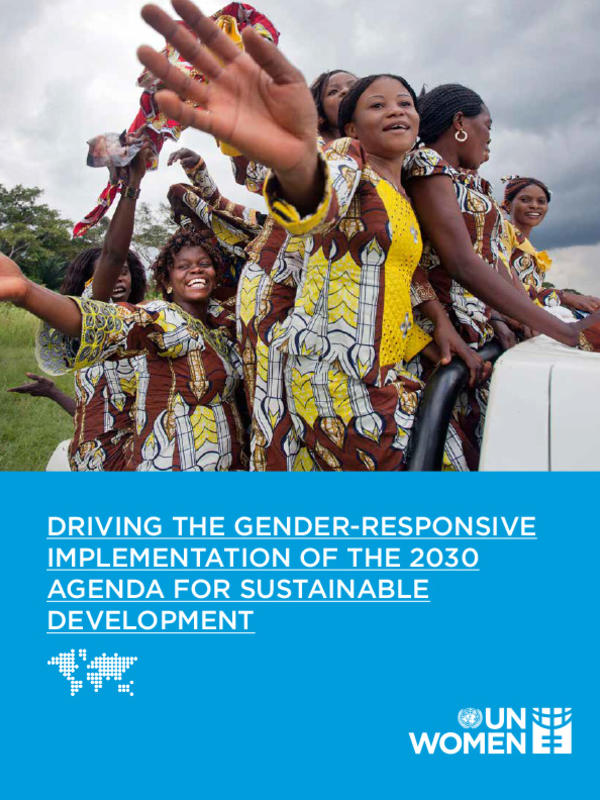
Driving the gender-responsive implementation of the 2030 Agenda for Sustainable Development

At the 60th session of the UN Commission on the Status of Women (CSW60) in March 2016, Member States reiterated their commitment in the 2030 Agenda to significantly increase investments to close the gender gap, to strengthen support for gender equality institutions at all levels, and to systematically embed gender perspectives into all aspects of implementation, including in their work on data and statistics, indicators, follow-up and review, and to build accountability and give primacy to women’s leadership at all levels. The CSW60 Agreed Conclusions laid out the strategy and road map for gender-responsive implementation of all Sustainable Development Goals. “Driving the Gender-Responsive Implementation of the 2030 Agenda for Sustainable Development” highlights the key messages and presents an analysis of the CSW60 agreed conclusions.

View online/download
External Link

The conflict did not bring us flowers: the need for comprehensive reparations for conflict-related sexual violence in Kosovo

Reparations for conflict-related sexual violence remain a pressing issue in many parts of the world. Sexual violence has been a feature of almost all conflicts to date, yet remains under-reported and under-acknowledged. In recent years, increased emphasis has been placed on the issue, paving the way for prevention and accountability mechanisms, along with increased attention to the needs and rights of survivors of sexual violence. In Kosovo, significant efforts have been undertaken to enact a legal framework to provide comprehensive reparations to survivors of sexual violence in the lead up to, during, and immediately after the 1998 - 1999 armed conflict. However, survivors remain in difficult circumstances as the legal framework required to enable survivors to obtain reparations is yet to be implemented . With the financial support of the European Union, UN Women Kosovo commissioned this study to complement the existing initiatives in Kosovo with updated research, focused on bringing survivor voices and perspectives to the forefront of future policy and programme design. It brings together best practices in the design and implementation of reparations, including those outlined in the 2014 United Nations Secretary General's Guidance Note on Reparations for Conflict-Related Sexual Violence, international law on the right to reparation, and the views, expectations and needs of survivors of conflict-related sexual violence in Kosovo. It aims to complement efforts to date, and to ensure the right to reparation for survivors of conflict-related sexual violence that is victim-centric, gender-sensitive and transformative.

View online/download
External Link

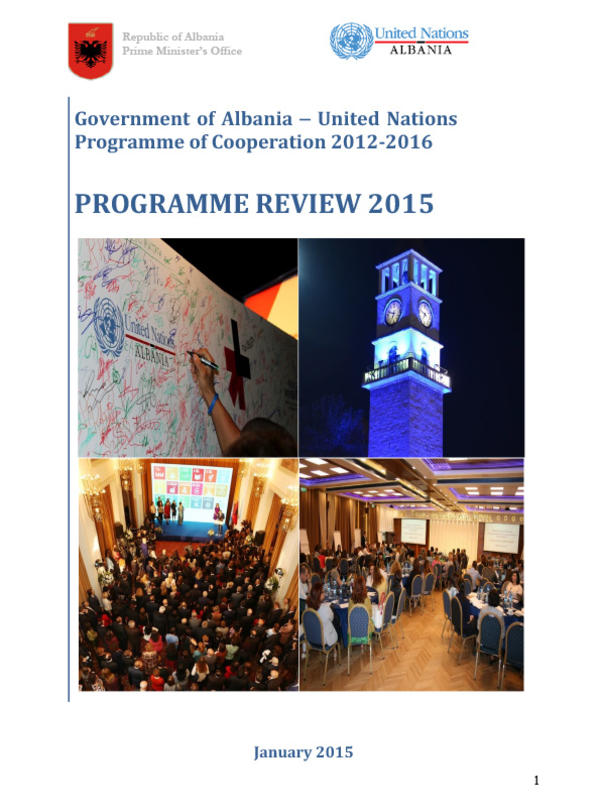
Government of Albania - United Nations programme of cooperation 2012-2016: programme review 2015

This 2015 programme review report presents the progress and results achieved by national partners and supported by the United Nations in Albania under the four pillars of the Government of Albania – United Nations Programme of Cooperation (PoC) 2012-2016, namely: (i) Human Rights; (ii) Inclusive Social Policies; (iii) Governance and Rule of Law; and (iv) Regional and Local Development. Additionally, it provides a brief overview of the implementation challenges and lessons learned, potential forthcoming United Nations support to the country, and the preliminary financial position for the year 2015.

View online/download
External Link

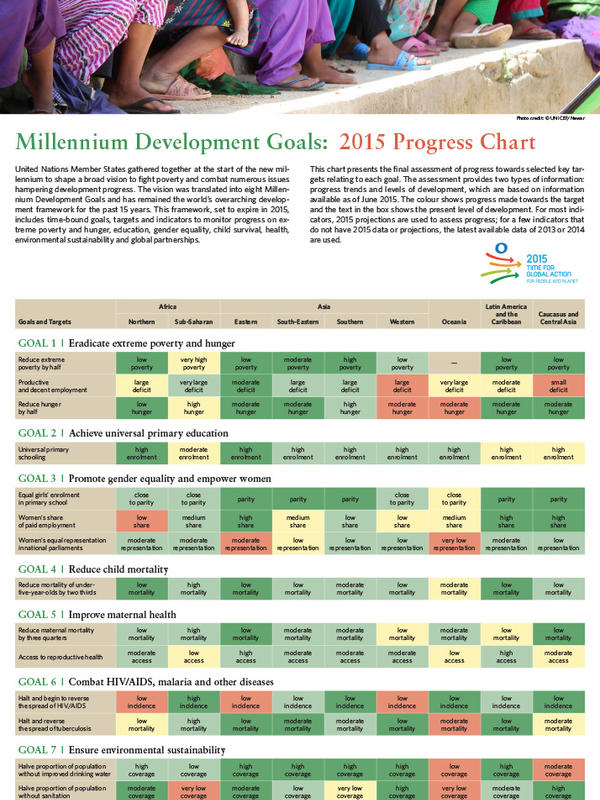
Millennium Development Goals: 2015 progress chart

This chart presents the final assessment of progress towards selected key targets relating to each MDG. The assessment provides two types of information: progress trends and levels of development, which are based on information available as of June 2015.

View online/download
External Link

Looking back, leaping forward: moving from MDGs to SDGs in Europe and Central Asia

This report takes stock of the progress achieved in Europe and Central Asia under the MDGs with the aim to chart the elements that are crucial for a successful transition to the SDGs. It draws on the experiences derived from the implementation of the MDGs, but also addresses the new challenges and opportunities for integrated interventions that come with the much more complex 2030 Sustainable Development Agenda. The report is structured into three parts. First, it takes stock of the progress achieved in the implementation of the MDGs. It aims to identify the main challenges at the beginning of the MDG period, how these were addressed and what has been achieved. The second section places the MDGs in the context of the wider SDG framework by identifying the unfinished agenda under the MDGs and discussing how the areas covered by the MDGs are now reflected in the 2030 Agenda. The final section describes some of the initial steps that governments in the region are taking to implement the 2030 Agenda and the ways in which the regional UN system can support these efforts. It concludes by identifying and assessing a number of risks that may influence SDG achievement and stressing the importance of collaboration for successful implementation.

View online/download
External Link

Standard operating procedures for countries adopting the 'Delivering as One' approach

Following the implementation of the ‘Delivering as One’ approach in 8 pilot countries, a second generation of “Delivering as One” was called for in 2012 and more than forty countries have formally adopted it. Efforts under 'Delivering as one' have now matured to the point where this set of Standard Operating Procedures is developed. They will enable the United Nations to function more effectively and foster greater collaboration and teamwork. The document is structured according to the core elements of the ‘Delivering As One’ approach: One Programme, Common Budgetary Framework (and One Fund), One Leader, Operating as One and Communicating as One.

View online/download
External Link

Eight case studies on integrating the United Nations’ normative and operational work

The United Nations System has shown the importance and use of international norms and standards for the UN Country Teams (UNCTs) in identifying and designing intervention strategies in various contexts. While the particular instruments and mechanisms vary from country to country, the common thread is the use of the human rights-based approach (HRBA) in every case study. This report shows how different UN agencies, in widely different situations, have developed and carried out joint programming for the implementation of United Nations norms and standards. Findings, lessons and recommendations drawn from the case studies are presented in this report.

View online/download
External Link

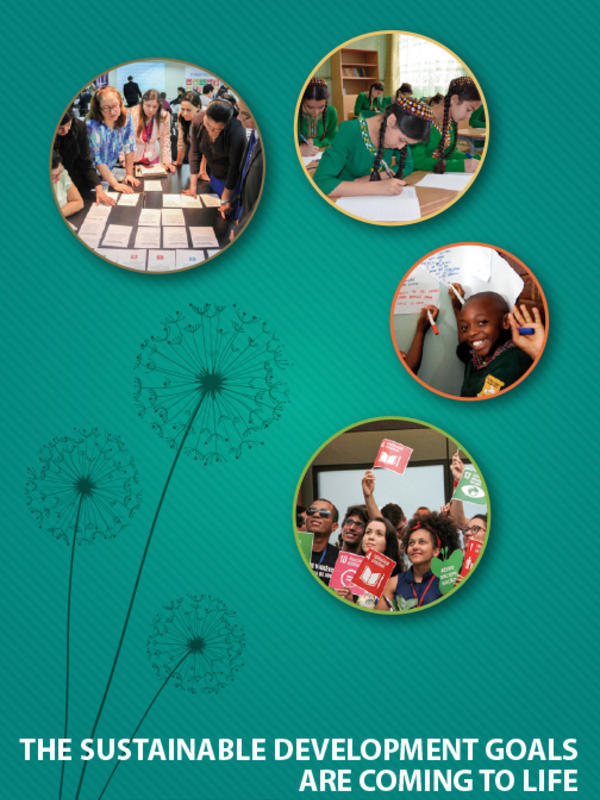
The Sustainable Development Goals are coming to life: stories of country implementation and UN support

This publication provides a glimpse into the early efforts of 16 countries across regions to bring the global SDGs to life, and the role United Nations Country Teams (UNCTs) play in the process. It illustrates how these countries are beginning to integrate the 2030 Agenda into visions, strategies and plans at the national, sub-national and local levels. The country efforts include raising public awareness, seeking engagement of different stakeholders, adapting the SDGs to national and local contexts, increasing coherence across policy areas and between levels of government, assessing risk and strengthening monitoring and accountability mechanisms.

View online/download
External Link

The Sustainable Development Goals are coming to life: stories of country implementation and UN support

This publication provides a glimpse into the early efforts of 16 countries across regions to bring the global SDGs to life, and the role United Nations Country Teams (UNCTs) play in the process. It illustrates how these countries are beginning to integrate the 2030 Agenda into visions, strategies and plans at the national, sub-national and local levels. The country efforts include raising public awareness, seeking engagement of different stakeholders, adapting the SDGs to national and local contexts, increasing coherence across policy areas and between levels of government, assessing risk and strengthening monitoring and accountability mechanisms.

View online/download
External Link

Value chain analysis of solar water heater industry in China

This study was conducted as part of a larger joint programme that aims to advance efforts to promote clean development through the creation of green jobs. It examines major problems currently besetting solar water heater manufacturers and distributors in Dezhou, China, and offers suggestions for improving the solar water heater value chain.

View online/download
English

Towards developing a policy on labour migration in the Republic of Serbia

In today’s globalized world, financial, goods and labour markets are undergoing an active transformation and integration, with no country remaining on the sidelines. The global economic downturn of 2008-2009 clearly demonstrated the importance of developing effective and fair systems of government control over economic processes and resource distribution. This ‘White Paper’ has been put together to support the Serbian Government’s current efforts in formulating an economically viable, efficient, but at the same time socially fair policy on labour migration regulation. This document takes into consideration effective international approaches evolved in other countries in recent years and presents a way forward that includes recommendations such as the need to give temporary migration priority over permanent migration when designing active labour migration options for nationals’ employment.

View online/download
English

The Serbian diaspora and youth: cross-border ties and opportunities for development

The Republic of Serbia has traditionally been a country of emigration for economic and political reasons and is also well known for its intellectual and highly skilled diaspora abroad. This paper, produced by the International Organization for Migration (IOM), analyzes data about the diaspora and proposes policy initiatives for the management of labour migration. This study is relevant for national and state ministries in any country concerned with engaging with their respective diaspora abroad, developing preventative policies that can limit emigration, and understanding what would entice them to return home in the future.

View online/download
English

Proposal on innovative mechanism for development and transfer of environmentally sound technologies

The innovation and diffusion of environmentally sound technologies (ESTs) is critical to meet the challenges of climate change. However, there are great technology gaps between developed and developing countries. The timely promotion of the development and transfer of ESTs will help to not only more rapidly narrow the technology gap but also achieve significant global climate benefits. This proposal contains a technology needs assessment, identifies barriers to technology development and transfer and presents a framework of the international mechanism for the development and transfer of ESTs.

View online/download
English

Operational manual for child grain bank for the production of complementary food in Ethiopia

Although poverty is the main cause of child malnutrition, inadequate food supply and inappropriate use of the available food compounded with limited access to clean water and poor infant caring practices also contribute to child malnutrition. This document proposes a model for piloting complementary food preparation and distribution, since child care takers must have adequate knowledge on the type and preparation of food to feed infants at the age of six months in addition to breast milk. The main objective of this project is to establish and administer a child grain bank to store complementary food production and organize its distribution to mothers and child care takers.

View online/download
English

Methodology of collection, harmonization, exchange and dissemination of migration statistics in Bosnia-Herzegovina

This document provides a situational analysis and recommendations for improving migration statistical data collection and analytical methods in Bosnia and Herzegovina (BiH). The goal is to develop an interactive and transparent database for demographic and migration data that can be used to help guide BiH migration policies and is in compliance with the requirements of EUROSTAT. It is a technical document intended for those in Europe trying to collect, analyze and build statistical databases concerned with tracking migration patterns and behavior.

View online/download
English

Design and testing of health promotion model to promote use of appropriate health services by migrant youth

This survey is part of a programme to protect the rights of vulnerable young migrants through improved access to social and labour protection. This baseline survey will help shed light on the access to health information and services for migrants in the pilot areas. Methods used were interviews, questionnaires, and focus group discussions. The policy and operational recommendations provided are intended for national and state officials inside China as well as development practitioners working on migrant rights’ programmes.

View online/download
English

Complementary feeding of children of 6 to 24 months old: training manual for health extension workers and community volunteers to train mothers and care givers

This document contains a training manual that provides information and guidance on the selection and preparation of locally available, nutritious and safe complementary foods that are easy to prepare for feeding children of 6 to 24 months old. This guide is made for those who will train mothers and caregivers in the preparation of complementary food mix and in implementing this at their community level. The aim is to help to improve the skills of health extension workers, community volunteers and care givers that are working with such children in many parts of Ethiopia.

View online/download
English

Comparative study on the employment of foreign nationals in France, Slovenia, Bosnia and Herzegovina (BiH) and Montenegro

This comparative study looks at legislation in the areas of employment and work of foreign nationals in fourEuropean countries. It lists each nation’s laws in regards to issues such as the permission to work without a work permit and relevant sanctions. It looks into quota systems, labour market tests and examines the regulations for individual categories such as “Foreign National Students” and “Domestic Staff of Diplomats.”

View online/download
English

Comparability of developed country mitigation efforts

The thirteenth Conference of the Parties (COP 13) to the United Nations Framework Convention on Climate Change (UNFCCC), in Bali in December 2007, called for mitigation commitments or actions by all developed countries, while ensuring the comparability of the efforts among them. Yet the Bali Action Plan (BAP) does not define the specific meaning of comparability. This position paper presents three schemes for comparability assessment. These approaches have been proposed as the starting point of political negotiation: equal deviation from BAU, equal reduction of emission intensity per unit of GDP and convergence of per capita emission.

View online/download
English


Suggest a publication

Feel free to submit a publication.

Submit here