Languages

Topbar Menu EN

The SDG Fund is operationally closed. This site is alive for knowledge and dissemination purposes.
Warning: This website is closed. Be aware of phishing or social engineering fraudulent requests of payments or certificates. Explore our programme areas.
Please visit jointsdgfund.org
Search our database of publications


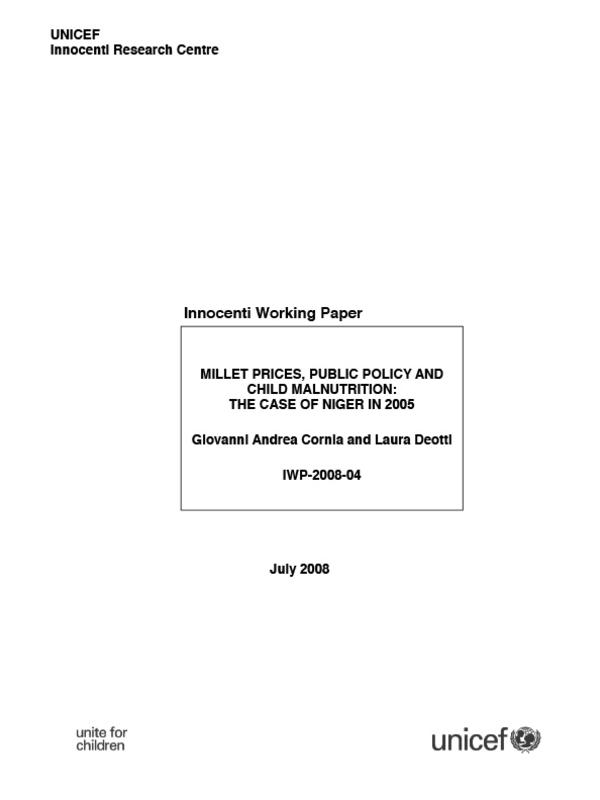
Millet prices, public policy and child malnutrition: the case of Niger in 2005

Severe food crises were common until the middle 1980s. Since then, they have been less frequent and until the sharp rise of food prices in 2007-8 the dominant perception was that, except in areas suffering from political instability, famines were slowly becoming a problem of the past. Niger’s 2005 events suggest it is too soon to claim victory. Indeed, between March and August 2005 the country was hit by a doubling of millet prices, and a sharp rise in the number of severely malnourished children admitted to feeding centres. The extent and causes of such crisis remain controversial. Some argue that these extreme events are part of a normal seasonal cycle while others suggest that in 2005 Niger’s chronic food insecurity turned into a nutritional crisis that in some areas reached near-famine conditions. This paper reviews the evidence in this regard in the light of the main famine theories and against the background of the chronic food insecurity and high child malnutrition characterizing Niger. This study concludes that the decline in food production invoked by many to explain the crisis does not help comprehending a complex crisis that can only be understood by examining the entitlement failures of several socio-economic groups, the malfunctioning of domestic and regional food markets, and policy mistakes in the fields of food security, health financing, and international aid.
View online/download
External Link

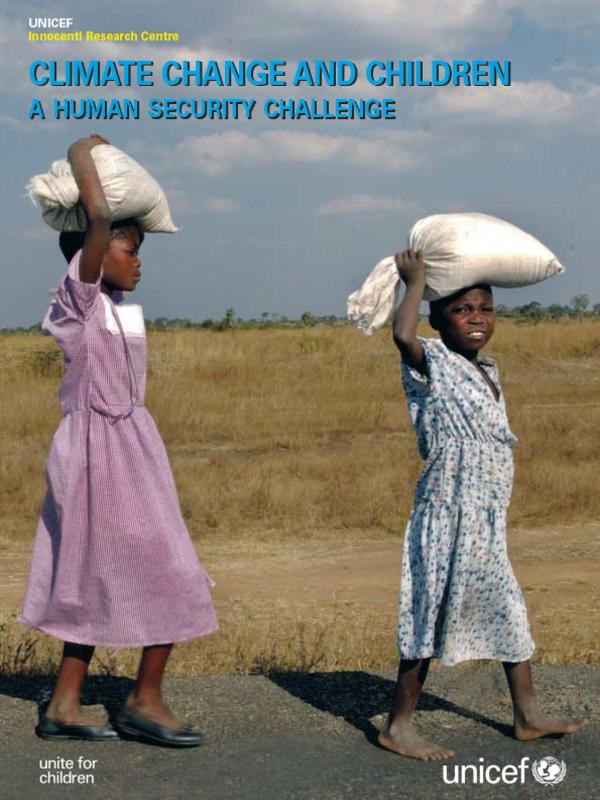
Climate change and children: a human security challenge

The study reviews the implications of climate change for children and future generations, drawing on relevant experiences in different sectors and countries of promoting child rights and well-being. It traces in considerable detail the pathways through which shifts in temperature and precipitation patterns create serious additional barriers to the achievement of the child survival, development and protection goals embraced by the international community. The role of children as vital participants and agents of change emerges as a key theme.

View online/download
External Link

Intersectional discrimination against children

This paper adds a perspective to existing research on child protection by engaging in a debate on intersectional discrimination and its relationship to child protection. The paper has a two-fold objective: (1) to further establish intersectionality as a concept to address discrimination against children; and (2) to illustrate the importance of addressing intersectionality within rights-based programmes of child protection.

View online/download
External Link

Global climate change and child health: a review of pathways, impacts and measures to improve the evidence base

This paper reviews the published evidence of pathways and impacts of global climate change on child health. The review was occasioned by the recognition that most of the work to date on climate change and health lacks clear focus on the children's dimension, while the climate change and children literature tends to be brief or imprecise on the complex health aspects. Based upon scientific and policy research conducted to date there is found to be substantial evidence of disproportionate vulnerability of children in response to climate change. The diseases likely to be potentiated by climate change are already the primary causes of child morbidity and mortality, including vector-borne diseases, water-borne diseases and air-borne diseases. For this reason further research, assessment and monitoring of child health in respect to climate change is critical. Proposals are made for governments to integrate environmental health indicators into data collection in order to accurately assess the state of child health in relation to other age groups and its sensitivity to climate change.

View online/download
External Link

South Asia in action: preventing and responding to child trafficking

This publication provides a regional analysis of anti-trafficking measures relevant to children in the countries of South Asia. It assesses national legal and policy frameworks and provides a list of recommended actions for the application of a rights-based approach to child trafficking. Emphasis is placed on the indivisibility of human rights and the influence that trafficking, exploitation and abuse have on children’s enjoyment of rights and fundamental freedoms.The study is based on the understanding that in order to ensure a comprehensive approach to child trafficking, exploitation and abuse, measures must be developed and implemented in full conformity with the 1989 Convention on the Rights of the Child and the broader framework of human rights.

View online/download
External Link

Child rights and governance roundtable: report and conclusions

The objective of this Roundtable was to reflect on the linkages between governance and child rights and initiate a dialogue between both constituencies. It brought together actors from the governance sector and child rights experts. Various studies have evidenced that good governance brings both an intrinsic and an instrumental value to a wide range of development outcomes, including poverty eradication, the reduction of inequities, economic growth and broader social objectives.

View online/download
External Link

Sexual abuse and exploitation of boys in South Asia: a review of research findings, legislation, policy and programme responses

This paper provides an overview of research findings, legislation, policy and programme responses to prevent and respond to the sexual abuse and exploitation of boys in South Asia. The background to the paper is based on the findings from previous UNICEF IRC research on child trafficking in the region, which indicated that boys enjoy less legal protection than girls from sexual abuse and exploitation and less access to services for victims. While it is seen that the majority of legislation and policies that address ‘children’ adequately address ‘boys’, this paper notes areas in which the rights and needs of boys require greater focus. Among the concerns is the absence of legal commentary on legislation regarding boys’ issues and an absence of advocacy efforts to take action and amend laws to provide equal protection to boys. In some cases legislation covers only girls and women. And, although research shows that boys face almost the same degree of sexual abuse and exploitation as girls, programming throughout the region is overwhelmingly directed at girls and women.

View online/download
External Link

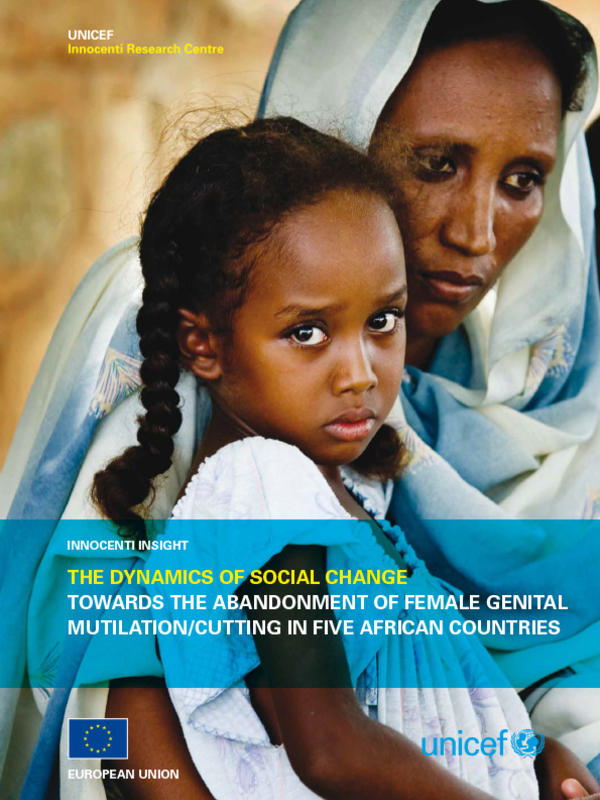
The dynamics of social change: towards the abandonment of female genital mutilation/cutting in five African countries

This UNICEF-Innocenti Insight examines the social dynamics of the abandonment of female genital mutilation/cutting (FGM/C) in five countries - Egypt, Ethiopia, Kenya, Senegal and the Sudan - and seeks to inform policies and programmes aimed at ending the practice. The experiences from the five countries documented in this Innocenti Insight provide evidence that the abandonment of FGM/C is possible when programmes and policies address the complex social dynamics associated with the practice and challenge established gender relationships and existing assumptions and stereotypes. This publication concludes with reflections on the remaining challenges of FGM/C abandonment and offers recommendations for future research and programme interventions.

View online/download
External Link

Best of UNICEF research 2014

Each year the Office of Research-Innocenti reviews submissions for the best research being published across all UNICEF offices: country programmes, National Committees, Regional Offices and headquarters divisions. The purpose of this activity is to showcase and recognize high-quality, high-impact research being done in the organization. At the end of the process each year the Office of Research-Innocenti issues a publication containing summaries of the papers considered to be of particular merit. In 2014, the summaries cover issues concerning child protection, cash transfers, ECD, maternal health, inclusive education, and WASH.

View online/download
External Link

Best of UNICEF research 2015

In addition to recognizing high quality research, the Best of UNICEF Research process aims to share findings with UNICEF colleagues and with the wider community concerned with achieving child rights. This year the competition received 99 applications With global reach, the 12 projects in the final selection cover many of the ‘traditional’ areas of UNICEF work (health, nutrition, sanitation and education), while also highlighting issues that have more recently gained prominence within the global policy agenda, such as social transfers, violence against children and school bullying, and various forms of inequality or exclusion. This publication provides summaries of these research projects, including methodology and results.

View online/download
External Link

Best of UNICEF research 2016

The Best of UNICEF competition identifies a number of studies that are assessed to be of particular merit on a number of criteria: in terms of the relevance and interest of the topic and findings; the rigour of their methodology; and the potential for impact, including lessons that could inform programmes elsewhere, or the capacity for replication or scaling up. Issues covered include health, education, WASH, child protection and social inclusion. There was also a strong emphasis on qualitative and mixed methods research, demonstrating the value of rigorous qualitative studies. A number of studies selected as of special merit in 2016 involved research directly with children and there is an increasing recognition that children’s perspectives are of primary importance. There was also a welcome attention to gender in some of the studies, including research with both adolescent boys and girls.

View online/download
External Link

Understanding governance of early childhood development and education systems and services in low-income countries

Over the past decade, early childhood development and education (ECDE) has received increasing attention. This has led to an influx of scientific, macroeconomic, and rights-based evidence, supporting the importance of equitably implementing quality ECDE programmes and services. Despite the increase in evidence, young children in the developing world still bear the greatest burden of poverty, disease, violence, and risk factors. Recent research suggests that equitable access to quality early childhood services (ECS) can reduce the impact of risk factors and improve outcomes.

View online/download
External Link

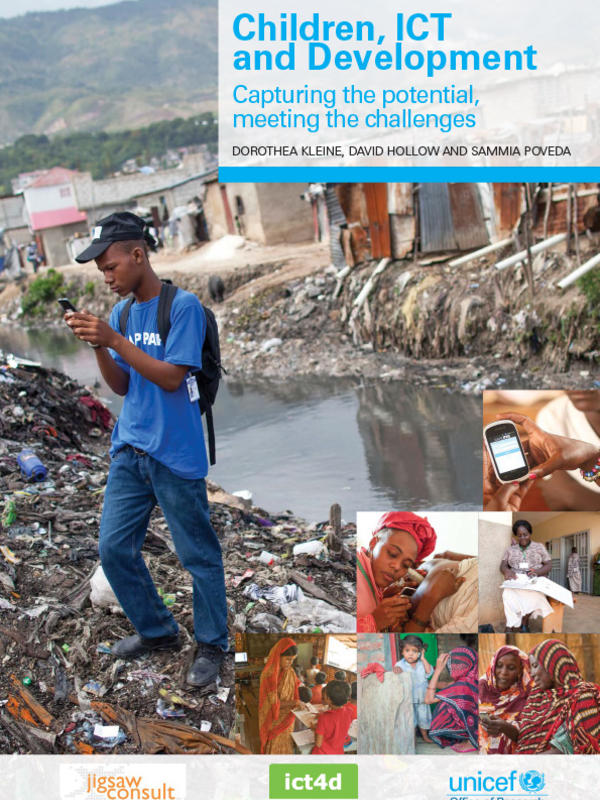
Children, ICT and development: capturing the potential, meeting the challenges

ICTs are not a technical sphere detached from the complex realities of children’s lives. They are increasingly woven into the very fabric of life, in income-rich and increasingly in income-poor countries. It is clear that if there is no targeted engagement with these socio-technical innovations, they are likely to reinforce existing inequalities. It follows that a focus on children and on greater equity leads to an active and reflective engagement with the potential and challenges of ICT for development, targeting in particular marginalized children. This report serves as a key contribution on which to build informed dialogue and decision making, developed jointly between research, policy and practice.

View online/download
External Link

Cash transfers and child nutrition: what we know and what we need to know

This paper aims to provide a comprehensive overview of the impacts of cash transfer programmes on the immediate and underlying determinants of child nutrition, including the most recent evidence from impact evaluations across sub-Saharan Africa. It adopts the UNICEF extended model of care conceptual framework of child nutrition and highlights evidence on the main elements of the framework – food security, care and health care. It finds that several key gaps should be addressed in future including cash transfer impacts on more proximate nutrition-related outcomes such as children’s dietary diversity, as well as caregiver behaviours, intra-household violence, and stress, all of which have implications for child health and well-being.

View online/download
External Link

Heterogeneous impacts of an unconditional cash transfer programme on schooling: evidence from the Ghana LEAP Programme

The paper uses data from a quasi-experimental evaluation to estimate the impact of the Ghanaian Government’s unconditional cash transfer programme on schooling outcomes. It analyses the impacts for children by various subgroups – age, gender, cognitive ability – and finds consistent impacts. There are differences across gender, especially on secondary schooling, with enrollment significantly higher for boys 13 years or older. For girls, the effect of the Livelihood Empowerment Against Poverty (LEAP) programme is to improve current attendance among those who are already enrolled in school (across all age groups). The authors found a significant effect on the expenditure on schooling items such as uniforms and stationary for these groups, which helps to explain the pathway of impact because these out-of-pocket costs are typically important barriers to schooling in rural Ghana and most of Africa.

View online/download
External Link

Cross country multiple overlapping deprivation analysis: analysing child poverty and deprivation in sub-Saharan Africa

Child poverty is defined as non-fulfillment of children’s rights to survival, development, protection and participation, anchored in the Convention on the Rights of the Child. DHS and MICS household survey data is used, taking the child as unit of analysis and applying a life-cycle approach when selecting dimensions and indicators to capture the different deprivations children experience at different stages of their life. The paper goes beyond mere deprivation rates and identifies the depth of child poverty by analyzing the extent to which the different deprivations are experienced simultaneously. The analysis is done across thirty countries in sub-Saharan Africa that together represent 78% of the region’s total population. The findings show that 67% of all the children in the thirty countries suffer from two to five deprivations crucial to their survival and development, corresponding to 247 million out of a total of 368 million children below the age of 18 living in these thirty countries.

View online/download
External Link

Can unconditional cash transfers lead to sustainable poverty reduction? Evidence from two government-led programmes in Zambia

In sub-Saharan Africa, the poorest region in the world, the number of cash transfer programmes has doubled in the last five years and reaches close to 50 million people. What is the impact of these programmes, and do they offer a sustained pathway out of ultra-poverty? In this paper we examine these questions using experimental data from two unconditional cash transfer programmes implemented by the Government of Zambia. We find far-reaching effects of these two programmes, not just on their primary objective, food security and consumption, but also on a range of productive and economic outcomes. After three years, we observe that household spending is 59 per cent larger than the value of the transfer received, implying a sizeable multiplier effect. These multipliers work through increased non-farm business activity and agricultural production.

View online/download
External Link

Child poverty in Armenia: national multiple overlapping deprivation analysis

This report provides the first comprehensive national estimates of multidimensional child poverty in Armenia, measured using UNICEF’s Multiple Overlapping Deprivation Analysis (MODA) methodology. Dimensions and indicators for three age groups (0-5, 6-14 and 15-17) were selected as the result of a broad consultative process with key stakeholders convened by UNICEF Armenia. Based on nationally representative data from the Armenian Integrated Living Conditions Survey 2013/14, the study finds that 64 per cent of children under 18 are deprived in 2 or more dimensions, with a substantially higher rate in rural than in urban areas. The highest rates of deprivation are in access to utilities, quality housing and leisure activities. More than one in four children are both multidimensionally deprived and live in consumption-poor households, while more than one in three are deprived but do not live in poor households. The findings suggest that to target the most vulnerable children, policies should concentrate on closing the rural/urban divide in infrastructure and on strengthening social safety nets, especially in rural areas.

View online/download
External Link

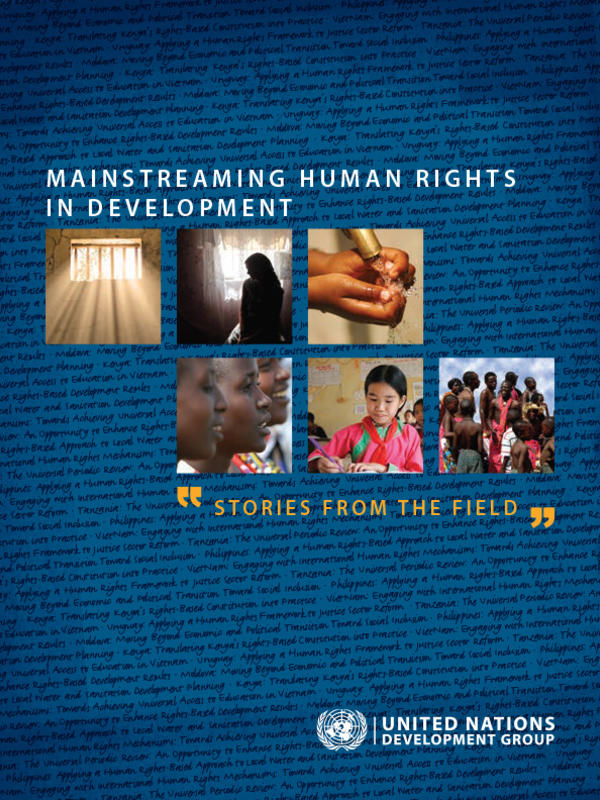
Mainstreaming human rights in development: stories from the field

Human rights mainstreaming has become part of the core work of the United Nations development system. A United Development Group Human Rights Mainstreaming Mechanism (UNDG-HRM) was established in 2009 at the request of the United Nations Secretary-General. This mechanism aims to bolster system-wide coherence, collaboration, and support to Resident Coordinators and United Nations country teams, so that they can better provide support to Member States to strengthen national capacity for the promotion and protection of human rights. This publication is a first step in collecting the experiences of UN country teams in integrating human rights into their development work. The six case studies presented herein reflect the growing number of United Nations country teams supporting governments to fulfill international human rights commitments and to integrate human rights into national policies and programmes.

View online/download
External Link

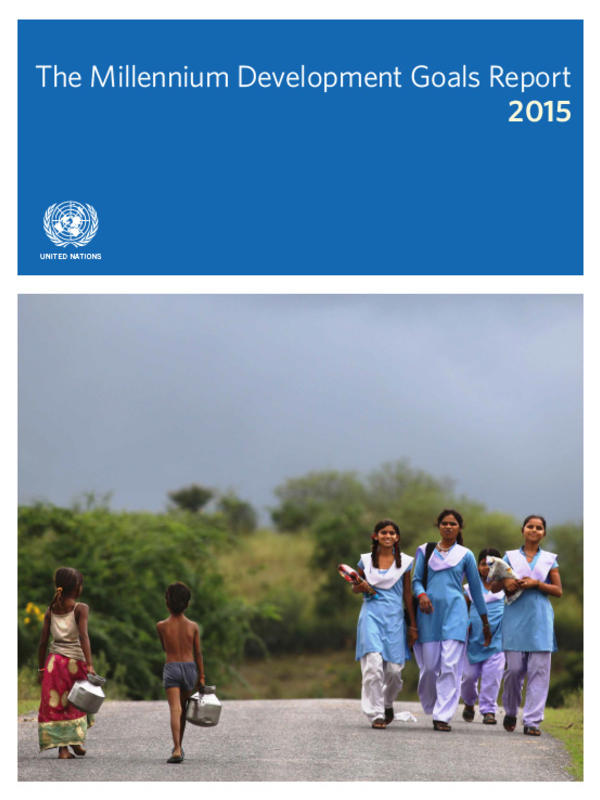
The Millennium Development Goals report 2015

This report presents data and analysis evaluating the progress towards achieving the Millennium Development Goals (MDGs). It proves that, with targeted interventions, sound strategies, adequate resources and political will, even the poorest countries can make dramatic and unprecedented progress. The report also acknowledges uneven achievements and shortfalls in many areas. The work is not complete, and it must continue in the new development era.

View online/download
External Link

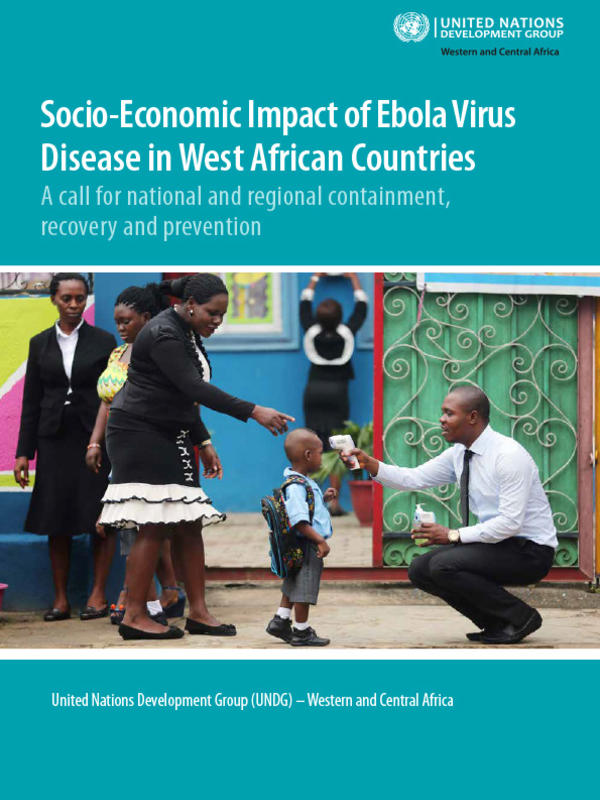
Socio-economic impact of Ebola virus disease in West African countries

This report undertakes an assessment of the Ebola virus disease (EVD) for each of the 15 West African countries, breaking away from the tradition of focusing on the three epicentre countries. It assesses the impact of EVD on poverty incidence and food security in both the three epicentre countries and other non-West African countries. The report concludes by offering a set of policy recommendations.

View online/download
External Link

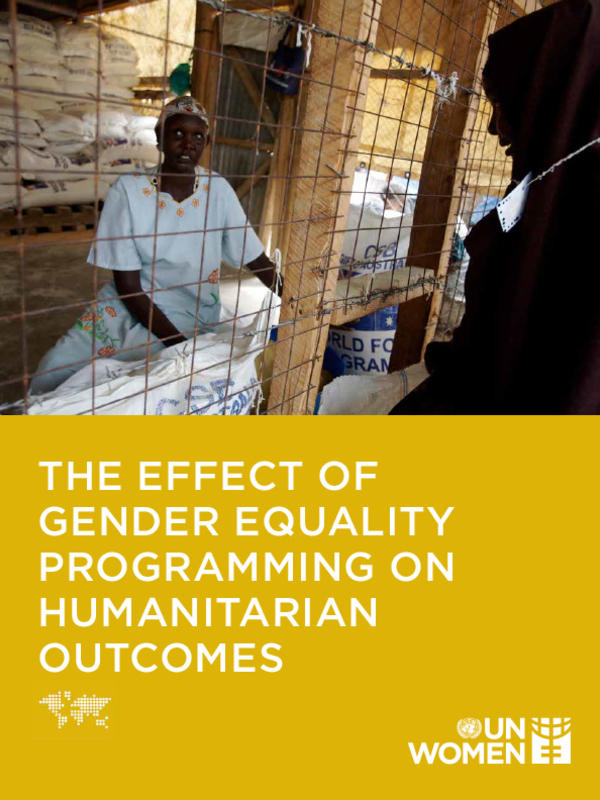
The effect of gender equality programming on humanitarian outcomes

Despite a number of developments in policy and practice aimed at integrating gender equality and women’s empowerment into humanitarian action, what remains missing is a strong evidence base that demonstrates just how gender equality programming is essential to ensuring an effective, inclusive, rights-based humanitarian response. To address this gap, UN Women—on behalf of the Inter-Agency Standing Committee (IASC) Reference Group on Gender in Humanitarian Action and with co-funding from the Department of Foreign Affairs, Trade and Development of Canada—in 2013 commissioned the Institute of Development Studies (IDS) at the University of Sussex to undertake a research study, titled “The Effect of Gender Equality Programming on Humanitarian Outcomes”. Its aim was to assess whether or not such programming has improved humanitarian outcomes and, if so, why. This report presents the findings of this research, based on interviews with more than 2,000 crisis-affected households gathered for four case studies conducted in Kenya (the Dadaab refugee camps and the county of Turkana), Nepal and the Philippines. Drawing on both the qualitative and quantitative data collected, researchers were able to develop a unique new methodology for assessing the degree to which gender equality and women's empowerment has been integrated into humanitarian programmes, using inputs from the beneficiaries themselves. The report presents overall findings, draws comparative conclusions across the four case studies and discusses practical recommendations for integrating gender equality programming in future humanitarian interventions in ways that strengthen effectiveness and inclusiveness.

View online/download
External Link

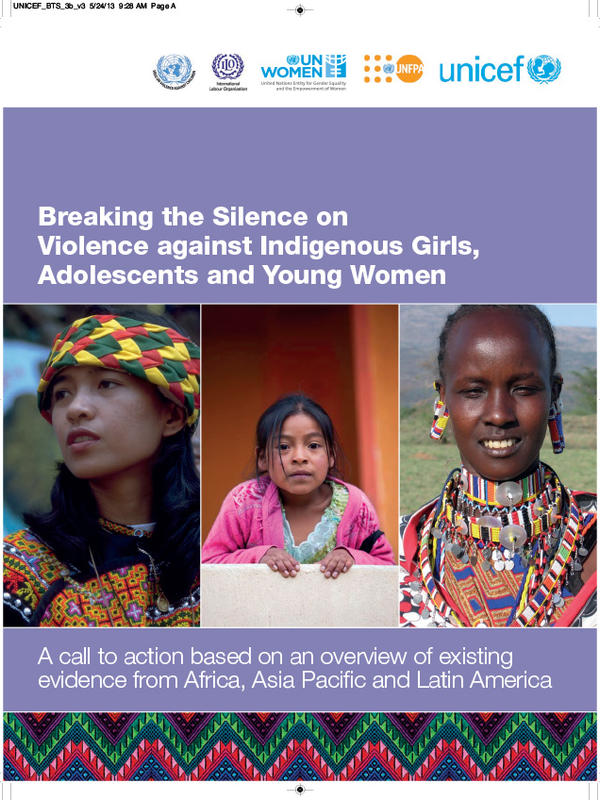
Breaking the silence on violence against indigenous girls, adolescents and young women

This inter-agency study highlights that the forms and nature of violence that women and girls experience are shaped and influenced by the often multiple forms of discrimination they face. They can be based on factors such as age, ethnicity, geographic location, or disability, and intersect with gender inequality and discrimination. In the case of indigenous girls, adolescents and young women, the broader contexts of discrimination against indigenous peoples such as colonial domination, continued discrimination, limited access to social services, dispossession from ancestral lands and militarization issues increase their vulnerability to violence and limit their ability to seek protection and recourse. The study, the first of its kind, reviews existing quantitative and qualitative data on the prevalence and incidence of the types of violence which have already been documented in relation to these groups in Africa, Asia and Latin America. Three countries were selected, one per region, to illustrate the findings. In addition to stressing the need to address the ‘statistical silence’ around violence against indigenous girls and women by enhancing efforts around data collection and analysis, the existing information presented in the report provides a solid case for the need to strengthen efforts to protect the rights of indigenous girls and women.

View online/download
External Link

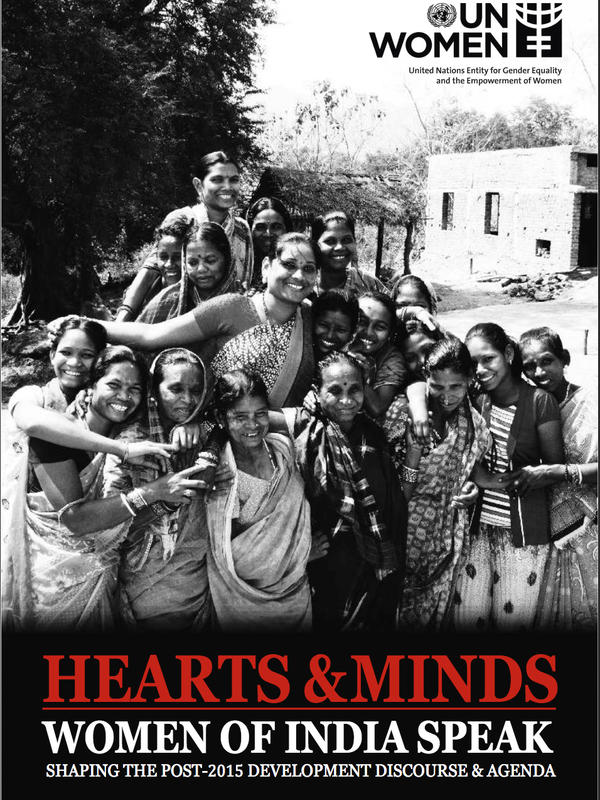
Hearts and minds: women of India speak

This report acknowledges the “lived experiences” of women and girls in India at the grassroots level and ensures that the voices of those who remain socially, economically and geographically marginalized are meaningfully reflected in the emerging post-2015 development discourse and agenda. The analysis contained in this report is based on in-depth interviews with women and focus-group discussions with almost 200 elected women representatives. The report addresses issues that resonate with women all over the globe, such as women's empowerment, poverty, employment, health and education. The key findings from this report can be used to influence the global agenda setting, ensuring that the post-2015 framework does not make the same mistakes that the MDGs did.

View online/download
External Link

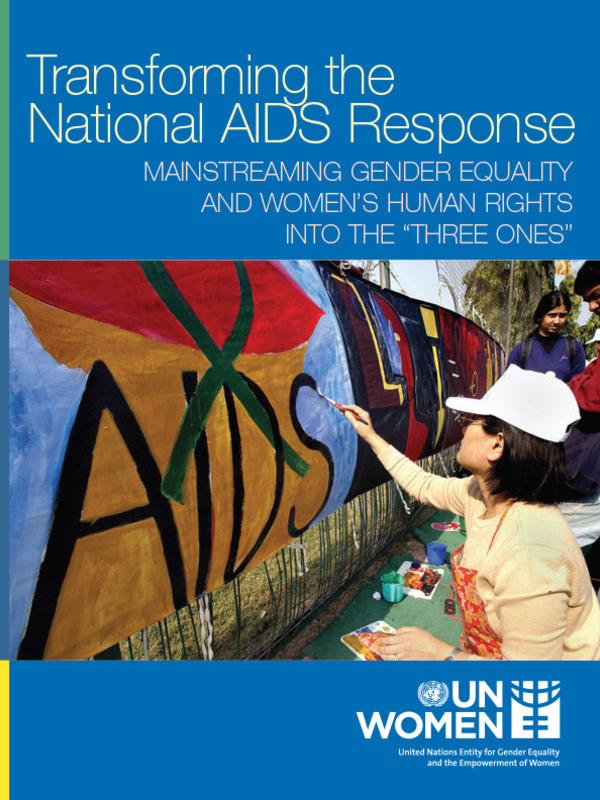
Transforming the national AIDS response

Statistics on HIV and AIDS present a stark reality. Today, after over 25 years of working to combat this pandemic, over 30 million people are living with HIV, half of them women. Women’s infection rates are rising, often dramatically, outpacing those of men in many countries particularly in sub-Saharan Africa. The single most important strategy in preventing the spread of HIV and AIDS is empowering women and girls and guaranteeing their rights to prevention, treatment, care and support. But there are other important strategies and actions that can be taken, at different levels, to eliminate the myriad barriers that keep them from exercising these rights. This resource guide provides examples of national strategies, from transforming national and local institutions in order to break through the silence and stigma that surround AIDS and HIV, to working with communities to change attitudes and behaviours that facilitate its spread. They show what can be done when women and men living with HIV are engaged and empowered to make their needs heard and to help design solutions.

View online/download
External Link


Suggest a publication

Feel free to submit a publication.

Submit here