Languages

Topbar Menu EN

The SDG Fund is operationally closed. This site is alive for knowledge and dissemination purposes.
Warning: This website is closed. Be aware of phishing or social engineering fraudulent requests of payments or certificates. Explore our programme areas.
Please visit jointsdgfund.org
Search our database of publications


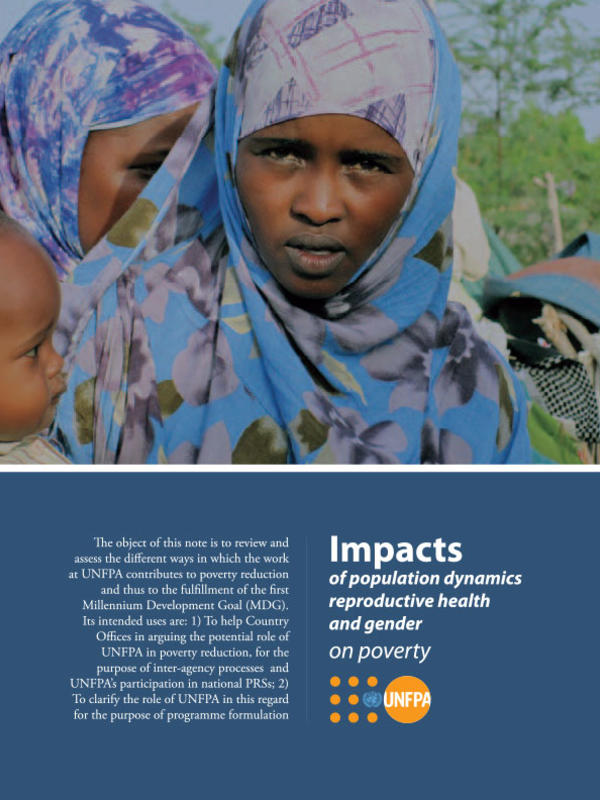
Impacts of population dynamics reproductive health and gender on poverty

How do the many the different components of the UNFPA mandate contribute to poverty reduction? This publication analyses this question in detail, looking at both the micro level (impacts on individuals and households) and the larger picture. The document concludes that the strength of UNFPA's contribution to poverty reduction resides in the complementarity of different interventions and the synergies by which population dynamics, gender equality and reproductive health work together to reduce poverty.
View online/download
External Link

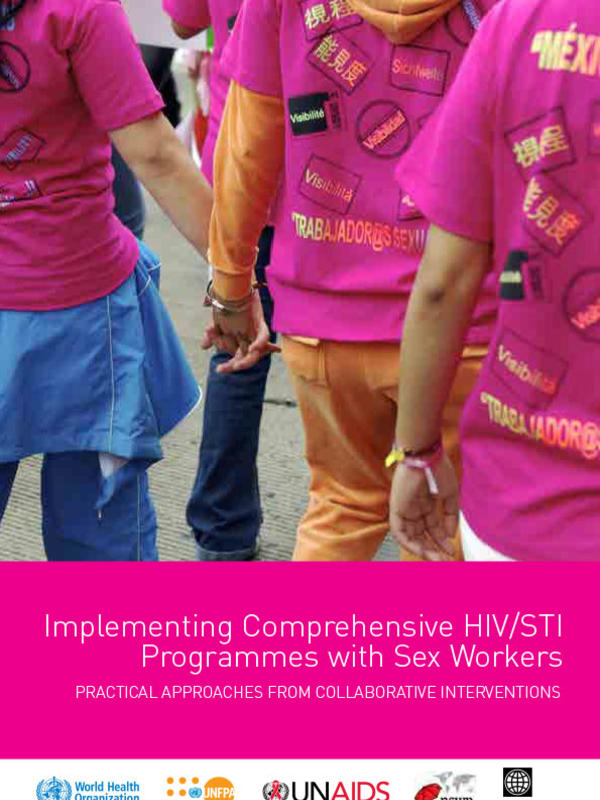
Implementing comprehensive HIV/STI programmes with sex workers: practical approaches from collaborative interventions

This tool offers practical advice on implementing HIV and STI programmes for and with sex workers. It is based on the recommendations in the guidance document on Prevention and treatment of HIV and other sexually transmitted infections for sex workers in low- and middle-income countries published in 2012 by the World Health Organization, the United Nations Population Fund, the Joint United Nations Programme on HIV/AIDS and the Global Network of Sex Work Projects. Topics covered in the tool include approaches and principles to building programmes that are led by the sex worker community such as community empowerment, addressing violence against sex workers, and community-led services; they include how to implement the recommended condom and lubricant programming, and other crucial health-care interventions for HIV prevention, treatment and care; and they include suggestions on how to manage programmes and build the capacity of sex worker organizations. The tool contains examples of good practice from around the world that may support efforts in planning programmes and services. The tool is designed for use by public-health officials and managers of HIV and STI programmes; NGOs, including community and civil-society organizations; and health workers. It may also be of interest to international funding agencies, health policy-makers and advocates.

View online/download
External Link

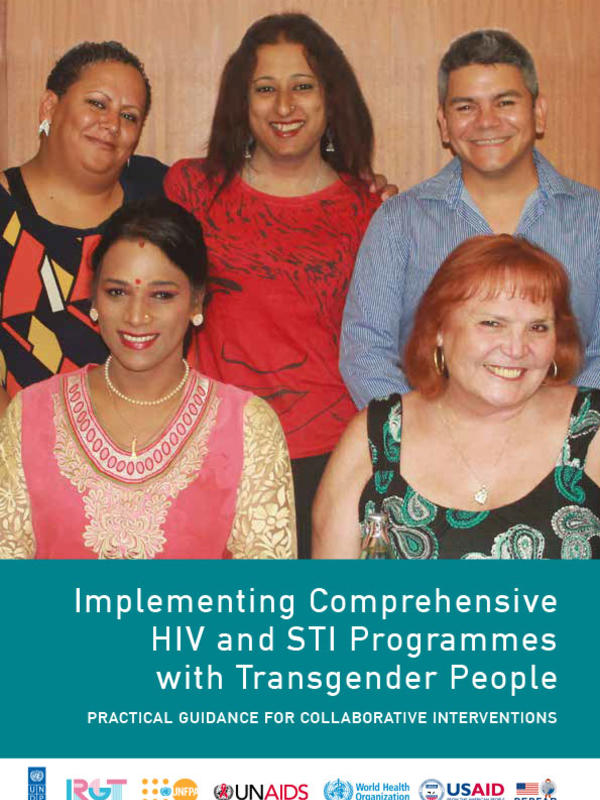
Implementing comprehensive HIV and STI programmes with transgender people: practical guidance for collaborative interventions

This tool contains practical advice on implementing HIV and sexually transmitted infection (STI) programmes with transgender people. Topics covered include community empowerment and human rights, addressing violence, stigma and discrimination and delivering trans-competent services, especially for HIV and STI prevention, diagnosis, treatment and care. The tool also covers community-led outreach, safe spaces and the use of information and communications technology in programming, and it offers strategies for managing programmes and building the capacity of trans-led organizations. It contains examples of good practices from around the world that can be used to support efforts to plan programmes and services with trans people. The tool is designed for use by public-health officials, managers of HIV and STI programmes, NGOs – including community and civil-society organizations – and health workers. It may also be of interest to international funding agencies, health policy-makers and advocates.

View online/download
External Link

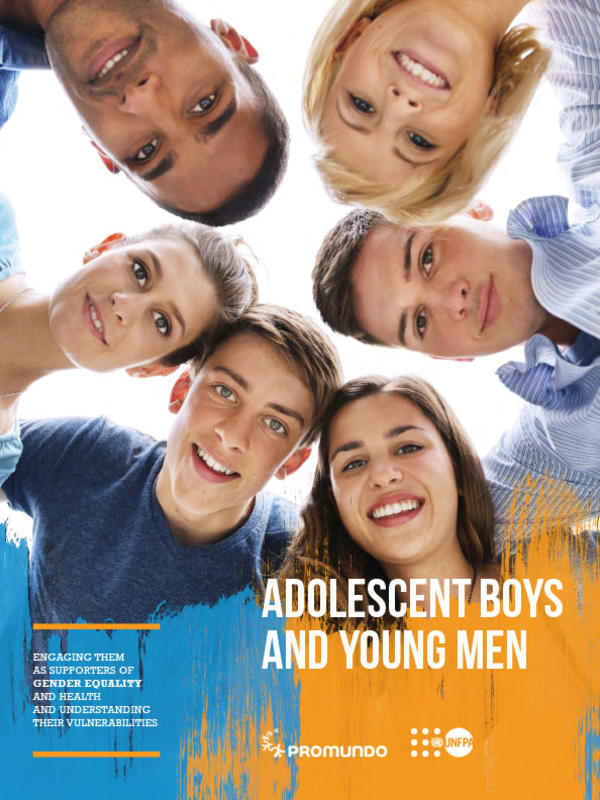
Adolescent boys and young men: engaging them as supporters of gender equality and health and understanding their vulnerabilities

Achieving gender equality must, and has, involved efforts to understand the vulnerabilities and risks that adolescent girls and young women face every day – but how much do we know about the realities of adolescent boys and young men? This report takes a deeper look at the daily lives of adolescent boys and young men around the world and at how they can join the movement towards improved health and gender equality. Exploring global research, the report reveals boys’ and young men’s specific risks and realities in relation to health in general, sexual and reproductive health in particular, sexuality, media violence, sexual exploitation and other vulnerabilities. It analyses the implications of these risks and realities not only for boys, but also on the lives of women and girls. Adolescence is a key period where individuals of all gender identities form attitudes, opinions and beliefs – about themselves, about their sexuality and about their place in the world. It is a period when ideas about equality can become ingrained. The study emphasizes that a holistic approach to advancing gender equality and sexual and reproductive health must include both adolescent girls and boys. It highlights the need to engage adolescent boys and young men as allies to achieve gender equality and as supporters of women’s empowerment, as well as the importance of addressing the specific health and social development needs of boys themselves.

View online/download
External Link

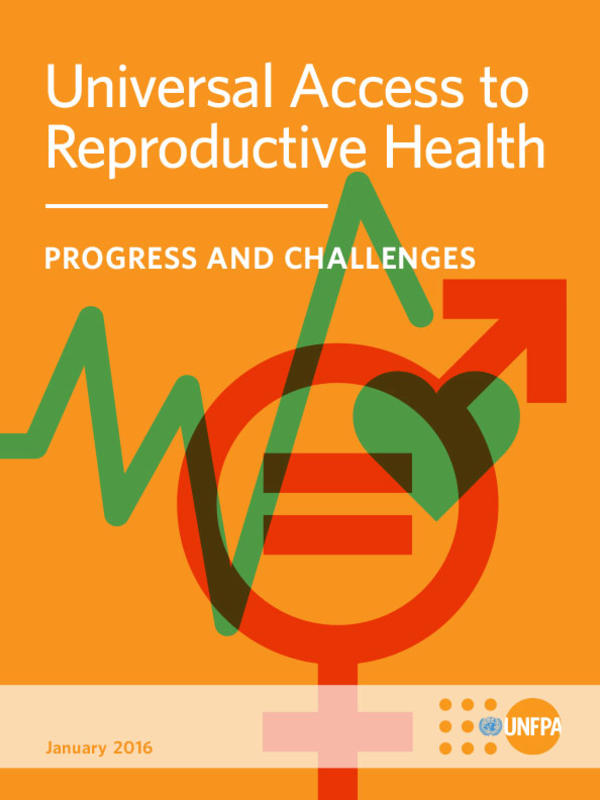
Universal access to reproductive health: progress and challenges

Universal access to reproductive health affects and is affected by many aspects of life. It involves individuals’ most intimate relationships, including negotiation and decision-making within these relationships, and interactions with health providers regarding contraceptive methods and options. This report seeks to identify areas where reproductive health has advanced or not according to four main indicators: Adolescent birth rate, contraceptive prevalence rate, unmet need for family planning rate, proportion of demand for contraception satisfied.

View online/download
External Link

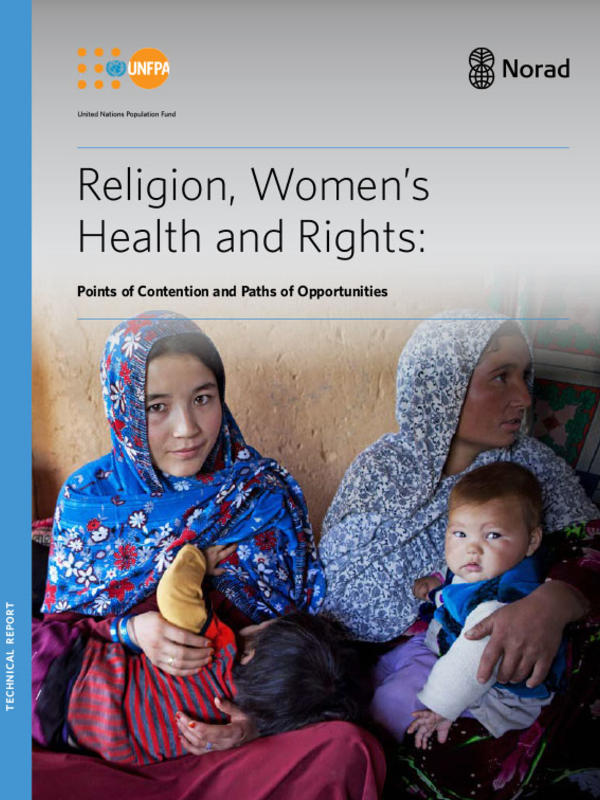
Religion, women's health and rights: points of contention and paths of opportunities

This report looks at the religious arguments around some of the most sensitive and contentious SRH-related issues, from the perspective of the major faith traditions of this world. These issues range from contraception to abortion to GBV to Child Marriage. Far from merely listing the 'religious objections' to be found in the 5 main religions of the world (Buddhism, Hinduism, Judaism, Christianity and Islam), this Report then goes on to elaborate the alternative, faith-based lived realities, interpretations and actions which support the sexual and reproductive rights in question.

View online/download
External Link

Realizing the faith dividend: religion, gender, peace and security in Agenda 2030

The UN Secretary General is on record as ​speaking to the importance of faith-based organizations in the realization of the Sustainable Development Goals, noting that ​they​ have a role to play​ in ​his​ policy of developing transformative multi-stakeholder partnerships over the coming five years.​ UNFPA is one of the oldest UN specialised agencies to engage with faith-based actors, convening them at the national, regional and global levels, since the Millennium. ​In 2010, UNFPA co-founded and chaired the UN Inter-Agency Task Force on Engaging with Faith-Based actors. Since then, this UN Task Force has annually convened these faith-based partners for a series of policy dialogues, together with donor governments, academics, development and humanitarian specialists from diverse regions and religions, around diverse human rights, development and peace and security-related issues. This report focuses on the role of religious actors, and religious considerations in the SDG agenda, particularly as they pertain to gender equality, peaceful coexistence and security considerations. The perspectives, ideas and initiatives discussed in these pages bring together experiences and policy analysis shared from the different realities of donors, UN agencies and Faith-Based NGOs. The richness of these narratives both build on and inform current policy formulations which are required at a time when religion is often seen too flippantly as a 'problem' by secular institutions which also have a legacy of partnerships as yet under appreciated.

View online/download
External Link

Trends in maternal mortality: 1990 to 2015

Accurate measurement of maternal mortality levels remains an immense challenge, but the overall message is clear: hundreds of thousands of women are still dying due to complications of pregnancy and/or childbirth each year. Many of these deaths go uncounted. Working towards SDG 3.1 and ultimately towards ending preventable maternal mortality requires amplifying the efforts and progress catalysed by MDG 5. Among countries where maternal deaths remain high, efforts to save lives must be accelerated and must also be paired with country-driven efforts to accurately register births and deaths, including cause of death certification. Strengthening civil registration and vital statistics will support measurement efforts and help track progress towards reaching SDG 3.1. Among those countries with low overall maternal mortality, the next challenge is measuring and amending inequities among sub-populations. The new Global Strategy for Women’s, Children’s and Adolescents’ Health will spearhead an enhanced global collaborative response aimed at ending all preventable maternal deaths.

View online/download
External Link

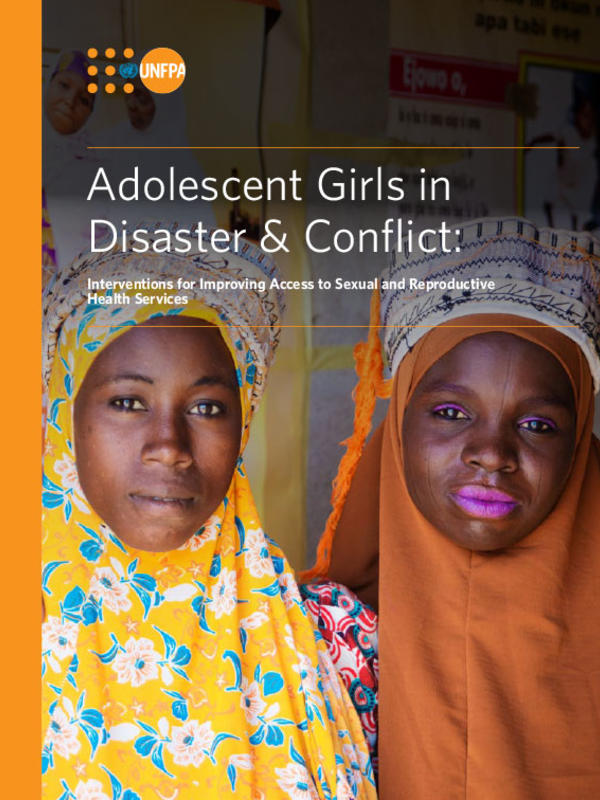
Adolescent girls in disaster & conflict: interventions for improving access to sexual and reproductive health services

Millions of adolescent girls are in need of humanitarian assistance. A crisis heightens their vulnerability to gender-based violence, unwanted pregnancy, HIV infection, maternal death and disability, early and forced marriage, rape, trafficking, and sexual exploitation and abuse. In emergencies, adolescent girls need tailored programming to increase their access to sexual and reproductive health services, including family planning, and to protect them from gender-based violence. From safe spaces to mobile clinics to youth participation, UNFPA uses different approaches to reach displaced, uprooted and crisis-affected adolescent girls at a critical time in their young lives. This publication features new case studies on reaching adolescent girls in humanitarian situations from programmes in Malawi, Myanmar, Nepal, Nigeria, Pakistan, the Philippines and Somalia.

View online/download
External Link

Ending the AIDS epidemic for adolescents, with adolescents

This publication provides guidance to programme designers, implementers, policymakers and decision-makers on how to meaningfully engage adolescents in the AIDS response and in broader health programming. It also demonstrates why adolescents and youth are critical in efforts to end the AIDS epidemic by 2030. The publication additionally highlights what steps should be taken to implement programmes and policies that improve adolescent health outcomes (including for HIV) at the national, regional and global levels.

View online/download
External Link

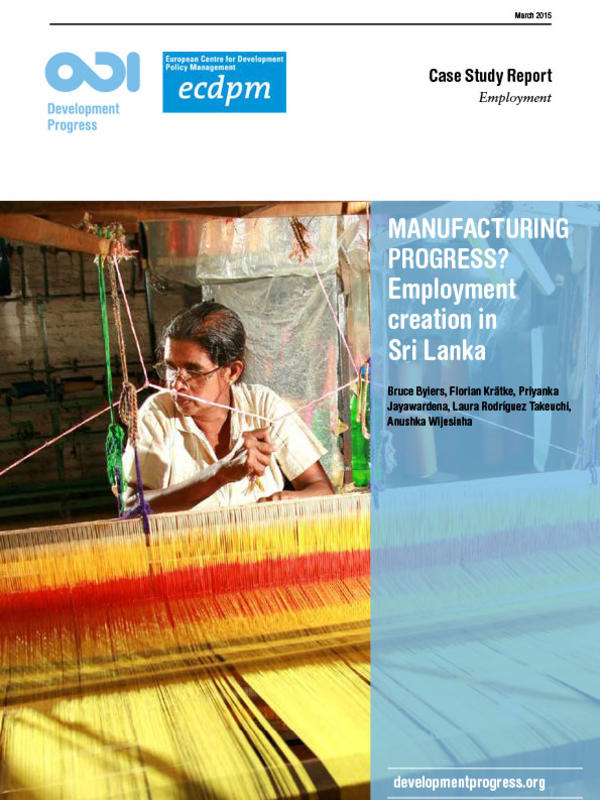
Manufacturing progress? Employment creation in Sri Lanka

This study, written in collaboration with ECDPM, aims to explain the employment progress achieved in Sri Lanka from 1990 to 2010. This period has seen a drastic reduction in unemployment, and improved working conditions, particularly for women, accompanied by structural transformation away from agriculture towards manufacturing and services. The drivers of employment progress in quality, quantity and access are examined in terms of policies affecting demand for and supply of labour. While this employment progress has been achieved under unique and challenging conditions, not least a civil war from 1983 to 2009, the study attempts to draw conclusions for policy-makers in other contexts. In particular it points to the long-term adherence to a hybrid industrial policy agenda comprising outward market orientation and policies to promote investment into export processing zones, attention to education and vocational training, and continuing strong government economic activity in the form of state-owned enterprises and public employment. As for any progress story, employment progress is not necessarily ‘success’ – outward migration and war-related employment have also been key factors. Nonetheless, Sri Lanka is on a trajectory of economic transformation that, with the end of the civil war, offers a strong basis for further employment progress and improved livelihoods.

View online/download
External Link

Establishing a workable follow-up and review process for the Sustainable Development Goals

The Open Working Group document proposes that governments will set its own national targets. They will be guided by the global level of ambition but taking into account national circumstances. To make the Post-2015 agenda actionable, much more thought needs to be given to the process of target-setting, different actors’ responsibilities, implementation and accountability.

View online/download
External Link

Subsidies to key commodities driving forest loss: implications for private climate finance

There is an increasing focus on the role that public and private resources can play in supporting activities that reduce forest loss as part of wider efforts to address climate change, and ensure sustainable development. From our initial review of subsidies to beef and soy in Brazil, and timber and palm oil in Indonesia we find that there are significant opportunities for REDD+ finance to support identification, estimation and designing the reform of these subsidies - as part of a wider transition to economic development which increases agricultural productivity while avoiding forest loss.

View online/download
External Link

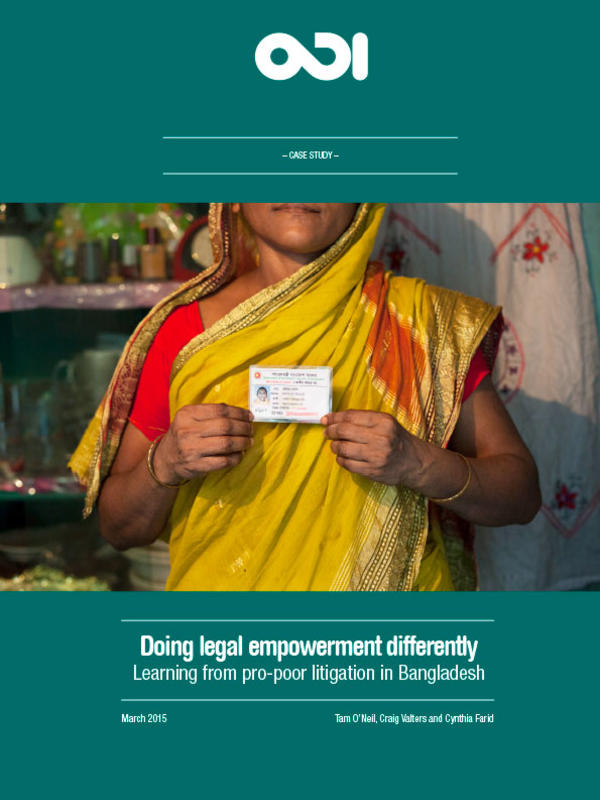
Doing legal empowerment differently: learning from pro-poor litigation in Bangladesh

In many countries, marginalised groups and their allies use the law and justice systems to contest and improve their access to rights, goods and services. This is the essence of legal empowerment. Taking a claim to a dispute resolution mechanism, such as a court or community mediation forum, is one way poor people can use the law. Yet there is no automatic link between litigation, or other forms of legal action, and improved outcomes for poor people. The success of legal mobilisation depends not only on a favourable legal ruling or decision. It also requires the enforcement or implementation of rulings in ways that redistribute power and resources to poor people in practice. We use two cases of successful public interest litigation in Bangladesh to explore the conditions that favour, and constrain, pro-poor mobilisation. One case centres on a 2008 Supreme Court ruling that confirmed the citizenship rights of thousands of Urdu speakers living in camps set up after the War of Independence in 1971. As a direct result of the 2008 ruling, Urdu speakers now have national identity cards and can vote, hold a passport and work in the formal sector. The second case centres on a 1999 Supreme Court ruling that has prevented the government’s forcible eviction of thousands of residents of low-income settlements in Dhaka, and continues to do so.

View online/download
External Link

Climate finance for cities: how can climate funds best support low-carbon and climate resilient urban development?

This paper reviews the approaches taken by multilateral climate funds in the period 2010-2014 to support low-emission and climate-resilient development in developing country cities. It identifies US$842 million in approved climate finance for explicitly urban projects, which equates to just over one in every ten dollars spent on climate finance over these five years. The majority of this finance has supported low-carbon urban transport systems in fast-growing middle-income countries. Adaptation funds financed only a handful of explicitly urban projects in the review period. The report highlights the following implications for future climate fund engagement at the urban level: 1) Climate funds must focus on catalysing action by others; 2) Climate funds need to develop appropriate access arrangements for reaching the most vulnerable urban residents; 3) Main-streaming climate risks and mitigation into local governance must remain a priority, but is not a solution by itself; 4) Climate funds can expand their impact by supporting urban project preparation.

View online/download
External Link

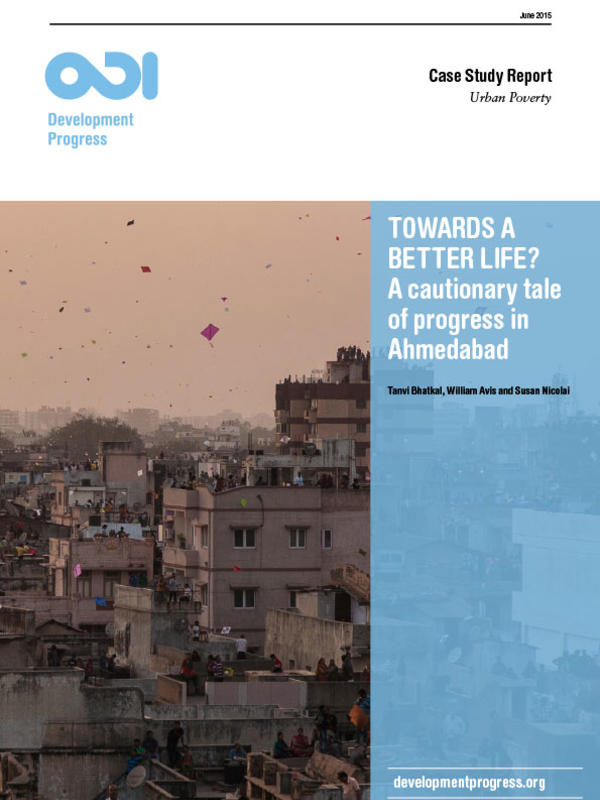
Towards a better life? A cautionary tale of progress in Ahmedabad

In the western Indian state of Gujarat, where Ahmedabad is located, the urban poverty rate declined from 28% in 1993-94 to 10% in 2011-12. Trade unions, such as the Self-employed Women’s Association, founded in Ahmedabad in 1972, have played a key role in organising and empowering informal workers. By 2001 Ahmedabad was already above both state and national urban averages in the coverage of drinking water, and progress has continued. The municipal government has introduced specific programmes to improve access to public utilities – water, sanitation and electricity – for slum dwellers irrespective of tenure status. Additionally, the city stands out for its ‘smart growth’ through proactive planning for urban expansion, enabling a compact urban area while allotting spaces to house poor families. However, gaps have remained and relations between communities and the government have become strained in recent years. Significant sections of the population continue to lack access to good quality services, and Ahmedabad has evolved into a city segmented by class, caste and religion. Further, across much of urban India there has been a shift in the conception of development from inclusive growth to the creation of ‘global cities’ marked by capital-intensive projects. As a result, dialogue has decreased, becoming increasingly confrontational, and the availability of public funds has diverted focus away from flexible local programmes built on a collaborative model of development. While urbanisation has been recognised as key to India’s future, the experience of Ahmedabad provides key lessons – both positive and cautionary – relevant to urbanisation both nationally and globally.

View online/download
External Link

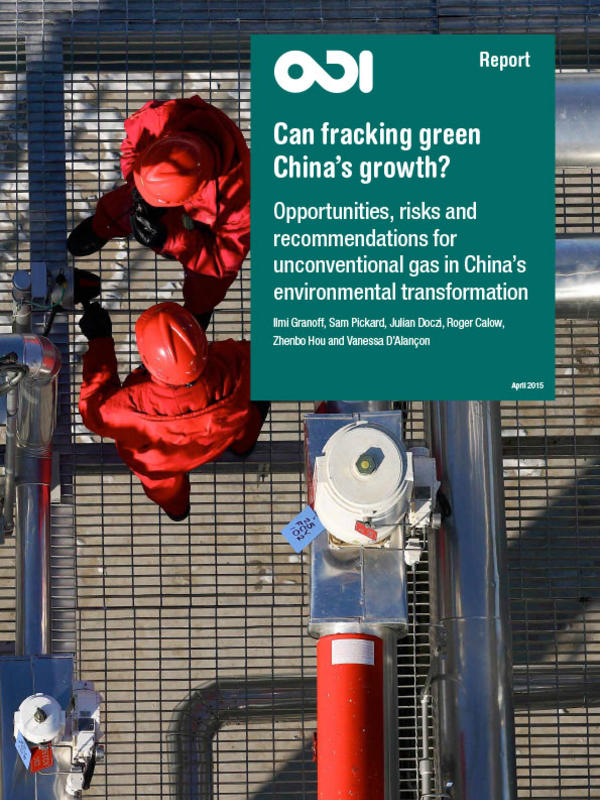
Can fracking green China’s growth?

This paper analyses the best available technical, scientific and engineering literature on the risks and opportunities posed by shale gas, and what policy environment could maximise the opportunity and minimise the risk. It also analyses China’s current policies and practice to understand whether the conditions for greener growth are in place. We conclude that many of the environmental risks shale gas poses are manageable, and amenable to conventional environmental law and policy tools. Its development could in principle offer significant net environmental benefits if the gas produced permanently replaces coal and helps set China on a pathway to a renewable-dominated energy system. The greater impediment is political, hinging on whether China has the political will and capacity to dramatically cap coal generation, invest in renewable energy and enforce strong environmental regulations and targets. We therefore emerge from our analysis with a healthy dose of scepticism about unconventional gas greening China’s growth: truly making it work requires a broader set of practical commitments to sustainability, pollution control and low-carbon energy.

View online/download
External Link

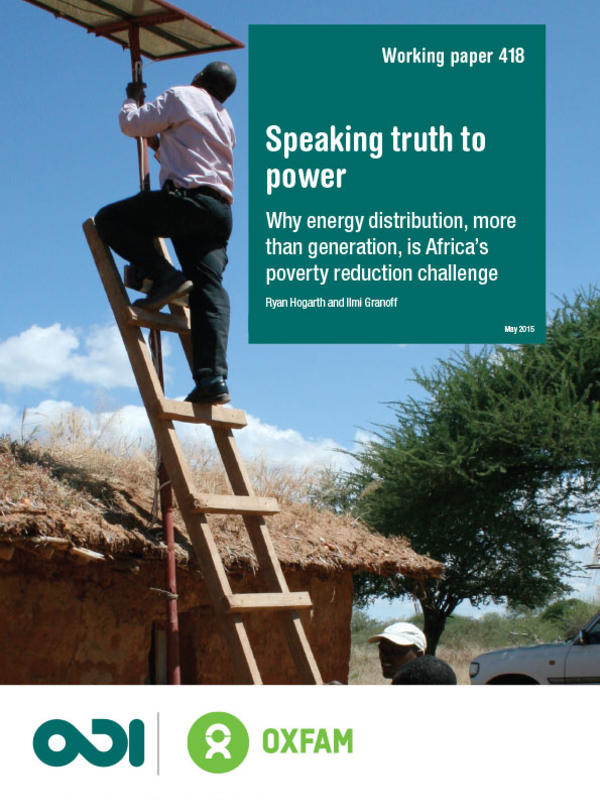
Speaking truth to power: why energy distribution, more than generation, is Africa’s poverty reduction challenge

Energy is important to reduce poverty, but increasing electricity generation alone will not solve the problem. In this paper, ODI uncovers that most investment in electricity generation in Africa is not geared towards serving the basic energy needs of the poor, but is instead focused on providing power to growing industries and existing consumers. This paper, therefore, argues that tackling energy poverty will have less to do with ambitious expansion of electricity capacity, and more to do with ambitious distribution of energy services to poor people. A second key conclusion is that distributed, clean energy interventions – both renewable energy systems and clean cookstove technologies - are best suited to tackling energy poverty – and poverty more generally. It is here that we should be focusing energy investment, to tackle poverty and close Africa’s energy gap.

View online/download
External Link

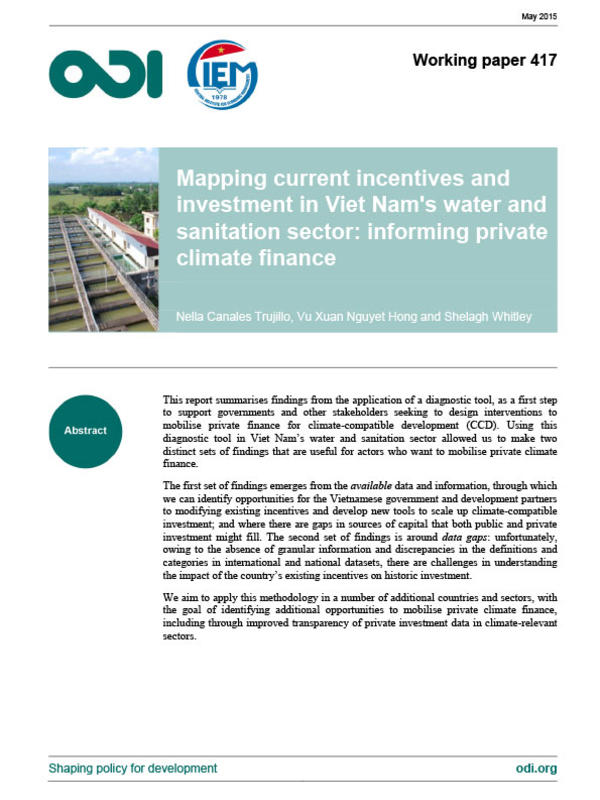
Mapping current incentives and investment in Viet Nam's water and sanitation sector: lessons for private climate finance

This report summarising findings from the application of a diagnostic tool, is as a first step supporting governments and other stakeholders seeking to design interventions to mobilise private finance for climate-compatible development (CCD). Using this diagnostic tool in Viet Nam’s water and sanitation sector allowed us to make two distinct sets of findings that are useful for actors who want to mobilise private climate finance. The first set of findings emerges from the available data and information, through which we can identify opportunities for the Vietnamese government and development partners to modifying existing incentives and develop new tools to scale up climate-compatible investment; and where there are gaps in sources of capital that both public and private investment might fill. The second set of findings is around data gaps: unfortunately, owing to the absence of granular information and discrepancies in the definitions and categories in international and national datasets, there are challenges in understanding the impact of the country’s existing incentives on historic investment.

View online/download
External Link

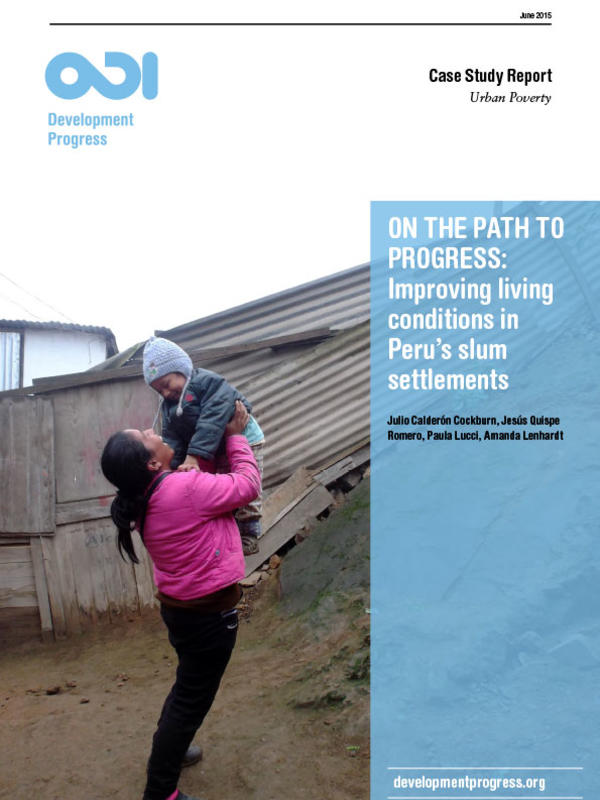
On the path to progress: improving living conditions in Peru’s slum settlements

This study explores the improvements in living conditions in slum settlements located in the outskirts of cities in Peru from 1990 to 2010. This period saw significant progress in access to utilities in these areas. Positive changes were recorded in water piped directly to households, and in access to sanitation (piped sewage systems), the share of slum households with electricity and dwellings made of durable housing materials. These improvements were the result of action at different levels: political will to increase public provision of water, sanitation and electricity (financed with contributions from multilateral banks and donor resources, but increasingly with governments’ own resources); continuous pressure from community organisations; and investments in housing upgrades by households themselves. The case study offers a number of useful lessons for other countries, particularly on the fact that improving the living conditions of existing settlements is a necessary but not sufficient condition to deal with increasing urban populations; urban planning and the provision of affordable housing (ownership and rental) needs to take place in tandem with slum upgrading.

View online/download
External Link

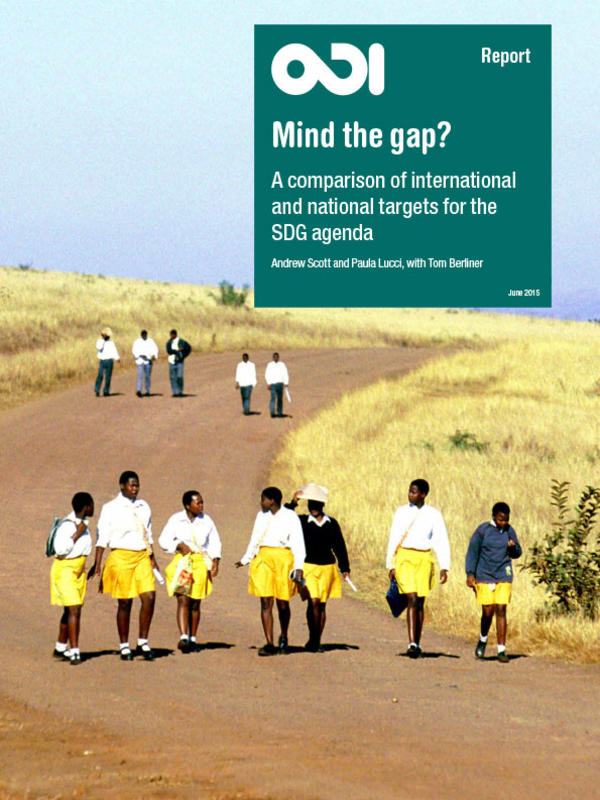
Mind the gap? A comparison of international and national targets for the SDG agenda

The stretch required for low-income countries (LICs) to achieve SDG targets is generally greater than for middle-income and high-income countries (MICs and HICs). The gaps identified indicate where most work is needed to alter political priorities in order to realise the SDGs. Most hard work will be needed in areas that are highly politically contentious (climate policy) or expensive (secondary education, electricity and sanitation). This has implications for how governments structure a review process and how resources are mobilised for the post-2015 sustainable development agenda. The report also found a great deal of variation in the approach to measuring targets at the national level. A standardised approach would make comparisons easier and hold governments more readily to account.

View online/download
External Link

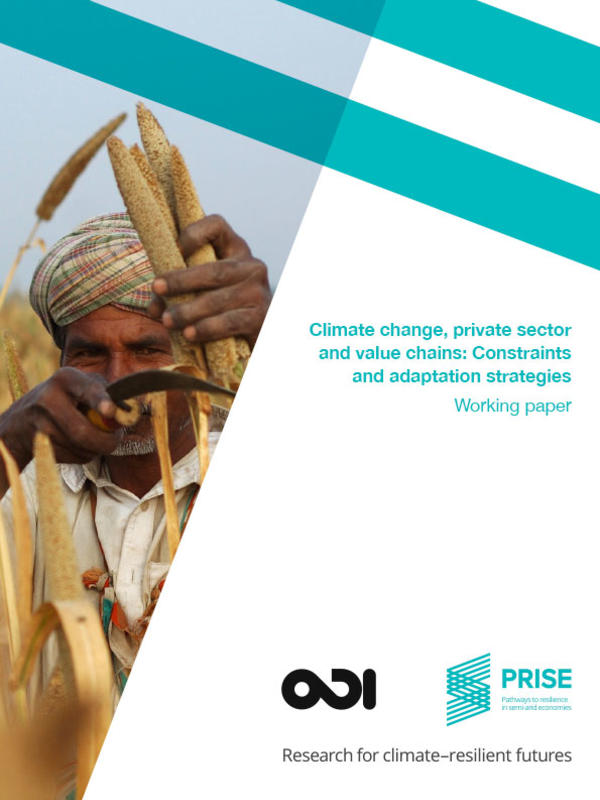
Climate change, private sector and value chains: constraints and adaptation strategies

Climate change can have significant impacts on economic activity and value chains. Understanding how climate change impacts private sector incentives and activities, and markets, is vital to understand not only the overall economic impacts of climate change in semi-arid regions, but also the social and environmental effects in these areas. Private sector actors, including smallholder farmers and large multinational companies, are key agents of change. Though these actors can be heterogeneous and operate with varying rationalities, many of the constraints they face and that influence their decision-making – such as limited access to markets, finance or natural resources – are often similar. Crucially, these actors do not act independently, but interact directly or indirectly with value chains, or through the use of assets and resources. This report sheds light on these interdependencies, and highlights the interactions between sectors and activities, both horizontal and vertical. Doing so makes it possible to identify multiple dimensions in climate risks to business models and supply chains, as well adaptation requirements and their costs and benefits. This new knowledge can help to identify new market opportunities for the private sector, enhance capacity to respond and inform policy frameworks that encourage private sector adaptation and risk management.

View online/download
External Link

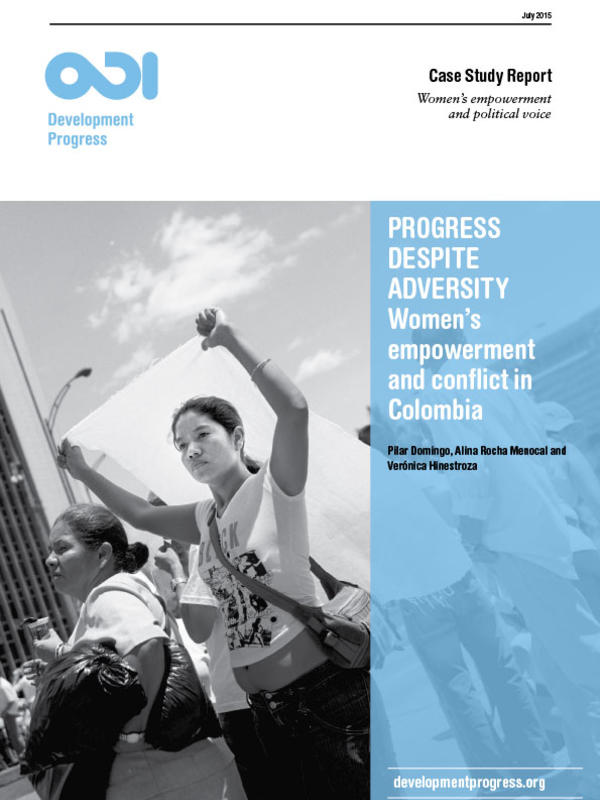
Progress despite adversity: women's empowerment and conflict in Colombia

The Colombian case is an example of progress in women’s empowerment in the face of formidable and continuing challenges. Progress is identified in relation to: legal gains for women’s rights and gender equality; women’s presence and representation in public and elected positions; the advancement of a gender-responsive approach to addressing the legacies of conflict; and associated mechanisms of memorialisation, reparations, restitution and transitional justice. The case of Colombia is a valuable study in how women engage with contesting legacies of exclusion and discrimination in the prevailing political settlement, and influencing the public debate and direction of policy relating to justice, peace and accountability to take into account the gendered experience of conflict.

View online/download
External Link

Baseline study: stamping out and preventing gender based violence (STOP GBV) in Zambia

This study provides a baseline to measure programme results, impact and long-lasting change at the end of the STOP GBV Programme led by World Vision (WV), Women and Law in Southern Africa (WLSA) and Zambia Centre for Communication Programme (ZCCP) in six districts of Zambia: Chingola, Kalomo, Monze, Mpika, Mumbwa and Nyimba. Given the focus of the STOP-GBV Programme the study focused on three main areas: GBV Survivor Services; Access to Justice; and Prevention and Advocacy.

View online/download
External Link

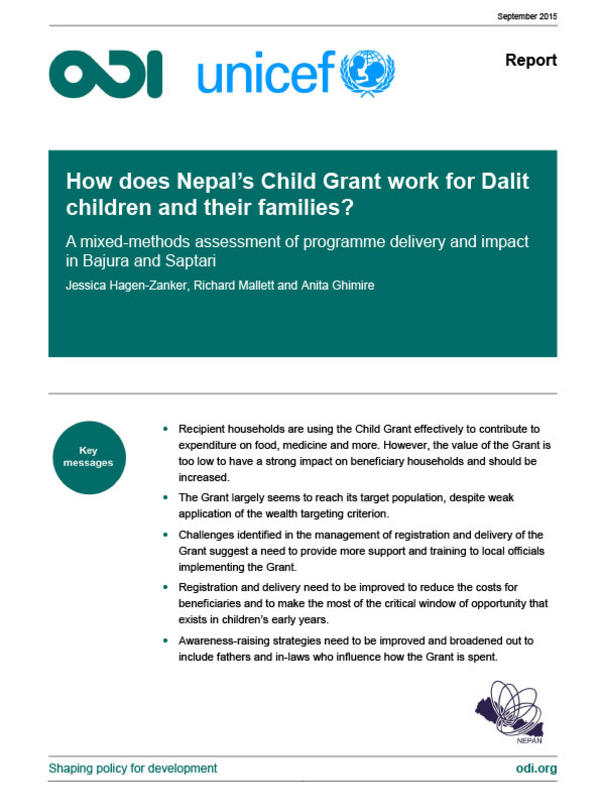
How does Nepal’s Child Grant work for Dalit children and their families?

The Child Grant is targeted at all households with children aged up to five years in the Karnali Zone and at poor Dalit households in the rest of the country. Launched in 2009 and covering around 20% of Nepal's children, it is seen as a key mechanism to support children in the government's draft National Framework for Social Protection. This study focuses on two districts; Bajura and Saptari, using a mixed-method approach to identify implementation barriers and recommend ways to improve effectiveness of the Grant.

View online/download
External Link


Suggest a publication

Feel free to submit a publication.

Submit here