Languages

Topbar Menu EN
The SDG Fund is operationally closed. This site is alive for knowledge and dissemination purposes.
Warning: This website is closed. Be aware of phishing or social engineering fraudulent requests of payments or certificates. Explore our programme areas.
Please visit jointsdgfund.org

Search our database of publications


Review of MDG-F joint programmes: key findings and achievements

The review presents the key findings and achievements of the 130 joint programmes across 50 countries supported by the MDG Achievement Fund (MDG-F) covering eight thematic areas: children, food security and nutrition; youth employment and migration; culture and development; gender equity and women’s empowerment; private sector and development; conflict prevention and peace building; environment and climate change; and democratic economic governance.

View online/download
English

Culture and development: review of MDG-F joint programmes key findings and achievements

This thematic study aims to capture the main achievements of the 18 Joint Programmes (JPs) funded under the Thematic Window on Culture and Development of the MDG Achievement Fund (MDG-F).

View online/download
English

Democratic economic governance: thematic study, full report

This report presents the key findings and achievements of the 11 Joint Programmes of the Democratic Economic Governance theme of the Millennium Development Achievement Fund (MDG-F) that aimed to democratize access to utility services and to improve governance in the water and sanitation sectors. The overarching goal of the Joint programmes was to accelerate progress worldwide towards achieving the MDG water and sanitation targets. Specifically, the programmes contributed to meeting the MDG7 target to halve the proportion of the population lacking sustainable access to safe drinking water and basic sanitation by 2015.

View online/download
English

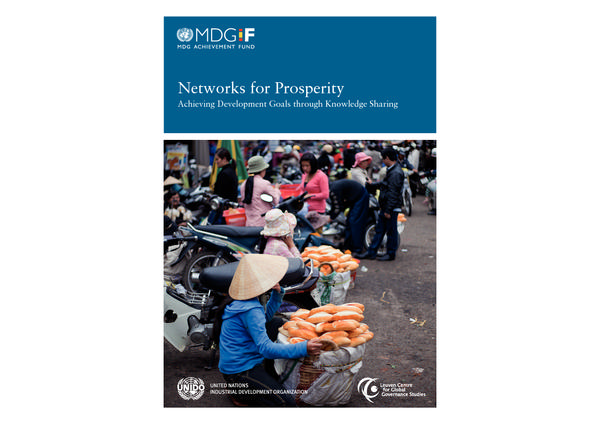
Networks for prosperity: achieving development goals through knowledge sharing

This report intends to provide decision-makers with a basis for including knowledge management and knowledge networking in policy considerations related to development strategy, effectiveness and governance. It is not intended as a full, in-depth study of all the links between knowledge networking, network governance and private sector development, but it gives an overview of the various concepts, provides new findings on correlations between them and illustrates these concepts with country case studies. The report is the outcome of a request to UNIDO, the technical convener agency of the funding window “Development and the Private Sector” of the MDG Achievement Fund (MDG-F), to create a knowledge management concept that would support developing countries in acquiring and adapting private sector development (PSD) relevant knowledge to their specific contexts and needs, and enhance the knowledge capabilities of the United Nations system and its national counterparts and partners in the field of PSD policy.

View online/download
English

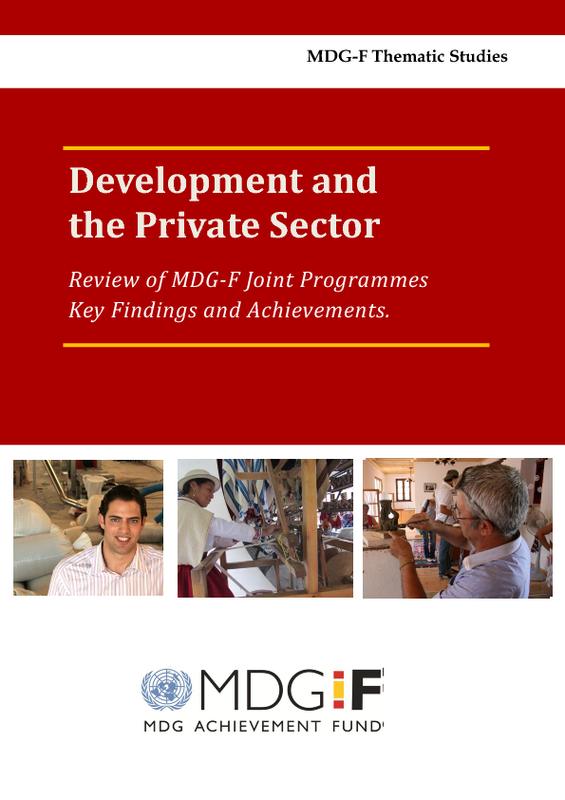
Development and the private sector: thematic study on review of key findings and achievements

This report looks at the achievements of one of the eight ‘windows’ of the MDG-F on development and the private sector (PSD). There are 12 joint programmes in this window, each designed to tackle extreme poverty and hunger through inclusive, pro-poor business development. Each programme is jointly run by UN agencies (typically 4-5 agencies) in the host country, implemented in collaboration with national and local counterparts.

View online/download
English

Making joint gender programmes work: guide for design, implementation, monitoring and evaluation

This Guide has been designed to help the UN system, including UN Country Teams, Gender Theme Groups, UN entities and national stakeholders to improve the development, implementation, and monitoring and evaluation of joint gender programmes.The Guide compiles best practices and lessons learned from recent experiences in this area of programming to support the UN system in addressing gender equality challenges.

View online/download
English

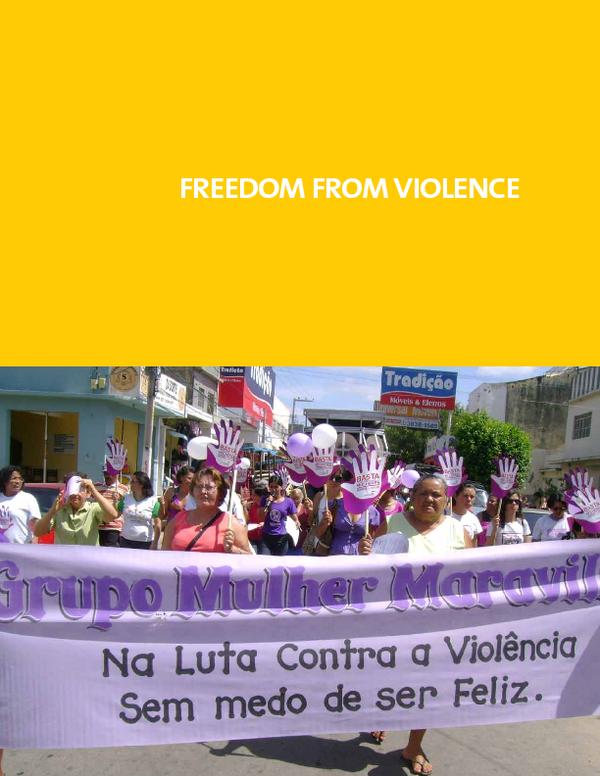
Freedom from violence

This report contains lessons learned and good practices from the Joint Programmes of Gender Equality and Women's Empowerment thematic window of the MDG Achievement Fund that worked towards eradicating gender based violence.

View online/download
English

Increased participation in decision making

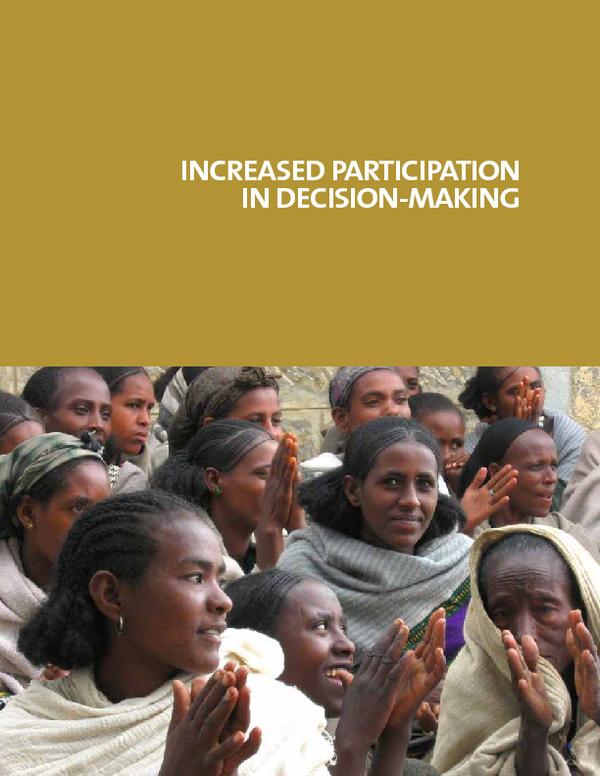
This document presents lessons and results of specific relevance to shaping the post-2015 development framework in regards to increasing women’s role in decision-making in public and private institutions, as well as in families and communities. It presents case studies of 9 different programmes implemented in Bolivia, Ecuador, Guatemala, Mexico, Nicaragua, Timor-Leste, Panama and the State of Palestine. Each case identifies the the key actors, objectives, strategy, results, sustainability analysis and lessons learned.

View online/download
English

Advancing gender equality: promising practices, experiences from the MDG Fund

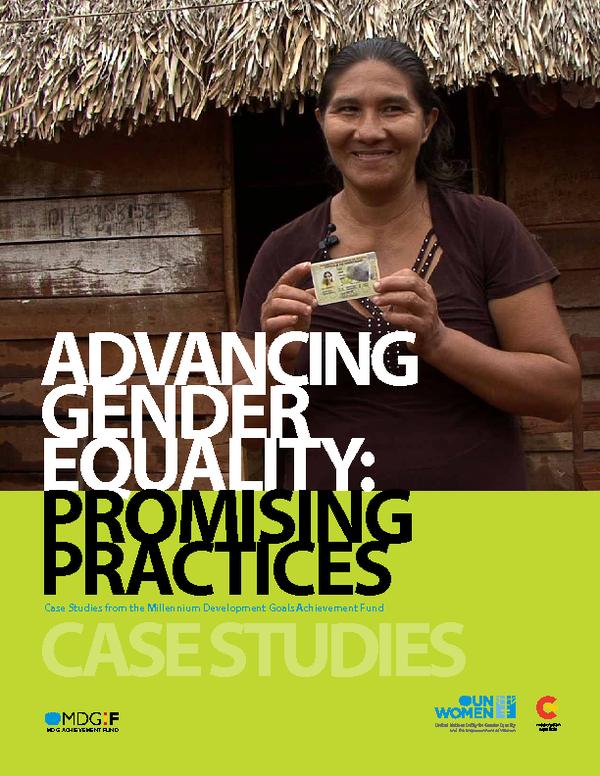
This overview presents lessons and results of specific relevance to shaping the post-2015 development framework. It contains lessons to enhance knowledge of both why results for gender equality and women’s empowerment are critical to advance an overall development agenda, as well as practical examples of how to make this a reality. As a result of the joint programmes, 20 promising practices have been identified. WIth a view to inform evidence-based policy and programming in support of women’s rights and gender equality, this Global Compendium presents the main findings of such analyses, including progress and results achieved, lessons learned from each programme and its sustainability, scaling up and replication potential. The in depth analyses of the case studies are in separate documents uploaded on the library under the names “Freedom From Violence,” “Improved Capabilities and Resources,” and “Increased Participation in Decision-Making.

View online/download
English

Lessons learned from MDG-F thematic window, private sector and development: providing valuable knowledge to future interventions in developing countries

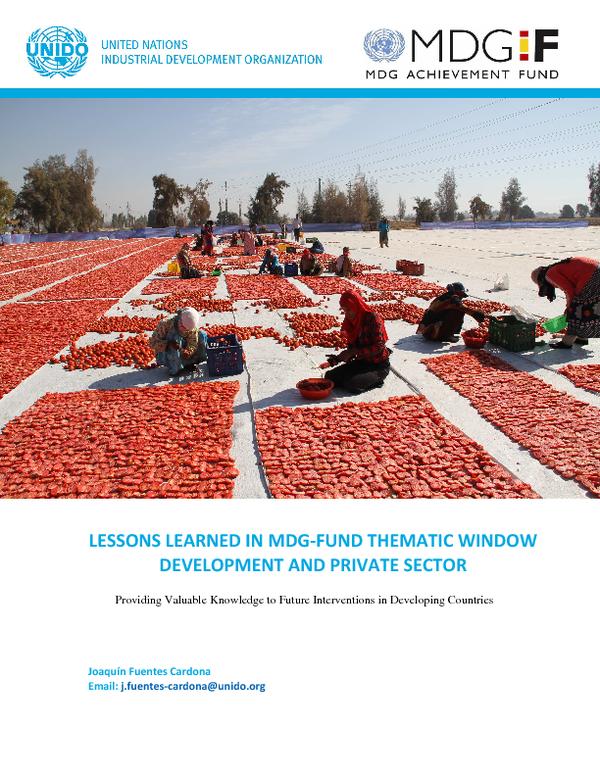
This study constitutes a valuable opportunity for information and experience sharing among UN agencies and Joint Programmes supported by the MDG-F. Its purpose is to provide knowledge and substantial insights to future interventions in developing countries regarding the design, management and implementation processes of private sector development-related programmes.

View online/download
English

Networks for prosperity: connecting development knowledge beyond 2015

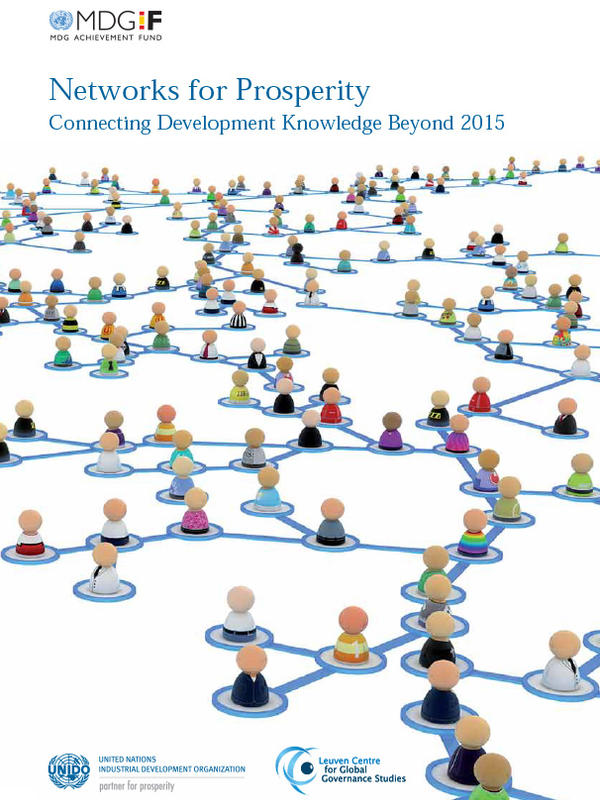
This study is the second report prepared by UNIDO’s Networks for Prosperity initiative which aimed to establish a knowledge management concept that would support developing countries in acquiring and adapting private sector development (PSD)-relevant knowledge to their specific contexts and development needs, and enhance the knowledge capabilities of the United Nations system and its national counterparts and partners in the field of PSD policy. This report is divided into five parts and concludes with recommendation that have been formulated for consideration by UN Member States.

View online/download
English

Youth labour market analysis: a training package on youth labour market information

This training package is one of the products developed under the Knowledge Management Facility on Youth Employment and Migration. This facility was sponsored by the Achievement Fund of the Millennium Development Goals (MDG-F). This package was developed to support managers and practitioners engaged in the implementation of youth employment programmes. The material that is contained in the package was validated by the managers of 15 joint programmes on youth employment and migration during two international workshops that took place in early 2011. It was subsequently used for the implementation of labour market information activities of some joint programmes on youth employment and migration of the MDG-F.

View online/download
English

Engaging with the urban poor and their organizations for poverty reduction and urban governance

This paper is primarily about the initiatives of organizations formed by the urban poor themselves and the potential these have as partners for UNDP offices. This includes the work of grassroots organizations formed around savings groups, mostly managed by women and in which most savers are women. This paper has a particular interest in how the scale and scope of what they do and what they can influence has been increased by the city-wide and national federations that they have formed, and the local NGOs that support them.

View online/download
English

Environment and climate change MDG-F thematic study: review of key findings and achievements

This report sets out to capture the main achievements and results of the 17 Joint Programmes (JPs) within the thematic window on Environment and Climate Change of the Millennium Development Goal Achievement Fund. The work on this thematic area was initiated with the outcomes of the Joint Programmes expected to have an accelerating influence on both the achievement of national development priorities and the Millennium Development Goals.

View online/download
English

Gender equality and women’s empowerment: MDG-F thematic study

This report sets out to capture the main achievements and results of the 13 Joint Programmes (JPs) within the thematic window on Gender Equality and Women’s Empowerment of the Millennium Development Goal Achievement Fund. The work on this thematic area was initiated with the outcomes of the Joint Programmes expected to have an accelerating influence on both the achievement of national development priorities and the Millennium Development Goals.

View online/download
English

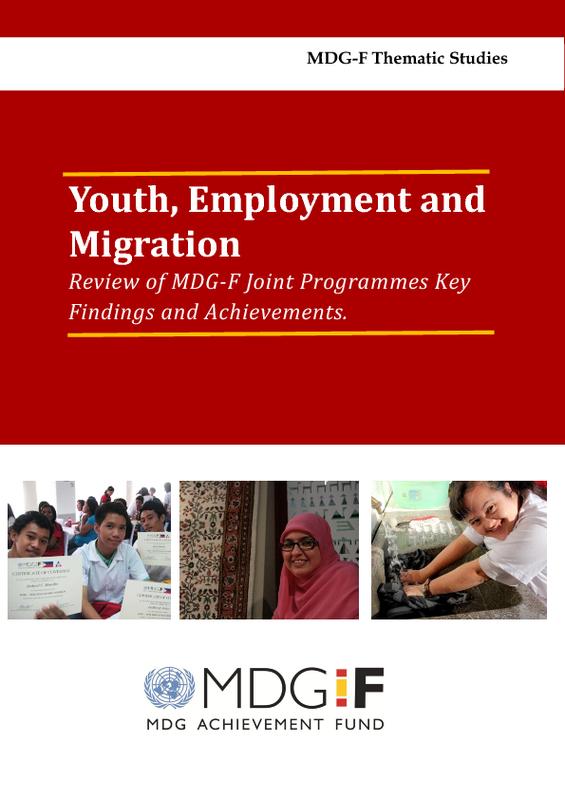
Youth, employment and migration MDG-F thematic study: review of key findings and achievements

This report sets out to capture the main achievements and results of the 15 Joint Programmes (JPs) within the thematic window on Youth, Employment and Migration of the Millennium Development Goal Achievement Fund (MDG-F YEM). The work on this thematic area was initiated in August 2007, with the outcomes of the Joint Programmes expected to have an accelerating influence on both the achievement of national development priorities and the Millennium Development Goals.

View online/download
English

Operationalizing gender aspects in the creative industries support programme in Cambodia

The document analyses gender aspects in the value chains targeted by the MDG-F’s Creative Industries Support Program (CISP) by identifying the issues affecting gender equality. The first section provides an overview of the situation of women in the economy, the second chapter includes the analysis of the value chains supported by CISP and a summary of few stakeholders engaged in gender and women entrepreneurship development. The third section incorporates the conclusions of the focus group discussions and the interviews conducted. Finally, the last part contains recommendations and actions that if implemented would improve CISP’s impact on achieving gender equality in the cultural industries value chains. Even if challenges met by women are usually the same as men but still, women are worse off due to less access to education and training, gender discrimination, and gender norms that assign women a lower status than men. Special consideration should be given to these women who have demonstrated success and should be used as role models, increasing the recognition and respect for women’s contribution to the overall economy.

View online/download
English

General assessment of the water supply sector and its human development function in Bosnia and Herzegovina

This document analyzes the water supply sector in Bosnia and Herzegovina as part of the program “Securing Access to Water through Institutional Development and Infrastructure” led by UNDP. By taking a participative approach, the aim of the document is to asses (i) organizational status of water utility companies, (ii) current municipal, cantonal, entity and state level legislation on the water supply sector and (iii) available structures for social protection welfare and public health, with the goal to ensure equitable and safe water supply and capacities of municipal governance systems. The research focuses in 20 municipalities and analyzes four different levels: water utility companies, municipal level (administrations in charge of utility affairs, costumers, local population, competent administration for refugees and returnees), entity level (water and environmental sector, social welfare sector, associations of water utilities) and the state level (competent authority for water and environment).

View online/download
English

Water supply study, Bosanski Petrovac

Bosanski Petrovac is located in the northwestern part of Bosnia-Herzegovina.This report has four main objectives: 1) provide a current situation analysis of the water supply system of Bosanski Petrovac as well as an analysis of development projects, studies, project solutions and harmonization of development of water supply systems with development plans and projects, 2) draft a water supply master plan for partner municipalities, 3) prioritize a plan of investment measures for a period of 10 years, and 4) conduct a feasibility study for priority investment measures.

View online/download
English

Water supply study: Istocno Novo Sarajevo and Istocna Ilidza

This report has four main objectives: 1) provide a current situation analysis of the water supply system of Istocno Sarajevo and Istocna Ilidza as well as an analysis of development projects, studies, project solutions and harmonization of development of water supply systems with development plans and projects, 2) draft a water supply master plan for partner municipalities, 3) prioritize a plan of investment measures for a period of 10 years, and 4) conduct a feasibility study for priority investment measures.

View online/download
English

Water supply study, Neum

Neum is a town and municipality located in the south of Herzegovina. It is Bosnia-Herzegovina only exit to the Adriatic Sea. This report has four main objectives: 1) provide a current situation analysis of the water supply system of Neum as well as an analysis of development projects, studies, project solutions and harmonization of development of water supply systems with development plans and projects, 2) draft a water supply master plan for partner municipalities, 3) prioritize a plan of investment measures for a period of 10 years, and 4) conduct a feasibility study for priority investment measures.

View online/download
English

Water supply study, Petrovo

Petrovo Municipality is located in the northeastern part of Bosnia and Herzegovina. This report has four main objectives: 1) provide a current situation analysis of the water supply system of Petrovo as well as an analysis of development projects, studies, project solutions and harmonization of development of water supply systems with development plans and projects, 2) draft a water supply master plan for partner municipalities, 3) prioritize a plan of investment measures for a period of 10 years, and 4) conduct a feasibility study for priority investment measures.

View online/download
English

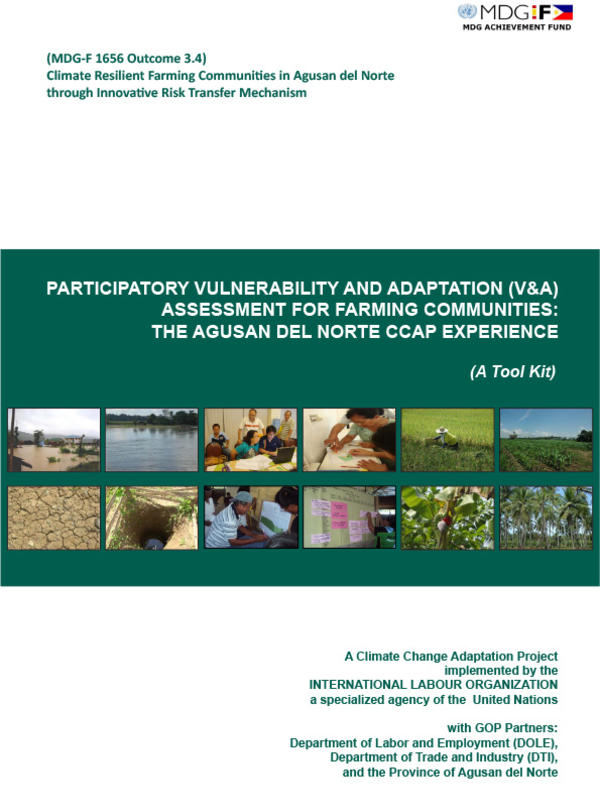
Participatory vulnerability and adaptation assessment for farming communities: the Agusan del Norte CCAP experience

A Vulnerability and Adaptation (V&A) Assessment takes stock of area characteristics, current and observed climate changes impacts along with natural hazards; and adaptation strategies employed in response to these, as well as looks at climate change scenarios for a particular locality. It is a risk assessment and looks at alternative adaptation coping capacities with respect to the likely risk scenarios. This tool kit provides an overview of the principles and key concepts of V&A, a step-by-step overview of the process that drives a V&A assessment and reviews report formulation and follow-through activities.

View online/download
English

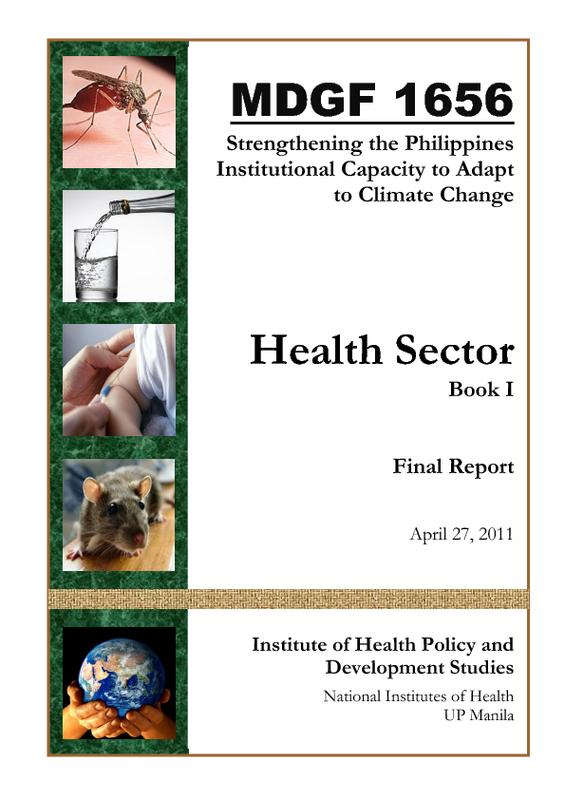
Strengthening the Philippines institutional capacity to adapt to climate change: Health sector, Book I

In the Philippines, improving maternal health has been identified as the most likely MDG not to be achieved by the target date as the decrease of maternal deaths has been decreasing too slowly to meet targets. Due to poor health, child health is also in jeopardy. Since climate change has been identified to exacerbate the effects of poor health, ineffective mitigation and adaptation are expected to make maternal and child health more fragile. Moreover, climate change is also expected to exacerbate vector borne diseases such as malaria, dengue and leptospirosis. This report presents a conceptual framework in the conduct of a vulnerability assessment and impact modeling for the Public Health Sector, a climate change vulnerability assessment framework, a climate change monitoring and evaluation framework, and documents innovative climate change adaptation practices applicable to the Philippine health sector. It also recommends that governments should engage more actively with the scientific community, who in turn must be supported to provide easily accessible climate risk information. It is the first of four books and contains the main project report. Book 2 contains the report annexes. Book 3 contains the compendium of best practices and book 4 presents training manuals on how to utilize the V&A framework and the integrated M&E framework.

View online/download
English

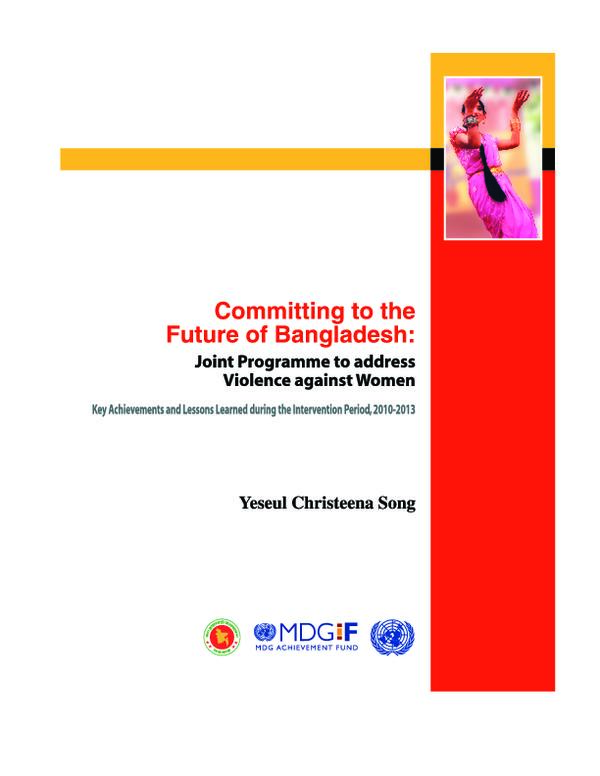
Committing to the future of Bangladesh: joint programme to address violence against women

The MDG-F Joint Programme to address Violence against Women was a comprehensive batch of interventions contributing to the prevention of violence and addressing the treatment and rehabilitation needs of survivors. It was designed to channel all outputs through existing government structures using clear and consistent procedures, with a strong monitoring mechanisms to ensure quality control. This document is filled with lessons learned and recommends that certain actions be scaled up, enhanced and replicated in future programmes. It provides criteria that should be met for future interventions addressing Violence against Women and cites examples, case studies, challenges faced and offers steps forward for each issue encountered.

View online/download
English


Suggest a publication

Feel free to submit a publication.

Submit here