Languages

Topbar Menu EN

The SDG Fund is operationally closed. This site is alive for knowledge and dissemination purposes.
Warning: This website is closed. Be aware of phishing or social engineering fraudulent requests of payments or certificates. Explore our programme areas.
Please visit jointsdgfund.org
Search our database of publications


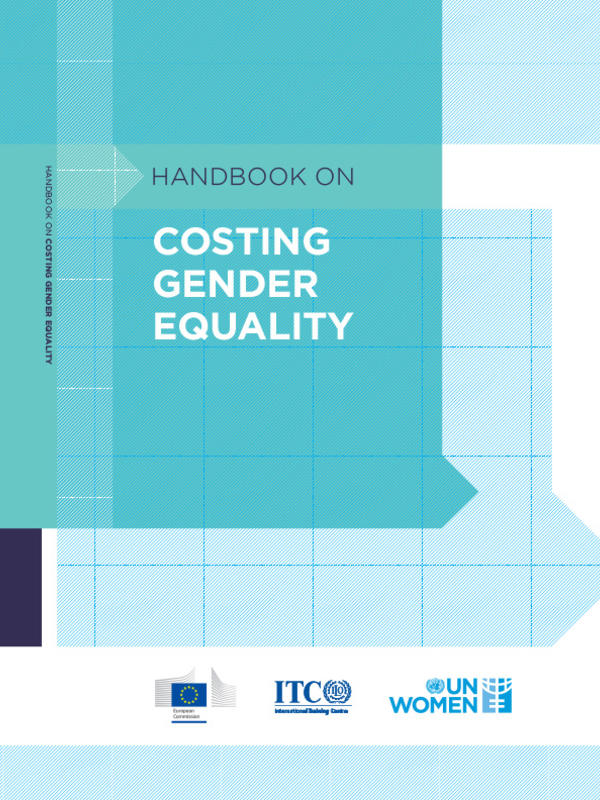
Handbook on costing gender equality
While governments have made commitments to action on gender equality, the lack of data on the costs of translating policy commitments into resources and investments limits the effectiveness and impact of their interventions. Quantifying the lack of investment in gender equality and women's rights is an important first step. To date, however, no systematic analysis of the different methodologies used for costing gender equality has been undertaken, nor an assessment of each method's strengths and weaknesses. Handbook on Costing Gender Equality is a comprehensive, step-by-step guide to costing gender equality priorities. It responds to the growing global demand for concrete methodologies to estimate the financing gaps and requirements for achieving gender equality commitments and builds on UN Women's decade long work on gender responsive planning and budgeting. The Handbook is organized into three sections: Section I explores the rationale for costing gender equality and introduces the main approaches and methods; Section II outlines the step-by-step process for undertaking a costing exercise; and Section III presents five case studies featuring costing work on gender equality.

View online/download
External Link

Gender budget initiatives: strategies, concepts and experiences

Efforts to analyze national and local budgets from the perspective of gender are growing throughout the world, in almost every region. "Gender Budget Initiatives" brings together the insights and analysis from the 2001 International Conference on Gender Budget Initiatives in Belgium. It presents the collective experience, analysis and evaluation of participants in all levels of society, government and international organizations. The first chapter provides deep insight into the concepts, tools and analysis required to forge ahead. Chapter two offers case studies from regions such as South Africa, Uganda and France. Chapter three, Advocacy and Mobilization, puts forward the statements of government and donor agency representatives as they share their in-depth knowledge and experience in the support of strengthening economic and financial governance through gender budget initiatives. "Gender Budget Initiatives" provides concepts, tools, case studies, and analytical methods and provides insights and strategies that will help widespread gender sensitive budget planning become more of a reality.

View online/download
External Link

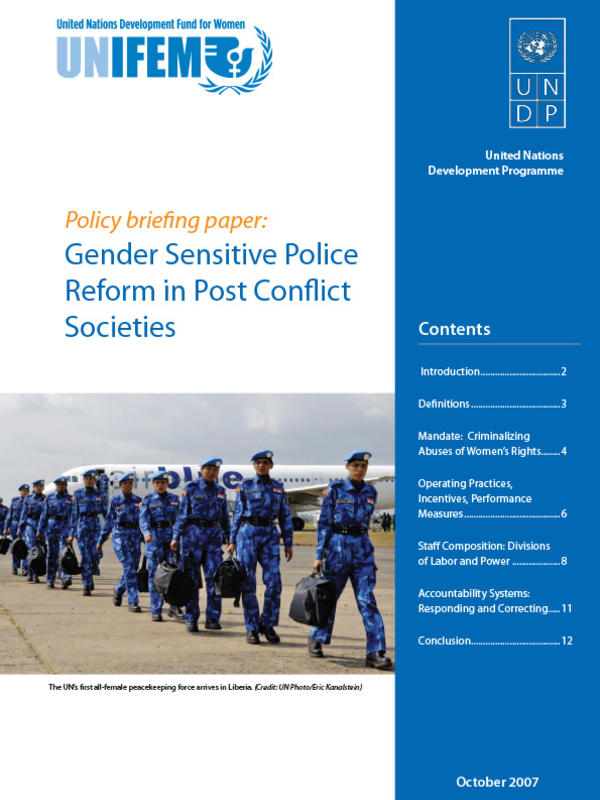
Policy briefing paper: gender sensitive police reform in post conflict societies

This briefing paper reviews UNIFEM and UNDP experiences in building the capacity of police services to respond to women's security needs. The paper distinguishes between internal reforms to facilitate recruitment of larger numbers of women, and reforms to police operational and accountability systems. The latter enable the police to address gender-based violence more effectively, and to develop other services that protect women and children from abuses of their rights. They include a complex range of reforms to incentive systems, performance measures, practical infrastructural arrangements, and information and communication systems. The paper concludes by stressing the importance of women's engagement in accountability mechanisms to review police performance and support efforts to correct for poor practice.

View online/download
External Link

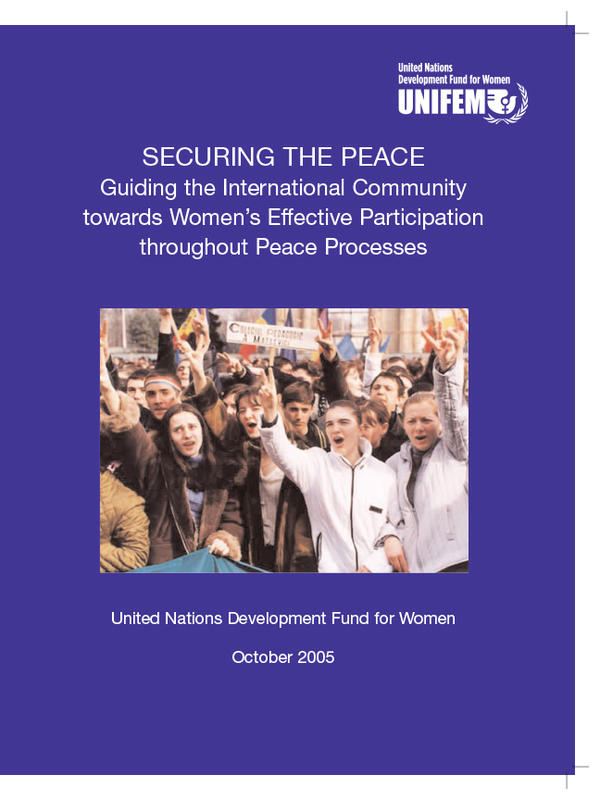
Securing the peace: guiding the international community towards women's effective participation throughout peace processes

The transition from war to peace opens a unique window of opportunity to address the root causes of conflict and transform institutions, structures and relationships within society. It is essential to ensure the active involvement of women and the articulation of gender equality from the earliest stages of peace talks through to implementation and monitoring of agreements. Not only do women have their own perspectives on political solutions and national recovery priorities to offer, but if they are excluded from peace accords this has tended, in the past, to guarantee their subsequent exclusion from public decision-making institutions. The overarching goal envisioned in this publication is a locally driven, locally owned and inclusive process wherein women can assert their right to participate in the decisions being taken about their future and which will result in the signing and implementation of a gender-sensitive peace agreement. A narrow window of opportunity exists for a gender perspective to be incorporated in the transformative processes that follow conflict; these begin with the negotiations that end war and create a foundation for peace. The guidelines offered here point the way to helping women make the most of that window, so they contribute to and benefit from a lasting, just and inclusive peace. This publication provides concrete recommendations to: 1) support women's effective participation at all stages of a peace process; 2) promote gender-sensitive peace negotiations and agreements; 3) encourage the mainstreaming of a gender perspective throughout the implementation of peace accords.

View online/download
External Link

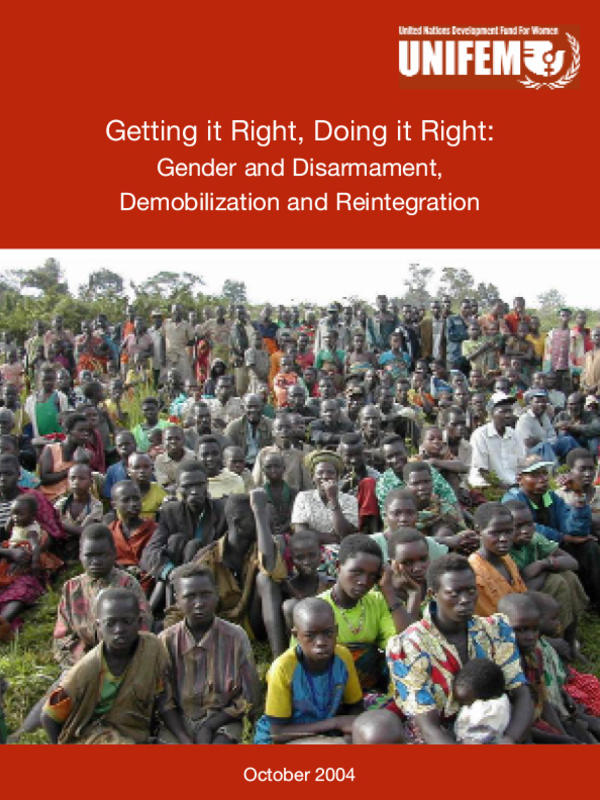
Getting it right, doing it right: gender and disarmament, demobilization and reintegration

This publication calls on all participants and decision makers to consider the needs of women and girls in disarmament, demobilization and reintegration (DDR) processes. Four years since the passage of resolution 1325, few would dispute that there is a gender deficit in DDR planning and delivery. Built on the premise that women and girls' should be supported in their efforts towards rebuilding their societies, "Getting It Right, Doing It Right" contains practical advice on how programmers and planners can incorporate gender perspective into their work. The publication contains a set of lessons learned and recommendations, guidance and insights that will make disarmament, demobilization and reintegration more inclusive and, ultimately, successful.

View online/download
External Link

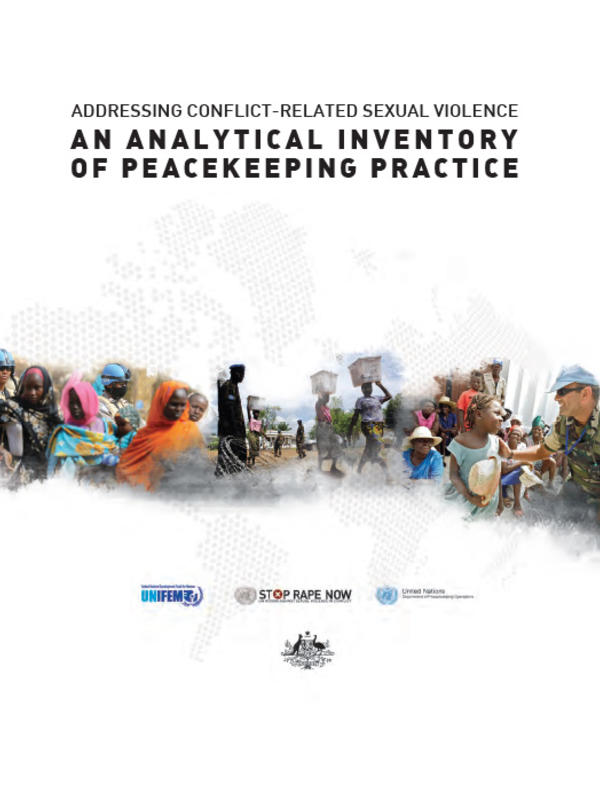
Addressing conflict-related sexual violence – an analytical inventory of peacekeeping practice

Despite increased attention to the women, peace and security agenda since the UN Security Council unanimously adopted resolution 1325 in October 2000, major analytical and implementation gaps remain. One such gap is the effort to combat conflict-related sexual violence — the premise of subsequent Security Council resolutions 1820 and 1888 — and the potential of uniformed peacekeepers to help fight such violence. This document captures best practices and emerging elements for a more effective response by peacekeepers to women's security concerns. From initiating firewood patrols in Darfur to establishing market escorts, night patrols and early-warning systems in the Democratic Republic of Congo, the document catalogues direct and indirect efforts to combat sexual violence during and in the wake of war. While the focus of this publication is on the practical methods by which military, police and civilian peacekeepers can prevent sexual violence, it is also part of a broader agenda to improve the capacities of peacekeepers to protect civilians effectively.

View online/download
External Link

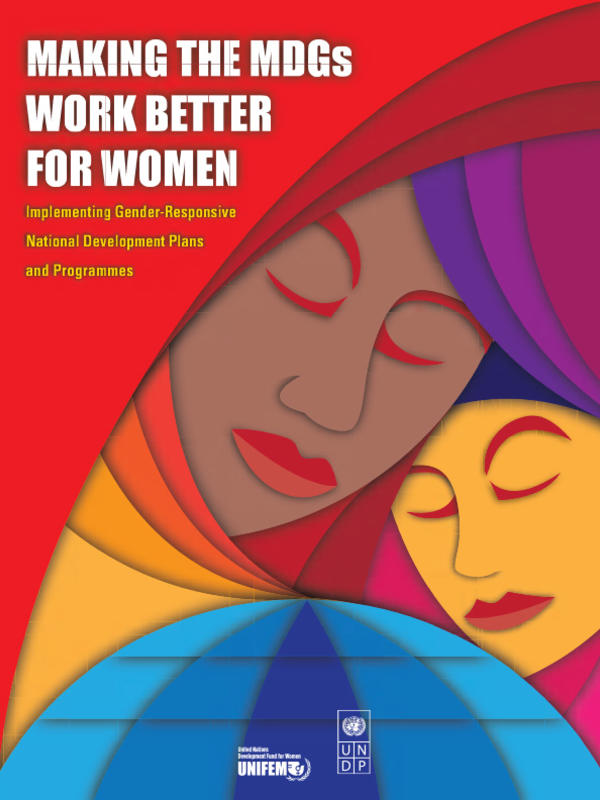
Making the MDGs work better for women

It is now recognized that sustainable human development cannot be achieved without gender equality. Achieving the Millennium Development Goals (MDGs) by 2015 hinges on making tangible progress with regard to gender equality and women's empowerment, not only as a goal in itself (MDG3), but also in the achievement of all the other goals. When women are integrated meaningfully into the labour force, there are impressive advances in social well-being. When women are empowered, there are better health and education outcomes for their children as well as a more sustainable use of natural resources. Maintaining and scaling up investments in gender equality is especially important in the context of the current global economic crisis. Projections of sharply reduced economic growth, rising unemployment, tightening credit conditions, falling remittances, and compressed aid flows will likely deepen deprivation around the world and seriously impede, if not reverse, progress towards the attainment of the MDGs, including MDG 3. In this context, it is especially important to optimize the use of scarce aid funds and protect and scale up recent achievements towards the attainment of gender equality. This publication provides knowledge on successful practices and approaches that governments, donors and civil society can take to make the MDGs work better for women. It reviews the successes and challenges faced in meeting MDG targets and the extent to which national reports have addressed gender in reporting on each goal. It concludes with a set of key recommendations for advancing progress towards achieving gender equality.

View online/download
External Link

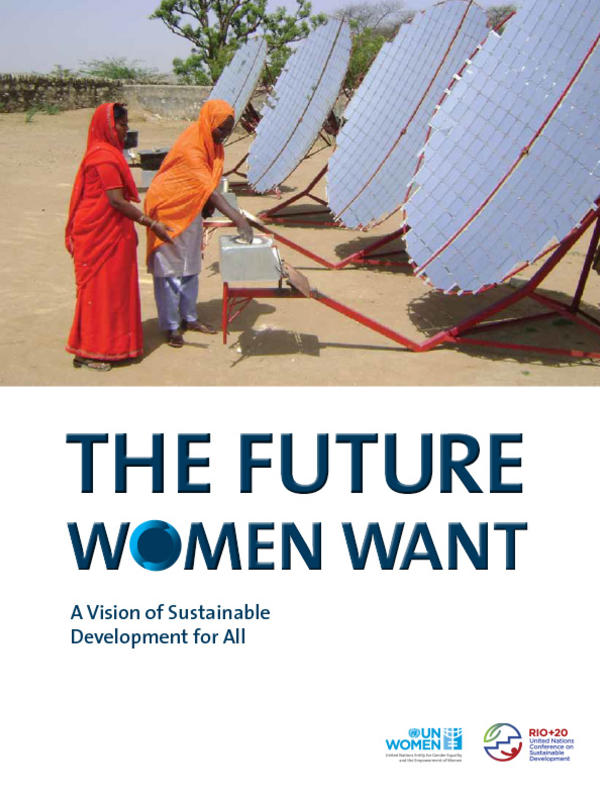
The future women want: a vision of sustainable development for all

Twenty years ago in Rio de Janiero, UN Member States unanimously agreed that “women have a vital role in environmental management and development. Their full participation is therefore essential to achieve sustainable development. Twenty years later, we still have a long way to go. In this publication UN Women highlights the commitments made on gender equality, and explores women's contributions to sustainable development and policy around the world. Focusing on priority areas—safe drinking water and sanitation; food security and sustainable agriculture; sustainable cities; decent work and the green economy; health and education—it details the actions needed to establish a gender-responsive development framework, and ensure an enabling environment for women's full participation in sustainable development.

View online/download
External Link

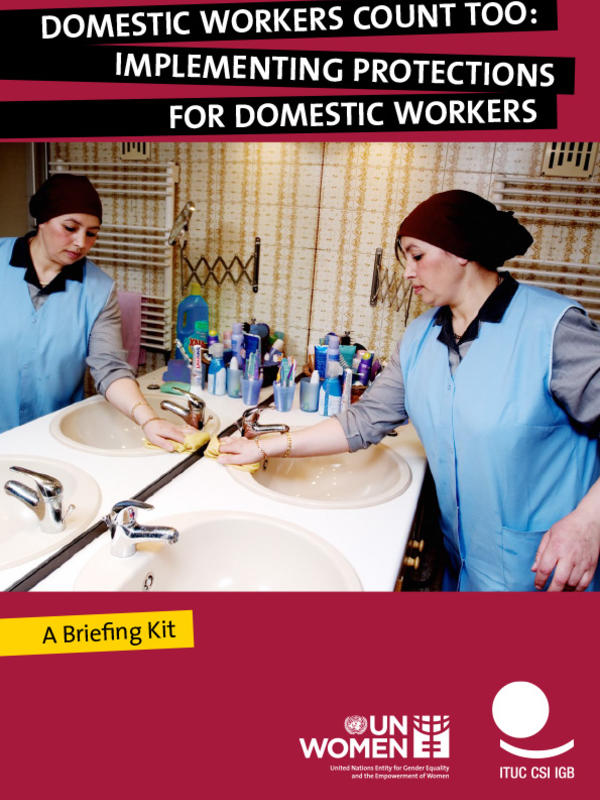
Domestic workers count too: implementing protections for domestic workers

This Briefing Kit is informed by the experience of struggle, resilience and creative practice of local and overseas domestic workers and their support groups. It is an invitation to governments and all of us to implement protections for domestic workers. The kit makes a compelling normative and development case for protecting domestic workers, based on interviews with governments, workers and employers from Bolivia, New York State in the USA, the Philippines and South Africa. It outlines the normative framework to promote and protect the rights of domestic workers and demonstrates how this can be operationalized, drawing on promising national practice worldwide, that embodies these standards and lessons learned from the same.

View online/download
External Link

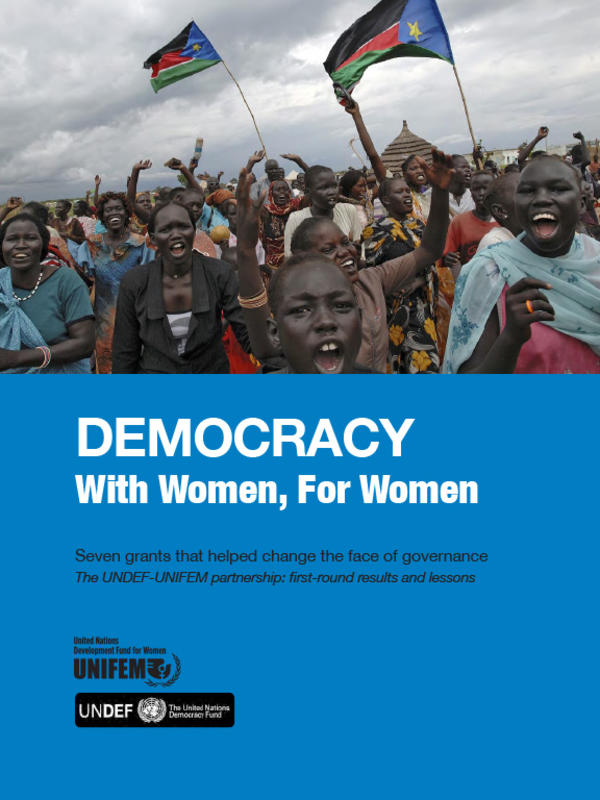
Democracy: with women, for women

Since 2006, the UN Democracy Fund (UNDEF) has provided grants to strengthen democratic governance in more than 100 countries. UNIFEM works with approximately 10 percent of UNDEF projects to inject its long-standing expertise in gender equality and governance. Democracy: With Women, For Women presents an overview and brief analysis of the first round of grants issued by UNDEF in partnership with UNIFEM. Both organizations are engaged in advancing gender equality and democratic governance around the world. The following pages probe, in a concise fashion, what was achieved through seven grants to improve women's political participation in a diverse set of countries and regions. A series of project profiles, drawn from reports and independent evaluations, summarizes objectives and activities, results, challenges, lessons and ideas for future work. Collectively and individually, the profiles shed light on effective strategies in implementing gender and governance programmes. This information may be useful for people carrying out or funding similar initiatives, for gender advocates, governance specialists and researchers interested in a concise overview of recent experiences illustrating advancements in women's political participation.

View online/download
External Link

Progress of the world’s women: in pursuit of justice

The past century has seen a transformation in women's legal rights, with countries in every region expanding the scope of women's legal entitlements. Nevertheless for many of the world's women the laws that exist on paper do not translate to equality and justice. Progress of the World's Women: In Pursuit of Justice looks at how the legal system can play a positive role in women accessing their rights, citing cases that have changed women's lives both at a local and at times global level. It also looks at the important role women have played and continue to play as agents for change within the legal system, as legislators, as lawyers, as community activists but also asks why, despite progress on legal reform, the justice system is still not delivering justice for all women. The report focuses on four key areas: legal and constitutional frameworks, the justice chain, plural legal systems and conflict and post-conflict. Drawing on tangible examples of steps that have been taken to help women access justice, the report sets out ten key recommendations for policy and decision makers to act on in order to ensure every woman is able to obtain justice.

View online/download
External Link

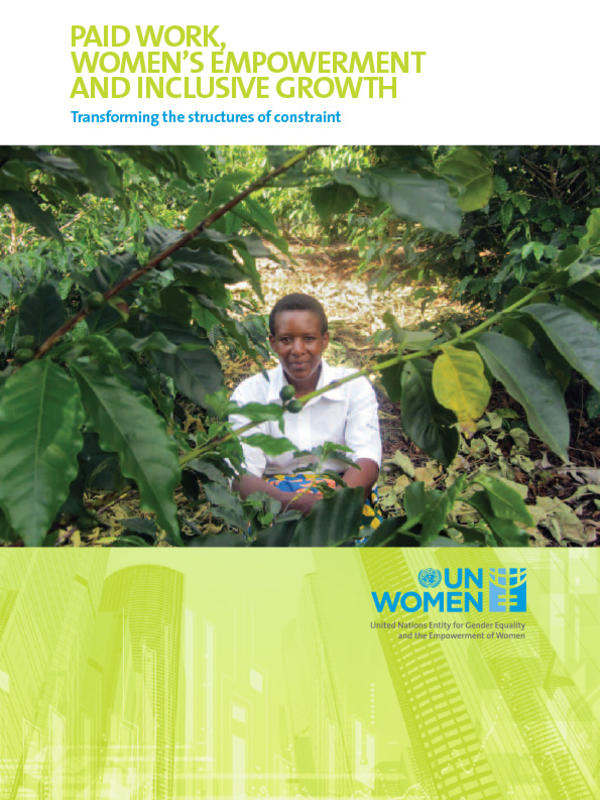
Paid work, women’s empowerment and inclusive growth: transforming the structures of constraint

Drawing on household survey data collected in Egypt, Ghana and Bangladesh as part of the Pathways of Women’s Empowerment Research Partners’ Consortium, this report provides insights into the ‘resource’ pathways that enhance women’s agency and thereby contribute to the inclusiveness of the economic growth process. Moreover, it looks at the the extent to which the structure of economic opportunities, generated by a country’s growth strategies, translated into positive impacts on women’s lives in these three country contexts. Briefly, the findings suggest that economic growth alone does not promote gender equality. Rather, unless patterns of growth generate reasonable quality jobs for women, the extent to which greater gender equality is achieved will depend on the actions of the state and civil society. Greater gender equality, in turn, does have the potential to contribute to inclusive growth when it is achieved in education, employment and other valued resources. In particular, women’s access to valued resources, such as decent jobs and higher education, can have positive distributional implications for growth.

View online/download
External Link

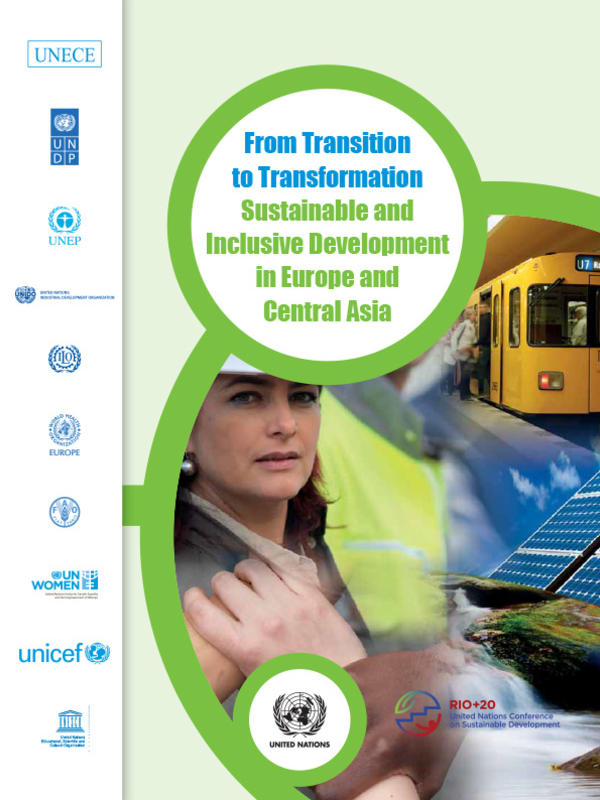
From transition to transformation: sustainable and inclusive development in Europe and Central Asia

This report was launched at the first Global Human Development Forum which brought together high-level experts from governments, corporations, civil society and international organizations to examine the global policy changes required to ensure a sustainable future for people today and for generations to come. The report, supported by 13 UN agencies, calls for a transformation to integrated policy making, where social equity, economic growth and environmental protection are approached together. The report calls for: 1) Removing fossil fuel subsidies to send the right signal to both businesses and households; 2) Establishing a social protection floor, in part to ensure the poorest are not hurt by the removal of fossil fuel subsidies; 3) Investing in green and decent job creation for women and men in the sectors where there is greatest opportunity in the region: renewables, recycling, energy efficient housing, and sustainable transport.

View online/download
External Link

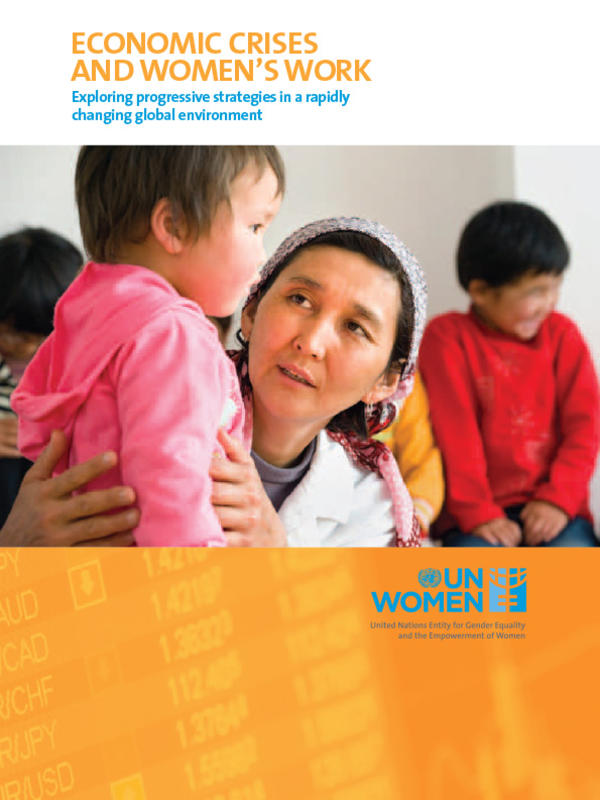
Economic crises and women’s work: exploring progressive strategies in a rapidly changing global environment

This paper examines issues of women’s employment and decent work in the context of the on-going global financial and economic crisis. Recognizing that financial and economic crises affect men and women workers differently for various reasons, it considers the implications of the crisis for women workers in formal, informal and unpaid activities. Analysis of some specific regional crises shows how crisis response strategies can have different impacts depending on how gender sensitive they are. Additionally, it shows how policy responses that take into account the differentiated impact on women workers are more likely to result in sustained and equitable recovery.

View online/download
External Link

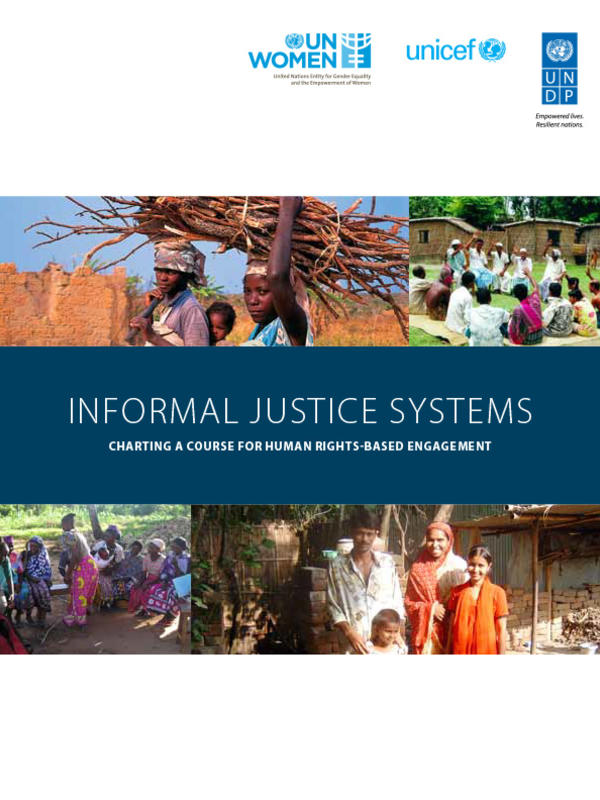
Informal justice systems: charting a course for human rights-based engagement

Informal Justice Systems: Charting a Course for Human Rights-Based Engagement is a study that has been jointly commissioned by UNDP, UNICEF and UN Women. It is the first comprehensive assessment that has been conducted of informal justice systems and human rights protection. It involved an exhaustive literature review and country-specific case studies in Bangladesh, Ecuador, Malawi, Niger, Papua New Guinea and Uganda, as well as a desk study of 12 additional countries. The Study establishes a typology for informal justice systems, recognizing the diversity and complexity of non-state mediation and decision-making by customary and traditional systems, and finds that most contain varying mixtures of elements of formality and informality. Drawing on the analysis of these systems’ practice, it reviews in particular issues of concern for the protection of women’s and children’s rights. Based on a comprehensive assessment of programming interventions to date, the study identifies the most promising strategies for bringing informal justice systems into greater alignment with human rights requirements. It also finds that effective programming in this area is highly context-specific, and that engaging with the cultural practices that are entrenched in informal justice systems demands a multi-pronged and long term human rights-based approach, that is carefully aligned with local communities’ own priorities.

View online/download
External Link

Violence against women in politics

Violence against women in politics is rampant in South Asia according to a new study conducted by the Centre for Social Research and UN Women. The study, ‘Violence against Women in Politics’ revealed that the insufficient implementation of laws, lack of support from police and judiciary, the socio-economic divide and current power structures are the major reasons for violence. The study was conducted in India, Nepal and Pakistan and analyses incidents of violence that occurred from 2003 to 2013. It was conducted to address the nature, extent and reasons for violence that inhibits women’s political participation. Approximately 800 respondents were interviewed including election commission officials, police, contestants, and families in urban and rural areas. The study finds that while the percentage of female voters and women candidates fielded by political parties has increased in all three countries, the percentage of female representatives in national bodies has decreased. The study also finds that more than 60 per cent of women do not participate in politics due to fear of violence.

View online/download
External Link

Ending violence against women: from the Beijing Platform for Action to the Sustainable Development Goals

The booklet contains relevant sections of the principal international agreements over the past 20 years where countries have committed to responding to violence against women and girls. It also provides a summary of the trends in national implementation of the Platform for Action, specifically in relation to one of the identified critical areas of concern, violence against women, as well as an overview of the role of UN Women in the 2030 Agenda for Sustainable Development, in particular, the development of the Sustainable Development Goals (SDGs).

View online/download
External Link

Global guidance on addressing school-related gender-based violence

More than 246 million children are subjected to gender-based violence in or around schools every year. This is a violation of their human rights, and a form of gender-discrimination that has far-reaching physical, psychological and educational consequences. The Global Guidance provides key information to governments, policy-makers, teachers, practitioners and civil society who wish to take concrete action against school-related gender-based violence. It introduces approaches, methodologies, tools and resources that have shown positive results in preventing and responding to school-related gender-based violence.

View online/download
External Link

Essential services package for women and girls subject to violence

The United Nations Joint Global Programme on Essential Services for Women and Girls Subject to Violence, a partnership by UN Women, UNFPA, WHO, UNDP and UNODC, aims to provide greater access to a coordinated set of essential and quality multi-sectoral services for all women and girls who have experienced gender based violence. The Programme identifies the essential services to be provided by the health, social services, police and justice sectors as well as guidelines for the coordination of essential services and the governance of coordination processes and mechanisms. Service delivery guidelines for the core elements of each essential service have been identified to ensure the delivery of high-quality services, particularly for low- and middle-income countries, for women and girls experiencing violence. Taken together, these elements comprise the “Essential services package”.

View online/download
External Link

The cost of agricultural productivity in Malawi, Tanzania and Uganda

Women form a large proportion of the agricultural labour force in Sub-Saharan Africa and thus play a vital role in ensuring family nutrition and food security. In Eastern and Southern Africa, agriculture continues to be a key engine for local and regional economies, represents a critical source of income and ensures food security and nutrition. However, as has been widely documented, gender-based inequalities in access to and control of productive and financial resources inhibit agricultural productivity and reduce food security. A new study measuring the economic costs of the gender gap in agricultural productivity in three African countries provides further evidence that reducing the gender gap plays a significant role in poverty reduction and improved nutritional outcomes. The report provides a unique quantification of the costs in terms of lost growth opportunities and an estimate of what societies, economies, and communities would gain if the gender gap in agriculture is addressed. The findings of this report are striking, and send a strong signal to policy makers in Africa as well as development partners that closing the gender gap is smart economics. Consider this: closing the gender gap in agricultural productivity could potentially lift as many as 238,000 people out of poverty in Malawi, 80,000 people in Tanzania, and 119,000 people in Uganda.

View online/download
External Link

A framework to underpin action to prevent violence against women

Violence against women is one of the most pervasive human rights violations in the world, rooted in gender inequality, discrimination and harmful cultural and social norms. It is also increasingly recognized as a public health issue that adversely affects the health of women. Due to sustained efforts by the women’s movement, governments and other stakeholders, the issue of violence against women is now positioned as a priority on global human rights, health and development agendas. Many of the responses to date to violence against women have focused primarily on intervening with affected individuals after the violence has occurred. Such strategies are essential to mitigate the devastating mental, physical, social and economic effects for women experiencing violence, ensure justice and accountability, and prevent its recurrence. It is important to continue to improve these responses. At the same time, there is also an increasing need to address the broader factors that contribute to prevalence at a population level, and to implement programmes that prevent such violence from occurring in the first place.

View online/download
External Link

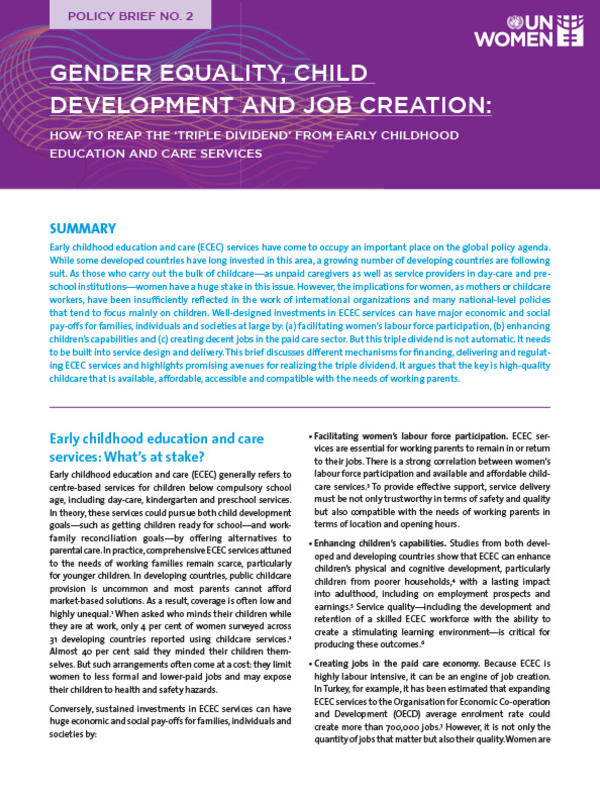
Gender equality, child development and job creation: how to reap the ‘triple dividend’ from early childhood education and care services

This brief synthesizes research findings, analysis and policy recommendations for realizing the triple dividend from early childhood education and care (ECEC) services. ECEC services have come to occupy an important place on the global policy agenda. While some developed countries have long invested in this area, a growing number of developing countries are following suit. As those who carry out the bulk of childcare—as unpaid caregivers as well as service providers in day-care and preschool institutions—women have a huge stake in this issue. However, the implications for women, as mothers or childcare workers, have been insufficiently reflected in the work of international organizations and many national-level policies that tend to focus mainly on children.Well-designed investments in ECEC services can have major economic and social pay-offs for families, individuals and societies at large by: (a) facilitating women’s labour force participation, (b) enhancing children’s capabilities and (c) creating decent jobs in the paid care sector. But this triple dividend is not automatic. It needs to be built into service design and delivery. This brief discusses different mechanisms for financing, delivering and regulating ECEC services and highlights promising avenues for realizing the triple dividend. It argues that the key is high-quality childcare that is available, affordable, accessible and compatible with the needs of working parents.

View online/download
External Link

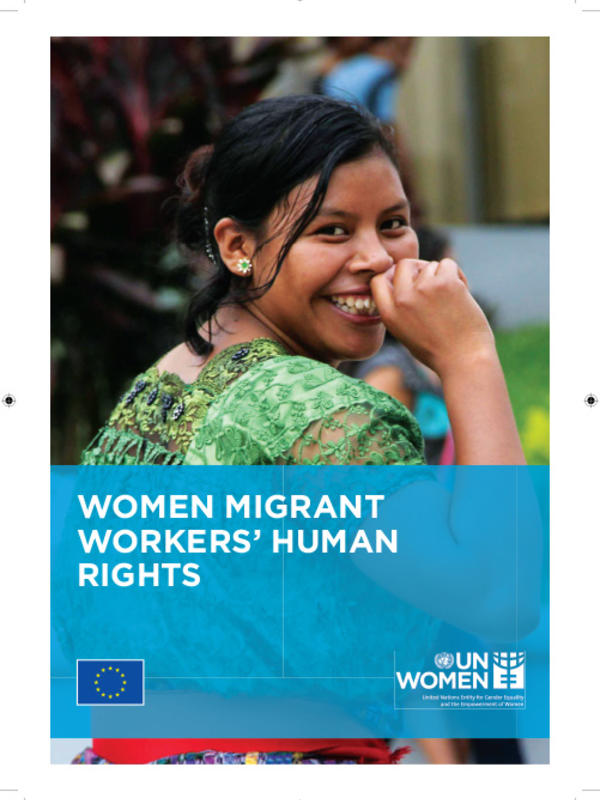
Women migrant workers' human rights

UN Women's Transforming our Future series introduces brief thematic documents with the goal of raising awareness on the importance of addressing such problems as inequality, the legal framework that mandates women's human rights protection, as well as to promote solutions from all areas of society. This leaflet presents central international instruments for the protection of the human rights of women migrant workers, and describes the link between gender and migration.

View online/download
External Link

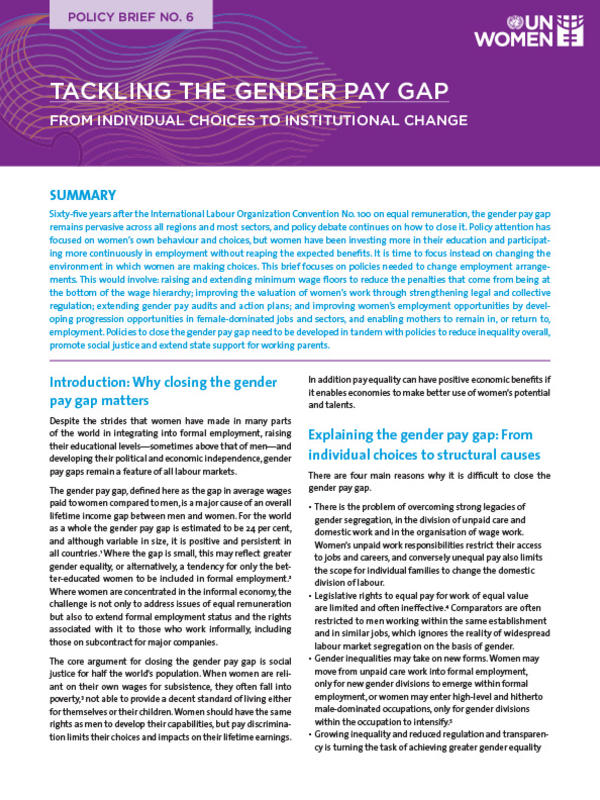
Tackling the gender pay gap: from individual choices to institutional change

Sixty-five years after ILO Convention no. 100 on equal remuneration, the gender pay gap remains pervasive across all regions and most sectors, and policy debate continues on how to close it. Policy attention has focused on women’s own behaviour and choices, but women have been investing more in their education and participating more continuously in employment without reaping the expected benefits. It is time to focus instead on changing the environment in which women are making choices. This brief focuses on policies needed to change employment arrangements. This would involve: 1) raising and extending floor under wages to reduce the penalties associated with being at the bottom of the wage hierarchy; 2) improving the valuation of women’s work through strengthening legal and collective regulation; 3) extending gender pay audits and action plans; 4) improving women’s employment opportunities by developing progression opportunities in female-dominated jobs and sectors, and 5) enabling mothers to remain in, or return to, employment. Policies to close the gender pay gap need to be developed in tandem with policies to reduce inequality overall, promote social justice and extend state support to working parents.

View online/download
External Link

Supporting women's empowerment and gender equality in fragile states: research brief — Sudan

This brief is one in a three-part research series produced by UN Women’s Fund for Gender Equality (FGE) – a global gender equality fund which awards competitive grants and technical assistance to women-led civil society organizations around the world. Focusing on grantee case studies in Sudan, this brief offers a more nuanced look at the real-time opportunities and barriers to women’s economic empowerment in fragile contexts, including what is working, what is not and what is needed to help women realize greater empowerment, equality and inclusive development. Through area-based research and a compilation of grantee good practices and lessons learned, this brief offers insight into the local gender dimensions of fragility and a set of recommendations to help scale strategies and interventions that work for women and their communities. In this series, the FGE also presents: 1) Findings of the FGE’s perceptions survey research, conducted in 2015 with over 1,200 rural, displaced and refugee women in Guinea, Lebanon and Sudan; 2) A programme-oriented framework for understanding empowerment as a set of four components working together: productive resources, personal resources, institutional relations and interpersonal relations.

View online/download
External Link


Suggest a publication

Feel free to submit a publication.

Submit here