Languages

Topbar Menu EN

The SDG Fund is operationally closed. This site is alive for knowledge and dissemination purposes.
Warning: This website is closed. Be aware of phishing or social engineering fraudulent requests of payments or certificates. Explore our programme areas.
Please visit jointsdgfund.org
Search our database of publications


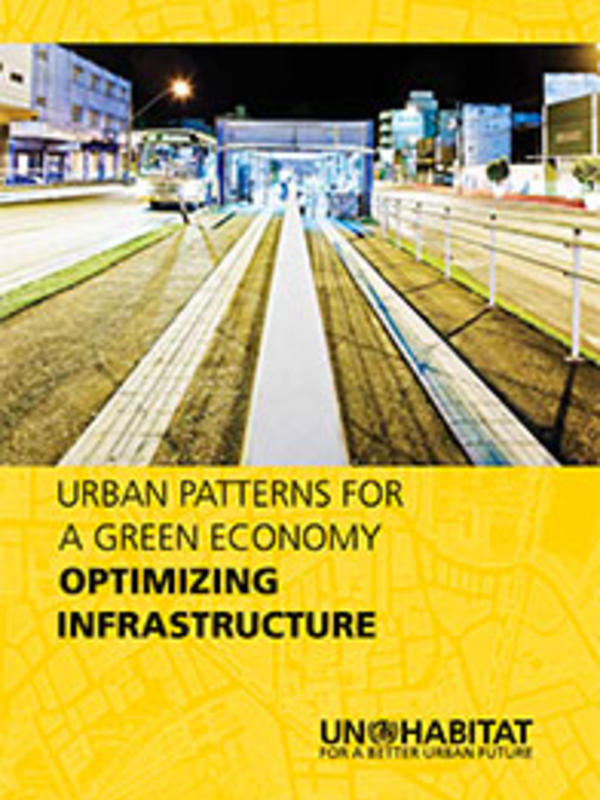
Urban patterns for a green economy: optimizing infrastructure
Part of a series of four entitled Urban Patterns for a Green Economy, this guide proposes that cities can act as agents for change that allow their large populations to live less wastefully. It considers how infrastructure systems can be viewed as an opportunity to shift cities onto a more sustainable path by paying close attention to the resources that pass through them, and the manner in which they support the activities of the city. Each city context differs, based on stage of development, pace of growth and available resources.

View online/download
External Link

Planning urban settlements in South Sudan

The publication will provide text and images on the Urban Development process and serve as a guide for designing new layouts or updating existing ones. The book will provide a compilation of different and updated Urban Planning and Development concepts that are currently applied all over the world.

View online/download
External Link

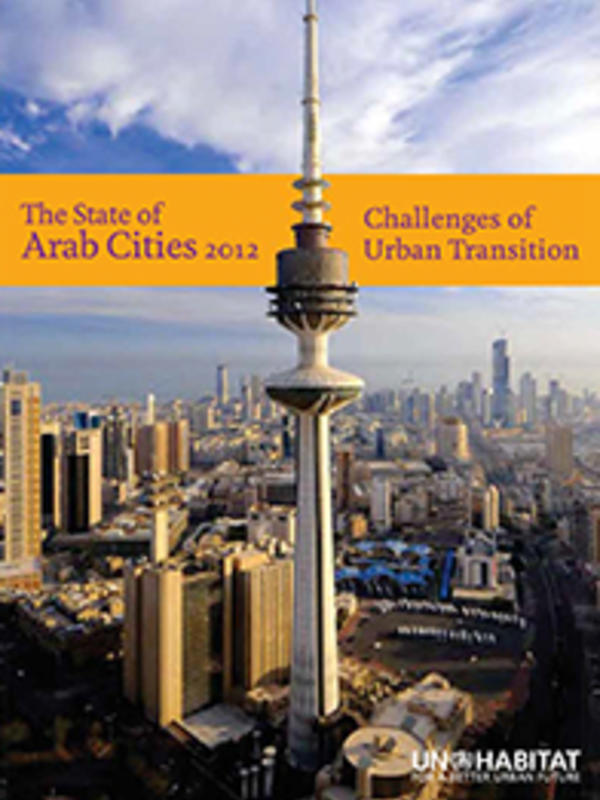
The state of Arab cities 2012: challenges of urban transition

The Arab world has played a very important role in the history of urbanization. It is the region where urban civilization was born and where urban matters have been addressed for centuries. The Arab urban civilization, as it has evolved over the past millennium, has generated some of the most beautiful cities in the world. This publication is the first ever to comprehensively analyse urbanization processes in the Arab States through the review of its four sub-regions: the Maghreb, the Mashreq, the Gulf Cooperation Council countries and the least-developed Arab countries of the Southern Tier.

View online/download
External Link

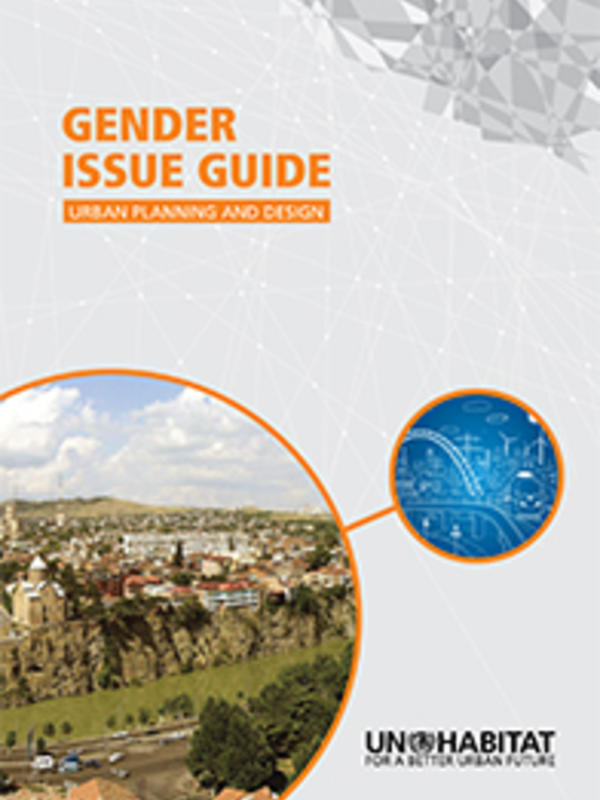
Gender issue guide: urban planning and design

While many cities are hubs of economic growth, employment, and cultural life, urbanization has resulted in pronounced socio-economic inequalities, exclusion, and segregation. The objective of this gender issue guide on urban planning and design is to: 1) Increase understanding of gender concerns and needs in urban planning and design; 2) Develop capacity to address gender issues in select human settlement areas; 3) Encourage integration of gender perspectives into policies, projects, and programmes for sustainable urban development ; 4) Support institutionalization of the culture of gender mainstreaming and gender equality through the implementation of gender-sensitive projects/programmes and the monitoring of gender mainstreaming progress

View online/download
External Link

The state of China's cities 2014/15

As a report with joint efforts by China Science Center of International Eurasian Academy of Sciences, China Association of Mayors, Urban Planning Society of China and UN-Habitat, this publication integrates both the guidelines of the Third Plenum of the 18th CPC Central Committee and the Central Urbanization Work Conference and includes new concepts, ideas, measures and innovative cases gathered from various places in China.

View online/download
External Link

53 UN-Habitat model projects 2013/2014

The efforts of UN-Habitat have been focused on building a brighter future for developing cities, which are most in need of support in guiding the process of urbanization. This catalogue of projects centres on three fundamental generators of wealth and employment in cities: planning and urban design, urban law and urban economy. It includes experiences in applying UN-Habitat’s methodology of community participation in the provision of basic services, housing and urban reconstruction. It also highlights how legislation, governance and soil treatment plays a key role in achieving urban transformation.

View online/download
External Link

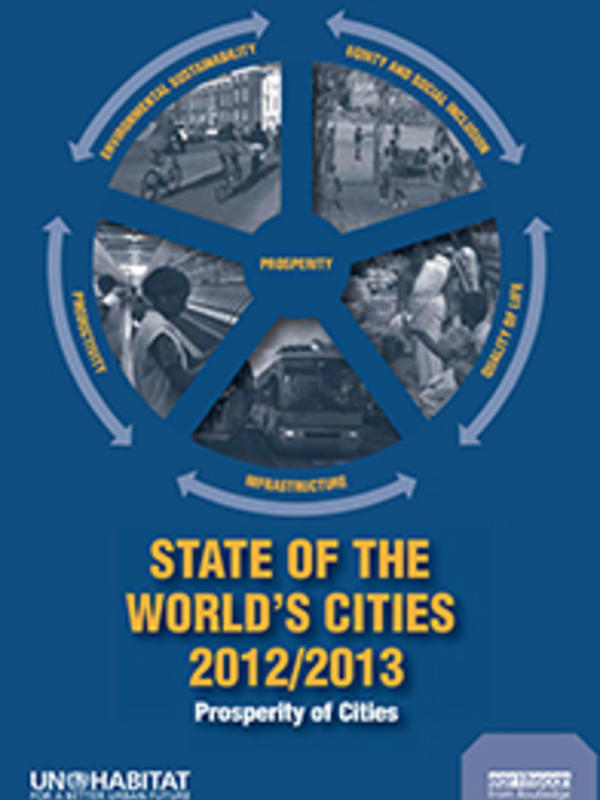
Prosperity of cities: state of the world’s cities 2012/2013

What this new edition of State of the World’s Cities shows is that prosperity for all has been compromised by a narrow focus on economic growth. UN-Habitat suggests a fresh approach to prosperity beyond the solely economic emphasis, including other vital dimensions such as quality of life, adequate infrastructures, equity and environmental sustainability. The Report proposes a new tool – the City Prosperity Index – together with a conceptual matrix, the Wheel of Prosperity, both of which are meant to assist decision makers to design clear policy interventions. The Report advocates for the need of cities to enhance the public realm, expand public goods and consolidate rights to the ‘commons’ for all as a way to expand prosperity. This comes in response to the observed trend of enclosing or restricting these goods and commons in enclaves of prosperity, or depleting them through unsustainable use.

View online/download
External Link

World Cities Report 2016: urbanization and development – emerging futures

The analysis of urban development of the past twenty years presented in this maiden edition of the World Cities Report shows, with compelling evidence, that there are new forms of collaboration and cooperation, planning, governance, finance and learning that can sustain positive change. The Report unequivocally demonstrates that the current urbanization model is unsustainable in many respects. It conveys a clear message that the pattern of urbanization needs to change in order to better respond to the challenges of our time, to address issues such as inequality, climate change, informality, insecurity, and the unsustainable forms of urban expansion.

View online/download
External Link

Planning and design for sustainable urban mobility: global report on human settlements 2013

Planning and Design for Sustainable Urban Mobility argues that the development of sustainable urban transport systems requires a conceptual leap. The purpose ‘transportation’ and ‘mobility’ is to gain access to destinations, activities, services and goods. Thus access is the ultimate objective of transportation. As a result, urban planning and design should focus on how to bring people and places together, by creating cities that focus on accessibility, rather than simply increasing the length of urban transport infrastructure or increasing the movement of people or gods. Urban form and the functionality of the city are therefore a major focus of this report, which highlights the importance of integrated land-use and transport planning.

View online/download
External Link

The state of European cities in transition 2013: taking stock after 20 years of reform

The transitional European countries are now in different stages of their transition to prosperous, just and democratic societies. As we look at the challenges of the future, This document offers insight and analysis to inform and enlighten.

View online/download
External Link

UN-Habitat gender journey

In 2012, UN-Habitat established the Advisory Group on gender issues (AGGI) as an independent body to advise the Executive Director on all issues related to gender issues in the agency’s work. One of the first requests of AGGI members was for a document in informing the organisation’s current gender work. This gender history is commissioned by UN-Habitat in response to AGGI’s request. Many past and present staff members and partners of UN-Habitat have contributed through availing documents, giving interviews, writing text and making comments. The document concludes by highlighting some observations and lessons learned.

View online/download
External Link

Global report on urban health; equitable, healthier cities for sustainable development

This timely report comes at a decisive moment in history where we can reshape urban environments and health systems for the majority of the world’s population that live in cities. Enabling this transformation are the SDGs, which have reconfigured how governments and the international community need to plan and implement actions to eradicate poverty and inequality, create inclusive economic growth, preserve the planet and improve population health. Central to this quest is to create equitable, healthier cities for sustainable development. A focus on urban health not only recognizes global demographic trends but the inextricable and inter-dependent links between health, economic productivity, social stability and inclusion, climate change and healthy environments, and an enabling built environment and governance. At the core of the dynamic and transformative nature of cities are people – healthy people. In order to pursue this goal and the SDGs, we must ensure that all citizens and communities, regardless of income, social status, or gender, have access to the quality health services they need with sufficient financial protection.

View online/download
External Link

21 projects compendium: implementing the new urban agenda

For the last 40 years, UN-Habitat has been working to improve the lives of people in human settlements around the world. As our population has grown, so has the number of people living in cities, towns and villages on all continents. With around 3 billion more people expected to live in urban areas by 2050, it is more critical than ever that we plan and manage the way our cities expand. This publication demonstrates just a snapshot of UN-Habitat's overall portfolio and represents the ways in which, along with their partners, their work positively impacts the quality of life for people around the world. Working together we can, and must, promote economically, socially and environmentally sustainable urbanization and a better urban future for all.

View online/download
External Link

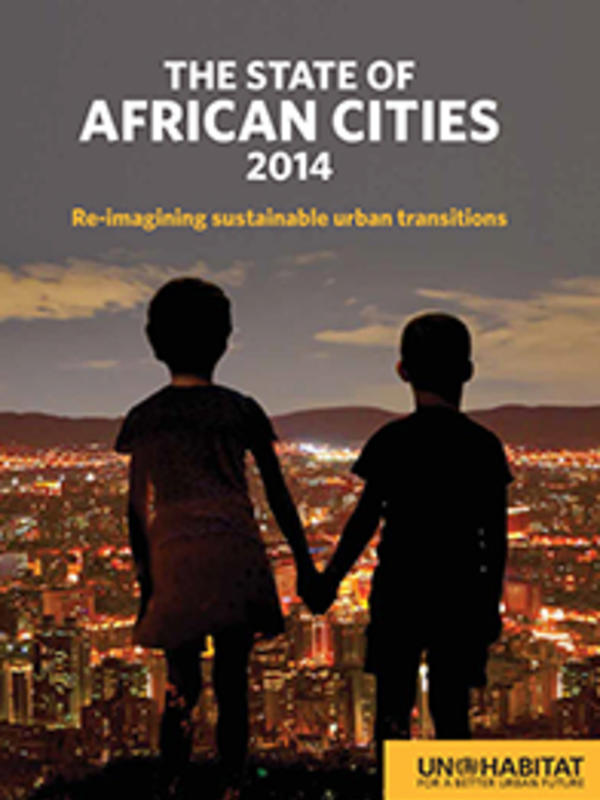
The state of African cities 2014: re-imagining sustainable urban transitions

The African continent is currently in the midst of simultaneously unfolding and highly significant demographic, economic, technological, environmental, urban and socio-political transitions. Africa’s economic performance is promising, with booming cities supporting growing middle classes and creating sizeable consumer markets. But despite significant overall growth, not all of Africa performs well. The continent continues to suffer under very rapid urban growth accompanied by massive urban poverty and many other social problems. These seem to indicate that the development trajectories followed by African nations since post-independence may not be able to deliver on the aspirations of broad based human development and prosperity for all. This report, therefore, argues for a bold re-imagining of prevailing models in order to steer the ongoing transitions towards greater sustainability based on a thorough review of all available options. That is especially the case since the already daunting urban challenges in Africa are now being exacerbated by the new vulnerabilities and threats associated with climate and environmental change.

View online/download
External Link

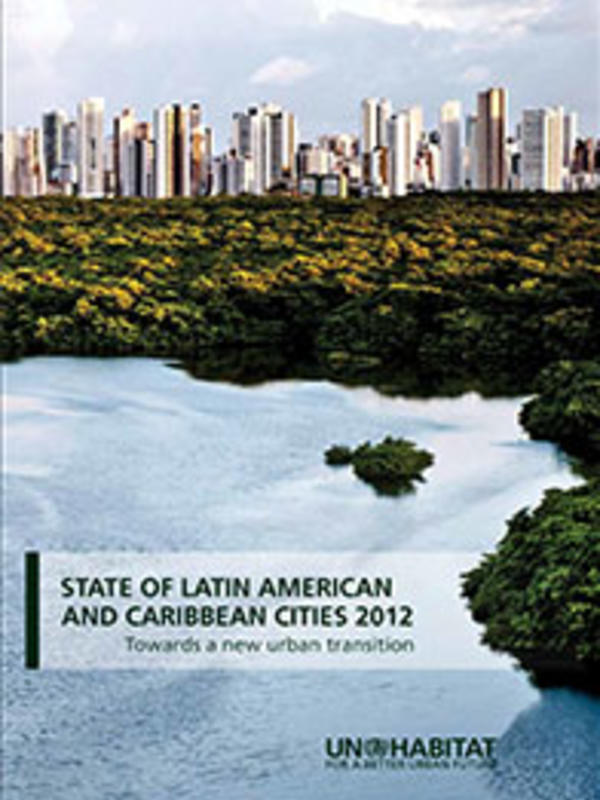
State of Latin American and Caribbean cities 2012

With 80% of its population living in cities, Latin America and the Caribbean is the most urbanized region on the planet. Located here are some of the largest and best-known cities, like Mexico City, São Paulo, Buenos Aires, Rio de Janeiro, Bogota, Lima and Santiago. The region also boasts hundreds of smaller cities that stand out because of their dynamism and creativity. This edition of State of Latin American and Caribbean cities presents the current situation of the region’s urban world, including the demographic, economic, social, environmental, urban and institutional conditions in which cities are developing.

View online/download
External Link

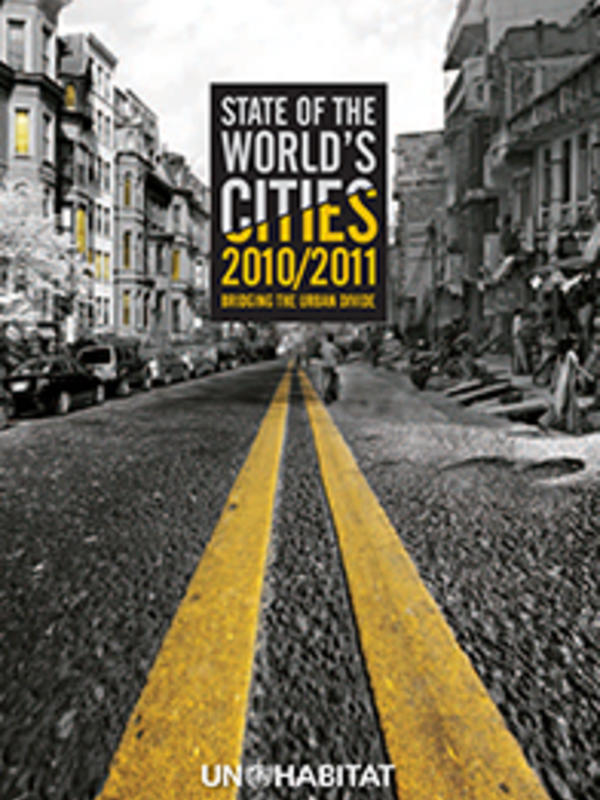
State of the world’s cities 2010/2011. Cities for all: bridging the urban divide

The world’s urban population now exceeds the world’s rural population. What does this mean for the state of our cities, given the strain this global demographic shift is placing upon current urban infrastructure? Following on from previous State of the World’s Cities reports, this edition uses the framework of ‘The Urban Divide’ to analyse the complex social, political, economic and cultural dynamics of urban environments. The book focuses on the concept of the ‘right to the city’ and ways in which many urban dwellers are excluded from the advantages of city life, using the framework to explore links among poverty, inequality, slum formation and economic growth. The volume will be essential reading for all professionals and policymakers in the field, and a valuable resource for researchers and students in all aspects of urban development.

View online/download
External Link

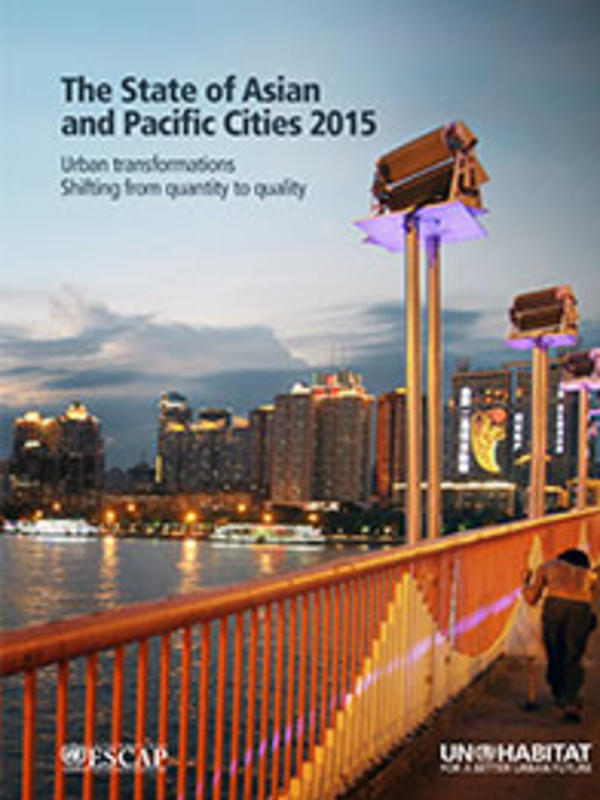
The state of Asian and Pacific cities 2015. Urban transformations: shifting from quantity to quality

This report on the state of Asian and Pacific cities is the second in the series first published by UN-Habitat (the United Nations Human Settlements Programme) and ESCAP (the United Nations Economic and Social Commission for Asia and the Pacific) in 2010 then 2011. Building on the findings and baseline data provided in the 2010 report, and in capturing both rapid change and new policy opportunities, The State of Asian and Pacific Cities 2015 seeks to further contribute to policy-relevant literature on the region’s urban change. Specifically, as reflected in its subtitle, the report highlights growing gaps between current urbanisation patterns and what is needed to shift to a more inclusive and sustainable urban future, in which the role of the region’s cities is unquestionably tied to national, regional and global development prospects.

View online/download
External Link

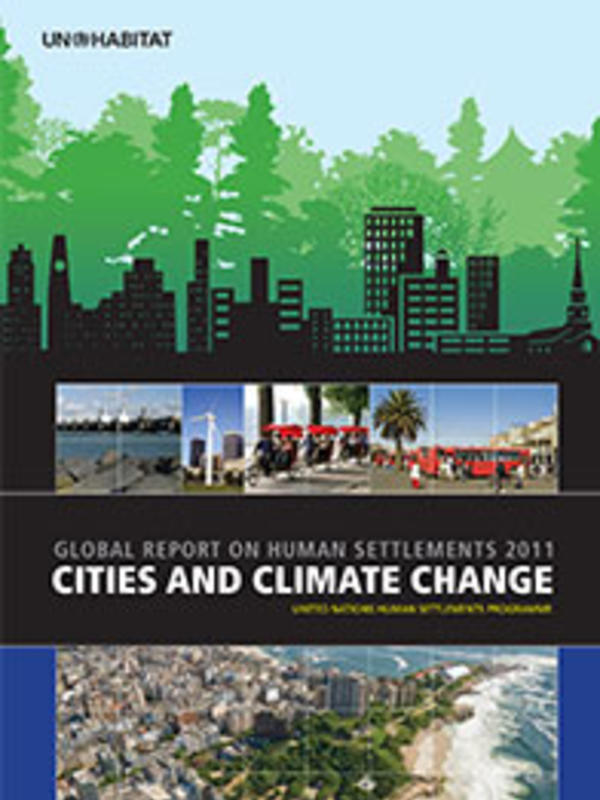
Cities and climate change: global report on human settlements 2011

Cities and Climate Change reviews the linkages between urbanization and climate change, two of the greatest challenges currently facing humanity in the 21st Century, and whose effects are converging in dangerous ways. It illustrates the significant contribution of urban areas to climate change while at the same time highlighting the potentially devastating effects of climate change on urban populations. It reviews policy responses, strategies and practices that are emerging in urban areas to mitigate and adapt to climate change, as well as their potential achievements and constraints. In conclusion, the report argues that urban areas have a pivotal role in both climate change mitigation and adaptation and identifies strategies and approaches for strengthening this role.

View online/download
External Link

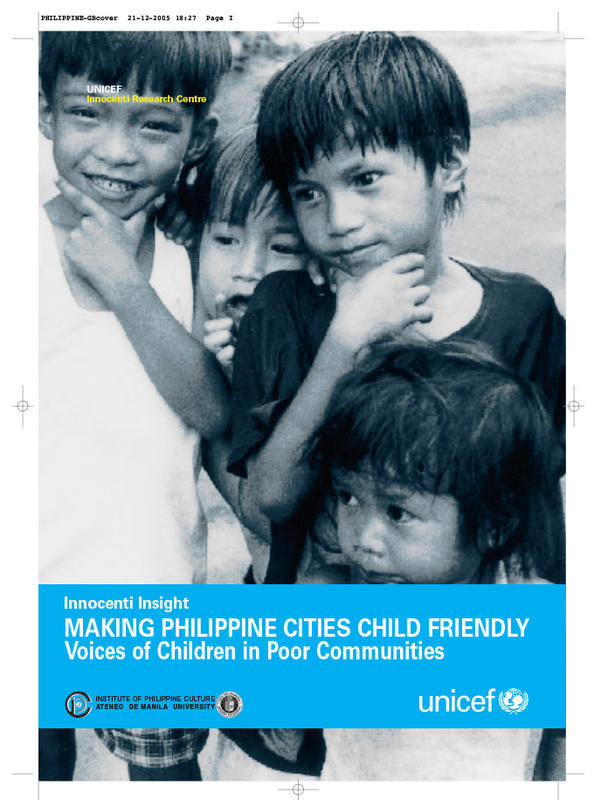
Making Philippine cities child friendly: voices of children in poor communities

The study analyses how the Philippines’ national Child Friendly Movement, which has engaged government, NGOs, civil society, children and UNICEF, has enhanced the capacity of local governments, communities and young people to fulfil the rights of the poorest children. The study uses participatory methodologies and reflects the viewpoint of children and the community. It reveals that in areas where the Child Friendly Cities strategy was adopted, greater attention is paid to the most excluded and vulnerable groups and interventions are developed on a wider spectrum of children’s rights. Beyond providing insights on concrete ways in which child rights are bring promoted at local level, it provides recommendations on how the fulfilment of child rights can be further enhanced by municipal governments.

View online/download
External Link

Early childhood education in Mexico: expansion, quality improvement and curricular reform

An accumulation of research across hundreds of studies shows the benefits of quality early childhood care and education for children’s later learning, school success and social development. In recognition of the value of providing early learning opportunities, many nations have expanded early childhood care and education in recent years. Mexico provides an interesting case in which expansion of early childhood care and education has occurred in the past 5 years, as have initiatives to improve quality and revise the national curriculum for pre-schoolers. This paper examines three policy initiatives that occurred in Mexico between 2000 and 2006 - preschool expansion, quality improvement and curricular reform. The preschool expansion included a mandate for all parents in Mexico to send their preschool-aged children (3, 4 and 5 years old) to preschool, with target dates of 2004, 2005 and 2008 for 100 per cent coverage of 5-year-olds, 4-year-olds and 3-year-olds, respectively. The quality improvement initiative was part of a larger programme providing supplemental funds to select preschools and schools in Mexico’s public education system. Finally, the curricular reform instituted a new preschool curriculum to be implemented nationwide for all programmes across the 3- to 5-year-old age range.

View online/download
External Link

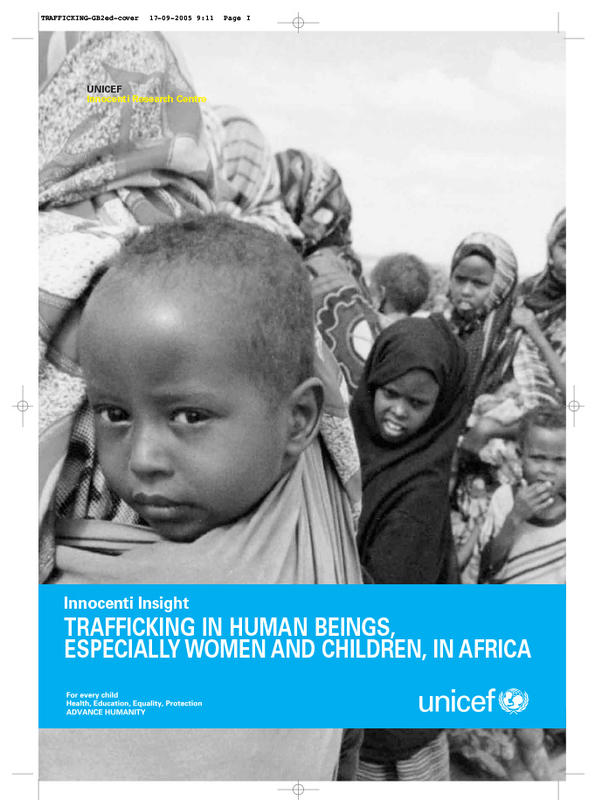
Trafficking in humans, especially women and children, in Africa

Trafficking of human beings affects every country in Africa for which data are available, either as countries of origin or destination. The report looks at information from 53 African countries and provides an analysis of the patterns, root causes, and existing national and regional policy responses and effective practices. Trafficking occurs when a child's protective environment collapses as a result of conflict, economic hardship, or discrimination. Traditional attitudes and practices, early marriage, and lack of birth registration further increase the vulnerability of children and women to exploitation.

View online/download
External Link

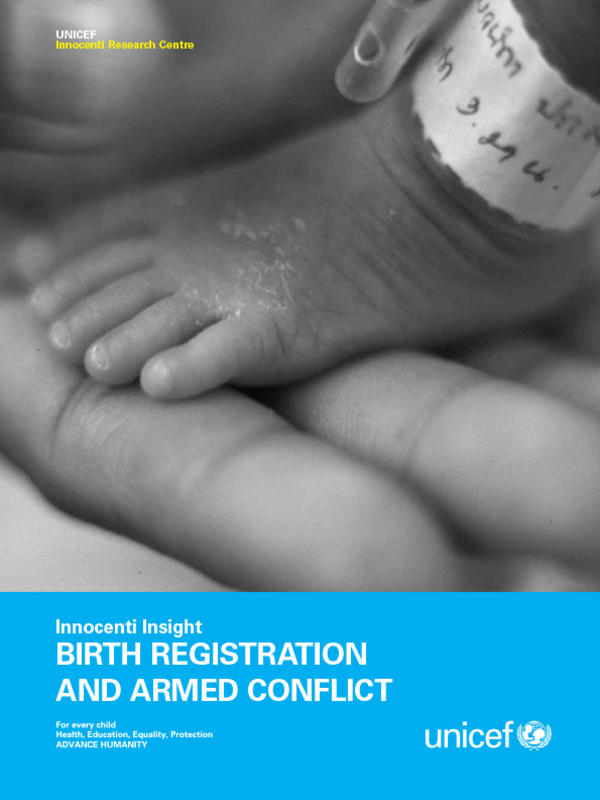
Birth registration and armed conflict

The research theme was identified within the framework of the European Network for the Research Agenda on Children in Armed Conflict and has been developed by UNICEF IRC with the co-operation of a number of Network partners and UNICEF offices in the field. It reviews the problem of non-registration in conflict-affected countries while drawing on case studies to analyze successful or promising initiatives to ensure registration. The ultimate goal is to assist practitioners in the field in conflict and post-conflict environments to promote emerging encouraging practices in ensuring the right of the child to birth registration and thereby to the enjoyment of many rights.

View online/download
External Link

Changing a harmful social convention: female genital mutilation/cutting

Every year, three million girls and women are subjected to genital mutilation/cutting, a dangerous and potentially life-threatening procedure that causes unspeakable pain and suffering. Not only is it practiced among communities in Africa and the Middle East, but also in immigrant communities throughout the world. Moreover, recent data reveal that it occurs on a much larger scale than previously thought. It continues to be one of the most persistent, pervasive and silently endured human rights violations. This Innocenti Digest examines the prevalence of FGM/C and its social dynamics. It provides an explanation as to why the practice persists and of the elements necessary for its abandonment. It also takes stock of progress to date, identifies what works and what does not, and provides direction regarding the most successful strategies to promote the abandonment of FGM/C. Combining concrete field experience with tested academic theory, the Digest provides a practical tool to bring about positive change for girls and women.

View online/download
External Link

Caring for children affected by HIV and AIDS

This IRC Insight highlights the urgent need to support families and communities to care for children orphaned by HIV/AIDS. The report looks at how the epidemic undermines children's health and schooling, and reinforces marginalization and deprivation. It explores the options for the care of children in communities affected by the AIDS epidemic. Beginning with the premise that the parent-child bond is the basic building block of child development and the family the basic unit of society, the report looks at ways to keep the family together for as long as possible. It then goes on to explore alternative care arrangements beyond the immediate family. Settings range from care by the extended family, to different forms of fostering in the community, through adoption and placement in residential institutions, which should be used as a last resort.

View online/download
External Link

AIDS, public policy and child well-being

This study addresses one of the greatest challenges of our time: the damage caused by HIV and AIDS to the well-being of children and families. With 38.6 million people affected by HIV in 2006, with HIV prevalence at antenatal clinics exceeding 40 per cent in areas of Botswana and KwaZulu-Natal (South Africa), with nationwide adult prevalence in excess of the critical threshold of 20 per cent in several countries, and with the prospect of a rapid spread of the disease in large swathes of India, China and the Russian Federation, the future of child well-being is seriously threatened. Certainly, in the 50 or so countries affected by the disease, the Millennium Development Goals in the field of child survival, education, poverty and basic rights will be missed, often by a large margin.

View online/download
External Link


Suggest a publication

Feel free to submit a publication.

Submit here