Languages

Topbar Menu EN

The SDG Fund is operationally closed. This site is alive for knowledge and dissemination purposes.
Warning: This website is closed. Be aware of phishing or social engineering fraudulent requests of payments or certificates. Explore our programme areas.
Please visit jointsdgfund.org
Search our database of publications


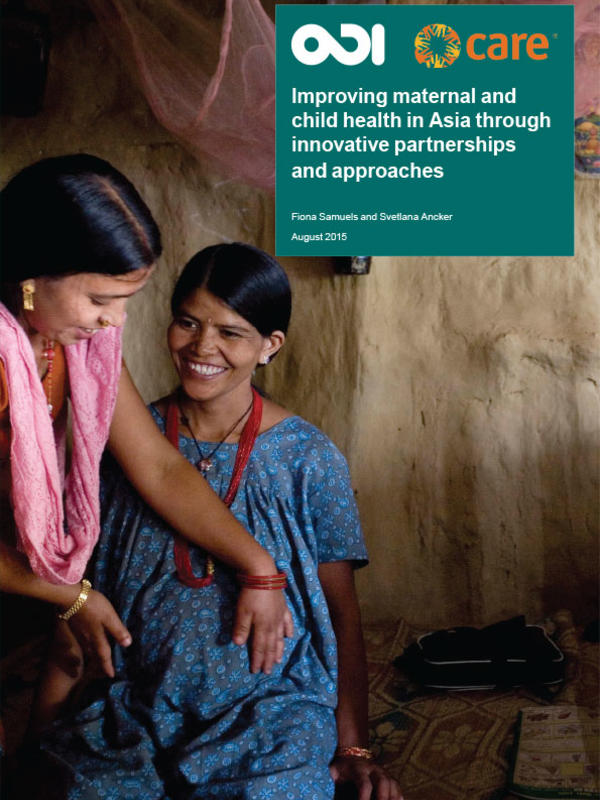
Improving maternal and child health in Asia through innovative partnerships and approaches
To help respond to a shortage of 7 million health workers worldwide and a growing overall burden of disease, CARE International UK has entered into partnership with GlaxoSmithKline (GSK) as the implementing partner of GSK’s 20% Reinvestment Initiative in Asia. This corporate community investment initiative aims to reinvest 20% of the company’s profits into strengthening of community health systems in six of the least developed countries in which GSK operates. This strategic partnership between CARE and GSK focuses on improving maternal and neonatal child health by improving the quantity and quality of front-line community health workers in the most remote and marginalised communities in Afghanistan, Bangladesh, Cambodia, Laos, Myanmar and Nepal. Through a mix of programming, lesson-learning and advocacy efforts, the initiative hopes to galvanise further national and international action on the health workforce issue. The CARE-GSK partnership is about to complete its first phase (2011-2015) and plans to continue and scale up its projects in 2015-2020. This briefing provides highlights from the six country projects. First, it presents the key indicators and context for each of the countries, followed by the goals and objectives of each project, and then outlines their achievements and impact. The briefing ends with a discussion of the key approaches and models that the projects have developed also providing some broad conclusions and recommendations for strengthening community health systems with a particular focus on maternal and child health.

View online/download
External Link

One foot on the ground, one foot in the air: Ethiopia’s delivery on an ambitious development agenda

This case study looks at the progress achieved in material well-being, education and employment, where Ethiopia has shown particularly strong performance over the past 10 to 15 years. However this transformation is far from complete and a number of challenges remain, not least the depth and breadth of chronic poverty. A number of key lessons for the Sustainable Development Goals can be drawn from Ethiopia's experience: 1) Centring government policy on a single goal - poverty reduction - and taking a multidimensional approach can encourage ministries to work more comprehensively and consistently; 2) Integrating social sectors into broader economic planning and high rates of pro-poor spending benefit the economy; 3) Long-term planning and a clear division of responsibilities can build the foundation for broader transformation.

View online/download
External Link

Low-carbon development in Sub-Saharan Africa: 20 cross-sector transitions

Sub-Saharan Africa is at a critical point, experiencing rapid population growth, particularly in urban areas, and a young and growing workforce. At the same time, the growing risk of catastrophic global climate change threatens to weaken food production systems; increase the intensity and frequency of droughts, floods, and fires; and undermine gains in development and poverty reduction. Although the region has the lowest per capita greenhouse gas emission levels in the world, it will need to join global efforts to address climate change, including through actions to avoid significant increases in emissions. This report reviews agriculture, forestry, energy, transport, extractives, construction and manufacturing, based on their importance to countries' economic development and their contribution to current and future greenhouse gas emissions. Based on this sector-specific analysis, we identify 20 cross-sector transitions that can be undertaken to promote low-carbon development in the region.

View online/download
External Link

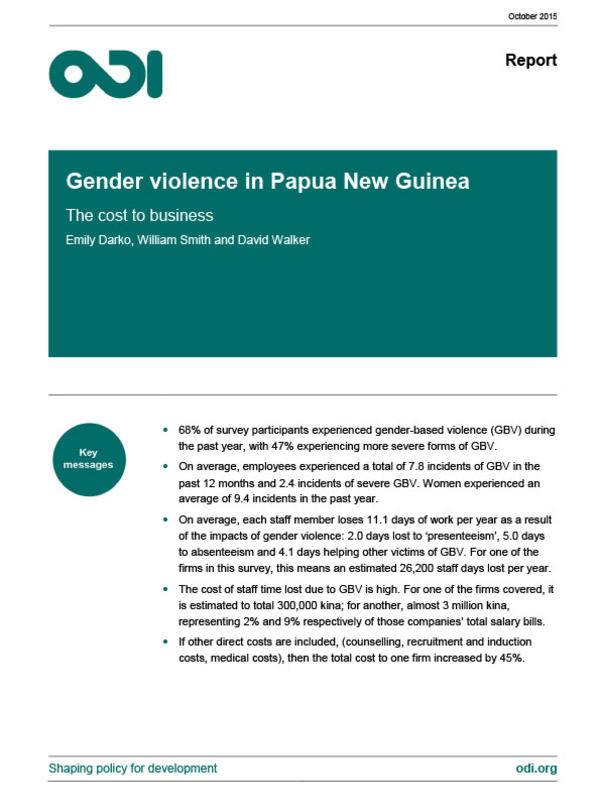
Gender violence in Papua New Guinea

The magnitude of gender-based violence (GBV) incidence in Papua New Guinea (PNG) is considered by some to be of epidemic proportions: 41% of men in PNG admit to having raped someone, over two-thirds of women are estimated to have suffered some form of physical or sexual violence in their lifetime, and it is reported that 7.7% of men admit to having perpetrated male rape. Only 73% of survivors of GBV in PNG seek assistance and the vast majority of these individuals (88%) seek this assistance through informal support structures, such as familial, kinship or collegiate networks or village courts and community leaders rather than through official channels. This indicates that GBV is under-reported. The social, emotional and physical costs of GBV are widely recognised, as are national-level economic costs. But the impact at individual firm level is less well understood. Being able to cost the multidimensional impact of GBV for a business, highlighting potential savings from investing in responsive and or preventative measures, is an important first step in building the business case for intervention and ultimately for contributing to a reduction of GBV incidence in PNG. This study sets out a practical approach for calculating costs within a firm and presents findings from three firms reviewed for this pilot study in PNG. The following review of methodology, prevalence findings, company responses, discussion, conclusions and recommendations provide a series of lessons for businesses and business support organisations seeking to develop a comprehensive response to the factors that enable and perpetuate GBV and its impacts.

View online/download
External Link

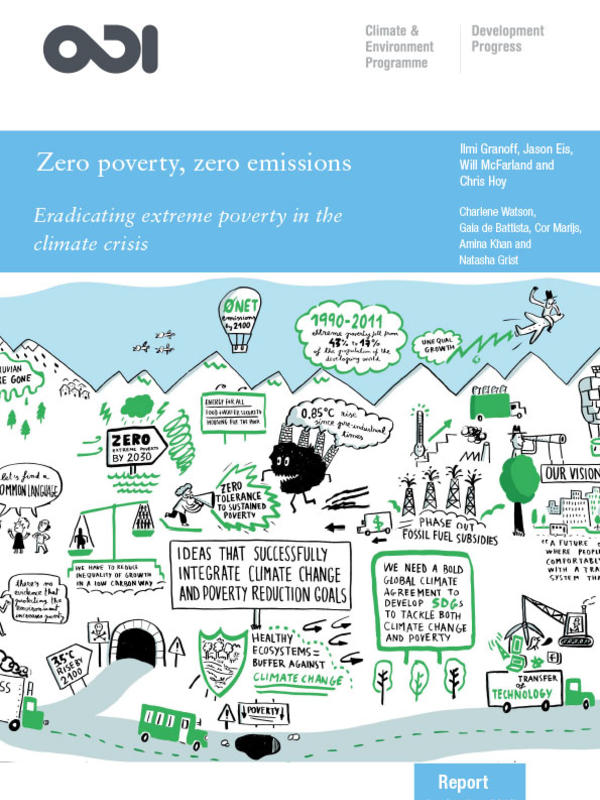
Zero poverty, zero emissions: eradicating extreme poverty in the climate crisis

Eradicating extreme poverty is achievable by 2030, through growth and reductions in inequality. However, unless global emissions peak by around 2030 and fall to near zero by 2100, catastrophic climate change could draw up to 720 million people back into extreme poverty. Building on previous ODI research, this report looks at how poverty can be eradicated by 2030 and how, contrary to popular belief, low carbon development is compatible with the zero poverty agenda. Showing how policy incoherent it is for gas emitting countries to support poverty eradication without moving their economies towards zero net emissions, we lay out the path we need to take to reduce both poverty and emissions together.

View online/download
External Link

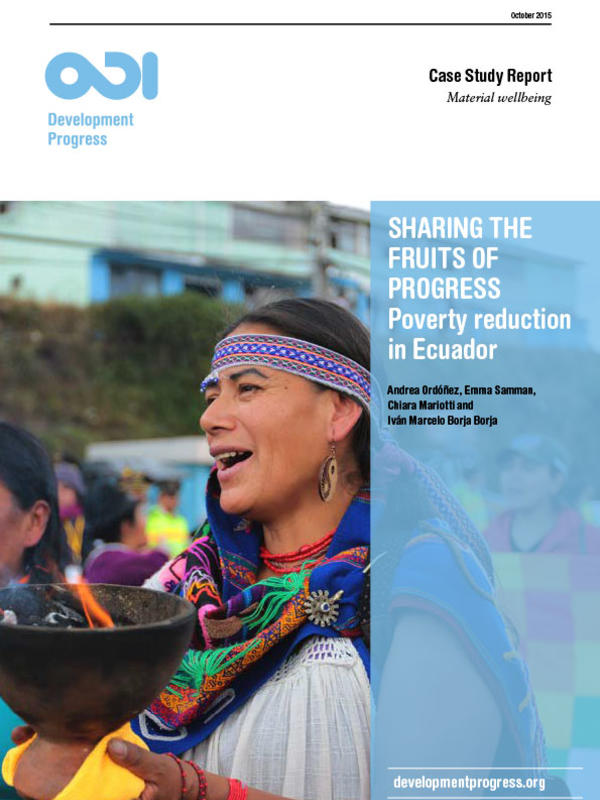
Sharing the fruits of progress: poverty reduction in Ecuador

This case study illustrates and explains Ecuador’s progress in reducing poverty and inequality, focusing on the period between 2000 and 2012. Drawing on primary interviews and secondary analyses, we argue that Ecuador’s success can be explained by four main economic and political factors. First, high oil prices helped the country to achieve economic stability and growth in a context of dollarisation. Second, growth gave way to changes in the labour market that benefited the poorest people, through a decline in unemployment and an increase in real wages. Third, Rafael Correa’s election in 2007 brought about radical change in adopting highly redistributive social policies. These were financed through measures to create fiscal space such as the re-writing of oil contracts, the restructuring of the public debt and the channelling of all oil revenues into the budgeting process. The poorest people also benefited from the expansion of the cash transfer programme, Bono de Desarrollo Humano, and the improved provision of health and education services, though these have often been used for political ends. Today, Ecuador faces the challenge of advancing and deepening the progress it has achieved in changing domestic and international circumstances, in particular the falling price of oil and the ending of Correa’s final presidential term. Further reduction of poverty will require paying greater attention to social sectors that have not shared fully in the benefits of growth, especially those living in rural areas, in certain geographical regions and the Afro-Ecuadorian and indigenous populations. In addition, the country will need to build upon the momentum it has established and channel it into a process of structural transformation.

View online/download
External Link

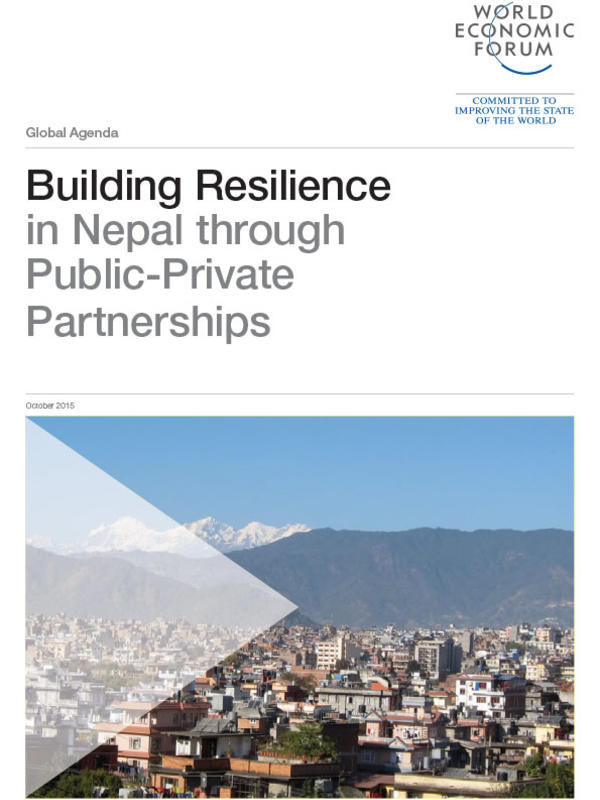
Building resilience in Nepal through public-private partnerships

This report from the WEF Global Agenda Council on Risk and Resilience explores how public-private partnerships helped - and can help - improve resilience in Nepal and other contexts.

View online/download
External Link

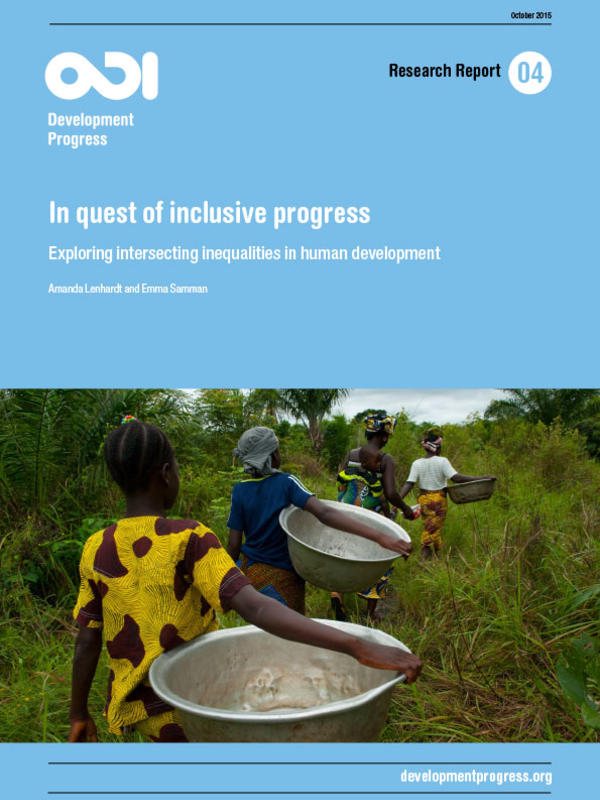
In quest of inclusive progress: exploring intersecting inequalities in human development

For 16 countries with appropriate data, this paper seeks to ascertain to what extent wealth status, urban/rural place of residence and ethnicity – and overlaps between them – explain inequalities in education and health; and how these inequalities have changed over time. The focus is on women’s years of education and on the proportion of children in a household who have died.

View online/download
External Link

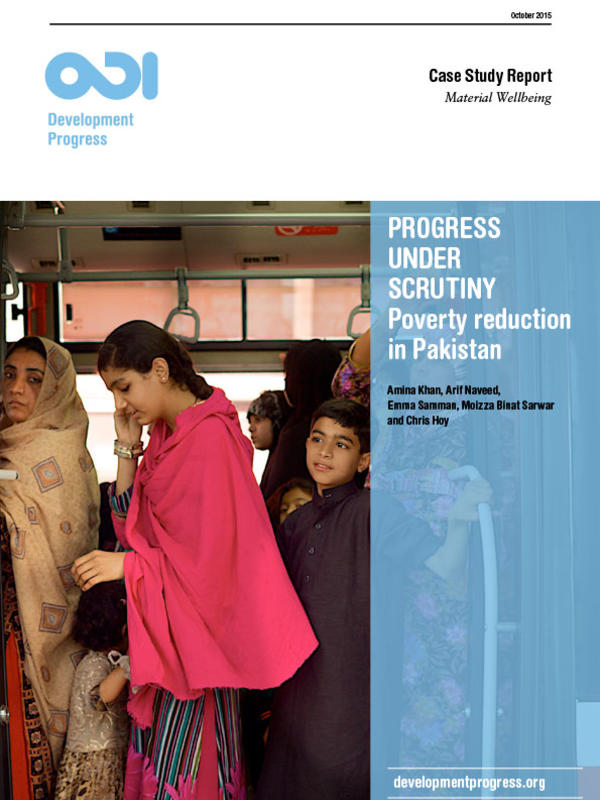
Progress under scrutiny: poverty reduction in Pakistan

Consumption-based poverty in Pakistan fell sharply between 1990 and 2010, according to official poverty data. Nonetheless the mainstream narrative on poverty reduction in the country remains highly contested. Key sources of evidence show improvements that are commensurate with a decrease in poverty, while others raise doubts over this decrease. The policy space in which poverty reduction is debated is also highly polarised, as revealed in the positions of multiple stakeholders involved in policy, research and civil society in Pakistan. An analysis of official poverty data shows how the estimates may be biased – both owing to technical flaws and to the politics of measurement. As a result, it is surprisingly difficult to reach a definitive conclusion as to whether poverty reduced between 1990 and 2010 and if the stated progress is real. The report discusses the implications of the high levels of contestation over official poverty data as well as the need to understand better the types of evidence that the government must produce to defend its policies to alleviate poverty, and for key stakeholders to accept these as credible. It also discusses the steps that the country is taking to depoliticise the measurement and analysis of poverty – in and of themselves signs of progress.

View online/download
External Link

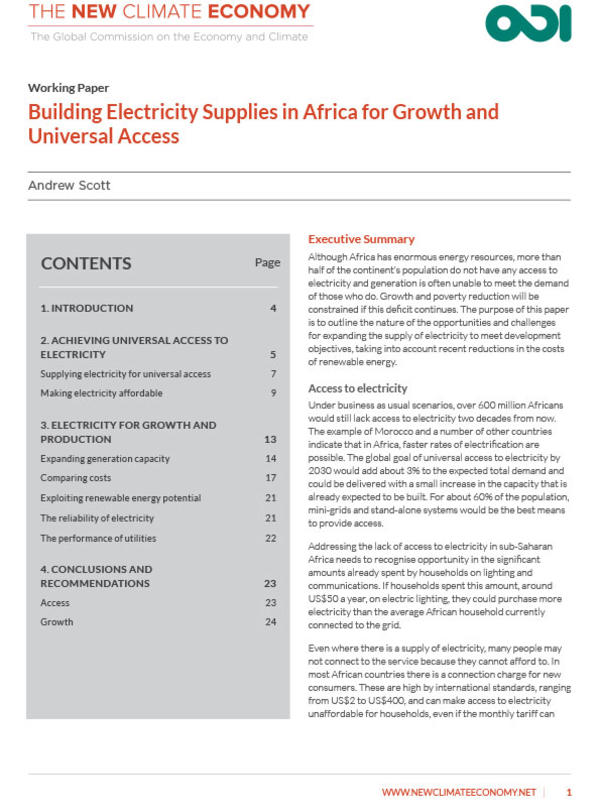
Building electricity supplies in Africa for growth and universal access

Although Africa has enormous energy resources, more than half of the continent’s population do not have any access to electricity and generation is often unable to meet the demand of those who do. Growth and poverty reduction will be constrained if this deficit continues. The purpose of this paper is to outline the nature of the opportunities and challenges for expanding the supply of electricity to meet development objectives, taking into account recent reductions in the costs of renewable energy. The two challenges of expanding electricity generation and distribution for economic growth, and extending electricity supplies to those who do not yet have access, are inter-related but require different policies and interventions.

View online/download
External Link

Empty promises: G20 subsidies to oil, gas and coal production

This research discovers that G20 country governments’ support to fossil fuel production marries bad economics with potentially disastrous consequences for climate change. In effect, governments are propping up the production of oil, gas and coal, much of which cannot be used if the world is to avoid dangerous climate change. This report documents, for the first time, the scale and structure of fossil fuel production subsidies in the G20 countries. The evidence points to a publicly financed bailout for some of the world’s largest, most carbon-intensive and polluting companies. It finds that, by providing subsidies for fossil fuel production, the G20 countries are creating a ‘lose-lose’ scenario. They are directing large volumes of finance into high-carbon assets that cannot be exploited without catastrophic climate effects. This diverts investment from economic low-carbon alternatives such as solar, wind and hydro-power. In addition, the scale of G20 fossil fuel production subsidies calls into question the commitment of governments to an ambitious deal on climate change.

View online/download
External Link

Bridging Costa Rica's green growth gap: how to support further transformation toward a green economy

Costa Rica’s track record on economic, social and environmental issues is second to none. It has strong comparative advantages, from its skilled and educated population to its political stability, and from its robust economy to its abundant natural resources. It has weathered numerous financial and economic storms and remains competitive on the global stage. Therefore, Costa Rica is regarded by many as an economic and environmental success story, with an admirable record of ‘green growth’—economic growth that minimizes pollution and uses and manages resources efficiently. Yet Costa Rica is also a victim of its own success: its leadership in some areas may have blinded it to its green growth gaps. As Costa Rica approaches a crossroads in its economic and environmental journey, its choices could provide the model for others to follow. ODI’s analysis highlights the deep structural challenges to the organisation of Costa’s Rica’s economy. We also, however, suggest some ‘quick wins’ that will propel Costa Rica towards long-term approaches to better align its economic and environmental performance. These include four primary recommendations.

View online/download
External Link

Piecing together the MDG puzzle: domestic policy, government spending and performance

Policy-makers in most of the developing countries surveyed report that the MDGs were influential in setting priorities domestically. Analysis of the education and health sectors suggests these statements are not merely tokenistic as countries reporting high influence saw increases in budget allocations. However while many countries experienced increases in government spending in social sectors over the MDG period, the majority still spend less than the recommended international benchmarks. Significant increases in government allocations will therefore be required to match the ambition of the SDGs. Recommendations for the SDG period include ensuring better data on domestic use of targets, government spending and performance are available to better assess their influence over the next 15 years and ensure the 'leave no one behind' agenda will be fulfilled.

View online/download
External Link

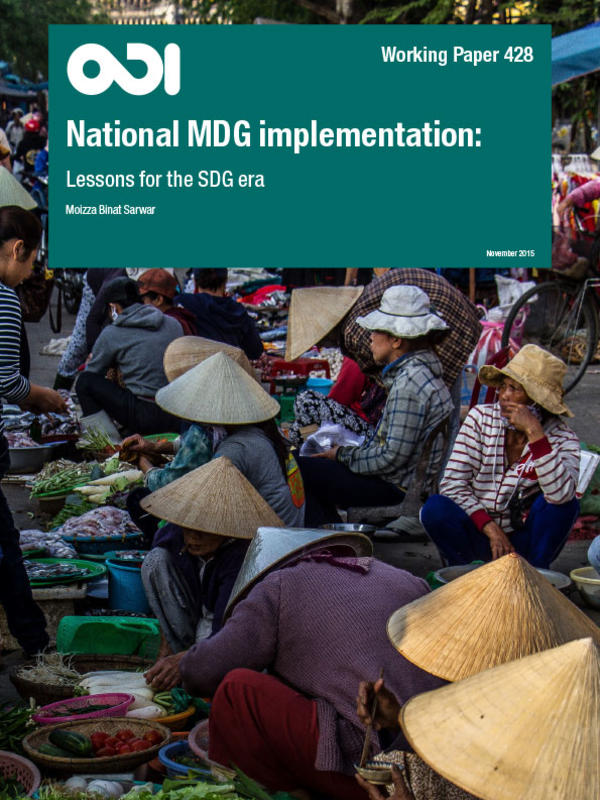
National MDG implementation: lessons for the SDG era

As we approach the deadline for the expiration of the Millennium Development Goals (MDGs), and the start of the Sustainable Development Goals, at the end of 2015, this paper asks: how did governments respond at the national level to the set of global development goals in the form of the MDGs? Using five case study countries: Indonesia, Turkey, Mexico, Nigeria and Liberia, to reflect a mix of regions, income classifications and MDG performance, the paper draws out common trends and suggests five lessons for the post-2015 era.

View online/download
External Link

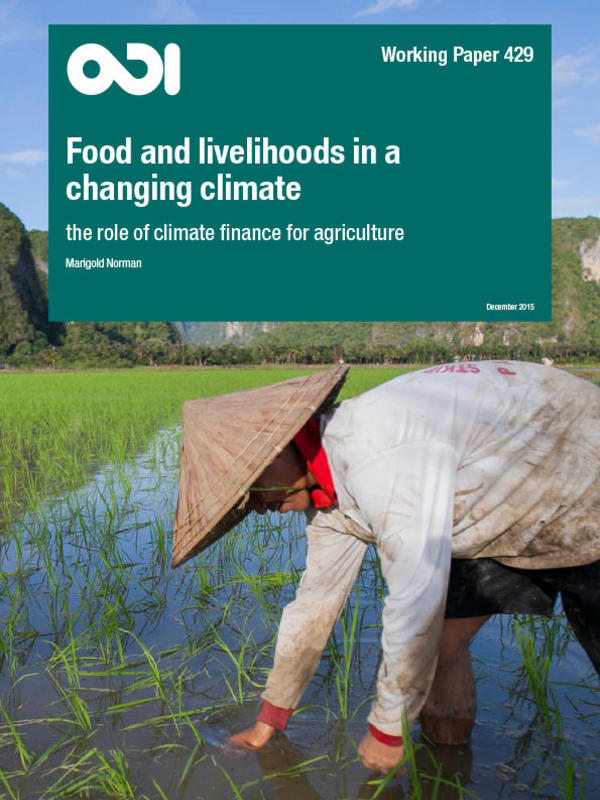
Food and livelihoods in a changing climate: the role of climate finance for agriculture

Climate finance remains a newcomer to the agriculture sector, playing a minor role compared to wider official development assistance. It has grown slowly since 2002 and is poised to play an important role in this sector. This paper sheds light on its growing importance, and considers dedicated multilateral funds. It reflects on opportunities for international public climate finance to transform a high greenhouse gas emitting sector, into one with more climate compatible practices, resilient to the effects of climate change.

View online/download
External Link

Effect of Sub-Saharan African trade corridors on vulnerable groups

This report examines the economic and non-economic (such as conducting community and family relationships and accessing health care and education) value of the border for small traders and informal workers. It seeks to examine a specific example of policy, a One-stop Border Post (OSBP) in East Africa, and how the policy changes have affected these groups, in light of the need for policy that specifically addresses issues relevant to vulnerable poor households.

View online/download
External Link

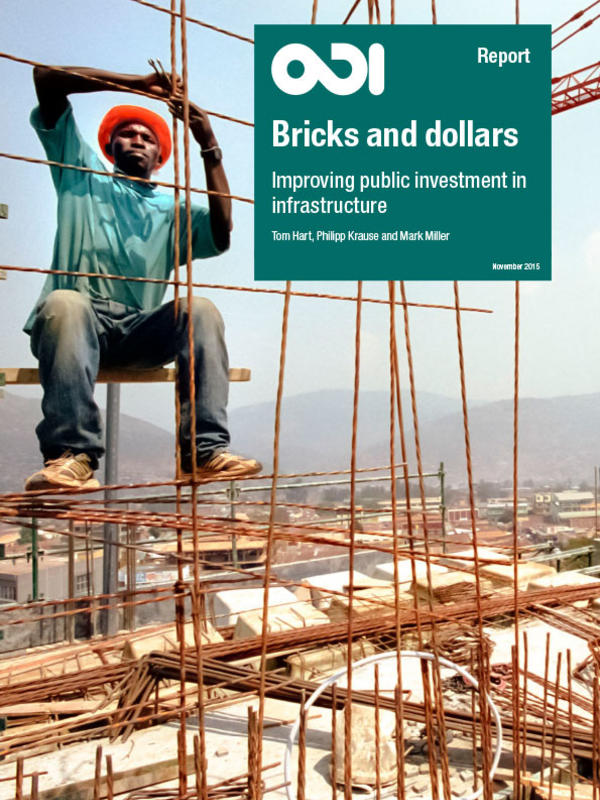
Bricks and dollars: improving public investment in infrastructure

The world is hungry for infrastructure investment. In 2014, the IMF declared 'the time is right for an infrastructure push'. Yet the development community has been here before. There have been earlier periods of infrastructure enthusiasm, with the white elephants to show for it, but precious little growth. How can governments avoid the mistakes of the past? What institutions and processes are needed to invest in infrastructure, and to invest well? The 2015 CAPE conference paper discusses what it takes to invest in infrastructure, and to invest well.

View online/download
External Link

Trade facilitation and concentration: evidence from Sub-Saharan Africa

This paper uses night-light emissions captured by satellites to explore the relationship between trade facilitation and the location of economic activity in Sub-Saharan Africa. We identify an ‘iron-curtain’ effect whereby light diminishes, on average, as one gets closer to Africa’s land borders. We also show that while the iron-curtain effect has reinforced itself over time, showing increasing agglomeration away from borders, it is dampened by improved trade facilitation (as proxied by the World Bank’s Logistics Performance Index score on customs clearance efficiency). Our results suggest that trade facilitation projects contribute not only to more trade, and therefore to more aggregate growth, but also to a more balanced spatial distribution of economic activity.

View online/download
External Link

Disentangling transit costs and time in South Asia

Under the overarching research theme of the impact of regional infrastructure for trade facilitation on growth and poverty reduction, this study attempts to identify the trade barriers that impede the trade flow of Nepal and Bhutan through the gateways ports of Kolkata and Haldia in India. This case study focuses on the impact of transit regulations and agreements on the cost of services required to transit goods between the ports and Bhutan or Nepal.

View online/download
External Link

Infrastructure for the participation of smallholders in modern value chains

Improving trade in food staples, whether cross-border or domestic, can connect deficit and surplus areas and reduce price volatility. It can also be positive for consumers and producers, in particular smallholders, and can drive inclusive poverty reduction and increased food security. The literature examining causes of differential abilities to capture food staples market integration in Africa reflects the high level of trade costs both within and between countries on the continent.

View online/download
External Link

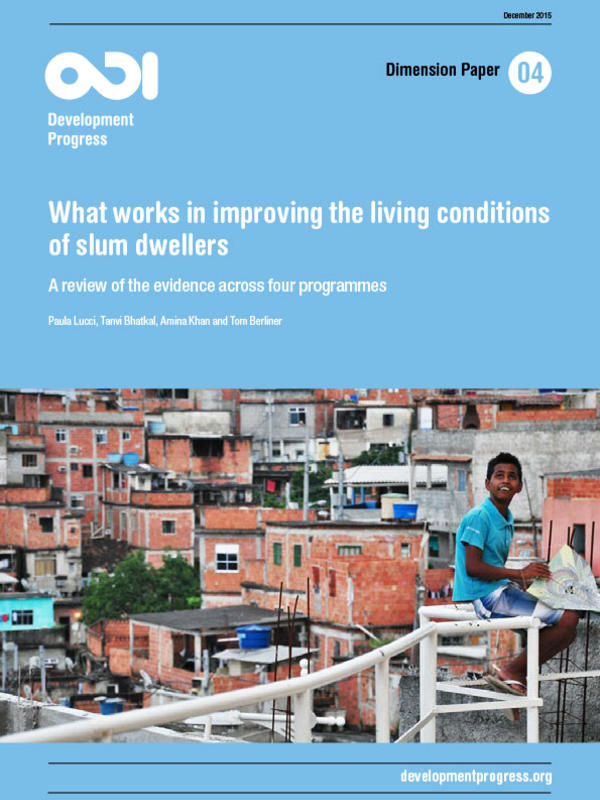
What works in improving the living conditions of slum dwellers: a review of the evidence across four programmes

About 1 billion people currently live in slum settlements – almost a third of the world’s urban population – and this could increase to 3 billion by 2050 (UN DESA, 2013). It is, therefore, timely to review the evidence on what works in improving the living conditions in slum settlements. Our focus is on physical living conditions: that is, access to land, housing and utilities, as these are among the most salient challenges facing the urban poor. They are also core elements of UN-Habitat’s definition of a slum household. In particular, we review the evidence of four different slum-upgrading programmes regarded in the literature as good practice: Rio de Janeiro’s Favela Bairro, the Programa Integral de Mejoramiento de Barrios Subnormales (Integrated Programme for Improvement of Slum Settlements – PRIMED) in Medellín, Colombia, Thailand’s Baan Mankong programme and a community toilets initiative in Mumbai, India. We conclude by highlighting the future challenges that governments will need to address to deal with urbanisation and the implementation of the SDG target on access to housing and slum upgrading. Ultimately, we hope this paper is a useful resource for policy-makers and donors grappling with the challenges posed by urbanisation and contributes to the wider SDG debate, particularly on how to meet target 11.1, as well as Habitat III conversations on a new urban agenda.

View online/download
External Link

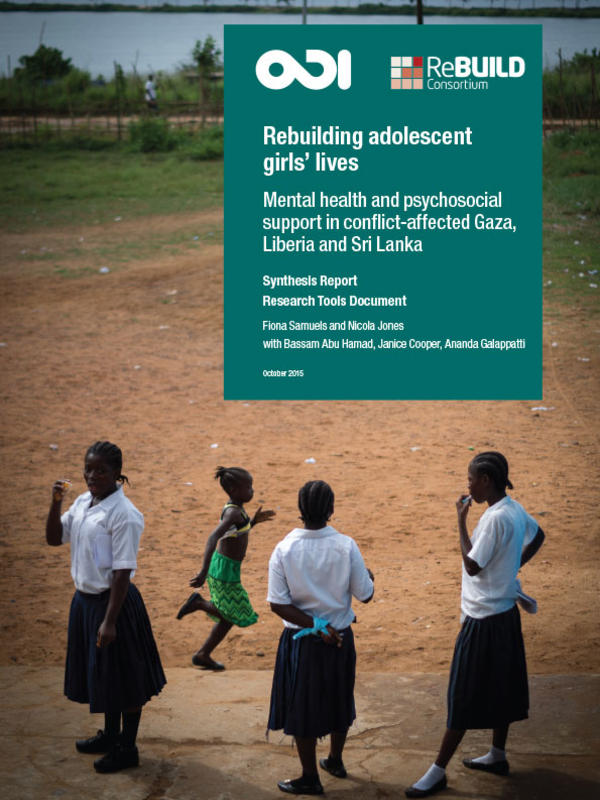
Rebuilding adolescent girls' lives: mental health and psychosocial support in conflict-affected Gaza, Liberia and Sri Lanka

This study explored the linkages between mental health, psychosocial well-being and social norms in the fragile and post-conflict settings of Gaza, Liberia and Sri Lanka with a particular focus on adolescent girls (10-19 years). In particular, the study explored the extent to which services and community and household responses to mental health and psychosocial problems in these settings are sufficiently informed by an understanding of the context, as well as gender inequalities and dynamics, and social norms.

View online/download
External Link

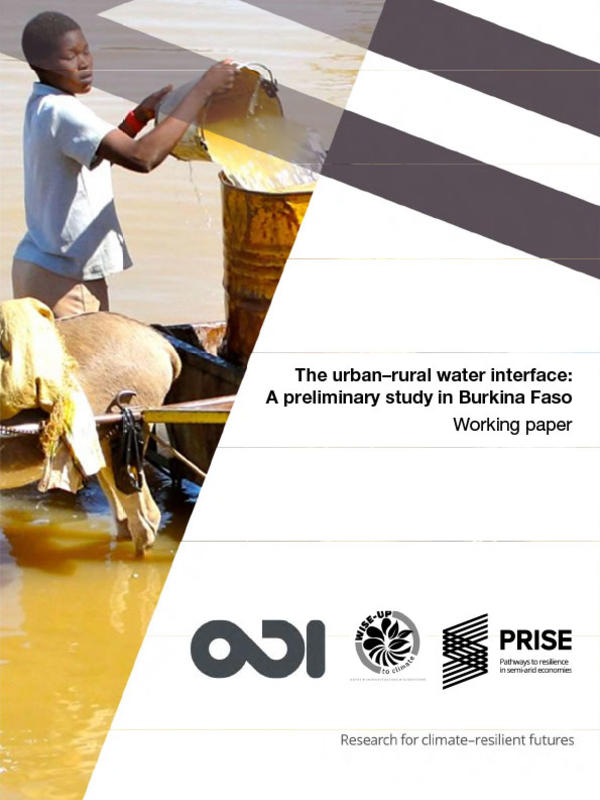
The urban-rural water interface: a preliminary study in Burkina Faso

This working paper looks at the case of Ouagadougou, in Burkina Faso, and the Ziga dam and reservoir, and supports the ethos that cities take - or are given - priority over rural areas in terms of water allocation. In this case, the basis of the claim is political power by the central government. Yet the economic rationality of this decision has not been evaluated, and the principle of 'equity' of access to water for rural communities has been overlooked. This working paper aims to address these issues.

View online/download
External Link

Urbanisation, land and property rights

Around one in seven of the world’s population lives in poor quality, usually overcrowded, housing in urban areas. Most of these areas lack provision for safe, sufficient water, sanitation and other needs, and include large numbers of urban dwellers who are malnourished and suffer preventable premature death and disease. However, a significant number of these are not defined as being poor according to standard poverty line measurements. Land can play an important role in providing conditions for maximising the potential for a beneficial process of urbanisation and minimising the negative impacts on the poor and vulnerable. This study aims to analyse the interactions between the process of urbanisation and land tenure arrangements, land governance and tenure security in peri-urban areas, particularly in smaller urban centres, looking particularly at recent experience in Ghana and Tanzania.

View online/download
External Link

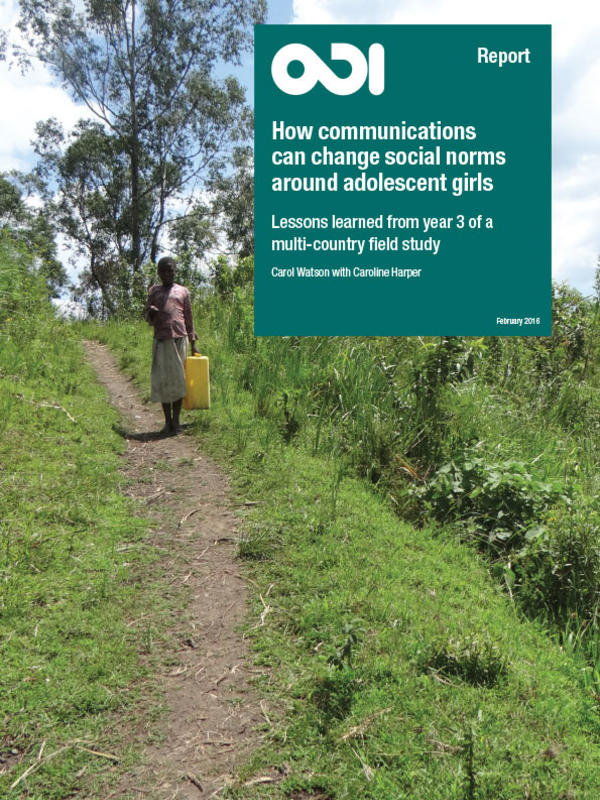
How communications can change social norms around adolescent girls

Poised at the intersection between childhood and adulthood, adolescent girls face unique challenges to the full development and exercise of their capabilities. Child marriage and under-investment in girls’ education are two such challenges that continue to limit girls’ trajectories, fuelled in part by discriminatory social norms that uphold these practices within local settings that are often circumscribed by poverty and lack of opportunity. A multi-year, multi-country study has been exploring the complex ways in which adolescent girls’ capabilities are shaped and/or constrained by gender-discriminatory social norms, attitudes and practices, and under what conditions positive changes may be brought about, particularly around norms and practices related to child marriage and education. Evidence from this report showed that communications programmes could be an effective way of challenging gender-discriminatory attitudes and practices, reaching a variety of stakeholders with both broad pro-gender equality messages and messages on specific discriminatory norms. While no one approach was found to be more effective than others, programmes with more than one communications component and those integrated with activities other than communications were found to achieve a higher proportion of positive outcomes.

View online/download
External Link


Suggest a publication

Feel free to submit a publication.

Submit here