Languages

Topbar Menu EN

The SDG Fund is operationally closed. This site is alive for knowledge and dissemination purposes.
Warning: This website is closed. Be aware of phishing or social engineering fraudulent requests of payments or certificates. Explore our programme areas.
Please visit jointsdgfund.org

Search our database of publications


The besieged Palestinian agricultural sector

The present study analyses the problems and prospects of the Palestinian agricultural sector. The study highlights the sector’s role, importance and contribution to the overall economy, and its strengths and weaknesses, as well as opportunities in the sector and constraints on the sector. The study underscores the distortions imposed by occupation and their impact on the state and prospects of the Palestinian agricultural sector.

View online/download
External Link

Policy guide on youth entrepreneurship

Harnessing entrepreneurial talents among young people and easing constraints of the labour market is vital for employment generation and inclusive growth. Current demographic trends and the explosion of youth unemployment is forcing youth entrepreneurship to the centre of global policy discussions and of the post-2015 development agenda. This guide is an important contribution to the efforts of the United Nations system and the Commonwealth to find solutions to address the challenges facing young people. It aims at supporting policymakers in developing countries and in transition economies to design policies and programmes, and to establish institutions that will promote youth entrepreneurship, providing the foundation for achieving job creation through the development, expansion and growth of youth-led enterprises.

View online/download
External Link

Enhancing the contribution of Export Processing Zones to the Sustainable Development Goals

This exploratory report suggests that changes taking place in the global market mean that Export Processing Zones (EPZs), and Special Economic Zones (SEZs) more generally, can be restructured as centres of excellence for sustainable development. Such restructuring would increase the appeal of EPZs to multinational enterprises (MNEs) and their suppliers, while simultaneously contributing to the implementation of the Sustainable Development Goals (SDGs), also known as 'Global Goals'.

View online/download
External Link

Global value chains and South-South trade

Building on previous UNCTAD research, this study examines trends and patterns of South-South trade over the last decade linked to Global Value Chains (GVCs). Its findings confirm much of the earlier analysis. However, there are some new, or at least more visible, trends that have emerged over the last decade and have impacted international production and South-South trade, including the growing influence of financial markets on the real economy (“financialization”), and the emergence of China as the world`s leading export economy. There has also been strong growth performance across the developing world, which began after the recovery from the dot-com crisis of 2000, and continued after the financial crisis of 2008, albeit at a slower rate than prior to the crisis. The study begins with an analysis of the links between trade, industrialization and the evolving international division of labour. Contrary to much recent analysis it emphasises the long-standing nature of the economic forces behind GVCs and the familiarity of the challenges they pose to policy makers in the South. This is followed by a discussion of some of the main changes in the global trading system over the past three decades, in particular the growing participation of developing countries in world trade, the shift in the composition of their trade from primary products to manufactures, and the rise of South-South trade both as a share of developing country and world trade. These three features are connected, in no small part, through the spread of GVCs. The next three sections examine in turn recent trends in global production sharing, the value added by different countries in GVCs, the contribution of GVCs to rising South-South trade, and the role of FDI in spreading international production and its development impact. A final section summarizes the key findings and draws policy implications.

View online/download
External Link

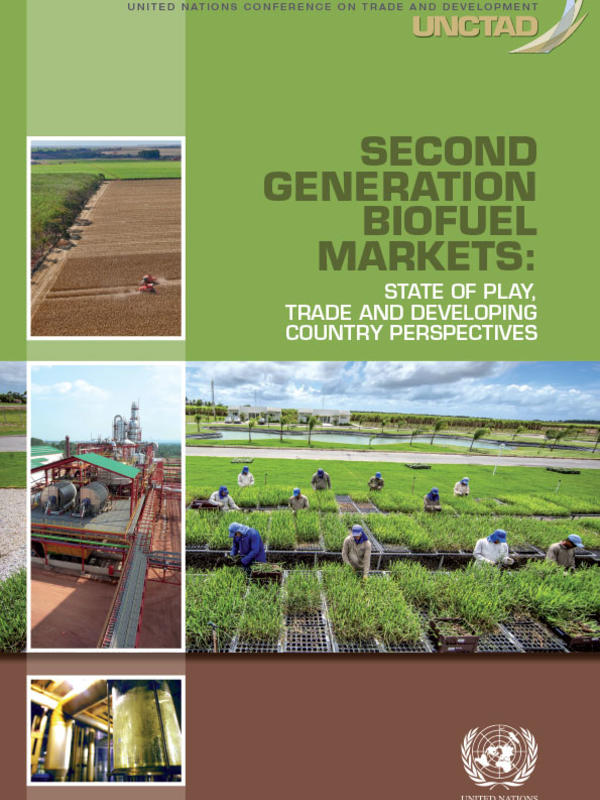
Second-generation biofuel markets: state of play, trade and developing country perspectives

In 2015, countries made commitments toward a more environmentally balanced future through the Sustainable Development Goals (SDGs), and now seek to expand policies for low-carbon development after the agreement reached in Paris at COP21. The year also marked a milestone in the bio-economy, as the point in time when the production of second-generation biofuels (2G) finally took off at commercial scale. Developing countries now face a new set of market opportunities and policy dilemmas to enhance their usage of biomass, which can now be transformed into more valuable products. This report focuses on how these market opportunities can be capitalized on and how to promote technology transfer for developing countries interested in engaging in advanced biofuel markets for the attainment of the SDGs, and as an instrument to meet their commitments under COP21. By carrying out a non-exhaustive mapping of cellulosic ethanol projects and recent policy lessons around the globe, this report seeks to provide public and private practitioners with a macro-picture of the advanced biofuels sector, with a specific focus on cellulosic ethanol as of 2015-2016. The report concludes with five suggestions for the responsible development of the second-generation biofuels industry.

View online/download
External Link

A compendium of UNCTAD partnerships with civil society and the private sector

Since its establishment by the General Assembly in 1964, UNCTAD has recognized the important role of civil society in its work. Civil society organizations bring fresh ideas, information and expertise to UNCTAD, as well as information about what is happening on the ground in developing countries. They also play an important advocacy role. At UNCTAD XIII, for example, they helped draw attention to current development challenges and urged that UNCTAD be strengthened in order to address them. UNCTAD therefore welcomes the opportunity to work with civil society (including non-governmental organizations, trade unions, academia and business associations), parliamentarians and the private sector on trade and development policy issues and concrete development-oriented projects. Formal and informal mechanisms have been set up to allow civil society, parliamentarians and the private sector to participate in and contribute to its programmes and activities. This compendium summarizes the different ways civil society, parliamentarians and private sector actors can engage in and contribute to UNCTAD work. It provides information on the opportunities that exist for this purpose and gives examples of specific partnerships and cooperation with UNCTAD.

View online/download
External Link

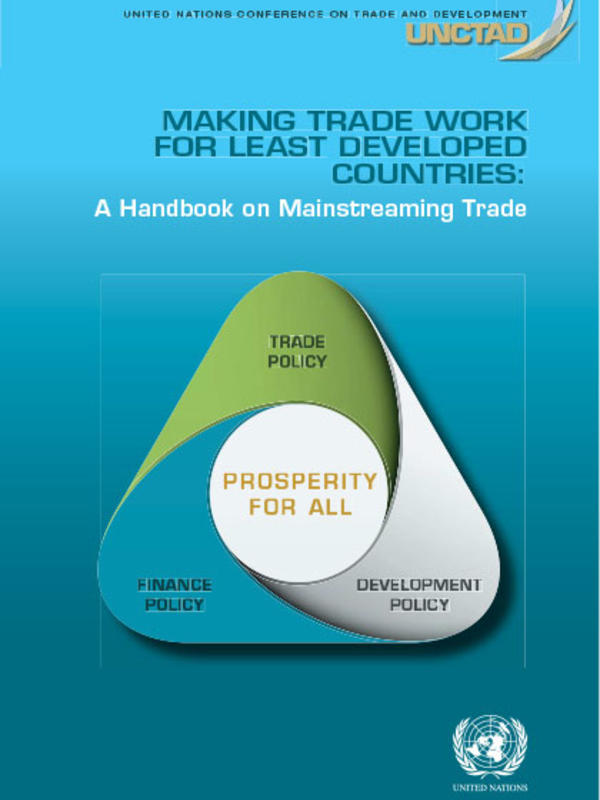
Making trade work for Least Developed Countries: a handbook on mainstreaming trade

Least developed countries (LDCs) have very high trade-to-GDP ratios, reflecting the fact that they are heavily dependent on trade. Over the past few decades, they have also embarked upon significant trade reforms. Although LDCs had relatively high economic growth during the past decade, unemployment, poverty, and inequality continue to be major development challenges in these countries. Against this backdrop, the United Nations Conference on Trade and Development (UNCTAD) developed a project to strengthen the capacity of trade and planning ministries of selected LDCs to develop and implement trade strategies conducive to poverty reduction. The project was funded by the UN Development Account for the period 2013–2015 and had six LDCs as beneficiaries: Ethiopia, Lesotho, and Senegal in Africa, and Bhutan, Kiribati, and Lao PDR in Asia and the Pacific. As part of the project, national workshops on the trade policymaking and trade main-streaming experiences of the beneficiary countries were organized by UNCTAD in collaboration with the governments involved and partner organizations. Two regional workshops were also organized: one on Africa and one on Asia and the Pacific. This handbook is the outcome of the workshops and research conducted under the project. It draws lessons from the experiences of the six countries that participated and provides fresh insights on how to design and implement an effective trade strategy in LDCs. It also provides clarity on the concept of main-streaming trade and identifies criteria on how to measure success in this endeavour. The handbook should be useful to policymakers in developing countries, development analysts, academics, and students of development. In this regard, it is meant to be a guide to policy formulation and implementation in LDCs, with the understanding that its application will vary from country to country because of differences in economic structure, history, and social and political realities.

View online/download
External Link

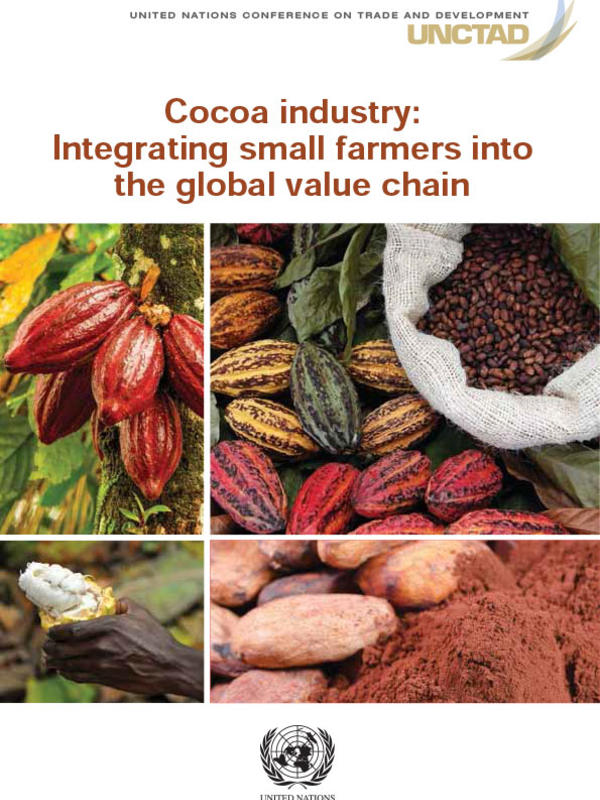
Cocoa industry: integrating small farmers into the global value chain

This report contributes to research on the cocoa global value chain (GVC). It examines consolidation patterns in the cocoa industry and their potential impacts on stakeholders along the value chain, in particular small cocoa farmers who constitute the backbone of cocoa production worldwide. It also discusses these farmers’ integration into world cocoa markets, highlighting some critical issues they face. The report finally offers some policy recommendations which may help governments, the private sector, the international community and producers to foster the development of a sustainable cocoa economy by empowering farmers, consonant with the Global Cocoa Agenda adopted at the first World Cocoa Conference in Abidjan in 2012. The report should ultimately contribute to the debate on how to attain the Sustainable Development Goals (SDGs) with their commitment to "leave no on behind", especially in cocoa farming communities.

View online/download
External Link

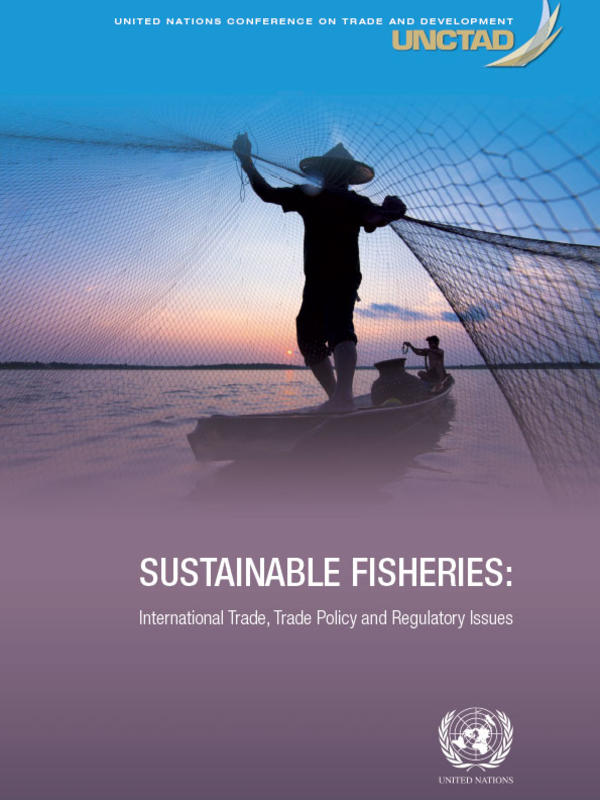
Sustainable fisheries: international trade, trade policy and regulatory issues

The expiry of the United Nations Millennium Development Goals (MDGs) in 2015 and recent launch of the UN 2030 Agenda for Sustainable Development includes a specific goal (Goal 14) on conserving and sustainably using oceans, seas and marine resources. This accord presents a new opportunity, but also some challenges for the international community to mobilise actions. These actions must be considered within the myriad of fishing-related instruments, including fisheries partnership agreements and trade agreements, so as to concretely and significantly arrest the ‘tragedy of commons’ in fish today and instead transform the situation into a ‘triumph of commons’ for fish in the future.

View online/download
External Link

Trade facilitation in the occupied Palestinian territory: restrictions and limitations

Despite the fact that Israeli procedures and trade impediments hamper efforts to create tangible changes on the ground, the study argues that a number of measures, if implemented, could boost Palestinian trade and revitalize the economy in the short term. Hence, this paper also identifies and critically examines some of these measures. One possibility, among many, is to seek and use donor aid to mitigate the constraints of the occupation. For instance, the improvement of trade conditions at King Hussein Bridge (KHB), including the need to process containerized shipments, would be a key element in facilitating Palestinian trade. In this regard, the introduction of the gantry scanner that was proposed by the Government of Netherlands (GoN) at KHB could boost Palestinian trade. For Palestinian shippers, the gantry scanner is intended to encourage the efficient movement of goods by eliminating the back-to-back process for moving goods (a costly, tedious process of unloading and reloading pallets for manual inspection), reducing damage to goods, allowing for the effective transportation of refrigerated and perishable items, enabling better packing of shipments in terms of the diversity and quantity of goods, and reducing transportation time and other costs.

View online/download
External Link

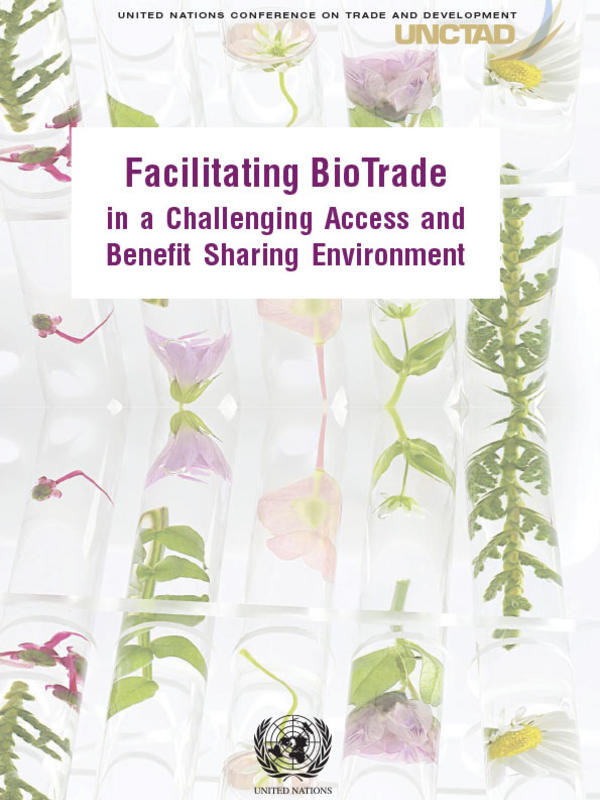
Facilitating BioTrade in a challenging access and benefit sharing environment

Legal uncertainty, lack of clarity and administrative inaction are not a good recipe to facilitate sustainable biodiversity businesses. With the entering into force of the CBD Nagoya Protocol on Access to Genetic Resources and the Fair and Equitable Sharing of Benefits Arising from their Utilization, there is a new opportunity to improve the synergies for access to genetic resources and benefit sharing (ABS) in the context of BioTrade, and in turn contribute to legal certainty on this particularly important matter in regards to sustainable use of biodiversity. Though historically BioTrade has moved in the realm of sustainable biodiversity businesses, particularly with biological resources and certain ecosystem services, questions remain regarding when and how genetic resources become part of BioTrade and most importantly, whether ABS policy and legal frameworks are applicable or not. Implementing the Nagoya Protocol in regards to BioTrade will require guidance as to how BioTrade and ABS positively interact and generate complementarity. When and how ABS requirements may be applicable to BioTrade is key to creating the enabling policy and regulatory environments. This scoping study offers an overview of some of the key issues and connections between BioTrade and ABS under the framework of the Nagoya Protocol, the challenges faced by interested actors and suggestions of ways to address them, including in terms of interpretation, implementing policies and legal reforms. Examples, figures and case studies are used to clarify some of the points raised and suggestions on the way forward.

View online/download
External Link

Trade policy framework: Angola

The study examines Angola’s participation in international trade and its existing trade policy, and seeks to recommend some areas of policy changes that may help the Government to improve its trade performance and bring about inclusive development. As regards merchandise trade, the study identifies several sectors that could be usefully explored for the country’s export diversification efforts, particularly through accelerated agro-based industries development. These include coffee, tea, fruits, fruit juice, vegetables, maize, cassava, sugar cane, cotton, floriculture, sawdust briquettes, fisheries, palm oil and natural rubber. Other recommendations centre on improving capacities with supportive services infrastructures, and regulatory and institutional framework, improving and strengthening trade related fundamentals. As regards services trade, the study identifies some key services sectors in which reforms and improvement in the supply side would be necessary to boost trade. These include the energy, financial, construction, tourism, telecommunications and transport services. For example, it calls for improved quality of transportation and increased supply of road cargo transportation. For telecommunications services, it calls for raising funds to create a broadband infrastructure in order to connect all urban and rural geographic regions of the country and establish connections with the regional infrastructures supporting the development of telecommunications. For tourism services, it calls for development of the Angolan tourism services through quality products, incorporating the regional, cultural and natural diversity and to stimulate and facilitate the consumption of Angolan tourism products in the national, intraregional and international market.

View online/download
External Link

Trade policy framework: Zambia

This paper sets out Zambia’s existing trade policy framework and identifies areas of possible reform and options for maximizing the contribution of trade to inclusive growth and sustainable development. It contains a review of the macroeconomic and trade performance of the economy between 1995 and 2013. It discusses the current trade policies and institutions so as to identify the major opportunities and challenges inherent in the Zambian economy and outlines the options for enhancing Zambia’s trade and sustainable real growth in the economy. Following a review of Zambia’s trade performance and the current tariff structure, the framework recommends a strategic trade policy calibrated to support industrial sector interests. Tariff-setting is an essential component of improving Zambia’s trade performance but is not the sole determinant. Other factors play a critical role in preventing the country from increasing its exports and ultimately the creation of employment, increased incomes and reduction of poverty, such as the cost of doing business and high trade costs. The framework sets out the principles, approaches and key elements that should shape Zambia’s strategy for integration into the global economy. Recognizing the growing complexity of trade policy in a rapidly changing global environment, the framework offers an agenda for future work on trade policy by outlining a number of recommendations.
View online/download
External Link

Training manual on developing joint BioTrade and REDD+ projects

The present training manual is intended to support the development and implementation of joint BioTrade and REDD+ projects in order to maximize benefits and synergies. It includes a step-by-step project methodology that has been specifically designed for project proponents and developers. The manual also provides policy advisers and other interested stakeholders with key concepts and practical considerations on BioTrade and REDD+, the synergies between the two approaches and the potential for combining them. The content of the manual draws on the experience of the UNCTAD BioTrade Initiative in promoting trade and investment in biological resources to further sustainable development. It also integrates Forests Alive’s experience in developing REDD+ projects. Finally, the manual builds on the findings of the project “Strengthening the capacity of policymakers and business leaders in three BioTrade beneficiary countries [Brazil, Colombia and Ecuador] in integrating REDD+ projects into BioTrade strategies” which was formulated and implemented by UNCTAD between 2010 and 2012 under the United Nations Development Account programme.

View online/download
External Link

Creative economy outlook and country profiles: trends in international trade in creative industries

International trade in creative industries showed sustained growth in the last decade. The global market for traded creative goods and services totalled a record $547billion in 2012, as compared to $302 billion in 2003. Exports from developing countries, led by Asian countries, were growing faster than exports from developed countries. Among developed country regions, Europe is the largest exporter of creative goods. In 2012, the top 5 creative goods exporters included Germany, France, Switzerland, the Netherlands and Belgium. Exports of creative goods from developed economies grew during the period 2003 to 2012, with export earnings rising from $134 billion to $197 billion. Among developing countries, China is the largest exporter of creative goods. In 2012, the top 5 exporters were China, Hong Kong, China, India, Turkey and South Korea. Exports of creative goods from developing economies grew during the period 2003 to 2012, with export earnings rising from $87 billion to $272 billion. Developing countries are playing an increasingly important role in international trade in creative industries. Creative industries are vibrant sectors of the global economy. Increasing demographics, better access to ICTs and dynamic shifts to new lifestyles associated with creative products and services, makes trade in these sectors a promising avenue for future growth.

View online/download
External Link

Farm support and trade rules: towards a new paradigm under the 2030 Agenda

After more than two decades from the conclusion of the Uruguay Round, producer support remains a structural, systemic issue in agriculture. Most importantly, the playing field is far from level, due to factual and formal discriminations across countries. The Doha Round, if concluded, would redress these imbalances but only partially. The “historic” Nairobi Package on agriculture, agreed at the 10th Ministerial Conference of the World Trade Organization (WTO) in December 2015, eliminates agricultural export subsidies. But important distortions and imbalances in the area of domestic support would stay. In particular, the proposed Doha disciplines would not obstruct the main gate-ways through which producer support is channelled today. How then to move forward in this setting? Where to set limits to farm support policies, beyond the terms of the Doha Draft, and how to arbitrate trade-offs between “policy space” and “trade fairness”? Given the changed scenario, and given that agricultural production accounts for around 24 per cent of all human-caused greenhouse gas emissions, the way ahead requires a pragmatic and groundbreaking pathway. Trade rules in general and domestic support disciplines in particular are to be reorganized around sustainable development outcomes. The boundaries of the Green Box have to be redefined accordingly. This re-orientation is needed if trade policy is to fit into the new programmatic framework shaped by the 2030 Agenda for Sustainable Development, the Addis Ababa Action Agenda, and the Paris Climate Change Conference. This paper elaborates on this move. It first briefly highlights the unfinished nature of trade policy reform under the Uruguay Round. It then moves on to consider the major limits of the proposed Doha disciplines on domestic support, as outlined in the Revised Daft Modalities for Agriculture of 6 December 2008 (hereafter, the Doha Draft). As a conclusion, it outlines options as to the way ahead.

View online/download
External Link

Exploring new trade frontiers: viewing the Trans-Pacific Partnership agreement through an agriculture lens

The Trans-Pacific Partnership (TPP) trade agreement brings together 12 countries: Australia, Brunei, Canada, Chile, Japan, Malaysia, Mexico, New Zealand, Peru, Singapore, United States, and Vietnam. The deal spans three continents across the Pacific with members at diverse levels of current economic development. Together, TPP members account for 40 percent of global trade. The TPP trade agreement will be one of the most consequential trade agreements in twenty years, on par with the North American Free Trade Agreement (NAFTA) or China’s entry to the World Trade Organization (WTO). Once the TPP has been fully implemented, nearly all of the tariffs will be at zero for all of the TPP members moving goods between markets in the agreement. Provisions of the TPP apply even to sensitive items like agriculture. The TPP could dramatically reconfigure supply chains in food and processed food items in ways that past trade agreements did not. The deep and broad commitments in the TPP sets up some interesting new dynamics. It is likely to exacerbate tensions in the global trading system that fall most acutely on the smallest, poorest states as companies increasingly “vote with their feet” and shift production, sales and services into TPP member markets and leave behind non-member markets in the region.

View online/download
External Link

Why geographical indications for Least Developed Countries?

Since 2010 UNCTAD is supporting selected LDCs rural communities in their efforts to promote traditional products through Geographical Indications (GIs). GIs are a trade-related intellectual property right under the WTO TRIPS Agreement. The link between the territory and the uniqueness of the product is the distinctive developmental nature of GIs with respect to other forms of TRIPs. Evidence from the market and literature shows that the promotion and protection of products under GIs may results in higher economics gains, fostering quality production and equitable distribution of profits for LDC rural communities. GIs encourage the preservation of biodiversity, traditional know-how and natural resources. Leveraging on biological and cultural diversification, the implementation of GIs may represent a unique opportunity to bring together the various players along the value chain supply, including producers, government authorities and researchers.

View online/download
External Link

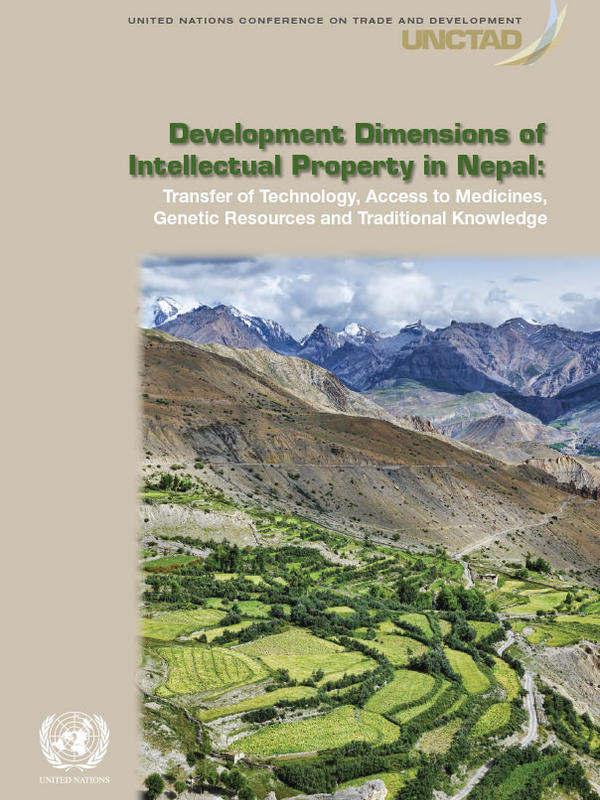
The development dimensions of intellectual property in Nepal

UNCTAD originally developed this Report on the development dimension of intellectual property rights (DDIP) in response to a technical assistance request from Nepal. Part 1 of this Report outlines the major framework for intellectual property (IP) policy in Nepal. IP rights have differential impact on countries based on their respective levels of development, with LDCs being in a less advantageous position due to their limited absorptive capacity and technological base, among other limitations. Considering its level of development, IP policy makers in Nepal needs to consider the importance of and the factors that facilitate indigenous learning activities and the adaptation of technologies, through incremental innovation in vital and promising sectors of the economy. Part 2 of the Report recommends a number of legislative, policy and practical steps to facilitate and enable the technological and innovation functions of IP protection. Part 3 of the Report examines the access to medicine regime of Nepal and recommends for Nepal to implement the transition period for the protection of pharmaceutical product patents and pharmaceutical test data that lasts until 2033. Part 4 of the Report analyses Nepal's access and benefit sharing regime, the interface between IP and biodiversity, and options for defensive and positive protection of genetic resources (GRs) and traditional knowledge (TK). The recommendations of this Report on the framework for IP policy in Nepal and on each specific area examined have legislative and institutional dimensions that require capacity building, and, in some cases, additional studies to develop specific action plans for implementation.

View online/download
External Link

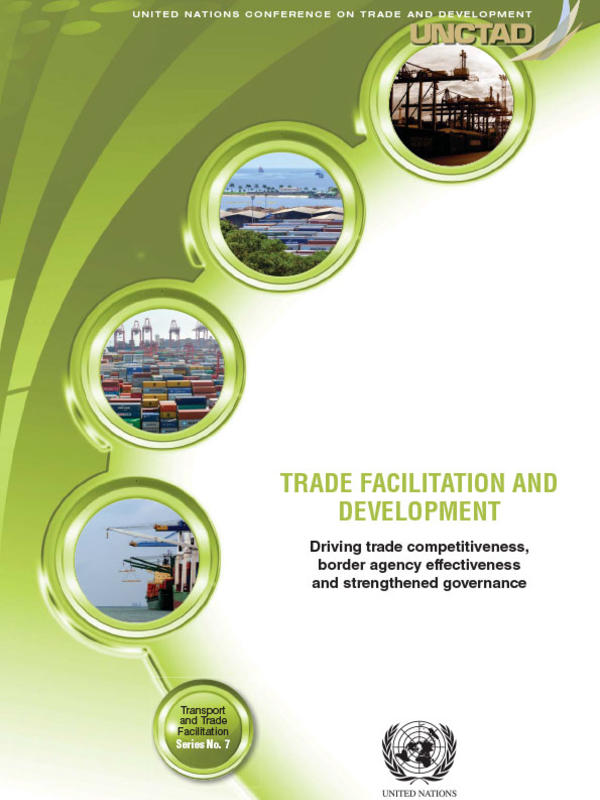
Trade facilitation and development

Trade facilitation reforms improve a country’s trade competitiveness and the effectiveness of border agencies. In addition, they can directly help advance development goals such as strengthening governance and formalizing the informal sector. The present study identifies policies to help reap the full development-related benefits from trade facilitation reforms. UNCTAD research and experience with technical assistance programmes has shown that such reforms should be comprehensive and ambitious and advance the trade and development objectives of countries. Trade facilitation should be linked to investments in transport infrastructure, information and communications technologies and broader trade-supporting services. Since many trade facilitation challenges and solutions are regional, their implementation should be included in regional integration schemes. Given the linkages between trade facilitation reforms and implementation capacities, development partners need to ensure that their support does not leave out the most vulnerable economies, and should make full use of the promises and possibilities for technical and financial assistance provided for by the Agreement on Trade Facilitation of the World Trade Organization (WTO), reached in Bali, Indonesia in 2013.

View online/download
External Link

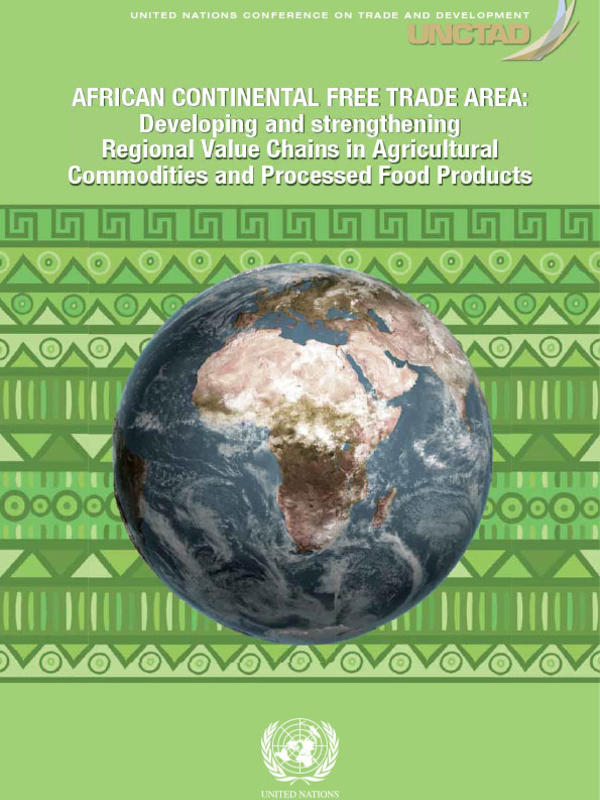
African Continental Free Trade Area: developing and strengthening regional value chains in agricultural commodities and processed food products

The African Union Assembly decided in 2012 during its 18th Ordinary Session to boost intra-African trade and to fast track the Continental Free Trade Area (CFTA). This CFTA is expected to boost intra-African trade expansion, stimulate sustained economic growth and foster inclusive development. The CFTA is more than a free trade agreement. It is perceived as a platform that would facilitate a process of inclusive structural transformation of African countries, contributing to meeting Africa's 2063 Vision. In this process, the CFTA would also help Africa to make progress in implementing the 2030 Agenda and Sustainable Development Goals. The present study aims to enhance knowledge among policy-makers, experts and private sector on requisite policies and measures for fostering the development and strengthening of regional supply and value chains in agricultural commodities and processed food products. This would contribute to the development of intra-African trade in agricultural and food products including through the setting up and strengthening of regional agro-food supply chains.

View online/download
External Link

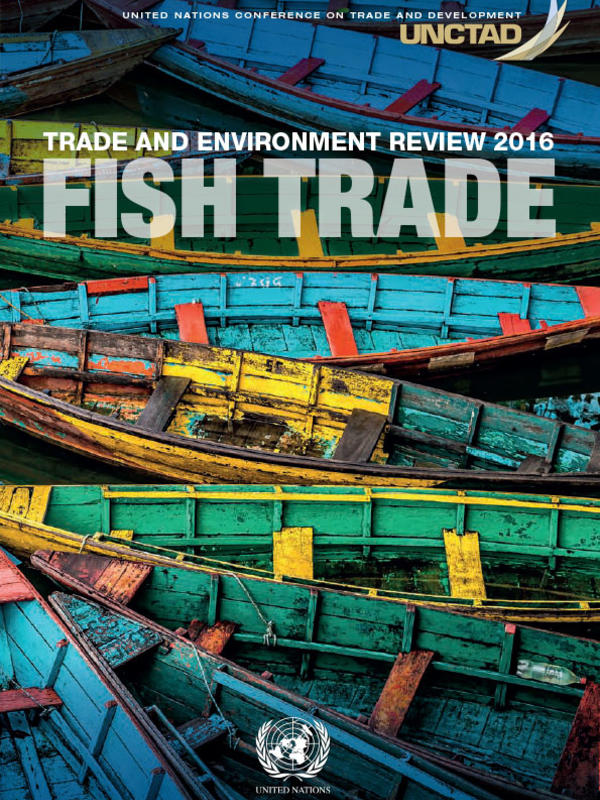
Trade and Environment Review 2016: fish trade

This review examines issues pertinent to the promotion of sustainable use of living marine resources in healthy oceans and seas, bringing together a collection of independent articles by 24 leading experts and practitioners on fish governance systems; fish harvest, production and consumption; unsustainable fishing practices; fish and marine ecosystems management; and fish trade. The Review provides a succinct diagnosis of some of the key challenges to be faced in addressing SDG 14, as well as novel suggestions and innovations to advance its implementation.

View online/download
External Link

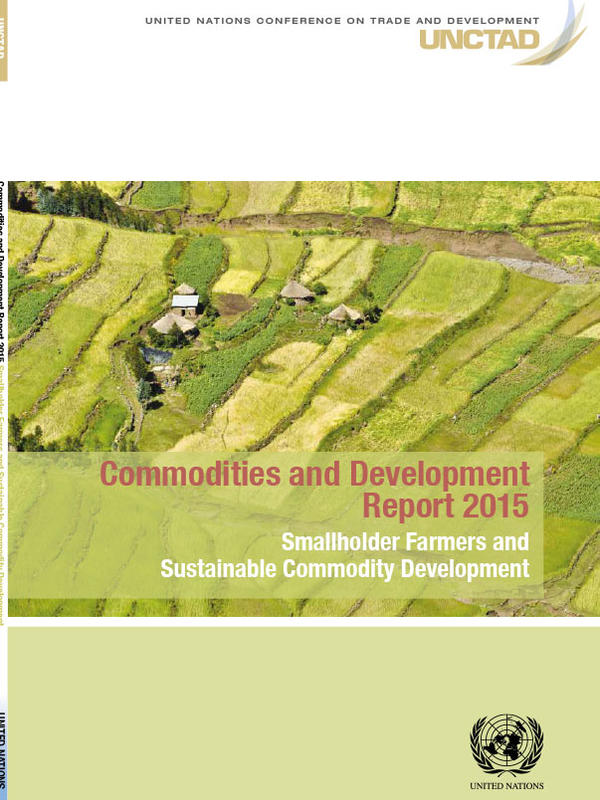
Commodities and Development Report 2015: smallholder farmers and sustainable commodity development

The report highlights the range of constraints that smallholder farmers face in developing economies and specifically provides new analyses of the state of their integration into the global economy. It underlines that smallholder farmers are both victims of climate change and key actors in the achievement of a more inclusive and environmentally friendly development path. The report argues for specific measures at the national, regional and global levels, including in international trade and investment agreements, for unleashing the full business potential of smallholders. It showcases good policy practices, including the role of strong political leadership in reversing the policy neglect that small farmers have suffered from. "Business as usual" is not an option if the 2030 Agenda for Sustainable Development is to be achieved. In light of this, the report calls for greater resources to be devoted to supporting smallholders. And finally, the report also urges for the establishment of an accountability mechanism for monitoring progress on key commitments related to smallholders on trade, investment, finance and technology.

View online/download
External Link

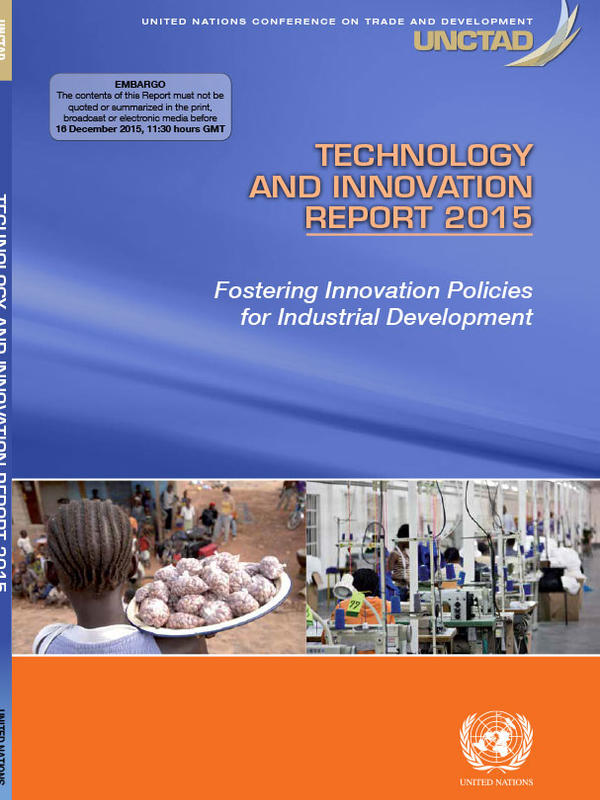
Technology and Innovation Report 2015: fostering innovation policies for industrial development

Building productive capacities and promoting sustainable industrialization have an important role to play across the spectrum of the integrated 2030 Agenda for Sustainable Development. The Agenda recognizes that the notion of sustainable industrialization is multi-faceted: it is not solely limited to environmental sustainability, but refers to efforts that are technology-led, productivity enhancing and poverty-reducing. It is based on the understanding that no industrial policy is complete without an accompanying innovation policy. Both are essential and complementary to shaping developmental outcomes and creating prosperity for all. This report addresses this urgent policy priority by analysing the crucial role of technological learning and innovation capacity. Promoting industrialization is a challenge throughout the world. This report helps to address some of the questions that policymakers face when seeking to forge new paths to secure a prosperous future for their people.

View online/download
External Link

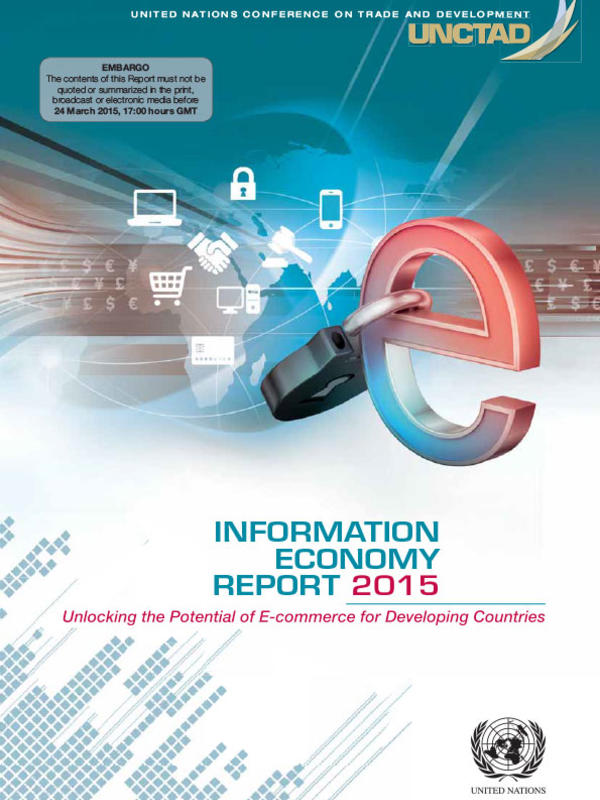
Information Economy Report 2015: unlocking the potential of E-commerce for developing countries

This report highlights how some of the greatest dynamism in electronic commerce can be found in developing countries, but that potential is far from fully realized. It examines opportunities and challenges faced by enterprises in developing countries that wish to access and use e-commerce. It also highlights the latest market trends, benchmarks country performances with the UNCTAD E-commerce Index, reviews examples of e-commerce in rural areas and low-income countries, addresses relevant legal issues and provides policy recommendations.

View online/download
External Link


Suggest a publication

Feel free to submit a publication.

Submit here