Languages

Topbar Menu EN

The SDG Fund is operationally closed. This site is alive for knowledge and dissemination purposes.
Warning: This website is closed. Be aware of phishing or social engineering fraudulent requests of payments or certificates. Explore our programme areas.
Please visit jointsdgfund.org
Search our database of publications


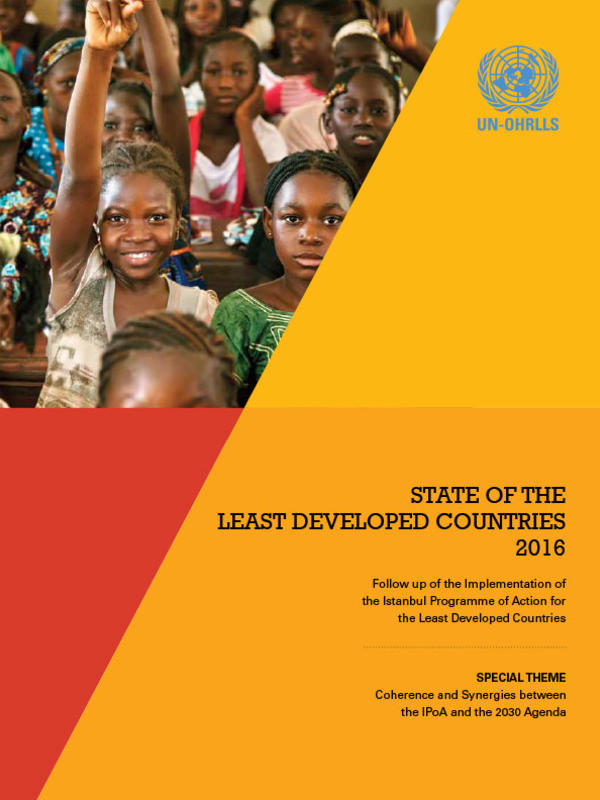
State of the Least Developed Countries 2016

The current report builds on the first and second editions, which considered the issues of productive capacity building as well as extreme poverty eradication in the least developed countries (LDCs) and the post-2015 development agenda. These reports provided analysis relating to the inclusion of LDC issues in the 2030 Agenda for sustainable development. This year’s report is dedicated to the implementation of the SDGs in LDCs using synergies with the Istanbul Programme of Action (IPoA). Part 1 of the report assesses progress towards achieving the goals and targets of the IPoA, particularly in the eight priority areas; reviews efforts towards this end; and identifies challenges ahead. The report argues that enhanced, coordinated and targeted support to the LDCs fulfilling ODA commitments but also going beyond, will remain critical to effectively implementing the IPoA. Part 2 of the report assesses the complementarities of the IPoA and the 2030 Agenda. It maps the goals, targets and actions of the IPoA with the SDGs, focusing on means of implementation. Furthermore it looks at how the implementation of the SDGs in LDCs can be fostered, including its mainstreaming and monitoring and followup. The conclusions and policy recommendations cover the findings in both parts of the report. As the report finds significant synergies between the IPoA and the Agenda 2030 it highlights the importance of leadership and political will and effective global partnership.
View online/download
External Link

The 2030 Agenda for Sustainable Development: achieving the industry-related goals and targets

UNIDO’s vision to address today’s economic, social and environmental challenges is enshrined in the Lima Declaration, which was adopted by UNIDO Member States in December 2013. On this basis, the Organization pursues Inclusive and Sustainable Industrial Development (ISID) to harness industry’s full potential to contribute to lasting prosperity for all. The mandate is based on the recognition by Member States that poverty eradication “can only be achieved through strong, inclusive, sustainable and resilient economic and industrial growth, and the effective integration of the economic, social and environmental dimensions of sustainable development.” The present document summarizes the contribution of UNIDO’s mandate as well as current and planned future activities vis-à-vis the SDGs, with a special focus on SDG-9, which highlights and affirms the critical importance of ISID and its contribution to all 17 goals.

View online/download
External Link

Pan-African cotton road map: a continental strategy to strengthen regional cotton value chains for poverty reduction and food security

The objective of this road map is to create synergies between the numerous interventions in favour of African cotton, and between the different categories of stakeholders at national, regional and international level. As such, it aims to become a complement to what already is in place in the regions by providing a common framework at the Pan-African level that addresses the existing strategies and national and regional policies from a Pan-African perspective. The road map is organized as follows: Part I succinctly describes the background to the Road Map, its link to the achievement of Millennium Development Goals and the translation of these into actions to be conducted; Part II enunciates the Road Map’s various activities based on the outcome of the Cotonou meeting around the three themes: Productivity, Marketing and Value-addition. This part also introduces other proposals, facilitation of the Road Map, its Action Plan and indicators of progress.

View online/download
External Link

The besieged Palestinian agricultural sector

The present study analyses the problems and prospects of the Palestinian agricultural sector. The study highlights the sector’s role, importance and contribution to the overall economy, and its strengths and weaknesses, as well as opportunities in the sector and constraints on the sector. The study underscores the distortions imposed by occupation and their impact on the state and prospects of the Palestinian agricultural sector.

View online/download
External Link

Commodities and Development Report 2015: smallholder farmers and sustainable commodity development

The report highlights the range of constraints that smallholder farmers face in developing economies and specifically provides new analyses of the state of their integration into the global economy. It underlines that smallholder farmers are both victims of climate change and key actors in the achievement of a more inclusive and environmentally friendly development path. The report argues for specific measures at the national, regional and global levels, including in international trade and investment agreements, for unleashing the full business potential of smallholders. It showcases good policy practices, including the role of strong political leadership in reversing the policy neglect that small farmers have suffered from. "Business as usual" is not an option if the 2030 Agenda for Sustainable Development is to be achieved. In light of this, the report calls for greater resources to be devoted to supporting smallholders. And finally, the report also urges for the establishment of an accountability mechanism for monitoring progress on key commitments related to smallholders on trade, investment, finance and technology.

View online/download
External Link

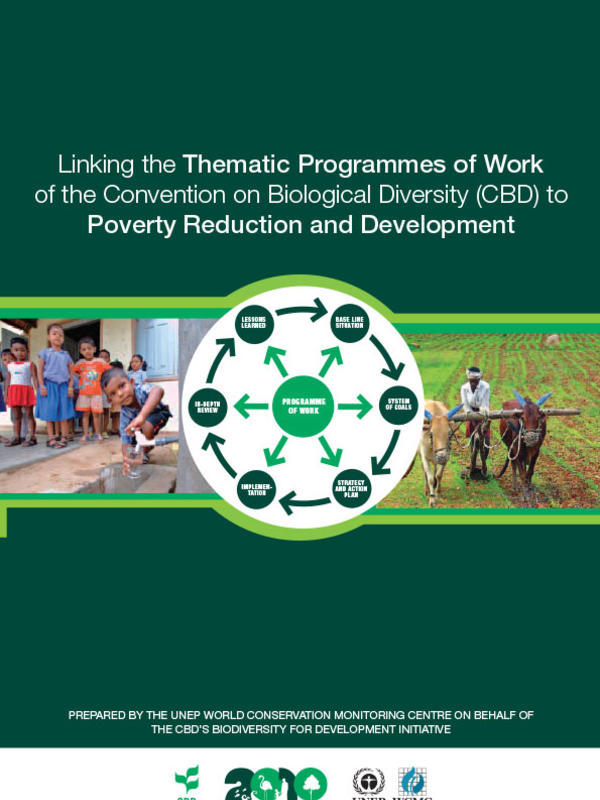
Linking the thematic programmes of work of the Convention on Biological Diversity (CBD) to poverty reduction and development

This report describes a consultancy carried out to determine the linkages between the Convention on Biological Diversity’s (CBD) thematic Programmes of Work (PoWs) and poverty reduction. It is well understood that the relationship between biodiversity and poverty reduction is complex and has multiple possible pathways, from ‘win-win’ outcomes (reducing poverty improves conservation outcomes), ‘win-neutral’ (conservation has no effect on poverty), ‘trade-offs’ (conservation action hurts the poor or poverty reduction damages biodiversity), or even ‘lose-lose’ situations (poverty increases and biodiversity declines). The major challenge in this regard is that production systems should enhance human well-being, be sustainable in the future without degradation of the natural resource base (biodiversity),while maintaining productivity and being equitably distributed among people, avoiding poverty. This requires an incredibly delicate series of balances. The report offers a series of recommendations and identifies 2 major critical conditions for successful implementation.

View online/download
External Link

Trade and health: towards building a national strategy

Globalization and the rise of international trade of goods and services in terms of volume and speed influence human health. This influence can be both positive and negative. Our work on “trade and health” is all about harnessing and maximizing opportunities to promote public health and minimizing the risks and threats.

View online/download
External Link

Daily iron supplementation in postpartum women: guideline

This guideline provides a global, evidence-informed recommendation on iron supplementation in post-partum women, as a public health intervention for the purpose of improving maternal and infant health outcomes. The guideline aims to help Member States and their partners in their efforts to make informed decisions on the appropriate nutrition actions to achieve the Sustainable Development Goals (SDGs), in particular, Goal 2: End hunger, achieve food security and improved nutrition and promote sustainable agriculture. It will also support Member States in their efforts to achieve the global targets of the Comprehensive implementation plan on maternal, infant and young child nutrition, as endorsed by the Sixty-fifth World Health Assembly in resolution WHA65.6 and the Global strategy for women’s, children’s and adolescents’ health (2016–2030). The recommendation in this guideline is intended for a wide audience, including policy-makers, their expert advisers, and technical and programme staff at organizations involved in the design, implementation and scaling-up of programmes for anaemia prevention and control, and in nutrition actions for public health. This guideline is intended to contribute to discussions among stakeholders when selecting or prioritizing interventions to be undertaken in their specific context. This document presents the key recommendations and a summary of the supporting evidence. Further details of the evidence base are provided in Annex 1 and other documents listed in the references.

View online/download
External Link

Establishing a workable follow-up and review process for the Sustainable Development Goals

The Open Working Group document proposes that governments will set its own national targets. They will be guided by the global level of ambition but taking into account national circumstances. To make the Post-2015 agenda actionable, much more thought needs to be given to the process of target-setting, different actors’ responsibilities, implementation and accountability.

View online/download
External Link

Mind the gap? A comparison of international and national targets for the SDG agenda

The stretch required for low-income countries (LICs) to achieve SDG targets is generally greater than for middle-income and high-income countries (MICs and HICs). The gaps identified indicate where most work is needed to alter political priorities in order to realise the SDGs. Most hard work will be needed in areas that are highly politically contentious (climate policy) or expensive (secondary education, electricity and sanitation). This has implications for how governments structure a review process and how resources are mobilised for the post-2015 sustainable development agenda. The report also found a great deal of variation in the approach to measuring targets at the national level. A standardised approach would make comparisons easier and hold governments more readily to account.

View online/download
External Link

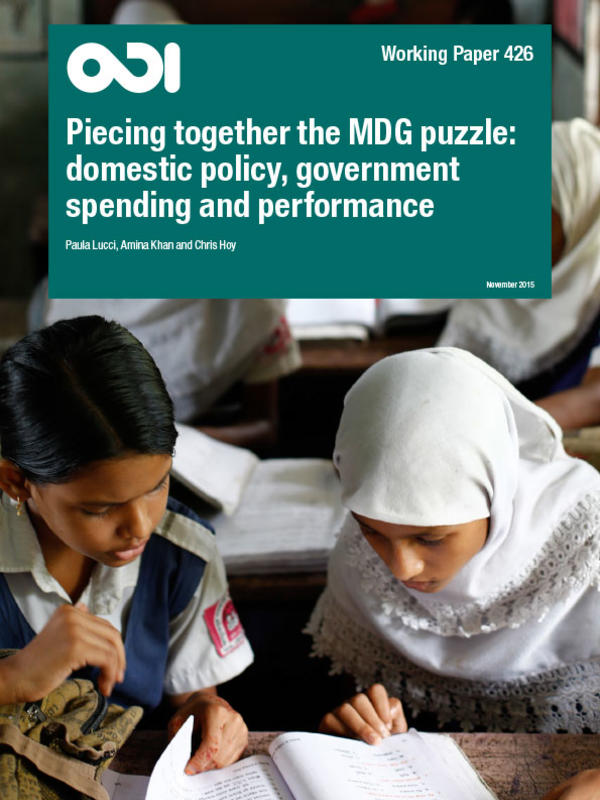
Piecing together the MDG puzzle: domestic policy, government spending and performance

Policy-makers in most of the developing countries surveyed report that the MDGs were influential in setting priorities domestically. Analysis of the education and health sectors suggests these statements are not merely tokenistic as countries reporting high influence saw increases in budget allocations. However while many countries experienced increases in government spending in social sectors over the MDG period, the majority still spend less than the recommended international benchmarks. Significant increases in government allocations will therefore be required to match the ambition of the SDGs. Recommendations for the SDG period include ensuring better data on domestic use of targets, government spending and performance are available to better assess their influence over the next 15 years and ensure the 'leave no one behind' agenda will be fulfilled.

View online/download
External Link

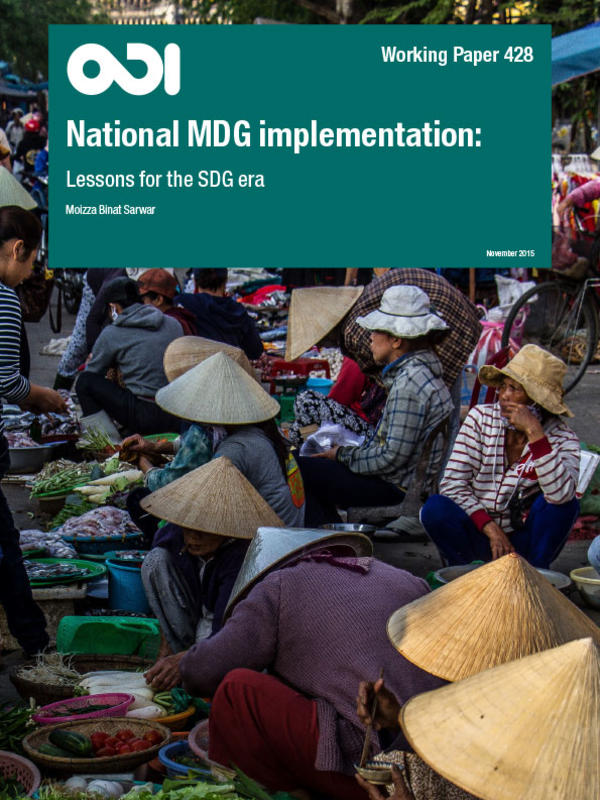
National MDG implementation: lessons for the SDG era

As we approach the deadline for the expiration of the Millennium Development Goals (MDGs), and the start of the Sustainable Development Goals, at the end of 2015, this paper asks: how did governments respond at the national level to the set of global development goals in the form of the MDGs? Using five case study countries: Indonesia, Turkey, Mexico, Nigeria and Liberia, to reflect a mix of regions, income classifications and MDG performance, the paper draws out common trends and suggests five lessons for the post-2015 era.

View online/download
External Link

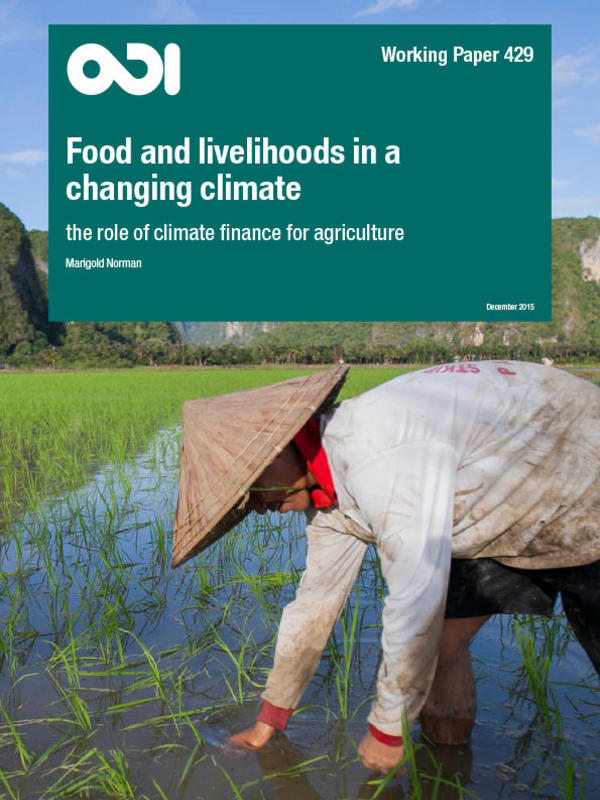
Food and livelihoods in a changing climate: the role of climate finance for agriculture

Climate finance remains a newcomer to the agriculture sector, playing a minor role compared to wider official development assistance. It has grown slowly since 2002 and is poised to play an important role in this sector. This paper sheds light on its growing importance, and considers dedicated multilateral funds. It reflects on opportunities for international public climate finance to transform a high greenhouse gas emitting sector, into one with more climate compatible practices, resilient to the effects of climate change.

View online/download
External Link

Infrastructure for the participation of smallholders in modern value chains

Improving trade in food staples, whether cross-border or domestic, can connect deficit and surplus areas and reduce price volatility. It can also be positive for consumers and producers, in particular smallholders, and can drive inclusive poverty reduction and increased food security. The literature examining causes of differential abilities to capture food staples market integration in Africa reflects the high level of trade costs both within and between countries on the continent.

View online/download
External Link

Synthesis of seven country case studies: strengthening coherence between agriculture and social protection

Agriculture and social protection can complement and support each other in reducing hunger and poverty. On the one hand, agricultural interventions can promote growth in smallholder productivity by addressing structural constraints that limit the access of poor households to land and water resources, inputs, financial services, advisory services and markets. On the other, social protection can provide liquidity and certainty for poor smallholders, allowing them to invest in agriculture, reallocate their labour to on-farm activities, invest in human capital development, increase participation in social networks (which constitute an important source of informal risk management) and better manage risks, thereby allowing them to engage in more profitable livelihood and agricultural activities. Coherence between agricultural development and social protection can be achieved by incorporating social protection objectives, such as risk reduction, in agricultural development and vice versa and by linking activities in the two sectors to create complementarities between programmes. Through the Protection to Production (PtoP) project, led by FAO and UNICEF, considerable evidence has been generated on the productive and economic impacts of social protection and its contribution to sustainable poverty reduction and economic growth in Africa. However, less is known on how to strengthen the links to agricultural development, including the opportunities for doing so and the challenges to be overcome. Case studies were carried out in seven countries across Africa (Ghana, Kenya, Lesotho, Zambia), Asia (Bangladesh) and Latin America (Mexico, Peru). The studies examined programme concepts and methods, coordination and outcomes. In most countries, two programmes from the agricultural sector and two from the social protection sector were observed.

View online/download
External Link

Projecting progress: the SDGs in Latin America and the Caribbean

This paper presents Latin America and the Caribbean’s (LAC) likely progress across the Sustainable Development Goals (SDGs) agenda, if trends continue on their current trajectories. There are significant disparities across the globe in progress both between and within countries; LAC is no exception. There are a number of disparities across sub-regions and there are disparities within countries – ethnicity, for example, is a crucial factor in determining whether someone is likely to benefit from development gains. During the Millennium Development Goals era considerable gains were made in a number of countries in LAC. However, already strong outcomes in some areas compared with other developing regions will make continued progress towards the new goals difficult.

View online/download
External Link

Health, migration and the 2030 Agenda for Sustainable Development

This briefing presents an overview of how international migration can have an impact on the sustainable development goal for health and well-being. It describes the health needs and health service delivery for migrants and refugees in different settings and highlights the ways they may be excluded in national policies relating to health and from specific policies that work towards achieving the Agenda 2030 on sustainable development.

View online/download
External Link

Projecting progress: are cities on track to achieve the SDGs by 2030?

This report explores for the first time the scale of the challenge for 20 cities across the world to reach selected targets set out in the Sustainable Development Goals (SDGs). More than half of the targets included will require a profound acceleration of efforts if they are to be achieved by the majority of selected cities. Targets that are not on course to be met by the majority of cities studied include ending child malnutrition, achieving full and productive female employment, access to adequate housing and access to drinking water and sanitation. The report makes a series of recommendations to increase progress towards the SDGs, including: 1) Central governments and donors should work to strengthen local governments’ capacities; 2) Government and city administrations should invest more in ways to monitor progress on the SDGs; 3) Statistical offices’ and cities’ information systems should improve the data available.

View online/download
External Link

China and Africa: an emerging partnership for development? - an overview of issues

China’s phenomenal growth offers an opportunity to boost development in African countries. Moreover, China’s loans and concessional assistance financed a wide range of development projects. China also is reaping significant benefits from this relationship, through access to raw materials, expanded markets for exports of manufactures, the establishment of investment relationships which could generate significant profits over time and diplomatic influence. But leadership from African governments, particularly to strengthen domestic policies and governance and to harmonize regional policies so as to improve the continent’s bargaining position with China, are required to ensure that the China-Africa relationship contributes to sustainable growth and poverty reduction. The twin goals of this paper are to summarizes the analysis on the economic exchange between China and Africa, and to outline policy recommendations to improve the benefits to both parties.

View online/download
External Link

Climate change, gender and development in Africa

This article focuses on policy to support adaptation to climate change, and the importance of good gender analysis in planning and following through. It first examines how vulnerabilities are understood by climate change specialists. Then it examines how, through these perspectives, African people – particularly women in environment-based livelihoods – can best be supported by governments and development partners to adapt to the effects of climate change.

View online/download
External Link

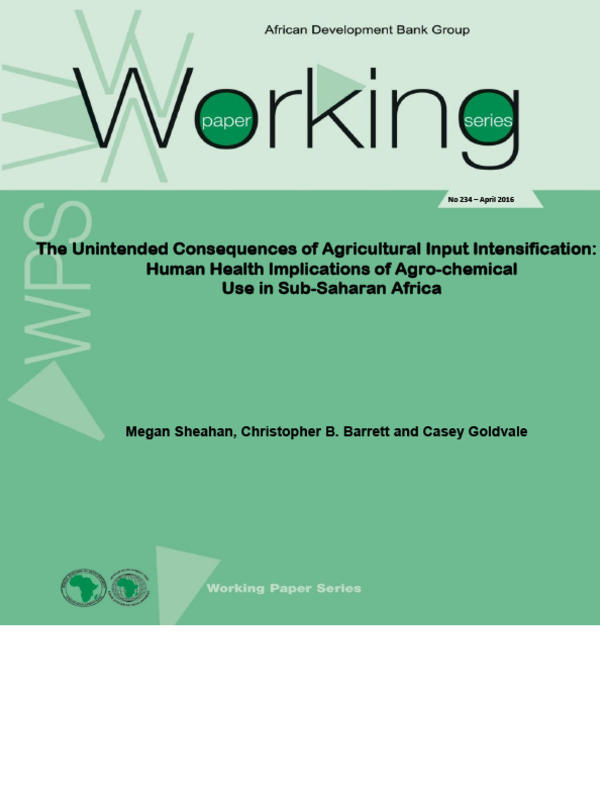
The unintended consequences of agricultural input intensification: human health implications of agro-chemical use in Sub-Saharan Africa

While agro-chemicals such as pesticides, fungicides, and herbicides are often promoted as inputs that increase agricultural productivity by limiting a range of pre-harvest losses, their use may have negative human health and labor productivity implications. We explore the relationship between agro-chemical use and the value of crop output at the plot level and a range of human health outcomes at the household level using nationally representative panel survey data from four Sub-Saharan African countries where more than ten percent of main season cultivators use agro-chemicals. We find that agro-chemicals use is associated with increased value of harvest, with similar magnitudes across three of the four countries under study, but is also associated with increases in costs associated with human illness, including increased health expenditures related to illness and time lost from work due to sickness in recent past. We motivate our empirical work with a simple dynamic optimization model that clearly shows the role that farmer understanding of these feedbacks can play in optimizing the use of agro-chemicals. The central role of information in determining that optimum underscores the role of agricultural and public health extension as modern input intensification proceeds in the region.

View online/download
External Link

Informal cross border trade in Africa: implications and policy recommendations

Despite being a source of income to about 43 percent of Africa’s population, informal cross border trade (ICBT) is generally regarded as illegal commercialization of cross border activities. ICBT can have positive macroeconomic and social ramifications such as food security and income creation particularly for rural populations who would otherwise suffer from social exclusion. If properly harnessed, ICBT has the potential to support Africa’s on-going efforts at poverty alleviation.

View online/download
External Link

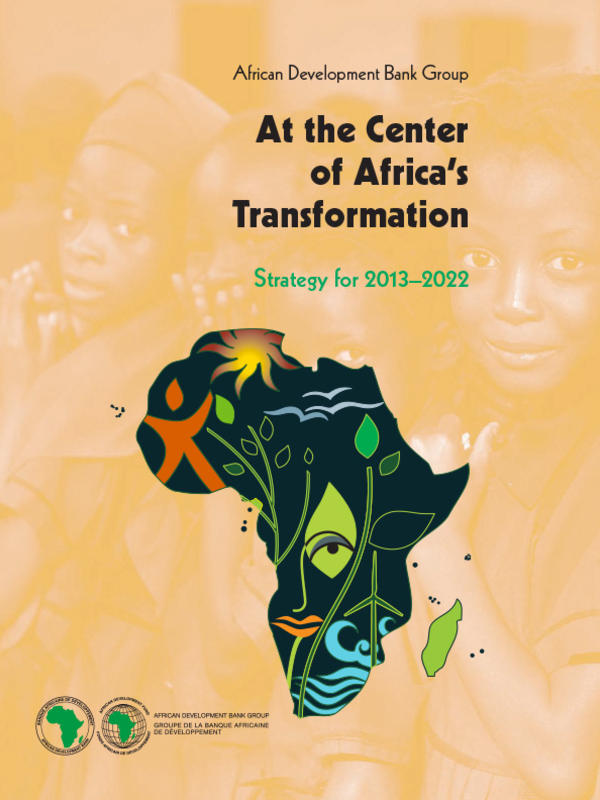
AfDB Strategy for 2013–2022 - at the center of Africa’s transformation

This ten-year Strategy is designed to place the African Development Bank at the centre of Africa’s transformation and to improve the quality of Africa’s growth. The Strategy will focus on two objectives to improve the quality of Africa’s growth: inclusive growth, and the transition to green growth. It also outlines five main channels for the Bank to deliver its work and improve the quality of growth in Africa: Infrastructural development; Regional economic integration; Private sector development; Governance and accountability; Skills and technology. In implementing its ten-year Strategy, and as an integral part of the two objectives, the Bank will pay particular attention to fragile states, agriculture and food security, and gender.

View online/download
External Link

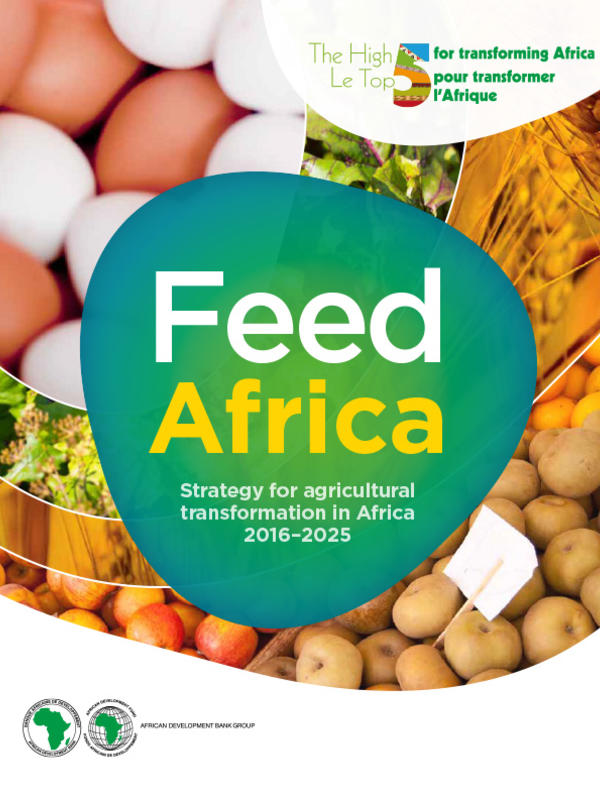
Feed Africa: strategy for agricultural transformation in Africa 2016–2025

There is a massive opportunity to reframe the current social and economic costs associated with the low productivity of the agricultural sector in Africa. What has — up till now — been an area of relative weakness for the African continent, can be recast as an area of strength and, more importantly, one of the fastest options for feeding, employing, and lifting millions of people out of poverty. Agricultural transformation has proven to be a complex endeavour, but is becoming increasingly understood as pockets of successful interventions spring up across the continent. New technologies — especially in the ICT realm — are bringing new ways of achieving and scaling success. Critical to realizing this opportunity will be shifting the development of the sector from ‘agriculture as a way of life’ to ‘agriculture as a business’. The public-sector has an essential role to play in fostering a private-sector led transformation of agriculture. Farmers, entrepreneurs, and investors alike will find a way to develop thriving agribusinesses if given the opportunity in the form of access to sufficient and affordable capital, access to markets and the right overall conditions in terms of policy and infrastructure.

View online/download
External Link

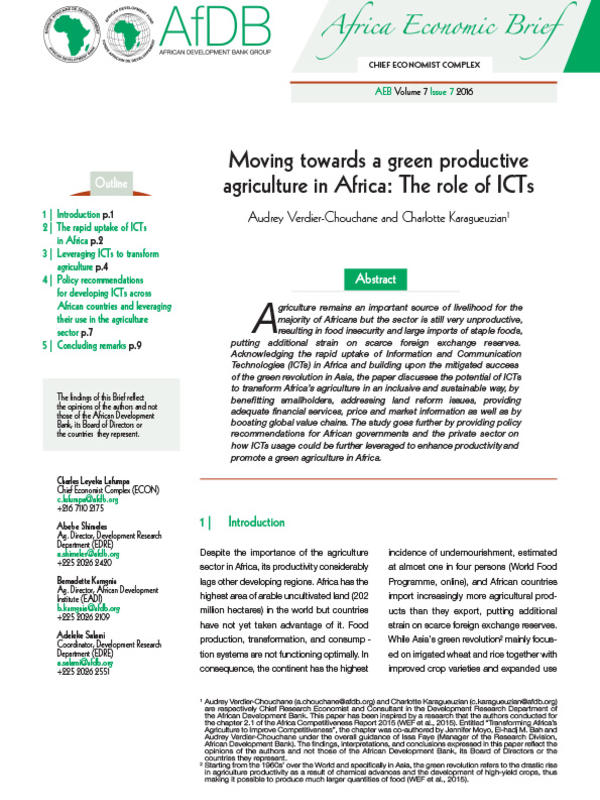
Moving towards a green productive agriculture in Africa: the role of ICTs

Agriculture remains an important source of livelihood for the majority of Africans but the sector is still very unproductive, resulting in food insecurity and large imports of staple foods, putting additional strain on scarce foreign exchange reserves. Acknowledging the rapid uptake of Information and Communication Technologies (ICTs) in Africa and building upon the mitigated success of the green revolution in Asia, the paper discusses the potential of ICTs to transform Africa’s agriculture in an inclusive and sustainable way, by benefiting smallholders, addressing land reform issues, providing adequate financial services, price and market information as well as by boosting global value chains. The study goes further by providing policy recommendations for African governments and the private sector on how ICTs usage could be further leveraged to enhance productivity and promote a green agriculture in Africa.

View online/download
External Link


Suggest a publication

Feel free to submit a publication.

Submit here